

More news on this day
A dramatic overnight airlift of 187 Maltese citizens from Dubai, coupled with fresh suspensions and curtailed schedules by Emirates, Etihad and Air France, has thrown a harsh spotlight on how the escalating war involving Iran is destabilising global aviation just as the industry was counting on a strong year for tourism recovery.
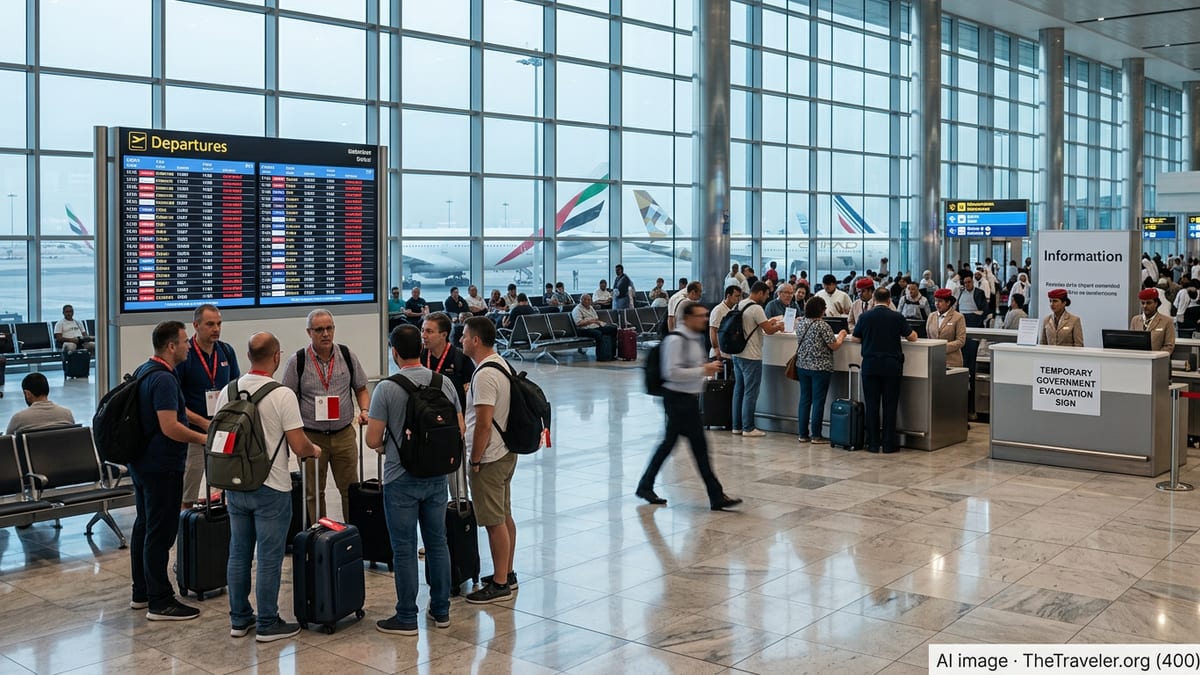
Evacuation From Dubai Underscores Fragile Safety Corridor
The specially chartered evacuation flight carrying 187 Maltese nationals landed safely in Malta just before dawn on Saturday, after threading a western route out of the United Arab Emirates that avoided high-risk airspace over Iran and Iraq. Maltese officials said the passengers had been stranded in the UAE following the closure and severe restriction of regional airspace earlier in the week as hostilities intensified between Iran and US-backed Israeli forces.
According to Maltese authorities, more than 200 citizens across the wider Middle East had requested consular help after the conflict erupted, with the majority in the UAE. The government turned to a private carrier and a carefully planned corridor via Saudi Arabia and Egypt to bring the group home, a route that has rapidly become one of the few viable escape paths out of the Gulf.
The operation highlights the degree to which even countries far from the immediate front lines are now directly affected by the Iran war. For small tourism-dependent nations like Malta, whose residents travel widely for work and holidays, securing safe passage home has become an urgent diplomatic and logistical priority rather than a routine consular service.
Emirates and Etihad Swing Between Groundings and Limited Returns
For the UAE’s two heavyweight carriers, Emirates and Etihad, the crisis has evolved from an initial grounding of most commercial flights into a fragile, stop-start resumption of limited services. Following sweeping airspace closures across the Gulf and wider region, both airlines suspended the bulk of their passenger operations in recent days, operating only a handful of repatriation, repositioning and cargo services approved on an ad hoc basis.
By Friday, Emirates and Etihad had begun operating reduced schedules to select destinations, taking advantage of narrow windows of airspace access and alternative routings that detour far south and west of Iran, Iraq and Israel. Even so, departure boards in Dubai and Abu Dhabi still list rows of cancellations, and capacity remains a fraction of normal levels. Aviation analysts note that these two carriers, together with Qatar Airways, usually carry roughly one-third of passengers between Europe and Asia and more than half of traffic between Europe and Oceania; any prolonged disruption inevitably ripples across global networks.
Passengers transiting through the UAE’s mega-hubs are confronting long delays, missed connections and abrupt reroutings, with many diverted to secondary airports or told to await scarce repatriation seats. The once-seamless experience that helped make Dubai and Abu Dhabi the backbone of long-haul connectivity has been replaced, at least temporarily, by uncertainty at the check-in desk and overcrowded customer service counters.
Air France Pullback Highlights European Caution
European carriers have taken an even more conservative stance. Air France, which was among the airlines coordinating evacuation missions for its nationals, has cancelled services to Dubai, Tel Aviv and Beirut until at least the end of March, sharply curtailing its presence in a region that normally feeds lucrative connecting traffic to Africa and Asia.
The caution was reinforced this week when a French-government chartered Air France aircraft tasked with collecting evacuees from the UAE was forced to abandon its mission and turn back mid-flight amid reports of missile activity in the area. French officials described the decision as purely safety-driven, but the incident underscores how quickly conditions can deteriorate and how narrow the operating margin has become for civil aviation.
Other European airlines have also suspended or rerouted flights to avoid traversing Iranian, Iraqi and adjacent airspace, in some cases extending journey times by several hours and adding significant fuel and crew costs. For travellers, the practical impact is fewer direct options into and through the Gulf, more complex itineraries, and growing uncertainty over whether tickets for the coming weeks will be honoured.
Tourism Recovery Faces a New Shock
The timing could hardly be worse for global tourism. After several seasons of post-pandemic recovery, 2026 was expected to consolidate a return to pre-crisis volumes on many long-haul routes, with Middle Eastern hubs playing a central role in connecting Europe, Asia, Africa and Australasia. Instead, travel agents are now reporting a spike in cancellations and date changes for itineraries that rely on transits through Dubai, Abu Dhabi, Doha and Bahrain.
Tour operators in Europe and Asia say group bookings that depended on Gulf connections are being reworked or postponed, especially for tours linking multiple regions such as Europe and Southeast Asia or Australia. Business travel planners, who had only recently relaxed restrictions on long-haul trips, are again reviewing duty-of-care policies and routing guidelines, often steering corporate travellers away from conflict-adjacent flight paths even where limited services remain.
Destination marketing organisations from Thailand to South Africa are watching the situation closely. Many had benefited from the capacity and aggressive expansion of Gulf carriers in recent years, which helped open up new source markets through one-stop itineraries. A prolonged reduction in Middle East hub connectivity could suppress arrivals in far-flung destinations that have no direct links to Europe or North America and rely heavily on these transfer flows.
What Travellers Should Expect in the Weeks Ahead
For individual travellers, the evolving picture suggests an extended period of volatility rather than a quick return to normal schedules. Even as some flights resume from UAE airports, seat availability is tight, routings are fluid and schedule changes can come with little warning. Aviation authorities stress that safety considerations will continue to override commercial pressures, meaning that sudden suspensions or diversions remain a real possibility as long as missile and drone activity persists.
Travel industry advisors recommend that passengers with imminent trips involving Gulf hubs maintain flexible plans, verify flight status frequently and be prepared for rerouting via alternative gateways in Europe, North Africa or South Asia. Those still planning new long-haul journeys are being urged to factor in potential extra travel time and the possibility of overnight layovers if routings shift at short notice.
For airlines and tourism boards alike, the crisis is a stark reminder that geopolitical risk can upend even the most carefully plotted recovery strategies. The emergency evacuation of 187 Maltese citizens from Dubai, the partial groundings at Emirates and Etihad, and Air France’s decision to suspend and scale back its Gulf operations are all part of a wider realignment in which safety, not schedules, will set the tempo of global tourism in the months ahead.