


Fifteen years after Airbnb reshaped the way people travel, the question many travelers now ask is not “what is Airbnb?” but “is it still worth using?” With cleaning fees, new regulations in big cities, and hotel prices shifting after the pandemic, the answer is no longer obvious. Whether Airbnb is a good choice for your next trip depends on where you are going, how long you are staying, and what kind of experience you actually want.
Get the latest updates straight to your inbox!
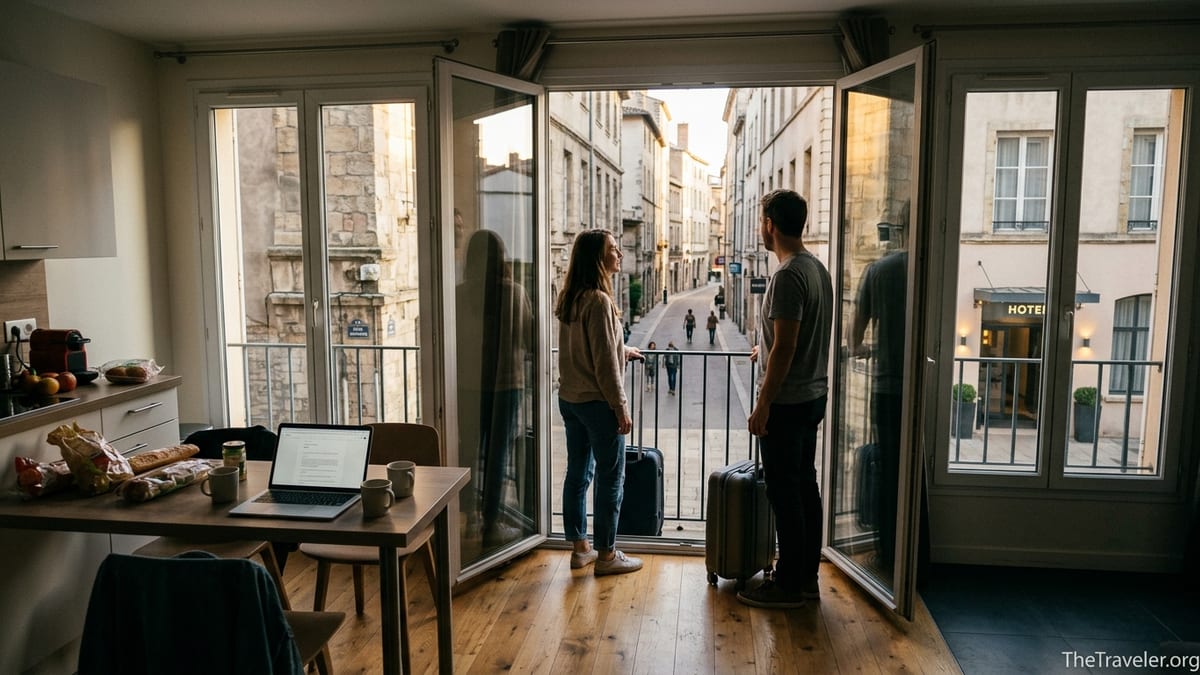
How Airbnb Pricing Really Compares To Hotels
For a long weekend city break, Airbnb is no longer automatically the cheaper option. In many U.S. cities, once you factor in cleaning fees and service charges, a mid-range hotel can cost roughly the same or even less than a comparable Airbnb. Recent analyses of major markets like Chicago, Austin and Miami show that the average cleaning fee for an entire home in the United States often sits around the 150 to 190 dollar mark per stay, with guest service fees adding roughly another 14 to 16 percent to the booking subtotal. Spread over just two or three nights, those add-ons can easily erase any savings from a slightly lower nightly rate.
Consider a typical three night visit to Denver for two people in shoulder season. A solid three star chain hotel near downtown might price at about 190 dollars per night before tax, for a pre-tax total around 570 dollars. A one bedroom entire apartment on Airbnb might list at 150 dollars per night for the same dates. On the surface that looks cheaper, but after a 160 dollar cleaning fee and a guest service fee in the 14 percent range, the total bill can come out close to or above the hotel price. For this kind of short urban stay, especially for couples or solo travelers, hotels increasingly win on pure cost once all fees are counted.
Where Airbnb still shines is on longer stays and for larger groups. The same Denver apartment could become more attractive if you stay seven nights instead of three. That 160 dollar cleaning fee is now spread over a week, and many hosts offer weekly discounts of 10 to 20 percent on the nightly rate. A family of five might pay for two standard hotel rooms or upgrade to a suite, which quickly pushes the hotel bill far higher than a two bedroom Airbnb where everyone shares the same kitchen and living space. In popular leisure destinations such as Orlando, Phoenix or the Carolina beaches, that group advantage remains one of Airbnb’s clearest strengths.
Regional differences also matter. In very high demand cities where hotel rates are elevated, such as San Francisco or New York during peak events, entire home Airbnbs can still present better value on some dates, particularly in outlying neighborhoods. By contrast, in mid-sized U.S. cities with a lot of newly built limited service hotels, chains can keep room rates aggressive enough that a modest, centrally located hotel will undercut many short term rentals once fees are added. The bottom line is that you now need to run the numbers, not assume that Airbnb is automatically the budget option.
When Airbnb Offers A Better Experience
Value is not only about price. In many scenarios, Airbnb remains appealing because of the type of space and experience it offers. For travelers planning a remote work month in Lisbon, for example, a small hotel room can quickly feel cramped. A light filled apartment with a proper desk, kitchen and washing machine around the São Bento or Graça neighborhoods may cost about the same per night as a standard hotel once discounts for a 28 night stay are applied. Yet the day to day quality of life is very different: you can cook, spread out, and live closer to how locals do.
Families often find Airbnb particularly useful. A couple traveling with two children to Rome might choose a one bedroom hotel suite near the Termini station, paying a premium for the extra space and a sofa bed. Alternatively, a two bedroom short term rental in the Monti district gives the kids their own room, a small kitchen for simple breakfasts and access to a washing machine. Parents can enjoy a glass of wine in the living room after bedtime without sitting in the dark as they might in a single hotel room. In these cases, the perceived comfort advantage often outweighs any modest extra cost, if there is one.
Another advantage appears in rural or coastal regions where hotels are scarce or standardized. In the Scottish Highlands, on New Zealand’s South Island or along the Algarve’s quieter stretches, small guesthouses and cottages listed on Airbnb can place you in landscapes that a traditional hotel might not reach. A farmhouse stay on an olive estate in Puglia, for example, can include interaction with the host’s family, access to their garden produce and a genuine sense of local life that is very different from a branded resort on the Adriatic coast.
Finally, some travelers simply enjoy the individuality of Airbnb properties. A converted warehouse loft in Brooklyn, a tiny house in the Texas Hill Country, or a canal boat in Amsterdam can become part of the story of the trip. If you value character and uniqueness over daily housekeeping and on site restaurants, that experiential factor is still a compelling reason to consider short term rentals.
Common Frustrations: Fees, Rules And Surprises
Alongside its strengths, Airbnb has developed a reputation for frustrations that did not feature so prominently a decade ago. Cleaning fees are the most visible example. It is common to see a two night stay in a small studio with a base rate of 120 dollars per night saddled with a 150 dollar cleaning fee. A traveler booking that weekend stay in Nashville may be surprised when the final price jumps by several hundred dollars at checkout, including the platform’s own service fee. Airbnb has introduced a “total price” toggle and has encouraged hosts to simplify fees, but many listings still rely heavily on sizable cleaning charges.
House rules and checkout demands are another recurring sore point. Travelers frequently report being asked to strip beds, start laundry and take out trash despite paying a substantial cleaning fee. A guest staying in a mountain cabin near Lake Tahoe, for instance, might arrive to a printed list of tasks that fill an entire page. Some hosts go as far as requesting that guests mow small lawns or water plants during longer stays. These experiences vary widely, but the inconsistency can be stressful compared with the predictable housekeeping standards of a hotel.
Service reliability also differs. Hotels guarantee daily front desk coverage and are legally responsible for providing a safe, habitable room. With Airbnb, the experience depends heavily on the individual host. Most guests never encounter serious problems, but when they do surface, they can be more disruptive. Think of a heating system that fails in a Paris apartment in January, or a host in Los Angeles canceling a popular listing a week before arrival after realizing they can charge more to a last minute booker. Airbnb has host penalties for such cancellations and a rebooking assistance system, but in practice, travelers sometimes end up scrambling to find alternative accommodation at higher last minute prices.
Checking in can be another pain point. Self check in with coded lockboxes or smart locks is now common and often convenient, but it can also go wrong. Guests may arrive in Barcelona to find that the keypad battery is dead at midnight, or that building staff do not recognize short term rentals and challenge them at the door. Hotels, with their 24 hour staffed lobbies, sidestep these particular risks.
Local Laws, Supply And The Changing Airbnb Map
Regulation has reshaped how and where Airbnb operates, especially in large cities. New York City’s enforcement of Local Law 18, which took effect in September 2023, sharply restricted short term rentals of entire apartments for fewer than 30 days unless the host is present and properly registered. Within months, the number of legal Airbnb listings in the city dropped from tens of thousands to only a few thousand. For travelers, the most immediate effect has been reduced choice and higher prices for the remaining legal options, along with a greater dependence on hotels and licensed aparthotels in Manhattan and Brooklyn.
Elsewhere, other cities are moving in similar directions. Barcelona has announced plans to gradually phase out most tourist apartments by the late 2020s, citing pressure on housing for residents. Neighborhood protests in Spanish destinations such as Palma de Mallorca and parts of the Canary Islands have focused heavily on the growth of short term rentals and their impact on rents. In some areas, local authorities are tightening caps on licenses or banning new registrations in central districts popular with visitors. Travelers who became used to wide Airbnb availability in these cities a few years ago may find a much smaller and more expensive pool of legal options over the next few seasons.
At the same time, some regions actively welcome short term rentals as a way to draw visitors beyond traditional hotel corridors. Smaller towns in Portugal’s Alentejo region, villages in rural Japan and countryside areas in parts of the American South have used platforms like Airbnb to attract guests who want local homes rather than large resorts. Regulation there tends to focus on safety standards and taxation rather than strict caps, which can make Airbnb one of the only practical options for overnight stays.
The implication for travelers is clear: you need to check how local rules affect availability. In heavily regulated markets such as New York or parts of Amsterdam, a legal, entire home Airbnb may be rare and carry a premium price. In less regulated beach communities in Florida or the Greek islands, by contrast, competition among many hosts can keep prices relatively competitive. Understanding where a destination sits on this spectrum helps you decide whether it is even realistic to plan around Airbnb for your trip.
Safety, Support And What Happens When Things Go Wrong
On the question of safety, Airbnb and hotels each come with distinct profiles. Major hotel brands build their reputations on consistent safety protocols, from centrally monitored fire systems to 24 hour staffed lobbies and cameras in common areas. If a key card fails in a Chicago hotel at 2 a.m., a guest can walk to the front desk for help. When a similar problem occurs with an Airbnb smart lock, support depends entirely on whether the host is responsive and whether the platform’s help center can intervene quickly enough.
Airbnb’s review system is a primary tool for managing risk. Before booking, you can read detailed guest reviews and filter for listings with high ratings and a long history of stays. A well reviewed apartment in Tokyo with hundreds of positive comments about cleanliness and responsiveness is, statistically, a low risk choice. However, new listings without reviews can be risky even if photos look professional. Hotels, in contrast, rarely appear without publicly available reviews across multiple platforms, and their obligations are backed by local hospitality regulations.
Theft and property damage worries cut both ways. Hosts sometimes complain of guests causing expensive damage, while guests sometimes fear unsecured personal items in private homes. In established urban hotels, rooms typically have safes, and staff are trained around guest privacy. In an Airbnb, the presence of personal belongings, unlocked owner closets or visible security cameras in living spaces can raise concern. Airbnb’s policies prohibit cameras in private areas and provide a process for guests to report violations, but enforcement is not perfect. Travelers who are particularly sensitive about privacy may feel more comfortable with a conventional hotel setup.
If something goes wrong, the resolution process also differs. Hotels can usually move you to another room on site or arrange a transfer to a nearby sister property in the same city. When an Airbnb turns out to be unclean, significantly misrepresented or unusable due to problems like leaks or pests, the platform offers a “rebooking and refund” policy that allows you to request a refund and help finding an alternative. In reality, success depends heavily on documenting issues with photos, contacting the host promptly and being prepared to negotiate. During high season in a place like Paris or Honolulu, even a successful refund may leave you scrambling for scarce last minute accommodation.
How To Decide: A Practical Framework
Given all these variables, deciding whether Airbnb is worth using for your next trip comes down to a few practical questions. First, how long is your stay and how many people are traveling? If you are a solo traveler spending two nights in central Boston for a work meeting, a hotel near your conference venue will almost always be simpler and often cheaper once cleaning and service fees are counted. If you are a group of six friends spending a week in a coastal town like Myrtle Beach or on the outskirts of Dubrovnik, a three bedroom Airbnb is more likely to offer communal space, a kitchen and a lower per person cost.
Second, what kind of experience are you seeking? If you want resort style amenities such as a pool with lifeguards, on site restaurants, room service and a staffed concierge, traditional hotels and resorts are built for that. If your dream is to cook with ingredients from the local market, spend evenings on a private terrace, or house extended family for a reunion under the same roof, Airbnb or other vacation rentals align far better with those goals. Matching expectations to the type of accommodation avoids disappointment on both sides.
Third, how sensitive are you to uncertainty and hassle? Travelers who value predictability, clear standards and daily service may find the variability of Airbnb frustrating. Checking in at midnight after a delayed flight is usually smoother at a major hotel near a large airport like Atlanta or Heathrow than at a private apartment where you must coordinate codes and keys. On the other hand, travelers who are comfortable troubleshooting minor issues, enjoy communicating with hosts and want a more “lived in” feel often find the trade-off entirely acceptable.
Finally, consider the local context and ethics. In some historic city centers with intense housing pressure, such as parts of Lisbon, Florence or Barcelona, staying in large commercialized short term rentals can contribute to tensions between residents and tourism. Opting instead for registered guesthouses, traditional pensions or hotels may feel better aligned with your values. In rural regions where tourism helps sustain small communities, choosing a locally owned Airbnb hosted by residents can have a more positive impact. Reading host profiles and looking for signs that the listing is part of the local community, rather than a distant investor’s portfolio, can guide more responsible choices.
The Takeaway
Airbnb is no longer the automatically cheaper, more authentic alternative it was often perceived to be in its early years. In 2026, it is a mature travel option with clear strengths and equally clear trade-offs. It works best for longer stays, groups and travelers who prioritize space, kitchens and neighborhood immersion over hotel style services. It tends to be less compelling for short urban breaks, last minute business travel and anyone who values predictable standards above all else.
For your next trip, start with your priorities. If you are planning a one week family holiday on Portugal’s Algarve coast and dream of cooking fresh seafood in your own kitchen, a carefully chosen, well reviewed Airbnb is likely worth it. If you are flying to Chicago for a two day conference in winter and want a frictionless arrival with guaranteed support at any hour, a reliable hotel will probably serve you better. By honestly weighing cost, comfort, risk tolerance and local impact, you can decide when Airbnb earns a place in your travel plans and when it is wiser to look elsewhere.
FAQ
Q1. Is Airbnb usually cheaper than hotels?
Not necessarily. For short stays of one to three nights in many cities, hotels are often similar in price or cheaper once Airbnb cleaning and service fees are included. Airbnb can become better value on longer stays or for larger groups sharing one property.
Q2. When does Airbnb make the most financial sense?
Airbnb tends to work best for trips of five nights or more, for families and groups needing multiple bedrooms, and in destinations where hotels are scarce or very expensive. Spreading a flat cleaning fee over more nights and more people lowers the cost per person.
Q3. How can I avoid surprisingly high Airbnb fees?
Always look at the total price, not just the nightly rate. Turn on any total price display options, compare the full Airbnb cost with at least one or two nearby hotels, and be wary of short stays with very high cleaning fees relative to the nightly rate.
Q4. Is Airbnb safe for solo travelers?
Many solo travelers use Airbnb without issues, but safety depends on the specific listing and destination. Choose properties with many recent, detailed positive reviews, clear photos, a verified host and good communication. If you arrive late at night or prefer staffed security, a reputable hotel may feel safer.
Q5. What should I do if my Airbnb host cancels before my trip?
Contact Airbnb support immediately through the app or website, request help with rebooking and compare options with local hotels. During busy periods, have a backup plan in mind, as last minute alternatives can be more expensive or limited.
Q6. Can Airbnb stays be good for working remotely?
Yes, many properties cater to remote workers with strong Wi-Fi, desks and longer stay discounts. Before booking, check reviews for comments on internet reliability, confirm workspace details with the host and compare the price to serviced apartments or extended stay hotels.
Q7. How do local laws affect my Airbnb options?
City and regional regulations can limit which rentals are legal, especially for short stays in big cities. In places like New York City and parts of Barcelona, strict rules have reduced listings and raised prices. It is wise to check current rules and favor clearly registered, legal properties.
Q8. Are there hidden chores at checkout?
Some hosts ask guests to do tasks such as taking out trash or starting laundry. Read the house rules carefully before booking, and if checkout requests feel excessive compared with the cleaning fee, consider choosing a different listing or a hotel where housekeeping is fully included.
Q9. How can I tell if an Airbnb listing is professionally run or owner occupied?
Clues include the tone of the host profile, how many properties they manage and the style of reviews. A host running many nearly identical apartments is likely operating professionally, while a single listing with personalized decor and references to the host’s own life is more likely to be owner occupied.
Q10. What are good alternatives if I decide not to use Airbnb?
Alternatives include traditional hotels, locally run guesthouses, serviced apartments, hostels with private rooms and regional vacation rental agencies. In some destinations, booking directly with small hotels or apartment style properties can offer competitive prices and clearer conditions than large platforms.