


Assessing whether English alone is sufficient for long-term life in Mexico is a core language risk question for foreign professionals, retirees, and remote workers. While English is present in education, business, and tourist-facing services, Mexico remains an overwhelmingly Spanish-speaking society with low overall English proficiency by international benchmarks. Understanding where English works, where it fails, and what minimum Spanish capabilities are advisable is critical for a realistic relocation decision.
Overall English Proficiency in Mexico
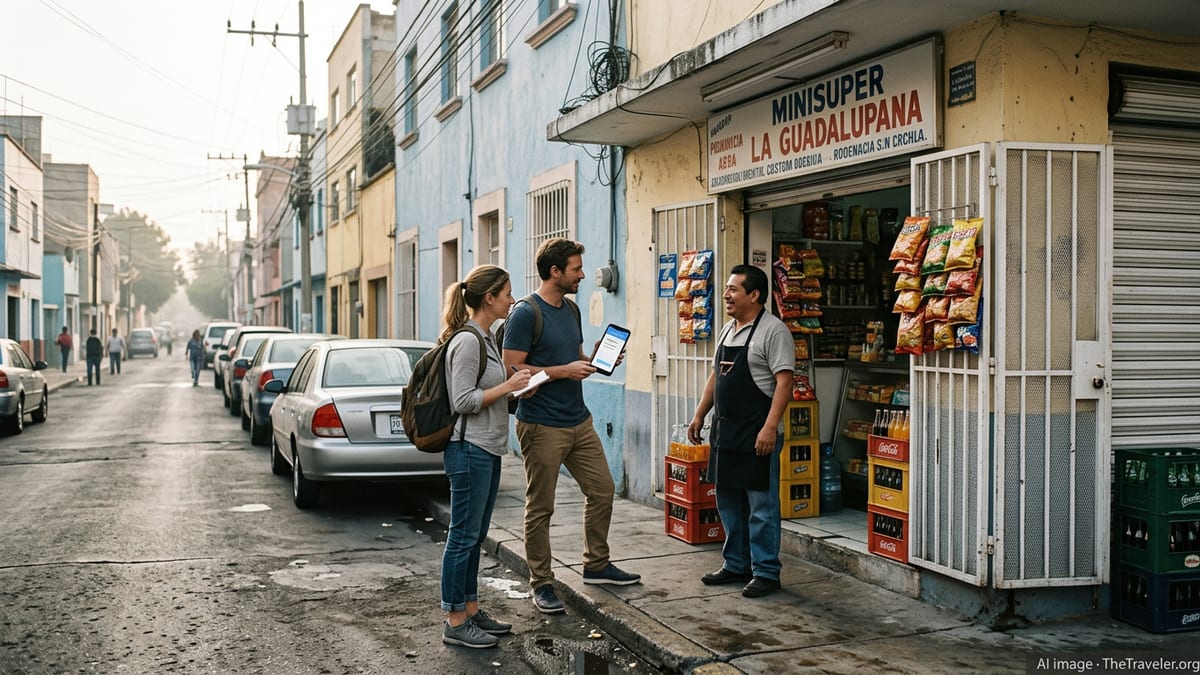
Mexico is a Spanish-dominant country in virtually every domain of daily life. Spanish is spoken by approximately 98 percent of the population, while English is the most common foreign language but remains a minority skill. Available analyses and surveys suggest that roughly 4 to 12 percent of Mexicans can hold a conversation in English, with higher estimates typically including people with only basic or limited proficiency. In practical terms, this implies that at least 8 to 9 out of every 10 people encountered in everyday settings will primarily operate in Spanish.
International benchmarking places Mexico in the lower tiers of global English proficiency. Recent editions of the EF English Proficiency Index classify Mexico in the “low” or “very low” band, and within Latin America it ranks close to the bottom of the region. This does not mean that English is absent, but it does indicate that English is not a reliable default language for routine interactions outside specific urban and tourist niches.
Evidence from national and academic studies indicates that English speakers in Mexico are disproportionately concentrated among younger adults, urban residents, and higher-income groups. English is widely taught in schools and is a standard part of secondary and tertiary education, yet teaching quality and exposure vary greatly by region and socioeconomic status. As a result, recorded “study” of English does not translate directly into widespread conversational fluency.
For relocation planning, the implication is clear: English in Mexico is present but structurally limited. Foreigners cannot assume an English-speaking environment outside defined pockets, and should instead approach Mexico as a Spanish-speaking country in which English provides selective, context-dependent support.
Geographic and Neighborhood Variations in English Use
English accessibility in Mexico is highly uneven geographically. Large metropolitan areas such as Mexico City, Monterrey, and Guadalajara have visibly higher concentrations of English speakers in specific districts, often linked to multinational employers, universities, and service sectors that cater to international clients. Neighborhoods with significant foreign resident communities or strong tourism activity, such as parts of Mexico City’s Roma, Condesa, and Polanco districts, tend to have more English-friendly cafes, coworking spaces, and services, although Spanish remains the default language in the broader city.
Tourist and resort corridors have substantially more routine English use. Destinations such as Cancun, Playa del Carmen, Tulum, Puerto Vallarta, and Los Cabos employ large numbers of staff trained to serve English-speaking visitors. In these areas, hotel employees, many restaurant staff, tour operators, and some shopkeepers can often manage conversations in English for transactional purposes. However, even in these localities, English is largely confined to the tourism value chain and does not automatically extend to government offices, utilities, local schools, or non-tourist businesses.
Border regions with the United States, notably cities in Baja California, Sonora, Chihuahua, Coahuila, Nuevo Leon, and Tamaulipas, display higher English exposure due to cross-border trade, employment, and media. Bilingualism is more common in some of these urban zones, especially in service jobs that interface with US clients. Yet away from international crossings and commercial strips, residents still primarily communicate in Spanish and may have only limited English.
In contrast, smaller inland towns, non-tourist secondary cities, and rural areas should be considered effectively Spanish-only environments for relocation purposes. In these settings, foreign residents relying exclusively on English will often face communication barriers in basic tasks such as arranging repairs, engaging with local markets, or consulting with public offices. Geography therefore strongly mediates how far English can stretch, and location choice is critical for anyone planning to live with minimal Spanish.
Daily Life Scenarios: Where English Works and Where It Fails
In some high-traffic sectors, English can be sufficient for basic functioning. Large international hotel chains, many upscale restaurants in major cities and resorts, some private medical facilities in metropolitan areas, and a subset of real estate agencies that target foreign clients commonly employ staff with usable English. Remote workers who primarily engage with non-Mexican employers in English and who live in highly internationalized neighborhoods may find that much of their professional and commercial interaction can be conducted in English.
However, a wide range of routine tasks remain predominantly Spanish-based. Interactions with landlords outside of specialized expat-focused agencies, coordination with building maintenance, dealing with local tradespeople such as electricians or plumbers, and purchasing goods in local markets typically require Spanish. Even in large supermarkets, while signage may occasionally include some English, staff are not systematically trained to communicate in English.
Public-facing institutions rarely operate primarily in English. Municipal offices, utility providers, postal services, and many healthcare facilities function in Spanish, with ad hoc exceptions when an employee happens to have personal English skills. Forms, notices, and automated phone systems are generally Spanish-only. Relying solely on English in these situations can lead to misunderstandings over bills, service conditions, deadlines, or regulatory requirements, with material consequences for daily life.
Social integration is also constrained when limited to English. While some middle- and upper-income Mexicans in major cities may be eager to practice English and can sustain friendships in that language, most social activities, community associations, parent groups at schools, and neighborhood networks operate in Spanish. Foreigners who do not speak Spanish tend to remain within an English-speaking or expatriate bubble, which can produce operational dependence on bilingual intermediaries and reduce resilience in unexpected situations.
Professional and Workplace Use of English
English plays a significant role in certain professional environments in Mexico, yet its presence is sector-specific. In multinational corporations, export-oriented manufacturing, information technology and software services, shared service centers, and some finance and consulting operations, English is often a working language used in documentation, meetings with foreign clients, and communication with overseas headquarters. In these contexts, Mexican employees are more likely to have at least intermediate English proficiency, and foreign professionals may be able to operate primarily in English within the office.
Nonetheless, internal communication is not uniformly in English. Teams composed mainly of Mexican staff frequently revert to Spanish for informal coordination, internal messaging, and off-record discussions. Company-wide announcements, HR processes, and benefits documentation are frequently produced in Spanish first, with English translations available inconsistently or only at higher organizational levels. Foreign employees who lack Spanish may therefore miss nuance or become reliant on colleagues to interpret internal policies.
In locally oriented businesses, traditional industries, and public sector roles, English is rarely a core competency. Small and medium enterprises servicing local markets, local branches of national retailers, and municipal or state government offices predominantly operate in Spanish, and hiring criteria may not include English at all. For foreigners seeking employment in these domains, functional Spanish is typically a prerequisite rather than an asset.
Remote workers and retirees whose income is sourced abroad may not rely on the Mexican labor market for employment. However, even for independent professionals, Spanish often becomes relevant when contracting local services, negotiating coworking memberships outside international hubs, or participating in professional associations. English alone can support work that is globally oriented and online, but it is not sufficient to guarantee smooth engagement with the domestic professional ecosystem.
Digital Tools and Workarounds for Non-Spanish Speakers
The rapid improvement of digital translation tools significantly changes the risk profile for non-Spanish speakers relocating to Mexico. Smartphone applications can translate menus, signs, and written notices, and can provide near-instant messaging translation with landlords or service providers. Voice translation tools can help bridge basic communication gaps in real time, especially for transactional conversations where context is straightforward.
Many larger Mexican companies now offer at least partially bilingual websites, and some customer portals for banks, telecom providers, or airlines provide English interfaces. Email-based customer service for international brands operating in Mexico may be available in English even when local branch staff mainly speak Spanish. This hybrid environment allows an English-speaking foreigner to manage some key services with limited Spanish, especially when willing to mix automated translation with written communication.
However, relying solely on digital tools has clear limitations. Complex conversations about legal responsibilities, contractual clauses, medical issues, or disputes with service providers are prone to mistranslation when handled through generic translation applications. In-person interactions with officials or professionals may involve idiomatic expressions and technical terms that are not rendered accurately by consumer-grade tools. Foreigners who depend entirely on automated translation for high-stakes communications accept a higher risk of misunderstanding and reduced negotiating power.
In operational terms, translation technology can reduce the immediate barrier to entry for non-Spanish speakers and make short-term settlement feasible in certain urban or tourist environments. It does not fully eliminate the structural dependence on Spanish for nuanced, long-term engagement with institutions and local society.
Recommended Minimum Spanish Levels for Long-Term Residents
For decision-making purposes, it is useful to frame Spanish requirements in terms of internationally recognized language benchmarks. While individual experiences vary, a reasonable guideline is that long-term foreign residents in Mexico should target at least a lower-intermediate level of Spanish, roughly comparable to the B1 level on the Common European Framework of Reference. At this stage, a person can handle most everyday situations, describe experiences, and deal with common issues that arise when traveling or living in a Spanish-speaking country.
Highly localized, English-dependent lifestyles are possible in selected enclaves, particularly for retirees or remote workers living in resort towns or international neighborhoods and relying heavily on intermediaries such as bilingual property managers, relocation consultants, and private healthcare providers. In such cases, functional survival might be possible with only basic Spanish phrases, equivalent to a high A1 or A2 level, combined with translation apps. However, this approach leaves the foreigner dependent on a service ecosystem and less resilient to disruptions, relocations within the country, or unexpected bureaucratic demands.
Foreign professionals working inside English-heavy corporate environments may initially manage with limited Spanish, but over time, career progression, internal networking, and informal workplace integration typically benefit from at least intermediate Spanish. Achieving a B2 level or above allows for more complex discussions, participation in strategy conversations, and effective leadership of bilingual teams, thereby reducing professional friction.
From a relocation risk perspective, planning to develop Spanish over the first year of residence is advisable even for those who expect to function primarily in English. Structured study combined with daily informal exposure tends to accelerate progress, and even modest improvements in listening comprehension and speaking significantly reduce reliance on intermediaries in housing, health, and official interactions.
The Takeaway
English alone is rarely sufficient for a fully autonomous, long-term life in Mexico outside narrow circumstances. The overall share of English-capable Mexicans remains relatively low, and proficiency is unevenly distributed by geography, income, and sector. While English is visible in tourist destinations, selected urban neighborhoods, and certain internationalized workplaces, Mexico remains fundamentally a Spanish-speaking environment at the level of daily life, public administration, and community interaction.
For foreign residents, the viability of an English-only strategy depends heavily on location choice, lifestyle model, and tolerance for dependency on bilingual intermediaries and digital translation tools. An English-only approach can be made to work, albeit with constraints, in resort corridors and some high-income enclaves of major cities, especially for retirees and remote professionals whose core economic activities remain external to Mexico. Outside these niches, inability to operate in Spanish significantly increases practical friction and reduces access to local services, networks, and opportunities.
Decision-grade planning should therefore treat Spanish not as an optional enhancement but as a central factor in relocation risk management. Prospective movers should assess their intended destinations, expected interaction with local institutions, and professional context, and then realistically evaluate how quickly they can reach at least a lower-intermediate Spanish level. With that foundation, English becomes a valuable complement rather than a fragile crutch, enabling a more stable and integrated life in Mexico.
FAQ
Q1. Can I live in Mexico using only English if I stay in major tourist areas?
Living with only English is more feasible in major tourist zones and resort towns, where many staff in hotels, restaurants, and tourism services use English daily. However, even in these areas, tasks involving local authorities, utilities, healthcare outside private clinics, and non-tourist businesses will usually require Spanish or a bilingual intermediary.
Q2. Is Mexico City an English-friendly place to live long term?
Mexico City has some of the highest English availability in the country, especially in international neighborhoods and corporate sectors, but daily life across the broader city is conducted predominantly in Spanish. English can cover part of a resident’s needs in selected districts and workplaces, yet long-term residents benefit significantly from at least intermediate Spanish for interactions beyond the expatriate and corporate spheres.
Q3. How common is English among Mexican professionals?
English is most common among professionals in multinational companies, export-oriented industries, and certain service sectors such as IT, finance, and tourism. Even in these environments, not all staff are fluent, and informal communication often reverts to Spanish. Outside internationally oriented sectors, English proficiency drops sharply.
Q4. Will I find English-speaking doctors and healthcare providers?
In large cities and popular expat or tourist destinations, some private clinics and hospitals offer English-speaking doctors or international patient coordinators. In public hospitals, smaller cities, and rural areas, staff usually communicate only in Spanish. For health-related discussions, relying solely on translation tools or ad hoc English can be risky, so at least basic medical Spanish or assistance from a bilingual person is advisable.
Q5. Can I handle banking and utilities in Mexico in English?
Some large banks and telecom companies provide limited English-language digital interfaces or call center options, but in-branch interactions, contracts, and official correspondence are typically in Spanish. Foreign residents who do not speak Spanish often depend on relocation consultants, bilingual friends, or translation tools for opening accounts, disputing charges, or changing service terms.
Q6. Is it realistic to work in Mexico in an English-only corporate role?
In certain multinational firms or remote roles serving foreign markets, it is possible to work primarily in English, especially in IT and shared services. However, internal communication, HR processes, and informal collaboration are frequently in Spanish. Over time, lack of Spanish may limit integration, effectiveness in local teams, and promotion prospects.
Q7. How much Spanish should I know before moving to Mexico?
For long-term relocation, aiming for at least lower-intermediate Spanish, roughly equivalent to a B1 level, is a practical target. This allows a foreign resident to manage most daily tasks, basic bureaucratic procedures, and routine conversations. Short-term stays in highly international areas are possible with less Spanish, but this increases dependence on others and on translation technology.
Q8. Can translation apps replace learning Spanish in Mexico?
Translation apps are very useful for simple interactions, reading signs, and basic messaging, and they significantly lower initial barriers. However, they are less reliable for complex topics such as legal, financial, or medical matters, and can slow down real-time conversations. They should be viewed as a support tool rather than a full substitute for functional Spanish skills.
Q9. Are there English-speaking communities where I can rely less on Spanish?
Several cities and towns with high concentrations of foreign residents, particularly in resort areas and some colonial towns, have active English-speaking communities, businesses, and social networks. Within these circles, it is possible to conduct much of one’s social life in English. Nonetheless, interactions with broader local society and institutions will still largely require Spanish.
Q10. Will my children need Spanish to attend school in Mexico?
International and some private bilingual schools in major cities teach partly or mainly in English and accept non-Spanish-speaking children. However, public schools and most local private schools use Spanish as the primary language of instruction. For sustained education in Mexico outside the international school network, children will need to develop strong Spanish skills.