


Many travelers land at Rome’s Leonardo da Vinci–Fiumicino Airport wondering whether it is worth staying nearby or if they should head straight into the city. Fiumicino is both Italy’s busiest airport and a real seaside town with its own personality, waterfront promenade and growing hotel scene. Deciding where to sleep can shape everything from how rested you feel on day one to how much time you actually spend enjoying Rome. This guide compares staying in Fiumicino versus treating it purely as an airport hub, using real-world examples of costs, transport and typical trip scenarios.
Get the latest updates straight to your inbox!
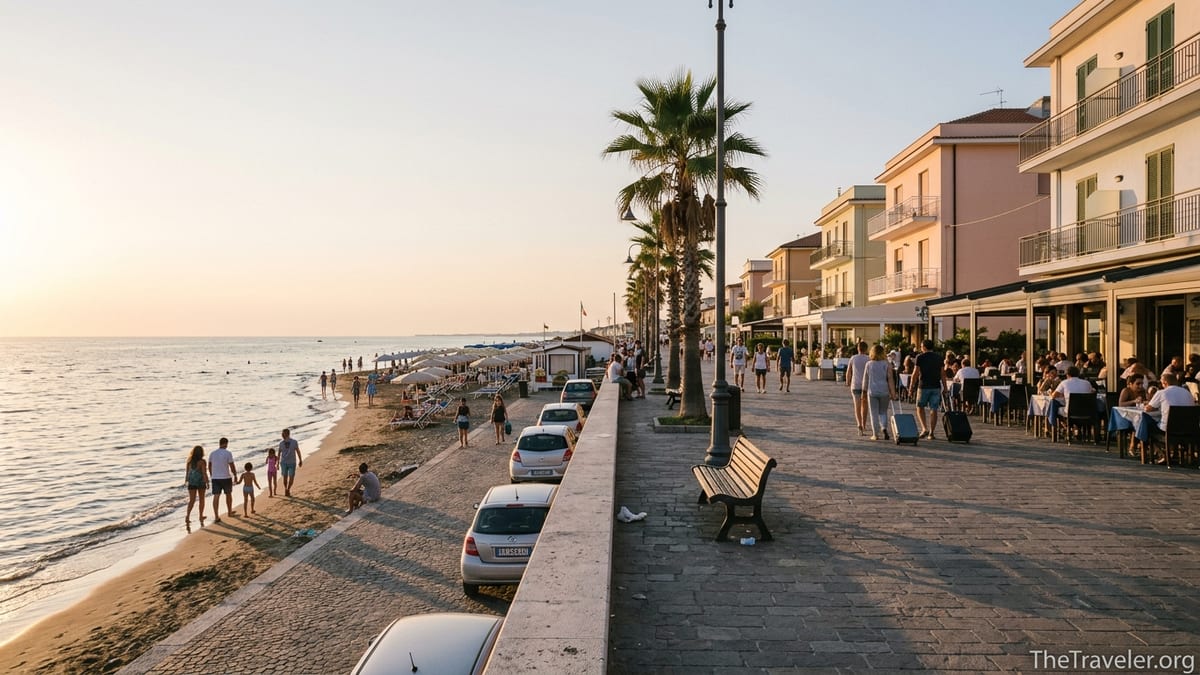
Understanding Fiumicino: Airport Hub and Seaside Town
Fiumicino is often reduced in travelers’ minds to its airport code, FCO, but it is also a town of around 80,000 residents stretching along the Tyrrhenian Sea. The airport sits inland, while the historic center, canals and beaches are 10 to 15 minutes’ drive away. Neighborhood names you will see when booking rooms include Isola Sacra, the canal-front area close to the old port of Rome, and Lungomare della Salute, the main beachfront strip lined with stabilimenti balneari, seafood restaurants and beach bars.
On the ground, this means that staying “near Fiumicino Airport” can mean two very different experiences. A room at the airport Hilton, linked to the terminals by a covered walkway, is a textbook airport stay focused on convenience and sleep. A small guesthouse near Lungomare della Salute, by contrast, feels more like a low-key Mediterranean beach break, where your evening might involve grilled fish and a sunset walk on the sand. When deciding whether Fiumicino is worth it, start by clarifying which of these you are actually booking.
Travelers with very early or very late flights often choose Fiumicino because it removes one layer of stress. Instead of navigating Rome’s public transport with luggage at 5.30 in the morning, you can wake up 10 minutes from the terminal, take a hotel shuttle and still have time for coffee before security. For some, especially after an overnight long-haul, that peace of mind is worth more than another night in a characterful but distant Roman neighborhood.
At the same time, Fiumicino town has gradually attracted travelers who like the idea of combining Rome with a quieter base. Repeat visitors sometimes spend their final two nights in a seafront hotel here, using one day for last museum visits in Rome and another for a lazy beach day with convenient access to the airport the next morning.
Getting Between Fiumicino and Rome: Time, Cost and Practicalities
Your decision will hinge partly on how easy it is to move between Fiumicino and central Rome. Leonardo da Vinci–Fiumicino Airport is connected to the city by the Leonardo Express, a non-stop Trenitalia train from the airport station to Roma Termini in roughly 30 to 32 minutes, with tickets around 14 euros per person in 2026 and departures roughly every 15 to 30 minutes depending on the time of day. There are also slower regional FL trains that cost about 8 euros and stop at stations such as Trastevere and Ostiense, which can be useful if you are staying in those districts rather than near Termini.
Several airport coach companies run direct buses from Fiumicino to Termini, with one-way fares from roughly 4 to 7 euros if you buy online. Timetables vary, but in normal traffic the ride takes about 45 to 60 minutes. This can be a better deal for couples or groups watching their budget, especially if they are comfortable with a slightly longer journey in exchange for lower cost. Official fixed-fare taxis between the airport and central Rome are set at about 55 euros, which becomes competitive when split between three or four people, particularly late at night when buses have thinned out.
If you decide to sleep in Fiumicino town rather than at the terminal, factor in the extra local leg. The waterfront is not within comfortable walking distance of the terminals with luggage. Many hotels and guesthouses advertise shuttles that cost somewhere in the region of 8 to 10 euros per person each way or offer to pre-arrange a taxi, which might run 10 to 20 euros for the short trip depending on time and traffic. Travelers who booked apartments on the beach often report paying around 10 to 15 euros for a taxi from the airport to the sea, and a similar amount back the next day.
In practical terms, this means that a couple staying in central Rome might spend about 28 euros on two Leonardo Express tickets to reach the city, while a couple staying at the Fiumicino seafront could pay 20 to 30 euros for a taxi or hotel shuttle to reach their room. Over several days of commuting in and out, these costs add up and should be weighed against how much you value beachside quiet versus instant access to Rome’s sights.
When Staying in Fiumicino Makes Sense
There are certain situations where choosing Fiumicino is not only sensible but genuinely pleasant. The clearest example is an overnight layover or an early-morning departure, especially when your flight leaves before 9.00 in the morning. A traveler landing from the United States at 21.00, for instance, might book a room at the Hilton Rome Airport or a nearby chain hotel such as Mercure or Best Western. These hotels typically run regular shuttles and allow check-in until late, so you can be in your room and showered well before you would even reach central Rome.
Another scenario is the last night of a longer trip. Imagine you have spent four or five days in the city, walking between the Colosseum, Trastevere and the Vatican Museums. Rather than packing everything, taking a taxi to the airport in the dark and worrying about rush-hour traffic, you might shift to a beachfront hotel in Fiumicino for your final night. In the evening you could stroll along Lungomare della Salute, have seafood at a restaurant like Vela Latina or enjoy an aperitivo at a beach bar near Papaya Beach Club, while knowing you are only a short taxi or shuttle ride from your terminal the next morning.
Fiumicino can also make sense for travelers who are not especially focused on intense sightseeing. Some visitors use it as a base for a relaxed long weekend that mixes one or two days in Rome with a day by the sea. For example, a couple might stay three nights in a small hotel on Isola Sacra, spend one full day visiting the archaeological site of Ostia Antica, another day in central Rome and one more simply enjoying the beach and local trattorie. In this pattern, Fiumicino is not just an airport area but a quieter alternative to staying in the city.
Budget can sometimes tilt the scales toward Fiumicino as well. In busy months, especially around May, June and September, central Rome rooms near major sights can be pricey, while mid-range hotels in Fiumicino often remain comparatively lower. A traveler might find a modern double room in Fiumicino with breakfast that costs notably less than a small, older room inside the Aurelian Walls. If you are comfortable with the idea of commuting into Rome on some days, this can be a workable compromise.
When You Are Better Off Staying in Central Rome
For many first-time visitors, staying in central Rome is still the better choice. Rome’s main sights are spread across neighborhoods such as the historic center around Piazza Navona and the Pantheon, the Colosseum area, Monti, Trastevere and the Vatican. Even if you stay near Termini to simplify airport connections, you will still spend time on foot, by bus or by Metro to reach the places you came to see. Adding a daily commute from Fiumicino on top of that can quickly become tiring.
Consider a three-night stay where you want to tour the Colosseum and Roman Forum, visit St Peter’s Basilica and the Vatican Museums, and enjoy long evenings in Trastevere. If you base yourself in Fiumicino, you might need 60 to 90 minutes each way between hotel and the city, depending on exact locations and connections. Over three days, that can mean six or more hours spent mostly on trains, buses and airport transfers. With such a short trip, that is a large chunk of your limited time.
Families with children and travelers who like to come back to their room midday may also prefer being in the city. Staying in central Rome allows you to return to your hotel for a rest, drop off shopping or change clothes before dinner without planning another long journey. If you have teenagers who want some free time in the evening, being in Trastevere or near Piazza Navona, with gelato shops and lively piazzas just outside, is more practical than being out by the airport where options are concentrated on the seafront strip.
There is also the intangible benefit of atmosphere. Waking up with the sound of church bells, grabbing a cappuccino in a neighborhood bar and walking past centuries-old palaces on your way to the Metro is part of Rome’s appeal. An airport area hotel, even a comfortable one, cannot replicate that. Unless you have a clear flight-related reason or intentionally want a quieter seaside base, most travelers on short first-time visits will feel more satisfied with a hotel in the city itself.
The Character of Fiumicino: Beaches, Food and Local Life
If you decide to treat Fiumicino as more than an airport, it helps to know what awaits beyond the terminal. The town’s heart is shaped by fishing and the sea. Along the canal and seafront you will find working fishing boats, fish markets and a dense cluster of seafood restaurants ranging from simple trattorie to more polished venues. Menus lean heavily on local catches: spaghetti alle vongole, frittura di paranza, and mixed grilled fish are common, often paired with local white wines from Lazio.
The Lungomare della Salute is the main beach promenade, where colorful umbrellas, lidos and beach clubs open in the warmer months. Stabilimenti like Papaya Beach offer paid loungers and umbrellas, while stretches of free public beach sit in between. In summer, Roman families drive out for the day, renting sunbeds, letting the kids play in the sand and stopping for gelato before heading back into the city. As a visitor staying overnight, you can experience this seaside routine at a slower pace, walking the promenade after dinner when the crowds thin and the sunset over the Tyrrhenian Sea tints the water orange.
Back from the waterfront, Isola Sacra combines residential streets with small hotels, B&Bs, pizzerias and cafes. It feels more like a lived-in suburb than a tourist quarter, which can be a plus if you enjoy seeing local life. Morning scenes might include schoolchildren at bus stops, residents chatting outside bakeries and the occasional traveler towing a suitcase toward a bus stop for the airport. This everyday backdrop contrasts with the overtly touristic center of Rome, where souvenir stands and guided groups dominate in peak season.
Even so, Fiumicino is not a beach resort in the glossy sense. The shoreline is practical rather than picture-perfect, and outside summer some beach clubs close or scale back operations. If you are expecting turquoise water and polished promenades, you might find it more modest. Travelers who appreciate simple seafood, open skies and the convenience of being near Rome’s main airport tend to be the ones who enjoy staying here most.
Comparing Typical Stay Scenarios
To decide whether Fiumicino is worth staying in, it can be helpful to picture specific trip patterns. Take a solo traveler with a 7.00 departure from Fiumicino on a Monday. If they stay in Trastevere on Sunday night, they might need to book a taxi around 4.30 or 5.00, costing roughly 50 to 55 euros and taking around 35 to 45 minutes without traffic. Factoring in the stress of an early start and the cost of the cab, they might instead choose a modest airport-area hotel at 80 to 100 euros, arrive there by late afternoon, have dinner in Fiumicino town, sleep earlier and use the hotel shuttle in the morning.
Now consider a couple landing at 10.30 in the morning on a Friday, staying three nights, and flying out on Monday afternoon. They plan to see the Vatican Museums, the Colosseum, the Forum and spend evenings in the historic center. In this situation, heading directly into Rome by Leonardo Express, staying near Piazza Navona or Monti and enjoying three nights fully immersed in the city will almost always feel more rewarding than commuting from Fiumicino. The airport transfer cost is a small portion of what they are spending overall, while the extra time in Rome’s streets is what they will remember.
A family of four with teenagers, arriving at 17.00 and departing at 9.30 two days later, might opt for a hybrid. They could stay both nights in Rome, perhaps near a major Metro line, and use a pre-booked taxi to the airport on departure day, or they could stay the first night at an airport hotel to recover from jet lag and then move into the city the following morning. The first option maximizes city time; the second prioritizes rest and easier logistics after a long flight with children in tow.
Longer itineraries open more possibilities. A traveler spending a full week in the area might choose five nights in Rome followed by two at a seafront guesthouse in Fiumicino, using the final full day as a beach day and a buffer against transport strikes or last-minute changes. If you are planning such a mix, look closely at hotel policies, shuttle schedules and the time of your departing flight to make sure that your last morning feels calm rather than rushed.
The Takeaway
Fiumicino is more than just Rome’s airport area, but whether it is worth staying in depends strongly on your flight times, trip length and travel style. For very early flights, late arrivals, jet lag recovery and relaxed final nights with easy access to the terminal, an overnight in Fiumicino or at an airport hotel is practical and often more pleasant than racing in from the city before dawn. Travelers who enjoy simple seaside walks and fresh seafood may even choose to build a planned night or two in Fiumicino town into their itinerary.
For first-time visitors on short trips whose main goal is to experience Rome itself, however, staying in the city usually makes more sense. Central neighborhoods place you closer to the Colosseum, the Vatican, Trastevere and Rome’s famous piazzas, cutting down on commuting and maximizing the hours you spend actually exploring. With efficient train and bus connections between the airport and Rome, you can still reach your flight comfortably without sacrificing precious time to long daily transfers from the beach.
In practical terms, treat Fiumicino as a strategic option rather than a default. Use it when it clearly improves your logistics or gives you the kind of quiet, sea-breeze atmosphere you want, and otherwise let the Eternal City itself be your base. Thinking through your specific schedule and priorities before you book will help you decide whether Fiumicino should be a brief transit stop, a restful side note or a small but memorable part of your Roman holiday.
FAQ
Q1. Is it worth staying in Fiumicino for a short city break in Rome?
For a two or three night trip focused on classic Rome sightseeing, most travelers are better off staying in central Rome and using the train or bus from Fiumicino Airport only for arrival and departure.
Q2. How long does it take to get from Fiumicino Airport to central Rome?
The Leonardo Express train takes about 30 to 32 minutes to Roma Termini, while airport buses usually need around 45 to 60 minutes depending on traffic and exact route.
Q3. Are there beaches near Fiumicino worth visiting?
Yes. The Lungomare della Salute area has sandy beaches, paid lidos and free sections. In summer it is popular with Romans looking for a quick day by the sea.
Q4. Is staying in Fiumicino cheaper than staying in Rome?
Often, but not always. Mid-range hotels in Fiumicino can be cheaper than similar central Rome properties, though you should factor in the cost and time of commuting into the city.
Q5. Is Fiumicino safe for an overnight stay?
Fiumicino town and the main airport-area hotels are generally considered safe, particularly if you stick to well-lit streets, the seafront promenade and reputable properties.
Q6. What kind of accommodation is available near Fiumicino Airport?
You will find classic airport hotels connected or close to the terminals, plus small B&Bs, guesthouses and mid-range hotels in Fiumicino town and on Isola Sacra.
Q7. Can I use Fiumicino as a base to visit Rome every day?
You can, but it means allowing roughly one to one and a half hours each way including transfers. For longer trips this may be acceptable, but for short stays it can feel tiring.
Q8. Are there good restaurants in Fiumicino?
Yes. Fiumicino is known for seafood, with many trattorie and restaurants along the canal and seafront serving fresh fish, pasta with clams and mixed grills from the local catch.
Q9. Do Fiumicino hotels provide airport shuttles?
Many airport-area and Fiumicino town hotels offer shuttle services at fixed times, usually for an extra fee. It is wise to confirm the schedule and cost when booking.
Q10. When should I definitely choose an airport hotel over central Rome?
It is almost always a good idea to choose an airport or Fiumicino hotel if you have a very early morning flight, arrive very late at night, or are dealing with heavy jet lag and just need a straightforward first or last night.