


Rome’s main airport, Leonardo da Vinci–Fiumicino (FCO), sits on the Tyrrhenian coast about 30 kilometers from central Rome. Many travelers with early departures or late arrivals wonder whether it is smarter to sleep near the airport in Fiumicino or head into the city. The answer is not the same for everyone. It depends on your flight time, budget, energy level, and what you still hope to see or do before leaving Italy. This guide looks at the real pros and cons of basing yourself in Fiumicino the night before (or after) your trip, with concrete examples drawn from how travelers are using the area today.
Get the latest updates straight to your inbox!
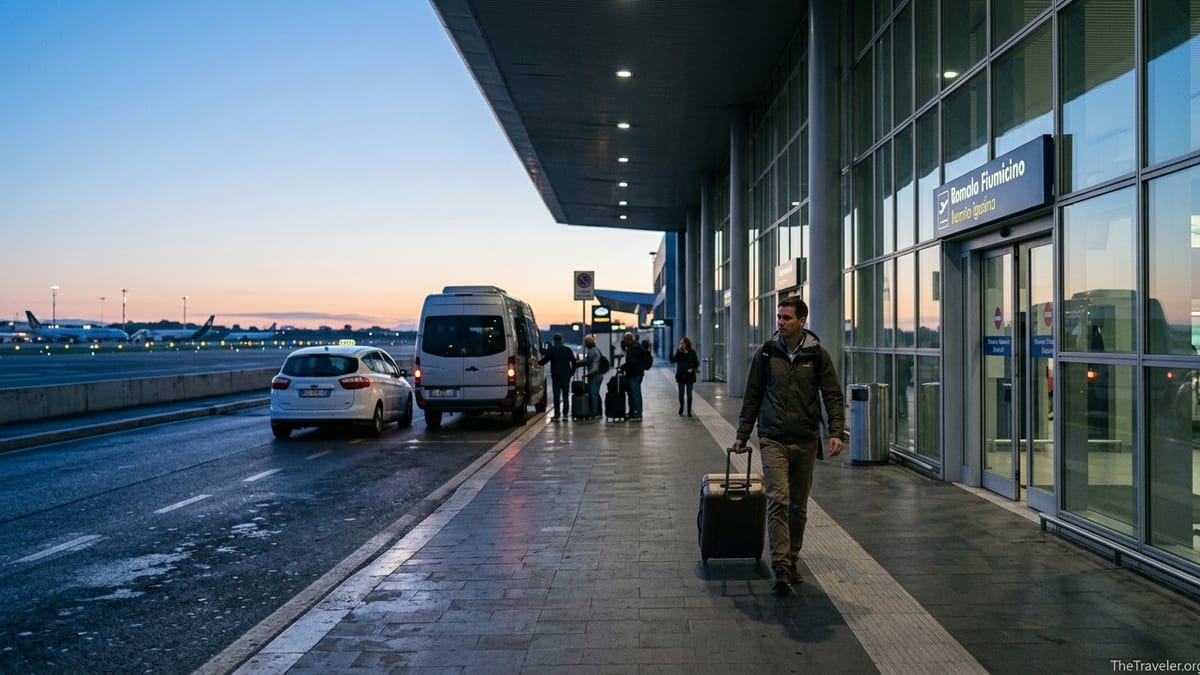
Understanding Fiumicino as a Place, Not Just an Airport
For many visitors, “Fiumicino” means only the airport terminal. In reality, it is also a coastal town of around 80,000 residents with neighborhoods stretching along the Tiber River and the Tyrrhenian Sea. You will see working fishing boats, family-run trattorie grilling the catch of the day, and locals walking their dogs on the waterfront promenade in Isola Sacra. Staying here is less about ancient ruins and museums and more about low-key, everyday Italian life at the edge of Rome.
Most airport hotels cluster in two zones: directly at or within walking distance of the terminal, and in or around the Isola Sacra / Fiumicino town area a 10 to 15 minute drive away. For example, Hilton Rome Airport is linked to the terminals by a covered walkway, while hotels like Best Western Hotel Rome Airport or Hotel Isola Sacra sit in residential streets with restaurants and small supermarkets nearby. When you choose to “stay in Fiumicino,” you should decide which experience matters more: being steps from check-in, or having a taste of a real Italian town on the sea.
The town’s location also makes it a practical base if you are connecting between flights and trains. Trenitalia’s Fiumicino Aeroporto station sits inside the airport itself, with the Leonardo Express and regional trains running into Rome. You can land in the afternoon, check into a nearby hotel, then head into the city for a quick dinner in Trastevere before returning to sleep beside the airport. That blend of convenience and limited sightseeing is what attracts many travelers to Fiumicino.
Key Advantages of Sleeping in Fiumicino Before a Flight
The major reason travelers choose Fiumicino over central Rome the night before a flight is to remove stress on departure day. First morning flights from FCO can leave around 6:00 or 7:00 a.m. If you are staying near the Pantheon or in Trastevere, that can mean a taxi pick-up at 3:30 or 4:00 a.m. and a quiet hope that an early-morning driver will show up on time. By contrast, if you are checked into a hotel such as Hilton Rome Airport or another property five to ten minutes away by shuttle, you simply wake up, ride the elevator, or catch a short minibus and walk to security.
Staying near the airport also gives you a buffer against delays and strikes. Italy occasionally sees rail or local transport strikes that can affect trains and some bus services. If you sleep in Fiumicino the night before, you can often walk to the terminal or rely on the hotel’s own shuttle, rather than depending on a regional train or a bus from Termini that might be reduced or canceled. For families or nervous flyers, that feeling of physical proximity can be worth as much as the room rate itself.
There is also a financial angle. The official flat taxi fare between Fiumicino Airport and destinations inside Rome’s historic center is in the mid 50 euro range, which can be good value for four people, but much less so if you are a solo traveler arriving late. If your plane lands at 23:00 and you take that taxi into the city, you are spending more than the cost of a typical airport-hotel shuttle and a simple hotel in Fiumicino. In that scenario, many travelers decide to keep things simple: check in near the airport, sleep, then start their Rome sightseeing fresh the next morning after a 30 minute train ride into Termini.
The Real Downsides Compared With Staying in Central Rome
The clearest downside to staying in Fiumicino is that you are not in Rome proper. If you dream of strolling past the Trevi Fountain at night, hearing street musicians near Piazza Navona, or having a last gelato with the Colosseum lit up in the distance, you will not get that from an airport hotel. Even a charming B&B in Fiumicino town cannot replace a final evening walk along Via del Corso or across the Tiber to Trastevere.
Logistics can also become more complicated if you underestimate travel time. While the Leonardo Express and regional trains usually take around 30 to 35 minutes from the airport to Termini, you still need to factor in time to get from your hotel in Fiumicino to the airport station, buy tickets or validate them, and perhaps connect to the metro or buses inside Rome. A traveler staying near the Isola Sacra area might spend 15 minutes in a hotel shuttle, then 15 minutes at the station, then 35 minutes on the train, plus another 10 minutes onto the metro. In practice, what looked like a quick trip can consume nearly an hour and a half each way.
Finally, the atmosphere around the airport can feel anonymous. Chain hotels, parking lots and shuttle buses do not have the magic of cobblestoned streets and Renaissance facades. If your trip to Italy is short, every hour in a generic airport zone is an hour that is not spent among Rome’s landmarks. For some travelers, especially those visiting Italy for the first time, that trade-off is too high and they prefer to accept a very early taxi or private transfer from the city instead.
Hotel Options and What You Actually Get for Your Money
Fiumicino gives you a spectrum of hotel styles and prices, from large international chains attached to the terminal to modest family-run places in town. At the top end, Hilton Rome Airport typically sells rooms at prices comparable to mid-range hotels in central Rome. For that price you gain a covered walkway directly into the terminal, a 24-hour front desk used to handling jet-lagged guests, and facilities like an on-site restaurant and fitness room. For travelers who value a seamless, low-friction airport experience, this is often the benchmark property.
Move a few minutes away, into Fiumicino town and the Isola Sacra area, and prices usually fall. Hotels such as Best Western Hotel Rome Airport or Hotel Isola Sacra often advertise airport shuttles for a small fee per person, with timetables that start early in the morning and run until late evening. A typical pattern is shuttles leaving the hotel every hour between about 5:00 and 23:00, with a journey time of around ten minutes. This setup can suit couples or families who want a quieter environment and perhaps a balcony, garden or pool while still being airport-convenient.
There are also small guesthouses and B&Bs in Fiumicino’s residential streets. These might not have their own shuttle, so you will rely on local taxis for the short hop to the terminal, with fares often in the 25 euro range for the seven kilometer ride between town and airport. What you gain instead is a more personal space, where you might chat with the owner over breakfast or walk a few minutes to a neighborhood pizzeria. When choosing, compare not only nightly rates but also what the transfer will cost and how early in the morning the hotel can actually get you to your check-in desk.
Transport Trade-Offs: Taxis, Trains, Buses and Shuttles
Whether staying in Fiumicino or in Rome, your choice of transport shapes the experience. From the airport itself, the Leonardo Express is the fastest straightforward link to Termini, taking around 30 minutes, with tickets priced in the mid teens per person. That can be ideal if you travel light and your hotel is within walking distance of Termini. For budget-minded travelers or those staying near other stations like Ostiense or Tiburtina, slower regional trains and several airport bus companies run between FCO and different points in the city at lower fares, often under 10 euros per person.
If you base yourself in Fiumicino town, you will interact more with shuttles and local taxis. Many nearby hotels publish their shuttle timetables and prices on their own websites, with services running to and from Terminal 3. For example, a mid-range hotel on Isola Sacra might charge a small per-person fee each way, with kids under a certain age traveling free and payment added to your room bill. That can be much cheaper than taking a central Rome taxi at flat-rate prices, especially for solo travelers.
Taxis still have their place. Official white Rome taxis leaving the airport can take you inside the Aurelian Walls for a fixed fare in the mid 50 euro range, including luggage and four passengers. This is particularly reasonable for a group that wants to go directly to a hotel in the historic center. By contrast, if you are only going as far as Fiumicino town, you will use the local municipal taxis, which follow their own minimum fares, typically lower than the Rome city flat rate because the distance is short. In all cases, you should ignore unofficial drivers approaching you in the arrivals hall and head to the marked taxi ranks or pre-booked car service meeting points.
When Fiumicino Makes Sense and When It Does Not
The travelers who benefit most from sleeping in Fiumicino before a flight usually fall into a few clear categories. One group is those with very early departures, particularly transatlantic or long-haul flights where airlines ask you to arrive three hours before boarding. If your flight to New York leaves at 7:00 a.m., being able to walk from your hotel to check-in at 4:30 without worrying about traffic is a strong argument. Another group includes families with young children or older relatives who may find a long ride from central Rome to the airport at 4:00 a.m. exhausting.
Fiumicino also suits travelers connecting between different modes of transport. For example, someone arriving on a late intercontinental flight might sleep at an airport hotel, then catch a mid-morning high-speed train from Termini to Florence or Naples. In this pattern, you remove the stress of making a same-day connection and still reach your onward destination at a reasonable daylight hour. Likewise, if you have a rental car to return, staying near FCO allows you to drop the vehicle the evening before your flight, then take a shuttle back to your hotel and walk or ride to the terminal in the morning.
On the other hand, if your departure is in the afternoon or evening and you have not yet spent much time in Rome, choosing Fiumicino may shortchange your trip. Imagine a 17:00 flight home on a Wednesday. If you stay in central Rome on Tuesday night, you can enjoy a slow morning coffee in Campo de’ Fiori, visit one more church or museum, have lunch in the Jewish Ghetto, then take a 13:00 train from Termini and arrive at the airport around 14:00. In that case, moving to an airport hotel the night before would only add an extra hotel change without providing much extra security or comfort.
What It Feels Like: A Night in Fiumicino, Hour by Hour
To understand the trade-offs, it helps to imagine an actual evening. Picture a couple landing at FCO on a Friday at 21:30 after a connecting flight from Paris, with another flight to the United States at 7:10 the next morning. They clear passport control around 22:15, collect their luggage and walk along the corridor to the Hilton Rome Airport. Within 30 minutes of landing they are in their room. They have a quick shower, order a light snack from the bar, double check their boarding passes and sleep. At 4:30 they are in line at security, with no need to worry about trains or taxis at all.
Now picture the same couple deciding to sleep in central Rome instead. They pass through arrivals, find the taxi rank and join the queue. Even with smooth traffic, they might only reach a hotel near Piazza Navona around 23:30 or midnight. They then have a choice: either set a 3:30 alarm for a pre-booked car back to the airport, or sleep slightly longer and accept a tighter connection at the terminal. In exchange, they might enjoy one hour of walking through Rome at night and a drink on a small piazza, but they will do it while calculating how many hours of sleep remain.
For others, the picture is flipped. A solo traveler with a 15:00 departure might wake up in Rome, enjoy their final cappuccino in a bar near the Spanish Steps, take the late morning Leonardo Express, and arrive at the airport with time to spare. If instead they had moved to Fiumicino town the night before, they would wake up amid parking lots or residential streets, eat breakfast in a generic lobby, and have little to do except ride back to the terminal. In that scenario, the emotional value of remaining in Rome outweighs the small reduction in logistical risk.
The Takeaway
Choosing whether to stay in Fiumicino or in central Rome before your trip is ultimately a question of priorities. Fiumicino offers clarity and control: short shuttles, predictable transfer times, and the reassuring sight of the terminal from your hotel window. It is especially appealing if you have a very early flight, if you are traveling with children or heavy luggage, or if you are coordinating a complex connection between flights and trains. For many travelers, the peace of mind that comes from waking up just minutes from check-in is worth giving up one more night in the historic center.
On the other side of the equation are atmosphere and experience. A night in Rome before you leave can become one of the strongest memories of your trip: a final walk past illuminated monuments, a last plate of cacio e pepe in a crowded trattoria, a slow stroll through alleys where laundry hangs over your head. These are moments you will not find among the airport hotels and commercial zones of Fiumicino, even if the beach and fishing harbor bring their own, quieter charms.
The most practical approach is to look at your specific flight time, your tolerance for early-morning logistics, and who you are traveling with, then choose accordingly. If your flight leaves before 9:00 a.m., you have mobility issues, or you are anxious about making it to the airport on time, an overnight in Fiumicino is usually the safest and calmest option. If your flight leaves later in the day and you still have energy to explore, keeping your base in Rome and transferring directly from the city can give you the richest final hours of your Italian journey.
FAQ
Q1. Is it worth staying in Fiumicino for just one night before an early flight?
It can be worth it if your departure is before mid-morning, you value stress-free logistics, or you are traveling with children, older relatives or a lot of luggage.
Q2. How long does it take to get from Fiumicino town to central Rome?
Allow about one to one and a half hours each way, including a hotel shuttle or taxi to the airport, time at the station, and a 30 to 35 minute train ride to Termini.
Q3. Are Fiumicino airport hotels much cheaper than staying in central Rome?
Prices vary, but chain hotels attached to the terminal are often similar to mid-range city hotels, while small properties in Fiumicino town can be more budget-friendly.
Q4. Will I miss out on Rome’s nightlife if I stay in Fiumicino?
Yes, you will miss the historic center atmosphere at night. You can still take an afternoon or early evening train in for a last walk, but you will not sleep in the city.
Q5. Are airport shuttles from Fiumicino hotels reliable early in the morning?
Most airport hotels run early-morning shuttles on fixed timetables, but you should always confirm the first departure time and whether you need to reserve a seat.
Q6. Is it safe to arrive late at night and go straight to a Fiumicino hotel?
Arriving late is common at FCO and reputable airport hotels are used to late check-ins. Using official shuttles, licensed taxis and marked hotel transfers is considered safe.
Q7. Can I enjoy the beach if I stay in Fiumicino?
Many hotels in Fiumicino town and Isola Sacra are within a short walk or drive of the Tyrrhenian coast, where you will find local beaches and seaside restaurants.
Q8. Is it better to stay at a hotel inside the airport or in Fiumicino town?
Hotels attached to the terminal are best for absolute convenience, while places in town can feel more local and relaxed but require a short shuttle or taxi to the airport.
Q9. What is the taxi fare from Rome’s city center to Fiumicino Airport?
Official white Rome taxis charge a fixed fare in the mid 50 euro range between Fiumicino Airport and addresses inside the historic center, which suits groups and families.
Q10. Should I move to Fiumicino the night before if my flight leaves in the afternoon?
If your flight is later in the day and you still want to sightsee, it usually makes more sense to stay in Rome and travel to the airport by train, bus or taxi a few hours before departure.