


Germany is widely perceived as a safe and orderly country, but families considering relocation require a more granular, data-driven understanding of everyday safety. Evaluating crime risks, public security, road safety, environmental conditions, and child-specific issues provides a clearer picture of how safe family life in Germany is likely to be compared with other advanced economies.
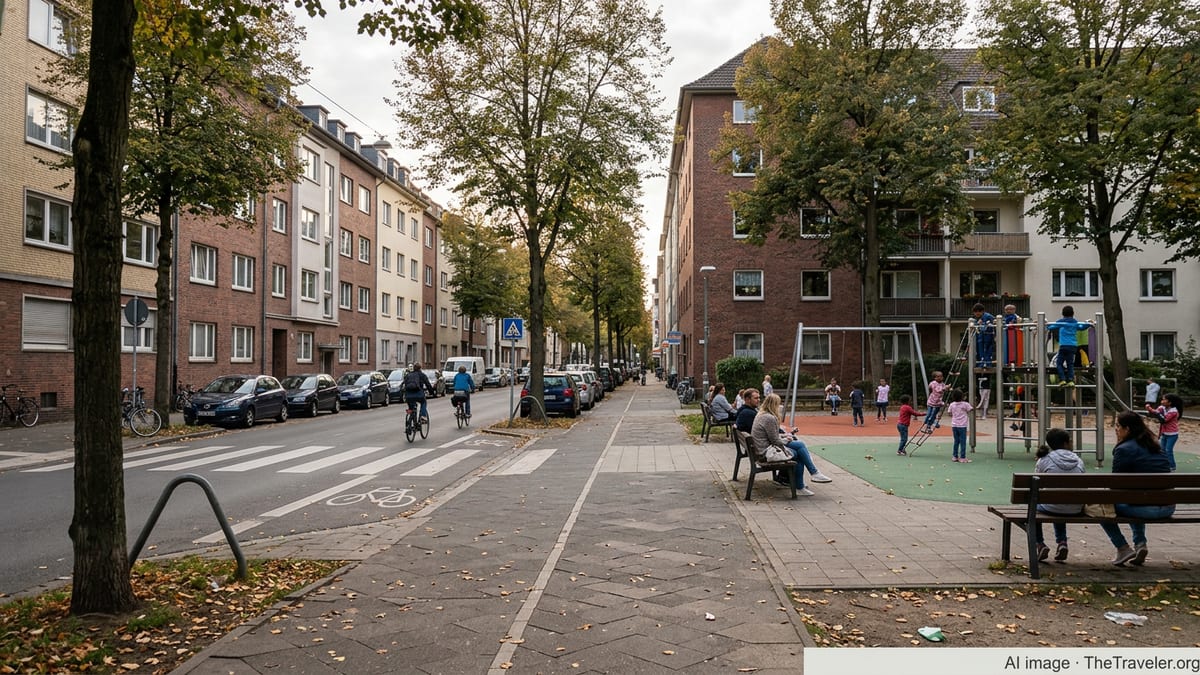
Overall Personal Safety Context in Germany
Germany is generally regarded as a low-risk destination by global standards, particularly when compared with many non-European countries. Crime and safety indicators typically place Germany among safer Organisation for Economic Co-operation and Development countries for residents, including foreign families. Homicide rates are low, large-scale violence is rare, and public authorities invest heavily in policing, surveillance, and rule enforcement.
Intentional homicide in Germany is estimated at well below 1 per 100,000 inhabitants, placing it significantly below global and European averages and much lower than figures seen in North America and many other regions. This low level of lethal violence is one of the clearest signals that Germany does not present systemic threats to physical safety for ordinary residents in day-to-day life.
Most security concerns that do arise for families are concentrated in specific contexts: petty crime in busy urban environments, occasional politically or ideologically motivated attacks, traffic risks, and localized disorder near nightlife or major events. For households that adopt standard urban safety practices and choose residential locations prudently, the baseline environment is comparatively secure.
Public confidence in law enforcement remains relatively high, and there is widespread use of emergency numbers, preventative policing, and victim support services. For relocating families, this institutional environment provides a strong safety net even when incidents do occur.
Crime Patterns Relevant to Families
From a relocation standpoint, the primary crime exposure for families in Germany concerns non-violent offenses such as theft, burglary, and vandalism, rather than serious interpersonal violence. Police statistics and comparative crime data indicate that violent crime does exist and has shown some fluctuation in recent years, but it remains modest relative to many other industrialized states.
In urban centers such as Berlin, Hamburg, Cologne, and Frankfurt, families will find higher rates of pickpocketing, bicycle theft, and opportunistic property crime, particularly in crowded transport hubs, tourist-heavy districts, and nightlife areas. These incidents typically involve loss of property rather than bodily harm, but they can be disruptive and stressful for newly arrived households. Standard risk controls such as secure door locks, well-lit building entrances, and caution with valuables in crowded spaces meaningfully reduce exposure.
Residential burglaries occur, though Germany’s rate is not exceptional in the European context and has seen periods of decline over the past decade amid improved home security measures. Suburban and small-town environments typically record noticeably lower burglary and street crime levels than dense inner-city districts. Families prioritizing safety can often reduce risk by choosing neighborhoods with lower recorded crime, greater residential stability, and active local community engagement.
Serious offenses such as robbery, aggravated assault, and sexual violence are relatively rare compared with many nations, but they are present and tend to concentrate around late-night entertainment zones, certain railway stations, and specific urban pocket areas. Families that avoid high-risk zones at night and educate teenagers about safe nighttime mobility practices can significantly limit exposure to these forms of crime.
Public Security, Terrorism Risk, and Social Tensions
Germany operates within a heightened European security environment in which terrorism and politically motivated extremism are treated as persistent, though statistically low-probability, risks. Public advisories frequently classify Germany as a location where residents should exercise increased caution regarding potential terrorist attacks. These advisories reflect concern about both Islamist-inspired actors and far-right extremists, not a day-to-day breakdown of security.
In recent years, Germany has experienced isolated but high-profile attacks involving knives, vehicles, and firearms in public spaces, occasionally resulting in multiple casualties. Events such as the Solingen festival stabbing and vehicle attacks in cities like Magdeburg and Munich illustrate that small-scale acts of violence can occur even in otherwise safe environments. For families, the practical takeaway is that mass-casualty events are rare but not impossible, and that vigilance in large crowds and at symbolic locations is advisable.
German security services have also disrupted plots and prosecuted individuals and groups preparing attacks on migrants, political institutions, or symbolic targets. Law enforcement agencies maintain extensive surveillance powers and devote substantial resources to monitoring extremist milieus, including both Islamist networks and radical right-wing groups. While this underlines that extremist currents exist, the operational capability of the security services helps keep the overall risk level for ordinary residents relatively low.
Social tensions around immigration, integration, and political polarization occasionally manifest in demonstrations, counter-protests, and isolated hate crimes. Large urban rallies and protests can create localized security disruptions, though they rarely lead to serious harm for bystanders if basic avoidance strategies are followed. Families relocating to Germany should factor occasional demonstrations and heightened police presence into their understanding of urban public life but need not see them as a systemic threat to household safety.
Road Safety and Everyday Mobility Risks
Road safety is a central component of family risk assessment in Germany, particularly for households that expect to drive frequently or have children walking and cycling independently. Germany’s road fatality rate sits markedly below the global average and typically remains better than or in line with European Union averages, with around 30 to 35 road deaths per million inhabitants in recent years compared with an EU figure in the mid-40s per million. This places Germany among the safer driving environments internationally.
Over the past several decades, total road deaths in Germany have been reduced dramatically from over 20,000 annually to fewer than 3,000 per year, despite growth in vehicle numbers and road use. This improvement reflects advances in vehicle safety technology, strict enforcement of drunk-driving and seat-belt rules, and ongoing investment in road infrastructure. For families, this history of continuous safety optimization is a positive structural factor that reduces long-term exposure to severe traffic accidents.
The German Autobahn network is widely known for segments without general speed limits, which can concern relocating parents. Accident data indicate that, per kilometer driven, motorways including Autobahns are not more dangerous than other road categories and may in fact record lower accident and fatality rates than rural roads. However, the consequences of high-speed collisions can be serious. Families who drive can mitigate risk by adhering to recommended speed limits where they apply, avoiding aggressive lane changes, and using vehicles with strong safety ratings and modern driver-assistance systems.
Urban transport environments present a different risk profile: dense intersections, mixed traffic with cyclists and pedestrians, and frequent public transport. Germany’s major cities have extensive pedestrian zones, cycling infrastructure, and regulated crossings, which support safer independent mobility for older children and teenagers. Nonetheless, traffic incidents involving vulnerable road users do occur, especially at complex junctions. Educating children on local traffic rules, ensuring visibility with reflective clothing, and favoring routes with protected bike lanes and signalized crossings are important risk-reduction tactics.
Safety in Public Spaces, Schools, and Child-Focused Environments
Safety standards in schools, childcare centers, and organized youth activities in Germany are generally high and heavily regulated. Buildings are subject to regular inspections for fire safety, building code compliance, and emergency readiness. Staff in schools and kindergartens are typically trained in supervision, basic first aid, and safeguarding protocols. As a result, severe incidents in formal child-focused environments are rare.
Bullying, youth violence, and occasional aggression among students exist, particularly in larger urban schools, but these are usually handled within structured disciplinary and counseling frameworks. Many schools deploy social workers, psychologists, or specialized staff to address conflict and integration issues. Parents can expect formal channels to discuss concerns about classroom safety, bullying, or harassment, and can usually change schools within the public system if a particular environment proves unsuitable.
Public playgrounds, parks, and sports facilities are widespread and typically well maintained. Equipment must meet European safety standards, and municipalities conduct periodic inspections for structural integrity and hazard mitigation. While minor injuries from falls and play are inevitable, systemic safety failures in such settings are uncommon. Families should nonetheless evaluate local playgrounds and parks for practical factors like lighting, visibility, and proximity to busy roads when choosing a neighborhood.
Public transport is widely used by adolescents and adults, and it is a relatively safe environment by international standards, though not entirely free from risk. Harassment, pickpocketing, and occasional anti-social behavior occur, especially at night or around major hubs. For older children using buses, trams, or suburban trains, agreeing on safety routines such as traveling with friends when possible, staying near well-lit areas on platforms, and knowing emergency contact procedures is recommended.
Environmental, Disaster, and Infrastructure Safety
From a family relocation perspective, environmental and disaster-related safety risks in Germany are relatively moderate. The country is not subject to major seismic risk, and there is no exposure to tropical cyclones or large-scale volcanic activity. The most significant natural hazards tend to be localized flooding, storms, and occasional heatwaves. In recent years, severe floods in parts of western Germany have highlighted vulnerabilities in certain river valleys and low-lying communities, prompting calls for improved flood defenses and warning systems.
Air and water quality are generally high compared with many industrialized countries, though urban areas can experience periods of elevated air pollution due to traffic and industrial activity. For most families, these episodes remain within or close to European regulatory limits, but households with members who have respiratory conditions may wish to monitor local air quality indices and select housing further from major traffic arteries.
Building and fire safety regulations in Germany are strict and broadly enforced, reducing the risk of catastrophic fires, collapses, or other structural emergencies. Multi-family buildings are typically equipped with smoke detectors and defined escape routes, and new construction must meet stringent safety and energy-efficiency codes. For families, due diligence around housing choice should still include checking for functioning smoke alarms, multiple exit routes, and adequate stairwell lighting.
Food safety standards and consumer protection regulations are strong, limiting exposure to contaminated products or unsafe consumer goods. Recalls are publicized and enforced, and there is a culture of regulatory compliance in manufacturing and retail. These frameworks help limit everyday risks that can disproportionately affect children, such as unsafe toys, poorly labeled allergens, or contaminated food products.
Regional and Urban–Rural Safety Variations
Germany exhibits notable geographic variation in safety conditions, which families should factor into relocation planning. Major metropolitan areas offer extensive services and opportunities but also bring higher exposure to petty crime, protest activity, and nightlife-related disorder. By contrast, small towns and rural regions typically have very low recorded crime, quieter public spaces, and lower traffic density, but may offer fewer youth activities and public transport options.
Within cities, neighborhood-level differences can be pronounced. Central business districts and entertainment quarters tend to register higher rates of theft and late-night disturbances, while residential suburbs, especially those oriented toward families, often show lower crime and more stable community networks. Indicators such as visible street cleanliness, building maintenance, lighting, and the presence of families with children in public spaces can serve as practical proxies for local safety conditions.
Eastern and western parts of Germany share broadly similar safety standards, though historical, socioeconomic, and demographic factors can influence specific local patterns of crime or social tension. Former industrial areas undergoing economic transition may show pockets of higher property crime or vandalism, while affluent suburbs around large cities tend to report fewer incidents but may face issues like high-speed commuter traffic.
Families relocating for work assignments often have some flexibility in neighborhood choice even when the city itself is fixed. In practice, many international families cluster in districts known for good schools, parks, and perceived safety, which can further reinforce secure conditions through active community engagement and informal mutual oversight among parents.
The Takeaway
When assessed against global and European benchmarks, Germany offers a comparatively safe environment for families relocating from abroad. Intentional homicide and serious violent crime rates are low, terrorism and extremist violence remain statistically rare despite visible security concerns, and road safety has improved dramatically over time, placing Germany among the safer motoring environments worldwide. Stringent building, consumer, and environmental regulations further reduce many everyday risks that can affect children and vulnerable residents.
At the same time, Germany is not risk free. Rising or fluctuating crime indicators in some years, isolated high-profile attacks, petty crime in busy urban areas, traffic hazards for cyclists and pedestrians, and localized natural hazards such as flooding all require realistic recognition and active management by relocating families. Safety outcomes can vary considerably between city centers and suburban or rural areas, and even between neighborhoods within the same city.
For decision-makers, the key conclusion is that Germany is broadly suitable and generally safe for family relocation, provided that households take standard precautions associated with life in a modern European country. Careful neighborhood selection, awareness of local crime and traffic conditions, adherence to basic security routines, and engagement with school and community networks collectively help ensure that the already favorable safety baseline translates into a secure daily reality for children and adults alike.
FAQ
Q1. How does Germany’s overall safety compare with other Western countries for families?
Germany generally records lower homicide and road fatality rates than many Western countries, providing a comparatively secure environment for daily family life.
Q2. Are German cities safe for children and teenagers to move around independently?
Most German cities are safe enough for age-appropriate independent mobility, especially in daylight, provided children are instructed on traffic rules and basic urban safety.
Q3. Is terrorism a major concern for families living in Germany?
Terrorist attacks are rare but possible. Germany treats the threat as persistently elevated, yet for most residents the absolute risk in daily routines remains low.
Q4. How common is violent street crime in Germany?
Serious violent street crime exists but is relatively uncommon compared with many countries. Families are more likely to encounter petty theft than severe violence.
Q5. Are German roads safe for family driving and school commutes?
Germany has one of the stronger road safety records globally, though caution is still required on high-speed roads and at complex urban intersections.
Q6. Is public transport safe for school children in Germany?
Public transport is widely used and generally safe. Risks primarily involve occasional harassment or theft, which can be mitigated with clear safety guidelines.
Q7. How safe are schools and playgrounds in Germany?
Schools and playgrounds are subject to strict safety standards and inspections, so serious incidents are rare, though minor injuries and occasional bullying still occur.
Q8. Are there specific German regions that are noticeably safer for families?
Suburban and small-town areas across many regions typically show lower crime and traffic density than inner-city districts, offering particularly family-friendly safety levels.
Q9. What environmental or natural hazards should families consider?
The main environmental risks are localized flooding, storms, and heatwaves. Germany has very limited exposure to earthquakes or other large-scale natural disasters.
Q10. Can safety concerns be substantially reduced through neighborhood choice?
Yes. Selecting residential areas with lower recorded crime, good lighting, family-oriented amenities, and active communities can significantly improve perceived and actual safety.