


More news on this day
Canada’s latest tightening of asylum and visa rules is reverberating across West Asia, complicating travel plans for citizens and residents of Qatar, Saudi Arabia, India, the UAE, Bahrain, Bangladesh, Israel and other regional states who have long relied on Canada as a key tourism, study and migration destination.
Get the latest news straight to your inbox!
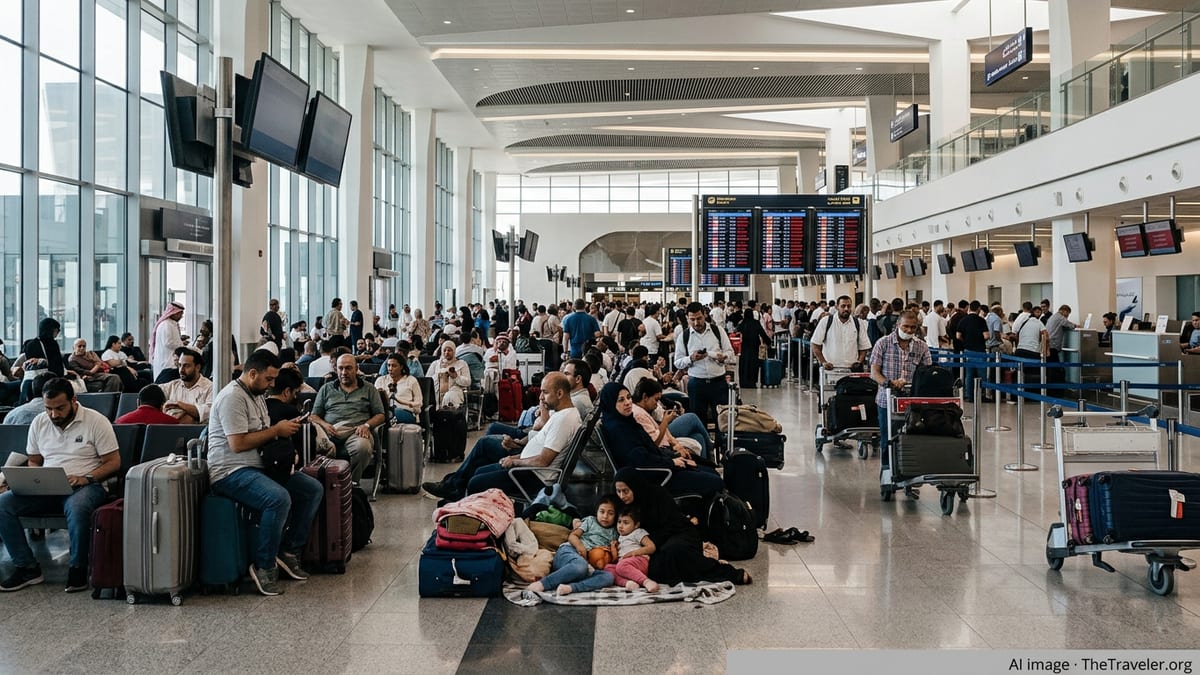
New Canadian Asylum Framework Targets Rising Claims
Recent measures in Ottawa are reshaping how people from a broad swath of West and South Asia approach travel to Canada, particularly those whose trips might previously have doubled as a pathway to seek asylum. According to published coverage in Canadian and international media, a new federal law adopted in April 2026 introduces stricter eligibility criteria for refugee protection, aims to fast-track the rejection of claims judged to be manifestly unfounded, and grants officials wider powers to bar or remove people deemed to be abusing the system.
Advocacy groups and policy analysts note that the reforms build on earlier legislative proposals from 2024 and 2025, when the government first floated plans to curb what it described as a surge in weak or opportunistic claims. One widely cited estimate suggests that as many as 30,000 asylum applicants could be affected by the latest package, including a significant number of nationals from India and Bangladesh, which in recent years have ranked among the top sources of refugee claims in Canada.
Publicly available statistics show that asylum filings climbed sharply through 2023 and 2024, putting pressure on Canada’s refugee determination system. Observers say this created political space for tougher rules that narrow access for people who arrive on temporary visas and then seek protection, a pattern that has become particularly visible among visitors and students from parts of West Asia and the Indian subcontinent.
Legal commentators caution that, while the reforms are framed as targeting abuse, they will also inevitably raise the bar for those with genuine protection needs who travel on visitor, work or study permits. For many would-be travellers, the perception that the door is closing is already influencing itinerary choices, transit routes and even whether to apply for a Canadian visa at all.
Impact on Travellers from Qatar and the Gulf
For citizens and residents of Qatar and its Gulf neighbours, Canada has long been both a leisure destination and a hub for education and business. In parallel, Gulf states have been adjusting their own mobility policies, with Qatar, Saudi Arabia, the United Arab Emirates and Bahrain all rolling out new residency categories, tightening certain visit-visa channels and experimenting with digital permitting systems, according to recent industry reports.
Travel agents serving Doha, Riyadh, Dubai and Manama report that the combination of stricter Canadian asylum rules and evolving Gulf visa regimes has created an unusually complex landscape for cross-border movement. Travellers now need to factor in not only Canada’s assessment of their risk profile but also how prior residence in Gulf states, gaps in travel history or changes of status might be interpreted in future visa applications.
Qatar’s own entry framework, which offers visa-free or visa-on-arrival access to many nationalities while reserving stricter financial and documentation checks for others, illustrates how layered the picture has become. Residents in Qatar from countries such as India, Pakistan or Bangladesh can face more intensive scrutiny both when entering Qatar and when applying onward for Canadian visas, especially amid rising political attention in Ottawa to visitor-to-asylum pathways.
Regional travel advisories circulated within the aviation and hospitality sectors indicate that some Gulf-based travellers are delaying or cancelling Canadian trips due to uncertainty about how the new rules will be applied in practice. Others are reportedly redirecting plans toward Europe, East Asia or domestic tourism within the Gulf, at least until there is greater clarity on approval rates under the updated Canadian system.
South Asian Hubs Face Added Hurdles
The ripple effects are particularly acute in South Asian hubs that maintain deep migration links with both West Asia and Canada. India and Bangladesh stand out: international data compiled by organisations such as the OECD show that nationals of these two countries have become leading sources of asylum claims in Canada in recent years, even as both nations remain key suppliers of labour and students to Gulf economies.
In response, Canada has already moved to tighten several visa channels from the region. Media reports from 2024 and 2025 highlighted heightened scrutiny of study and visitor visa applications from India and Bangladesh, with officials citing high rates of subsequent asylum claims. The latest asylum law effectively codifies a more restrictive stance, creating a feedback loop in which high claim volumes lead to tougher rules, which in turn feed perceptions of risk and urgency among would-be migrants.
Travel agencies in major South Asian cities note that many clients who once saw a Canadian visitor visa as a relatively low-risk way to explore long-term options now face intense document checks, longer processing times and a greater likelihood of refusal. Those with family ties in Canada, or with previous stays in Gulf states such as Qatar, Saudi Arabia or the UAE, often encounter additional questions about intent to return.
For Bangladeshis and Indians working in West Asia, the situation is even more complex. Their mobility is now shaped by three overlapping systems: restrictive immigration and nationality regimes in Gulf host countries, tighter outbound controls or vetting from their home governments, and Canada’s more guarded stance on asylum and temporary visas. Each layer adds friction to what was once a relatively straightforward decision to book a ticket to Toronto, Vancouver or Montreal.
Israel, Security Concerns and Shifting Perceptions
Israel, another key West Asian state with longstanding links to Canada, is also caught up in the shifting asylum and travel environment. While Israeli citizens typically enjoy relatively high levels of visa access globally, heightened security concerns and the broader politicisation of migration in Western democracies are reshaping how applications from the region are perceived.
Analysts point out that Canada’s new asylum rules do not explicitly target any single nationality. Instead, they focus on procedural tools and categorisations that can indirectly affect applicants from countries associated with complex security or human rights narratives, including Israel and its neighbours. Travellers from Israel who once viewed Canada chiefly as a tourism or business destination are increasingly aware that future asylum pathways are narrowing, even if they have no intention of seeking protection.
At the same time, wider debates in North America and Europe about “safe country” designations and differentiated treatment for asylum seekers from various regions have drawn attention to how states such as India, Bangladesh and Israel are labelled in policy documents. European legislative proposals listing several of these states as safe countries of origin, for example, underscore a broader trend of Western governments seeking to reduce recognition rates for claims by their nationals.
For travel planners, tour operators and airlines serving Tel Aviv and other gateways, this evolving discourse matters. Perceptions of how Canadian authorities view different passports can influence everything from marketing strategies to the choice of transit hubs, particularly for mixed-nationality groups that include travellers from across West Asia and South Asia.
Travel Industry Braces for a Complex Summer
Across West Asia, the immediate consequence of Canada’s asylum tightening is a spike in uncertainty. Airlines, travel agencies and corporate mobility managers in Qatar, Saudi Arabia, the UAE, Bahrain, India, Bangladesh and Israel are revising risk assessments and advising clients to build in more lead time and documentation for any trip involving Canada.
Industry bulletins suggest that some carriers are preparing for a modest softening in Canada-bound demand from certain markets, offset by growing interest in alternative destinations perceived as more predictable. For tour operators specialising in educational fairs, medical tourism and summer travel packages, the challenge lies in explaining to prospective travellers that visa approval can no longer be taken for granted, even for those with strong financial profiles and established travel histories.
Policy experts observe that Canada is far from alone in recalibrating its approach to asylum and migration. From the Gulf to Europe and North America, governments are moving toward more selective, security-focused frameworks that prioritise labour-market needs while constraining humanitarian channels. For travellers across West Asia, Canada’s latest steps are another sign that the era of relatively frictionless mobility is giving way to a patchwork of stricter rules, closer coordination among states and higher stakes at every border.