


Grand Cayman Crystal Caves has quickly become one of the island’s headline land attractions, sitting in the lush North Side far from the cruise port crowds. The photos look spectacular, but the reality on a tight vacation schedule is more nuanced. This guide walks through cost, travel time, what the caves are really like, and how the experience compares with Grand Cayman’s famous marine attractions so you can decide whether Crystal Caves deserves a place in your itinerary.
Get the latest updates straight to your inbox!
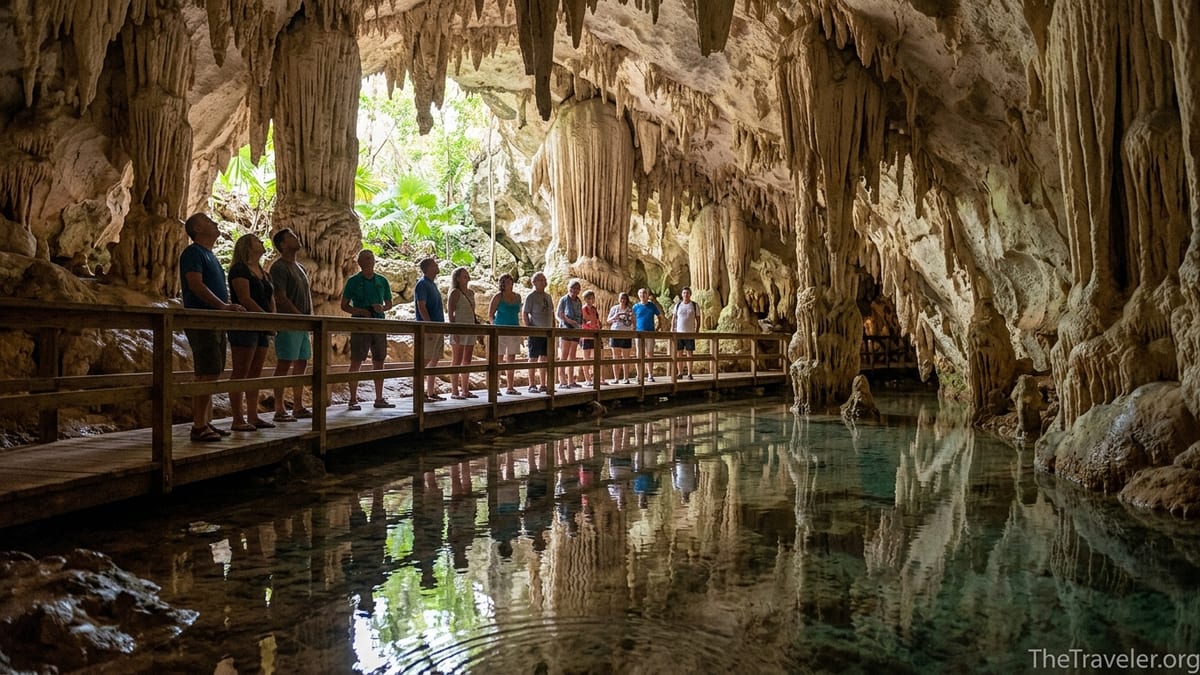
Where Grand Cayman Crystal Caves Fits in Your Itinerary
Crystal Caves is a guided walking tour through three different limestone caves set in tropical forest on Grand Cayman’s quieter North Side. It is very much a land-based, nature-and-geology experience rather than a beach or water activity. Visitors follow a guide along a compact nature trail and then enter an open-ceiling cave, a roots-filled cave where tree roots hang dramatically from the ceiling, and a lake cave with clear, still water reflecting stalactites overhead.
The attraction runs its own guided tours seven days a week, typically grouped and scheduled by start time. You cannot simply wander on your own, so you will need to reserve a specific slot and plan the rest of your day around it. For many travelers this makes Crystal Caves a half-day anchor activity paired with lunch at the onsite Treehouse Restaurant or with a stop at nearby attractions such as the Queen Elizabeth II Botanic Park or Rum Point later in the day.
Because the caves sit inland on the North Side, visiting them feels very different from staying around Seven Mile Beach. The drive takes you past small residential areas, local eateries and stretches of quiet coastline before turning into the forested entrance road. For travelers who enjoy seeing more than resort strips and shopping streets, this inland detour can be as appealing as the caves themselves.
If you are visiting on a cruise, Crystal Caves competes directly with headline water activities like Stingray City, snorkeling boat trips and beach breaks. Time in port is limited and there is usually only room in a single day for one major excursion. Understanding exactly what you get for the time and money invested in Crystal Caves is key before you commit.
Ticket Prices, Tour Length and Overall Value
As of mid 2026, standard admission for the Cayman Crystal Caves guided tour is advertised at about 45 US dollars for adults and 35 US dollars for children 12 and under. Babies and toddlers under four are usually free. These prices cover the guided cave experience and access to the nature trail area but do not include transportation from your hotel or the cruise port.
The core guided tour inside the caves runs for roughly 1.5 hours. This typically includes a short orientation, the walk along the trail and time within each of the three caves. In practice, visitors should plan about two hours on site to allow for check-in, restroom stops and photo pauses. If you add transportation from the west side of the island, the full outing often takes around four hours door to door.
For many travelers, this cost feels comparable to other organized tours on Grand Cayman. A typical three-stop Stingray City, reef snorkel and Starfish Point boat excursion, for example, often falls in the 60 to 90 US dollar range per adult depending on the operator and inclusions. Beach days at Seven Mile Beach clubs may cost less per person but can add up once you factor in chair rentals, food, drinks and a taxi each way.
Value therefore depends heavily on your interests. If you or your children are fascinated by caves, geology or photography, spending roughly 45 US dollars for an in-depth, well-maintained cave system in the Caribbean, complete with a knowledgeable local guide, often feels like a solid return. If your dream of Grand Cayman centers on turquoise water and marine life, the same outlay may be better directed toward a boat trip or snorkeling tour instead.
Travel Time, Transport Logistics and How Busy It Feels
Crystal Caves lies near Old Man Bay on the North Side of Grand Cayman. Driving from the hotel areas around Seven Mile Beach or from George Town cruise tender terminals typically takes around 40 to 50 minutes each way in normal traffic. This is along paved but sometimes narrow roads that pass through Bodden Town and the quieter eastern districts.
The attraction offers shuttle packages that bundle round-trip transportation from the western districts, including major hotels on Seven Mile Beach and the George Town area, with the cave tour itself. These shuttle options generally add to the per-person cost but remove the stress of driving on the left, navigating unfamiliar roads and timing your arrival to a specific tour slot. Cruise passengers whose ship shore excursion program sells a “Cayman Crystal Caves Tour” will usually have transportation and timing handled for them as part of a half-day outing.
Visitors who rent a car gain more flexibility. A common pattern for independent travelers is to depart Seven Mile Beach in the morning, tour the caves in a late-morning time slot, have lunch at the Treehouse Restaurant overlooking the forest canopy, and then continue on to locations such as Rum Point, Starfish Point or the East End blowholes before looping back to the west in the afternoon. Factoring in driving, this shapes up as a relaxed full-day circuit of the island’s quieter side.
In terms of crowd levels, Crystal Caves can feel pleasantly uncrowded compared with Grand Cayman’s marine hotspots. Tour groups are staggered, and group sizes are generally moderate rather than huge bus loads. Even when several groups are on site, you move sequentially through the caves, so you are rarely competing with large numbers of people for views and photos in the same chamber. That said, prime mid-morning and mid-afternoon slots during peak season can still sell out, so advance reservations are important if you are traveling between December and April or during holiday weeks.
Cave Scenery, Photography Potential and Rainy-Day Pros and Cons
The main reason people travel across the island to Crystal Caves is the scenery. Inside, you will see classic limestone cave formations: stalactites hanging like icicles from the ceiling, stalagmites rising from the floor, columns where the two have joined, curtains of flowstone and occasional delicate soda-straw formations. In the lake cave, the still, clear water creates mirror-like reflections that are a highlight for photographers.
One of the signature photo spots is in the roots cave, where thick roots from tropical trees above push down through the openings and weave into the rock, backlit by daylight filtering through the entrance. With a modern smartphone camera, you can capture striking images here, especially if you steady your hands in the low light. A small mirrorless or DSLR camera with a fast lens around 24 to 35 millimeters can handle the darker sections even better, though flash is generally discouraged to protect both the cave environment and the experience for other visitors.
Because you are both outdoors and underground, Crystal Caves works relatively well in mixed or rainy weather. Light rain does not usually cancel tours, and being inside the caves keeps you sheltered from showers for much of the time. On days when offshore winds make boat excursions choppy and some snorkeling trips are canceled, the caves can be a reliable alternative activity. It is still wise to bring a light rain jacket or poncho for the walk between caves and for waiting areas outside.
On the other hand, the caves are not air-conditioned, and on very humid days the combination of warm air and walking on uneven terrain can feel a little sticky. The paths and steps may also become damp and slightly slippery after heavy rain, so closed-toe shoes with good grip are recommended even if you usually wear sandals at the beach. Guests with balance issues should use handrails where provided and move slowly on any wet or glossy surfaces underground.
Is Crystal Caves Good for Families and Cruise Passengers?
Crystal Caves markets itself as family friendly and is included as a family excursion option by several major cruise lines. In practical terms, the experience tends to work best for school-age children and teens who can manage 1.5 hours of guided walking and listening to explanations about geology, local history and ecology. Younger children may enjoy the novelty of being in a cave, spotting bats and looking for shapes in the rock formations, but they can also become restless if they are not used to structured tours.
Strollers are not suitable inside the caves due to steps, uneven surfaces and narrow passages. Parents of toddlers should plan on baby carriers or be prepared to carry children for short stretches. Children under four are generally allowed on the tour at no charge, but families should realistically assess whether their child will tolerate the darker spaces and echoing sounds of a cave environment. The tour is well lit, but some sections are naturally dim, and the guide will often ask for quiet while explaining features or while bats are nearby.
For cruise passengers, the key question is time. A typical ship call in Grand Cayman may give you six to eight hours in port, but tendering off the ship and back can consume around an hour each way on busy days. When you add 40 to 50 minutes of drive time each way to the caves plus the tour itself, Crystal Caves can easily fill your entire practical shore window, leaving little or no time for the beach or shopping in George Town afterward.
Cruisers who choose the caves usually do so through an organized ship excursion that guarantees return-to-ship timing. A common real-world pattern is a morning Crystal Caves tour with transport included, returning to the port by early afternoon. This works well if you have visited Grand Cayman before or if you prioritize unique land experiences over water. First-time visitors who dream of swimming with stingrays or snorkeling pristine reefs often feel that dedicating a rare port day solely to caves is a missed opportunity.
Crystal Caves vs Grand Cayman’s Marine Attractions
Grand Cayman is world famous for its marine attractions, particularly Stingray City, the shallow North Sound sandbar where southern stingrays gather around visiting boats. Typical Stingray City excursions bundle time in the waist-deep sandbar with a snorkel stop over coral and sometimes a visit to Starfish Point. These trips run several times per day and depart from marinas along Seven Mile Beach, from Camana Bay or from North Sound docks, usually involving a 20 to 30 minute boat ride to the sites.
When comparing Crystal Caves with a marine tour, think about the type of memories you want from your trip. A cave tour delivers striking underground visuals, close looks at bats and cave formations, and a sense of exploring a hidden interior landscape of the island. A Stingray City or reef snorkeling trip delivers interaction with marine life, open sea views, saltwater swims and, often, a more kinetic adventure, especially when the boat ride includes music and commentary.
Cost-wise, cave tours and quality marine tours are broadly similar for adults. The difference lies more in time allocation and physical comfort. Travelers who are not strong swimmers, are nervous about boat motion, or are traveling with a family member who refuses to get on a small boat may find Crystal Caves the better choice. Conversely, guests who are comfortable in the water and have never experienced wild stingrays or tropical reefs often rank a good Stingray City trip as the single most memorable part of their time in Grand Cayman.
Because water conditions matter at sea, some visitors sensibly plan the caves for days when winds or waves look unfavorable. Winds from certain directions can make North Sound choppier and may cause tour operators to cancel or shorten boat trips. The caves operate more consistently across weather conditions, so they can be a smart backup for days when ocean activities are disrupted. Many repeat visitors design flexible itineraries where, if marine conditions are perfect, they book last-minute boat trips and leave Crystal Caves for a return trip if it does not fit.
Who Will Love Crystal Caves, and Who Might Prefer Something Else
Based on recent visitor patterns and feedback, certain traveler profiles are especially likely to appreciate Crystal Caves. Nature enthusiasts who enjoy slower-paced, guided experiences often come away happy, particularly if they combine the caves with the nearby botanic park for a full day focused on Cayman’s terrestrial flora and fauna. Amateur photographers find the contrasting light and shapes underground rewarding, especially during less crowded tour times when they can linger briefly at key viewpoints.
Families with children interested in science or geography often view a cave tour as an educational highlight. Guides typically discuss how sea level changes, rainfall and time carved the caves, as well as stories about how they were discovered and developed as an attraction. Teens who have grown up seeing Caribbean beaches on social media sometimes appreciate doing something less typical that they can share as a different perspective on the island.
On the other hand, travelers whose primary vacation goals are relaxation and minimal effort may prefer to remain on the west side of the island. For them, a day divided between a beach club on Seven Mile Beach and a short sunset sail, or a few hours of snorkeling near the shore followed by casual dining, may better match their expectations. Older guests with significant mobility challenges might also find the steps and uneven surfaces in the caves taxing, even though the overall distance walked is not huge.
For cruise passengers on a first visit to Grand Cayman, the argument against Crystal Caves is often about opportunity cost. If your ideal image of the Cayman Islands involves turquoise water, stingrays and beach time, then a cave-focused excursion that keeps you inland for much of the day can feel disconnected from that core identity. In that case, you might earmark Crystal Caves as a candidate for a future land-based trip, when you have more time to explore the island’s interior without giving up precious hours on or in the sea.
The Takeaway
So is Grand Cayman Crystal Caves worth visiting? For many travelers, the answer is yes, provided it aligns with their interests and schedule. The caves are visually impressive, the guided tour is well structured, and the setting in a quiet tropical forest offers a welcome contrast to the busier resort areas. Ticket prices are in line with other organized excursions on the island, and the experience performs particularly well for visitors who appreciate geology, photography and nature, or who want a reliable activity that does not depend heavily on calm seas.
At the same time, Crystal Caves requires a meaningful time commitment once you factor in transport from the main tourist areas. First-time visitors with limited days on the island, and especially cruise passengers, should carefully weigh whether they will regret skipping iconic marine experiences such as Stingray City or reef snorkeling. Neither choice is wrong; it is a matter of what you most want to remember when you think back on Grand Cayman.
If you envision your perfect day in Grand Cayman as standing in shallow turquoise water surrounded by stingrays, then prioritize a quality marine tour and consider the caves a nice-to-have for a future trip. If, instead, you are drawn to the idea of exploring a beautiful cave system in the Caribbean, learning how the island was formed and capturing moody, otherworldly images beneath the forest, Crystal Caves can be a highlight and a worthwhile use of your time and budget.
Whichever way you decide, booking in advance, planning around your transport and building in a little extra time for delays will help ensure your day unfolds smoothly, whether that is underground among stalactites or out on the North Sound with stingrays gliding by your feet.
FAQ
Q1. How long does a visit to Grand Cayman Crystal Caves actually take door to door?
Most visitors should plan around four hours from Seven Mile Beach or George Town, including 40 to 50 minutes of driving each way and about 1.5 hours on the guided cave tour itself.
Q2. Is Crystal Caves a good choice for a rainy day on Grand Cayman?
Light or moderate rain usually does not affect cave tours much because you spend a significant portion of the time underground, though paths between caves can be damp and you should wear closed-toe shoes with decent grip.
Q3. Can young children and toddlers handle the Crystal Caves tour?
School-age children generally do well, but the tour can be challenging for toddlers since strollers are not suitable and the darker, echoing spaces may feel intimidating, so parents should consider baby carriers and their child’s temperament.
Q4. Is it better to book Crystal Caves through a cruise line or independently?
Cruise line excursions cost more but simplify timing and transport back to the tender, while independent bookings offer more flexibility and sometimes lower overall cost if you are comfortable managing your own schedule and transportation.
Q5. Are the caves difficult to walk through for people with limited mobility?
The total distance is not very long, but there are steps, uneven surfaces and occasionally damp patches, so guests with balance or mobility issues should be cautious and may find the experience tiring.
Q6. How does the cost of Crystal Caves compare to a Stingray City tour?
Adult cave tickets are typically in the mid-40 US dollar range, while multi-stop Stingray City and snorkel tours often run from about 60 to 90 US dollars per adult, so pricing is broadly similar once you consider inclusions and transport.
Q7. Are photos allowed inside the caves, and what kind of camera works best?
Photos are allowed, usually without flash, and modern smartphones handle most scenes well, while a small camera with a fast wide-angle lens can help capture sharper images in the lower light.
Q8. Can I combine Crystal Caves with other activities in one day?
Yes, many independent travelers pair a late-morning cave tour with lunch on site and then continue to nearby spots such as Rum Point, Starfish Point or the Queen Elizabeth II Botanic Park before returning to the west side.
Q9. Is Crystal Caves worth it on a first-time, one-day cruise stop?
It can be, especially if you prefer land-based nature experiences or dislike boats, but many first-time cruisers prioritize marine highlights like Stingray City and snorkeling instead, leaving the caves for a future land stay.
Q10. Do I need to reserve Crystal Caves in advance or can I just show up?
Advance reservations are strongly recommended, particularly in high season and on busy cruise days, because tour slots are scheduled and can sell out, and arriving without a booking risks waiting or not getting on a tour at your preferred time.