


The Travelex Money Card has long appealed to travelers who like the idea of loading foreign currency before they fly. But in 2026, it is rarely the most flexible or cost-effective way to pay abroad. New multi-currency apps, fee-free debit cards and modern travel credit cards now offer better exchange rates, fewer fees and far more day-to-day usability. If you are considering a Travelex Money Card for your next trip, it is worth understanding the alternatives first.
Get the latest updates straight to your inbox!
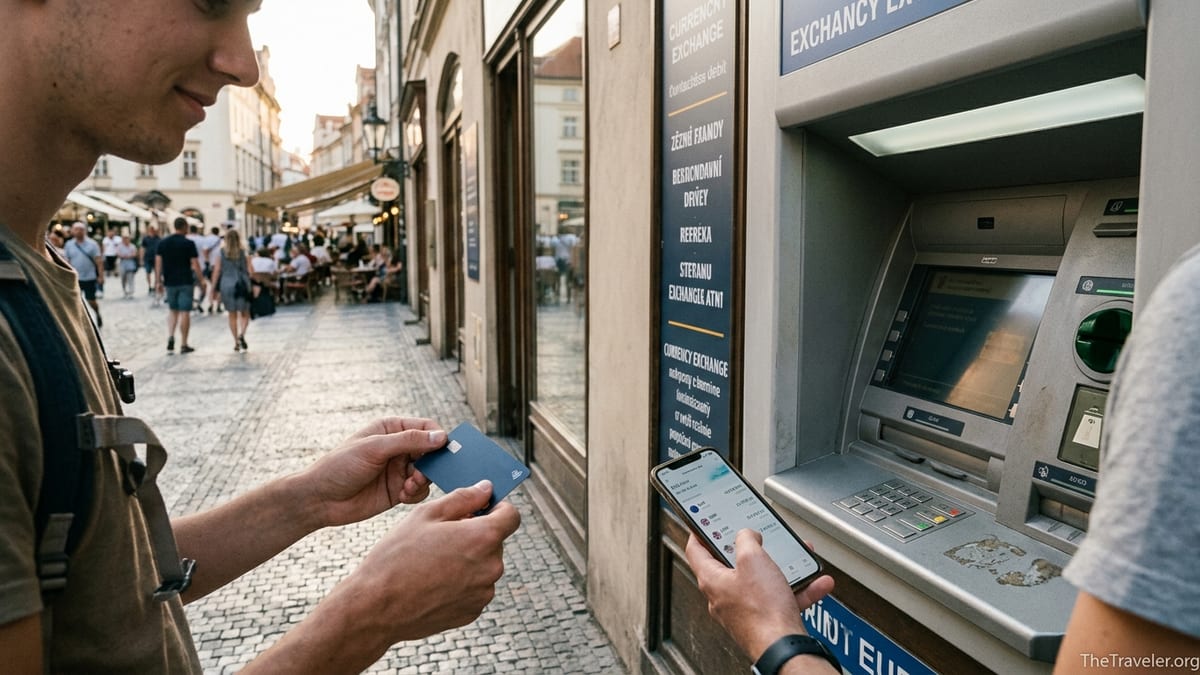
Why Travelers Are Looking Beyond the Travelex Money Card
The Travelex Money Card is a prepaid Mastercard that lets you load multiple currencies before a trip, then spend or withdraw cash overseas. It offers chip-and-PIN security and the psychological comfort of locking in a rate in advance rather than worrying about market moves while you are away. For some travelers, particularly those on tightly fixed budgets, that predictability has been a selling point.
However, once you look closely at the fine print, the card’s limitations become clear. The Travelex Money Card typically involves an initial load minimum, various currency conversion costs when you need to switch between wallets, and fees for inactivity or card replacement. Independent reviews in early 2026 note that advertised low fees can still translate into a poorer effective exchange rate compared to specialist travel cards or modern bank accounts, especially if you are visiting more than one country and need to juggle currencies.
There is also the practical side. A prepaid travel card is separate from your usual banking. If you underestimate your budget, you may have to top up while abroad, sometimes from a clunky app or at a Travelex outlet with additional charges. If your card is lost, getting a backup can be slow and may incur extra fees. By contrast, many of today’s app-based accounts and debit cards let you move money instantly from your main bank, freeze and unfreeze cards in seconds, and generate virtual numbers for safer online payments while traveling.
Most importantly, the exchange-rate gap between prepaid cards and newer travel products has widened. Many travelers now find that a combination of a fee-free travel debit card for cash, plus a no-foreign-transaction-fee credit card for everyday purchases, beats the Travelex Money Card both on simplicity and on total cost.
Multi-Currency Accounts: Wise and Revolut as Everyday Travelex Alternatives
For travelers who liked the multi-currency wallet element of the Travelex Money Card, services such as Wise and Revolut have become compelling replacements. Both let you hold balances in multiple currencies and spend on a linked debit card, but they are built as full-featured apps rather than single-purpose prepaid cards. That makes them easier to manage across multiple trips and countries.
Wise in particular has become popular because of its transparent exchange rates. When you convert dollars to euros or yen inside the Wise app, you typically get the mid-market rate, with a modest, clearly disclosed fee added on top. Independent comparisons in 2026 consistently show that this structure is often cheaper than the bundled spread and fees used by traditional prepaid cards. For example, a traveler loading 1,000 US dollars to spend in Europe might see a noticeable difference in how many euros end up on their card when using Wise compared with a prepaid option like Travelex.
Revolut takes a slightly different approach. It offers tiered plans, including a free standard account and paid Premium and Metal subscriptions, each with their own monthly allowances for fee-free foreign exchange and ATM withdrawals. Within those limits, you can exchange money in-app at competitive rates and use a contactless Visa or Mastercard in more than 150 currencies. Features like budgeting tools, disposable virtual cards and location-based security controls make the card feel like a modern bank in your pocket instead of a one-off holiday card.
In practice, multi-currency apps shine for people visiting several countries on a single trip. Imagine a six-week journey through the United Kingdom, the Eurozone and Eastern Europe. With the Travelex Money Card you would have to pre-guess how much to load in each currency, and pay to swap if you guessed wrong. With Wise or Revolut, you can keep most of your balance in dollars, convert as needed when rates look reasonable, and let the card handle small variations automatically at the point of sale.
Bank Debit Cards With No Foreign Transaction Fees: Schwab, Fidelity, SoFi and Chime
Another strong alternative to the Travelex Money Card is a regular bank debit card that is designed for international use. These cards spend directly from a checking or cash management account and usually convert currency at standard Visa or Mastercard rates, which tend to track the real market closely. The key is finding accounts that do not add their own foreign transaction fees or ATM surcharges on top.
Charles Schwab’s Investor Checking debit card is often cited by frequent travelers as a gold standard. The card does not charge foreign transaction fees and reimburses ATM operator fees worldwide, usually at the end of each monthly statement. For someone withdrawing local currency regularly in cash-first destinations, that can add up. A backpacker in Southeast Asia pulling the equivalent of 200 US dollars from an ATM every few days might otherwise lose several dollars each time to local ATM fees plus a US bank markup. With Schwab, most of those costs are refunded or never charged in the first place.
Fidelity’s Cash Management debit card offers a similar profile, with no foreign transaction fees and broad ATM access. Meanwhile, newer US-based banks and fintechs such as SoFi and Chime promote no monthly account fees and minimal international charges for card purchases. Travelers posting experiences in 2026 often report that these cards provide close-to-market exchange rates with only occasional small ATM operator fees in certain countries, which can still be significantly cheaper than a prepaid travel card that charges a direct withdrawal fee abroad.
These debit cards have an extra convenience advantage: they are tied to your main account rather than a separate wallet. If your hotel deposit is higher than expected, or you decide to upgrade your overnight train cabin at the last minute, you can use funds straight from your checking balance instead of worrying about whether you left enough on a prepaid card at the airport.
Modern Travel Credit Cards: Rewards and Flexibility in One Wallet
If you are comfortable with credit and pay your balance in full, a no-foreign-transaction-fee credit card can be one of the most flexible alternatives to a Travelex Money Card. Rather than pre-loading money, you use the card normally and settle the bill at home, often earning miles or cash back in the process. In 2026, several major US issuers promote cards aimed squarely at international travelers.
Capital One, for example, states that its US-issued credit cards have no foreign transaction fees. Travel-oriented cards like Venture and Venture X earn miles on every purchase, with bonus rewards for bookings through the issuer’s travel portal. For a couple spending several thousand dollars on hotels, train tickets and restaurant meals during a two-week trip, those rewards can offset a meaningful portion of the travel cost, while the absence of foreign transaction fees avoids the 2 to 3 percent surcharge many traditional cards still impose.
Other issuers, including Chase and American Express, also offer travel cards that waive foreign transaction fees and add perks such as airport lounge access, primary rental car coverage or hotel status. While these cards sometimes carry substantial annual fees, they can still be competitive compared to prepaid options when the benefits align with your travel style. Someone who flies long-haul three or four times a year may find that a single lounge visit and the value of points earned on airfares more than cover the yearly cost.
In day-to-day use, a travel credit card is often more widely accepted than a prepaid travel card, especially for online reservations and security deposits. Car rental agencies, for instance, may flatly refuse prepaid products or require an extra deposit, while happily accepting a mainstream Visa or Mastercard credit card. For many travelers, the most practical setup is to use a no-foreign-transaction-fee credit card for hotels, flights and restaurant bills, then pair it with a travel-friendly debit card to withdraw cash when they need it.
Comparing Costs in the Real World: How the Alternatives Stack Up
Choosing an alternative to the Travelex Money Card is not just about features; it is about the total cost of your trip. Unfortunately, comparing cards can be tricky because providers charge in different ways. Prepaid cards might advertise zero commission on foreign exchange while building a hidden spread into the rate. Debit cards may use good network exchange rates but tack on fixed ATM withdrawal fees. Credit cards may waive foreign transaction fees but offer poor cash advance terms at ATMs.
A practical way to compare is to run a simple scenario. Imagine you are spending ten days in Italy and expect to spend 1,500 US dollars in total, with 400 in cash and the rest on cards. With a Travelex Money Card, you might load euros in advance, pay a mark-up baked into the rate and then be charged a flat fee for each ATM withdrawal in Rome or Florence. With a Schwab debit card, you would withdraw euros locally at the Visa rate and later see ATM fees refunded to your account. With Wise, you could convert dollars to euros at the mid-market rate plus a small percentage fee, then withdraw from any compatible ATM within your plan’s allowance.
When travel sites and personal finance blogs model these scenarios, the gap is often clear. For light to moderate cash use with most spending by card, Wise or Revolut combined with a no-foreign-transaction-fee credit card can beat prepaid travel cards by a noticeable margin. If your trip is heavily cash-based, such as long stays in rural areas where card terminals are rare, a Schwab or Fidelity debit card with ATM rebates may come out ahead. Either way, what used to sound reassuring about a prepaid card, like “locking in your rate,” can actually be more expensive if the locked-in rate is significantly worse than the spot rate you would get via a modern app.
The other cost to consider is opportunity cost. Money parked on a Travelex Money Card usually earns no interest. Funds in a high-yield checking, savings or cash management account, by contrast, may continue earning a modest return right up until you spend them. For long trips or large travel budgets, that difference can be worth paying attention to, especially when high-yield accounts in the US frequently advertise interest rates well above zero.
Safety, Convenience and When a Prepaid Card Still Makes Sense
Despite their drawbacks, prepaid travel cards like the Travelex Money Card are not obsolete. They can still make sense for specific situations, and understanding these edge cases will help you decide whether you are the kind of traveler who truly needs one. The main advantages are separation from your main bank account, basic budgeting help and the ability to give a secure payment method to someone who cannot or should not hold a regular credit card.
Parents sending a teenager on an organized trip abroad, for example, sometimes prefer a prepaid card that can only spend up to a preloaded amount. If the card is lost, the exposure is limited to the balance, not an entire checking account or a high credit line. Similarly, some business or school groups issue prepaid cards to participants so that trip organizers can load allowances in a controlled way, and track spending separately from their own accounts.
There are also cases where travelers want to quarantine part of their budget. Someone on a months-long sabbatical might load a fixed amount onto a prepaid card and treat it as a weekly spending wallet, leaving their main nest egg untouched in a separate savings account. In destinations with a history of card skimming or unreliable ATMs, using a prepaid card dedicated to travel can feel safer than swiping a primary debit card tied to your everyday funds.
Even in these scenarios, though, it is worth comparing several prepaid products rather than defaulting to Travelex. Some newer app-based prepaid cards offer better exchange rates, lower fees and more flexible top-ups than the traditional travel money kiosks in airports. If your primary reason for considering Travelex is safety, you may find that a combination of a strong banking app, instant card-freeze tools and virtual card numbers on a debit or credit account can provide similar peace of mind with better economics.
The Takeaway
In 2026, the Travelex Money Card sits in a crowded field of travel payment options, and for many US-based travelers it is no longer the most flexible or cost-effective choice. Multi-currency accounts like Wise and Revolut, international-friendly debit cards from providers such as Charles Schwab and Fidelity, and modern travel rewards credit cards with no foreign transaction fees all provide more seamless everyday use with fewer hidden costs.
The best alternative for you depends on how you actually travel. If you move between several countries and like to control your exchange timing, a multi-currency app will probably feel more transparent than a prepaid card. If you rely heavily on cash from foreign ATMs, a debit card that refunds withdrawal fees can save you real money. If you mainly tap or swipe for hotels and dining, a rewards-rich credit card can both protect your spending and earn you miles or cash back for your next trip.
Prepaid cards still have a role for specific travelers who need hard spending limits or an extra layer of separation from their main accounts. But for most people planning international journeys today, the smarter move is to think beyond the Travelex Money Card, build a small toolkit of one or two well-chosen accounts, and let those flexible options work quietly for you in the background while you focus on the actual travel.
FAQ
Q1. Is the Travelex Money Card still a good option for international travel in 2026?
The Travelex Money Card can still work, but many travelers now find multi-currency apps and no-fee bank debit cards cheaper and more flexible for everyday use abroad.
Q2. What is the main downside of using a Travelex Money Card compared with newer alternatives?
The main downside is overall cost and rigidity. Exchange-rate markups, various fees and the need to pre-load specific currencies often make it less convenient than modern debit or credit cards.
Q3. How does a Wise card differ from the Travelex Money Card?
A Wise card is linked to a multi-currency account that uses mid-market exchange rates with a clear fee, and it works like a regular debit card rather than a standalone prepaid wallet.
Q4. Are bank debit cards like Charles Schwab’s really fee-free at foreign ATMs?
Cards such as the Schwab Investor Checking debit card do not charge foreign transaction fees and typically reimburse ATM operator fees, although reimbursement timing and limits can vary.
Q5. Why do travelers pair a debit card with a no-foreign-transaction-fee credit card?
Travelers often use a debit card for ATM cash withdrawals and a credit card for hotels, flights and restaurant bills, which maximizes acceptance and can earn rewards while keeping fees low.
Q6. Can a prepaid travel card ever be safer than using my main debit card abroad?
Yes. A prepaid card can act as a firewall between foreign ATMs and your primary bank account, which some travelers prefer in destinations with a higher risk of card cloning or fraud.
Q7. What should I look for in a travel credit card if I want an alternative to Travelex?
Priority features include no foreign transaction fees, strong fraud protection, travel-specific benefits and rewards that match your habits, such as miles for flights or cash back on dining and hotels.
Q8. Do Wise and Revolut charge ATM fees when withdrawing cash overseas?
Both services usually include a monthly allowance for fee-free ATM withdrawals, after which a small percentage fee applies, so it is important to check the current limits before you travel.
Q9. Is it better to lock in an exchange rate with a prepaid card or use live rates on a debit or credit card?
Locking in a rate can help with budgeting, but live rates from networks like Visa or Mastercard, or from multi-currency apps, are often more competitive over time than prepaid card rates.
Q10. How many different cards should I realistically carry when traveling abroad?
For most trips, carrying one no-foreign-transaction-fee credit card and one travel-friendly debit card as backup is enough, with a prepaid card only if you have a specific need for strict spending limits.