


More news on this day
Escalating hostilities between the United States and Iran in recent days have revived questions about the safety of travel to Dubai and Abu Dhabi, two of the Middle East’s busiest hubs for tourism and transit. While flights are still operating and daily life in the United Arab Emirates (UAE) continues largely as normal, governments are maintaining heightened warnings that focus on the residual risk of missile and drone attacks and the wider volatility in the Gulf region.
Get the latest news straight to your inbox!
What Official Travel Advisories Say About the UAE
The United States currently assigns the United Arab Emirates a Level 3 “Reconsider Travel” rating, citing the threat of terrorism and the risk of renewed armed conflict after Iranian missile and drone strikes earlier this year. Publicly available information from the State Department shows that non-emergency US government staff and family members were ordered to depart the UAE in early March 2026, a step that signaled elevated concern about potential further attacks.
Other governments have also updated their guidance in light of the war involving Iran, the United States and regional actors. The latest advice from the United Kingdom urges travelers to the UAE to remain vigilant and notes that, prior to an April ceasefire, Iranian officials signaled an intention to target locations in the Gulf associated with the United States and Israel. More recent updates continue to reference a volatile security environment and emphasize that the situation could deteriorate with little warning.
European governments have taken a similar line. The Dutch foreign ministry, for example, continues to advise caution for travel to the UAE while acknowledging that a June 2026 understanding between Washington and Tehran reduced the intensity of cross-border strikes. The tone of these advisories is that travel is not banned, but that visitors should be prepared for a higher level of geopolitical risk than was typical before the 2026 conflict.
The UAE, for its part, has publicly stressed that it is not a party to the war and has reiterated its long-standing policy of de-escalation and “good neighborliness” with Iran and other states. At the same time, it has imposed its own travel bans on Emirati citizens heading to certain regional countries and has issued periodic alerts about the possibility of missile and drone activity over its territory.
Security Situation in Dubai and Abu Dhabi
Iranian missile and drone barrages that began in late February 2026 brought the UAE directly into the conflict for the first time, with debris falling in parts of Dubai and Abu Dhabi and isolated damage reported at high-profile sites and critical infrastructure. UAE air defense systems intercepted the majority of incoming projectiles, but the incidents demonstrated that the country’s major cities are within range of Iranian firepower in the event of renewed escalation.
Since an interim ceasefire arrangement around the Strait of Hormuz was announced in April, large-scale attacks on the UAE have subsided. However, intermittent exchanges between the United States and Iran elsewhere in the region, together with public statements by Iranian figures warning that the UAE could “pay a price” for cooperation with Washington, have kept risk levels elevated in the assessment of many security analysts and foreign ministries.
Local media in the UAE continue to report that daily life in Dubai and Abu Dhabi is functioning, with schools, malls, beaches and business districts open and events going ahead, though sometimes with enhanced security precautions. Airport operations at Dubai International and Abu Dhabi International have generally remained resilient, even when previous strikes or alerts prompted brief temporary suspensions or reroutings of flights earlier in the year.
Experts who track Gulf security describe the current threat as low-probability but high-impact. The likelihood of an average tourist being directly affected by a new strike is still considered relatively small, especially compared with the peak of the attacks in March. Yet any renewed barrage would carry serious consequences if it were to hit urban areas or vital infrastructure, so governments are erring on the side of caution in their public guidance.
Key Risks for Tourists and Transit Passengers
For travelers considering trips to Dubai or Abu Dhabi, the main security concern remains the possibility of missile or drone fire linked to the wider US Iran confrontation. Most previous projectiles have been intercepted over sparsely populated areas or at high altitude, but shrapnel has fallen in parts of both cities, highlighting the chance of collateral damage even when defenses perform well.
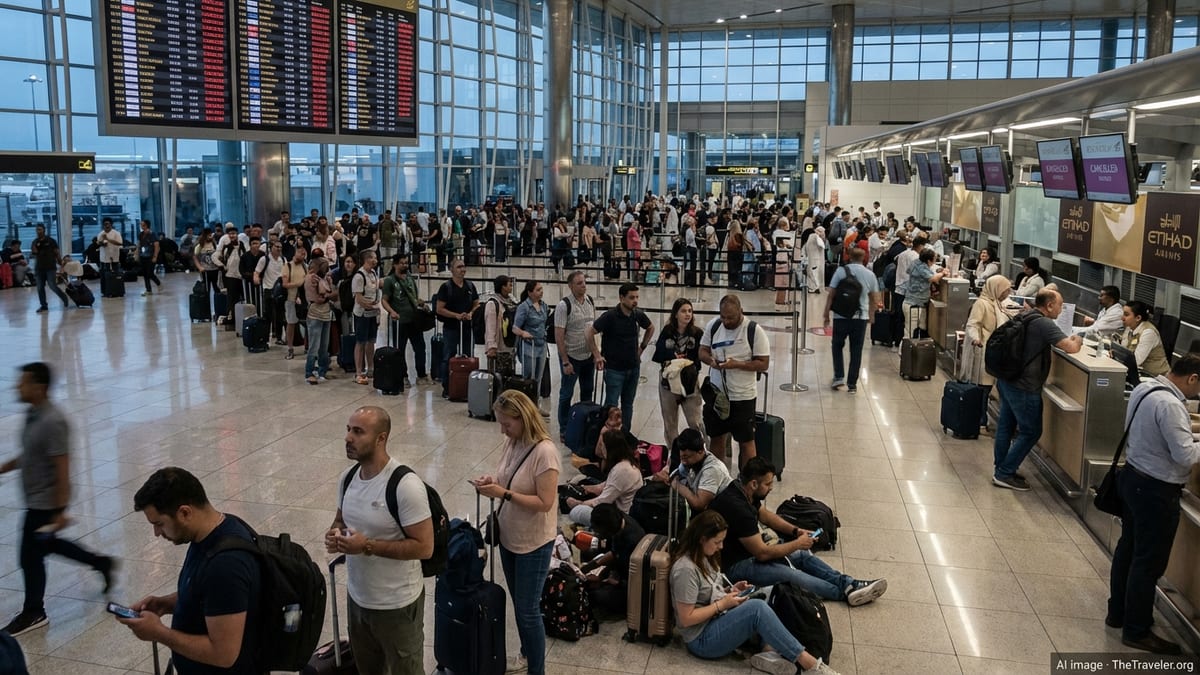
Another important risk is disruption to air travel. The UAE sits close to the Strait of Hormuz, a chokepoint that has been repeatedly mentioned in international coverage as a flashpoint for shipping and aviation. Advisories from the United States and other countries encourage airlines and mariners to use routes that keep aircraft and vessels as far as practical from Iranian airspace and territorial waters. Travelers passing through Dubai or Abu Dhabi on long-haul connections may face last minute schedule changes, longer routings or short-notice cancellations if tensions spike.
Cyber and infrastructure security are additional areas of concern. Analysts note that oil and gas facilities, ports and major airports across the Gulf have been listed as potential targets in Iranian messaging and are seen as symbolic assets. While there has been extensive investment in physical and digital defenses, the potential for temporary power, communications or transport disruption cannot be entirely discounted.
At street level, crime rates in Dubai and Abu Dhabi remain comparatively low by global urban standards, and there is no broad indication of unrest or instability within the cities themselves. The principal risks currently identified by foreign ministries relate not to local law and order, but to the external geopolitical environment and the chance that the UAE could again be drawn into cross-border exchanges beyond its control.
How Governments and Airlines Are Managing the Threat
The UAE government has expanded its use of nationwide smartphone alerts and civil-defense messaging since the first wave of Iranian strikes. Publicly available guidance outlines procedures for sheltering in place, seeking covered parking for vehicles and steering clear of impact zones if interceptions occur overhead. Residents and visitors alike are encouraged to follow official channels for updated instructions during any incident.
At the same time, Gulf-based carriers and international airlines have been adjusting flight paths and contingency plans to account for airspace closures and military activity. Aviation trackers and regional news outlets report that many routes now favor more southerly corridors over Oman’s airspace when entering or leaving the Gulf, reducing exposure to areas near Iranian territory. These changes can add flight time but are intended to keep passenger jets well clear of potential conflict zones.
Insurance and risk consultancies have issued special advisories to corporate travelers and expatriates in the UAE, recommending that organizations maintain evacuation plans, validate their crisis communication channels and ensure that employees are registered with their embassies. Some reports suggest that companies with large regional footprints have temporarily relocated non-essential staff to neighboring countries while keeping core operations running in Dubai and Abu Dhabi.
Despite these precautions, tourism marketing campaigns aimed at key feeder markets have not stopped. Hotel occupancy and visitor arrivals dipped during the most intense period of strikes earlier in the year, according to local business reporting, but have shown signs of gradual recovery since the ceasefire. Industry observers say the UAE’s strong track record of infrastructure resilience and rapid repair has helped sustain confidence among airlines, investors and many travelers, even as geopolitical risks persist.
Practical Advice for Travelers Weighing a Trip
For individuals deciding whether it is safe enough to visit Dubai or Abu Dhabi now, the picture is nuanced. The UAE is not experiencing day to day combat, and its major cities remain functioning, with a visible security presence and extensive missile defense systems in place. However, the country has already been targeted during this conflict, and leading governments still rate the risk environment as serious enough to justify “reconsider travel” language.
Travelers who are risk averse, or who would struggle with sudden itinerary changes, may choose to postpone non-essential trips until there is a clearer and more durable de escalation between Washington and Tehran. Those who do decide to go are generally advised to take several precautions: monitor their own government’s travel advisories closely, register their presence where that service is available, and share itineraries and contact details with family or employers.
Booking flexible air tickets and fully refundable hotel reservations can help mitigate the financial impact of any sudden disruption. Comprehensive travel insurance that explicitly covers war related incidents, airspace closures and emergency evacuation is also recommended, as many basic policies exclude such events. Travelers should read policy wording carefully and, where needed, seek confirmation that Gulf related disruptions are included.
Once on the ground, visitors are encouraged to remain attentive to their surroundings, follow local civil defense instructions if emergency alerts are issued, and stay informed through reputable international and UAE based news outlets. For many tourists, a trip to Dubai or Abu Dhabi in mid 2026 will pass without incident. The current phase of the US Iran conflict, however, means that the margin for unexpected events is wider than in previous years, and each traveler will need to weigh that reality against their own appetite for risk.