


More news on this day
Travelers heading to Riyadh, Dubai or Abu Dhabi are reassessing plans after weekend reports of a Houthi attack aimed at the Saudi capital, a reminder that long-range missiles and drones can affect major Gulf hubs even when day-to-day life appears normal.
Get the latest news straight to your inbox!
What happened in Riyadh, and what it means for visitors
Published coverage over the weekend indicated that Yemen’s Houthi movement launched a ballistic missile toward Riyadh, with Saudi defenses reported to have intercepted it. Separate reporting described smoke and flames seen near King Khalid International Airport, while Houthi statements claimed strikes on “sensitive sites” in the capital and on energy-related facilities elsewhere in the kingdom.
For travelers, the practical takeaway is not that central Riyadh is off-limits, but that the risk profile can change quickly when there is an active cycle of launches and interceptions. Even without widespread ground fighting, missile or drone incidents can trigger temporary restrictions around airports, government buildings, and critical infrastructure, along with sudden transport slowdowns.
It also raises the odds of knock-on travel disruption. Airlines and airports may implement additional screening or adjust operations at short notice, while travelers may see revised routing if airspace management changes across the region.
Latest official travel advice for Saudi Arabia (Riyadh focus)
As of mid-September 2026, the U.S. State Department lists Saudi Arabia at Level 3, “Reconsider Travel,” citing terrorism and other factors, and notes limitations for U.S. government personnel in certain areas, including near the Yemen border.
UK government travel advice continues to warn against travel to parts of Saudi Arabia and includes guidance on regional risks, including what to do in the event of missile or drone attacks. That includes staying aware of official alerts, avoiding impacted areas, and following local instructions during fast-moving incidents.
For most short-stay visitors whose itineraries center on Riyadh’s business districts, major hotels, and cultural sites, the key risk management steps tend to be practical: avoid lingering near sensitive facilities, build flexibility into schedules, and keep close track of local advisories that can affect road access around key sites and the airport.
Dubai and Abu Dhabi: high-profile hubs, different immediate threat picture
Dubai and Abu Dhabi have not been at the center of the latest Riyadh strike reports, but the UAE remains part of a broader regional security environment where risks can shift with little notice. The U.S. State Department lists the United Arab Emirates at Level 3, “Reconsider Travel,” citing terrorism and armed conflict, and includes notes about restrictions and heightened sensitivity around military bases and critical energy infrastructure.
UK guidance for the UAE highlights regional tensions and the potential for travel disruption, including periodic airspace closures and flight cancellations. It also warns against approaching debris such as drone or missile fragments, reflecting the reality that incidents elsewhere in the region can create hazards well beyond the immediate target area.
For travelers, the safety calculation in Dubai and Abu Dhabi is often less about street-level crime and more about “systems risk”: aviation disruption, heightened security postures, and the possibility of escalation affecting air corridors or high-profile venues.
Flights and airport disruption: what travelers should plan for
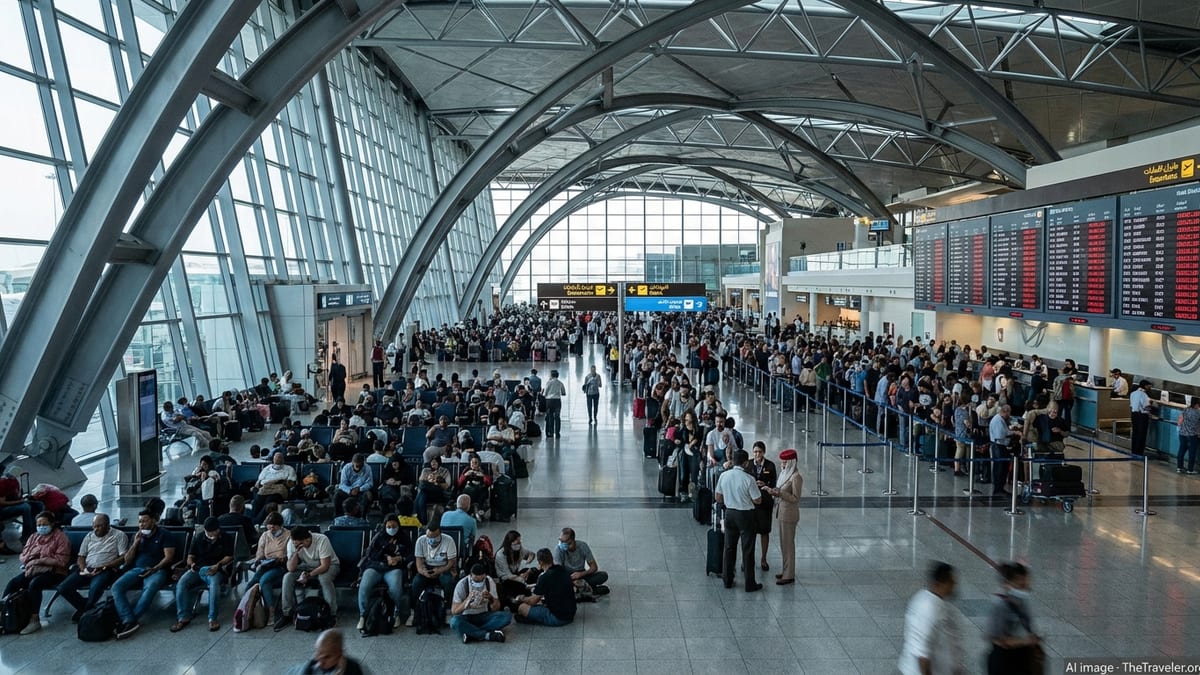
Even when airports remain open, operational hiccups can be significant. Recent published travel coverage described notable delays at Dubai International Airport and Abu Dhabi’s Zayed International Airport, with travelers advised to recheck flight status close to departure and expect schedule changes.
Dubai Airports’ flight-status service and airline travel-update pages have been emphasizing real-time checks rather than assumptions based on yesterday’s timetable. Travelers transiting through Dubai or Abu Dhabi should plan for longer connection buffers, especially on separate tickets, and keep airline contact details updated in bookings to receive change notifications.
If you are traveling into or out of Riyadh, it is worth planning for scenario-based disruption: a late-night incident can bring temporary access restrictions or heightened screening the next day, which may affect how early you need to arrive at the airport even if your flight ultimately operates.
Practical safety steps for visitors to Riyadh, Dubai and Abu Dhabi now
Start with the basics: review the most current U.S. State Department advisory level for Saudi Arabia and the UAE and read the country information pages for destination-specific notes that can affect transit, documentation, and on-the-ground movement. UK and Australian advisories can add useful detail on regional tensions and disruption planning even for non-UK travelers.
Then plan for flexibility. Choose fares or hotels with change options if your schedule is tight, avoid overly short layovers, and consider travel insurance carefully, since coverage terms can depend on advisory levels and policy wording. Keep digital and printed copies of essential documents, and share itineraries with a trusted contact.
Finally, reduce exposure to high-consequence locations during heightened tension. Travelers do not need to avoid entire cities, but it can be sensible to steer clear of military facilities, critical energy infrastructure, and areas where security activity is visibly elevated. If any incident occurs, avoid the area, follow local instructions, and treat rumors on social media as unverified until confirmed by reputable outlets or official channels.