


More news on this day
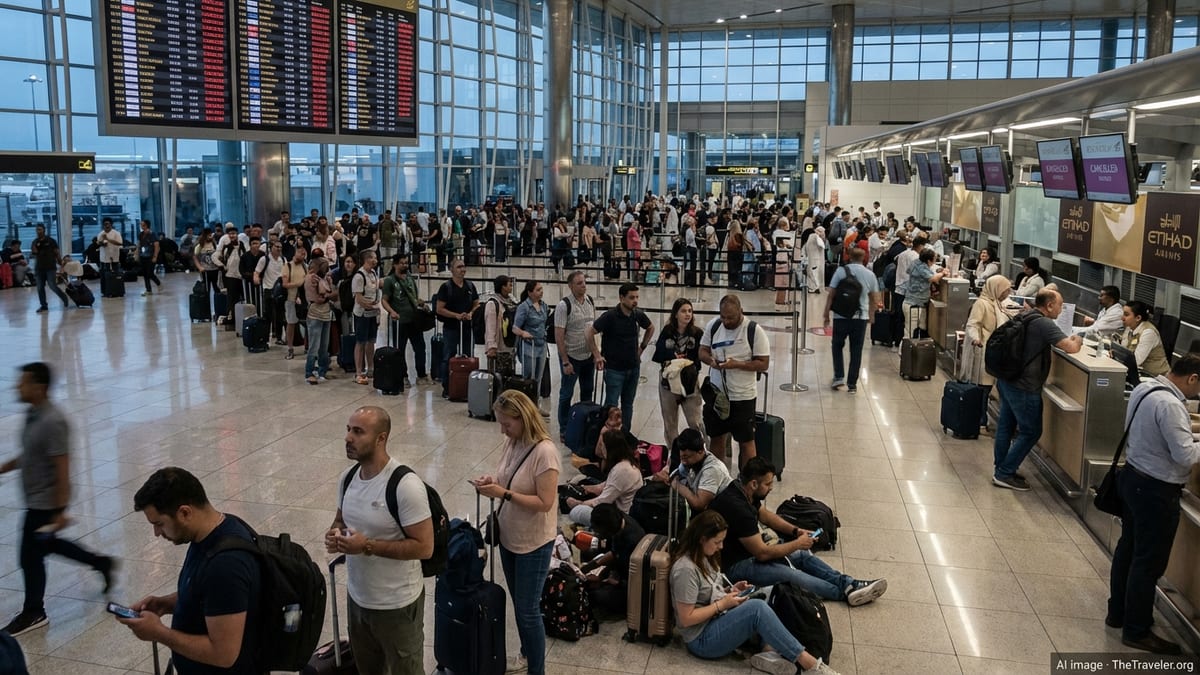
President Donald Trump returned to the White House from Camp David on Saturday, as fresh U.S. travel warnings underscored the growing risk of sudden flight disruptions across the Middle East for Americans planning trips or already in the region.
Get the latest news straight to your inbox!
What the latest U.S. warning means for travelers
Published coverage indicates the U.S. State Department has renewed and reinforced guidance urging Americans to exercise increased caution in connection with heightened Middle East tensions, with a particular emphasis on travel disruption risks such as flight cancellations and periodic airspace closures. The department’s “Worldwide Caution” advisory, updated July 22, 2026, explicitly flags the possibility that airline schedules may change quickly and encourages travelers to monitor airport and carrier operations closely.
The same advisory framework also recommends that travelers reassess itineraries that route through the region even when their final destination is elsewhere. For travelers already in the Middle East, the language focuses on heightened vigilance and readiness to adjust plans on short notice, including verifying that flights are still operating and reviewing local security updates.
For travel planners, the key practical takeaway is that this is not solely a destination-based risk issue. It is also a connectivity issue: a long-haul routing that normally transits hubs in the Gulf or the Eastern Mediterranean can be disrupted if airlines re-route around closed or constrained airspace, leading to missed onward connections, overnight delays, or last-minute rebookings.
Airspace and aviation advisories shaping flight paths
Separate from general travel guidance, publicly available aviation notices show how risk assessments can translate into operational limits. The Federal Aviation Administration has posted an active advisory for the Middle East and the Eastern Mediterranean that is effective immediately “until further notice,” warning that military activity may occur across wide areas including the Eastern Mediterranean, Red Sea, Gulf of Aden, Arabian Sea, Gulf of Oman, and the Arabian Gulf. The notice emphasizes that accurate identification of civil aircraft is critical to avoid inadvertent incidents.
The same FAA advisory also states that Iraq’s territorial airspace is closed to all non-coalition aircraft with limited exceptions, a detail that matters to travelers even if they never planned to visit Iraq. When airspace becomes unavailable, airlines often respond by rerouting around it, which can add time, trigger crew and aircraft scheduling knock-on effects, and reduce the number of available flight options on particular city pairs.
Additionally, FAA restrictions for U.S. flight operations in Iranian airspace remain part of the aviation risk landscape. For passengers, these technical notices rarely change what is printed on a ticket, but they can explain why routings suddenly lengthen, why fuel stops may be added on some long sectors, or why certain flights are suspended when carriers determine they cannot operate within acceptable safety and regulatory parameters.
What airlines are doing: suspensions, reroutes, and reduced schedules
Airline responses have varied by operator and network strategy, but recent travel-industry reporting has described a patchwork of suspensions and schedule adjustments across Middle East routes, including continued avoidance of certain airspace and extensions of previously announced route pauses. Coverage in regional outlets has pointed to ongoing changes affecting both Europe-to-Gulf services and long-haul flights that typically overfly parts of the region, reflecting continued constraints on airspace capacity.
For travelers, the practical consequence is uneven availability. Some hubs may appear “open,” yet the menu of nonstop options can shrink abruptly, with fewer frequencies and tighter connection windows. In parallel, airlines that continue operating may shift departure times, swap aircraft types, or consolidate services to protect reliability, which can cascade into rebookings, seat changes, or longer layovers.
Because these changes can happen quickly, travelers with trips booked through major connection points should monitor not just the headline route but also the specific flight number and operating days. A route may exist on paper while particular weekly frequencies are cancelled, or an itinerary may be altered to avoid certain airspace, changing arrival times enough to break onward connections.
Country-specific advisories: an example from Saudi Arabia
In addition to region-wide alerts, country pages can contain concrete details that matter for trip decisions. The U.S. State Department’s Saudi Arabia travel advisory, issued September 15, 2026, lists the destination at Level 3 “Reconsider travel” and references risks that include drone and missile threats tied to regional hostilities, along with the possibility of significant disruption to commercial flights at times.
The same advisory highlights that certain areas within Saudi Arabia carry higher risk, including a “Do Not Travel” designation for the Yemen border region, and it spells out internal movement limits that apply to U.S. government personnel. While those restrictions do not apply directly to tourists, they can signal where risk is assessed as elevated, which is useful when planning road trips, domestic flights, or excursions beyond major cities.
Saudi Arabia’s advisory also includes non-security issues that can still affect travelers, such as warnings around exit bans and local laws regarding social media activity. In practice, travelers may want to review what they post publicly while in-country and ensure their documents, visas, and employer or sponsor paperwork are in order for business travel.
How to plan now: tickets, connections, and documentation
Travelers with near-term departures to or through the Middle East can reduce disruption risk by confirming the airline’s latest schedule shortly before leaving for the airport and again on the day of travel, especially for overnight connections or multi-ticket itineraries. The State Department’s travel alert language encourages travelers to check directly with air carriers and monitor embassy and consular updates for breaking developments.
It can also help to simplify itineraries. Where possible, travelers may prefer single-ticket journeys that keep all segments under one carrier or airline alliance, since re-accommodation tends to be smoother when the itinerary is protected as one booking. Separately ticketed connections can become costly when delays or cancellations occur, because missed onward flights may not be rebooked without additional charges.
Finally, travelers should ensure passports have sufficient validity for the destination and transit points, keep digital and printed copies of key documents, and verify entry or transit requirements for each stop. When flight paths shift, unexpected diversions and unplanned overnights can occur, and having documentation, funds, and flexible lodging options can make an already stressful disruption easier to manage.