


More news on this day
Severe weather over the Chicago area disrupted air travel in a major way this weekend, with heavy rain and thunderstorms contributing to hundreds of flight cancellations and lengthy delays at O’Hare International Airport and additional disruptions at Midway.
Get the latest news straight to your inbox!
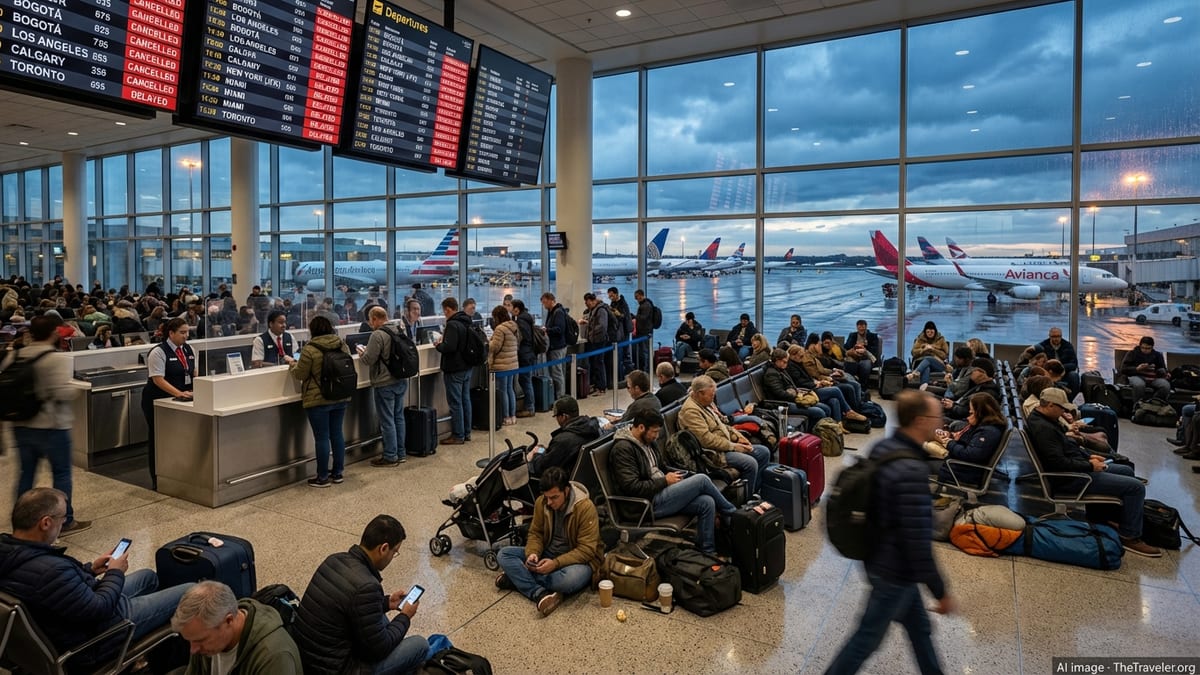
O’Hare and Midway see widespread disruption
Published coverage and airport-tracking data showed the biggest impacts centered on Chicago O’Hare (ORD), where cancellations climbed into the hundreds as rounds of heavy rain and thunderstorms moved through the region on Saturday, September 19, 2026. Midway (MDW) also recorded cancellations, though the scale appeared notably smaller than at O’Hare.
By mid-afternoon Saturday, publicly available airport performance dashboards showed O’Hare with more than 300 cancellations for the day, along with significant average delays. Midway’s cancellation total was lower, but the airport still experienced delays and irregular operations typical of thunderstorm-driven traffic management constraints.
While storms can be localized, Chicago’s role as a central hub means disruption often extends beyond the metro area. Flights that never depart from other cities because aircraft or crews are out of position can amplify the disruption, even for travelers not flying into or out of Illinois.
Ground stops and traffic management ripple across schedules
Publicly available FAA air traffic status pages indicated that traffic management initiatives were used to manage demand at Chicago-area airports during the stormy period. These tools can include ground stops, which temporarily halt departures headed to a specific airport, and ground delay programs, which hold flights on the ground to meter arrivals into constrained airspace and runways.
Earlier in the week, Thursday, September 17, 2026, also brought significant disruption as early-morning thunderstorms triggered ground stops and produced nearly 1,000 delays across O’Hare and Midway combined, according to published local coverage and flight-tracking data. That earlier event included a sizable number of cancellations at O’Hare and additional cancellations at Midway, underscoring how repeated storm cycles can strain recovery.
Even after storms move out, systemwide recovery can take many hours. Aircraft rotations, gate availability, and crew duty-time limits can keep schedules unstable into the evening, particularly at a complex hub like O’Hare where inbound congestion can quickly cascade into outbound delays.
Weather details: heavy rain, thunderstorms, and flood concerns
National Weather Service reporting and published local coverage pointed to heavy rainfall totals during the storm cycles, with some areas of the Chicago metro receiving multiple inches of rain. Rainfall measurements tied to airport observing sites also reflected meaningful totals, reinforcing why runway rates and arrival spacing would likely be reduced for portions of the day.
Beyond lightning and reduced visibility, thunderstorms can force aircraft to deviate around convective cells, compressing airspace and reducing the number of safe arrival and departure “slots” available per hour. When that happens at a hub airport, delays can climb quickly even if the airport remains open.
Forecast information available during the period also suggested additional rounds of showers and storms in the broader region, a factor that can complicate recovery planning for airlines because a brief improvement can be followed by another disruption window later the same day.
What travelers can do during Chicago weather disruptions
For travelers heading through Chicago, the most practical step is to monitor flight status closely and assume that a listed on-time departure can change quickly when FAA traffic management programs are active. Airline apps and airport flight-tracking tools can provide the fastest view of gate changes, rolling delays, and cancellations once they are posted.
When severe weather hits a hub, rebooking options can tighten fast. Travelers with flexible plans may have better results searching for alternate routings that avoid Chicago entirely for that day, or shifting to a morning departure after the most active storm window if forecasts show improving conditions.
Passengers should also account for downstream effects: even if Chicago weather improves, inbound aircraft and crews may be arriving late from other disrupted cities, which can delay flights for reasons that are no longer directly tied to local radar conditions at O’Hare or Midway.