


More news on this day
The United States has tightened its travel warning for Saudi Arabia after a series of reported missile attacks on Riyadh’s King Khalid International Airport left several people dead and injured, disrupted airline operations, and heightened concerns about the security of the kingdom’s airspace.
Get the latest news straight to your inbox!
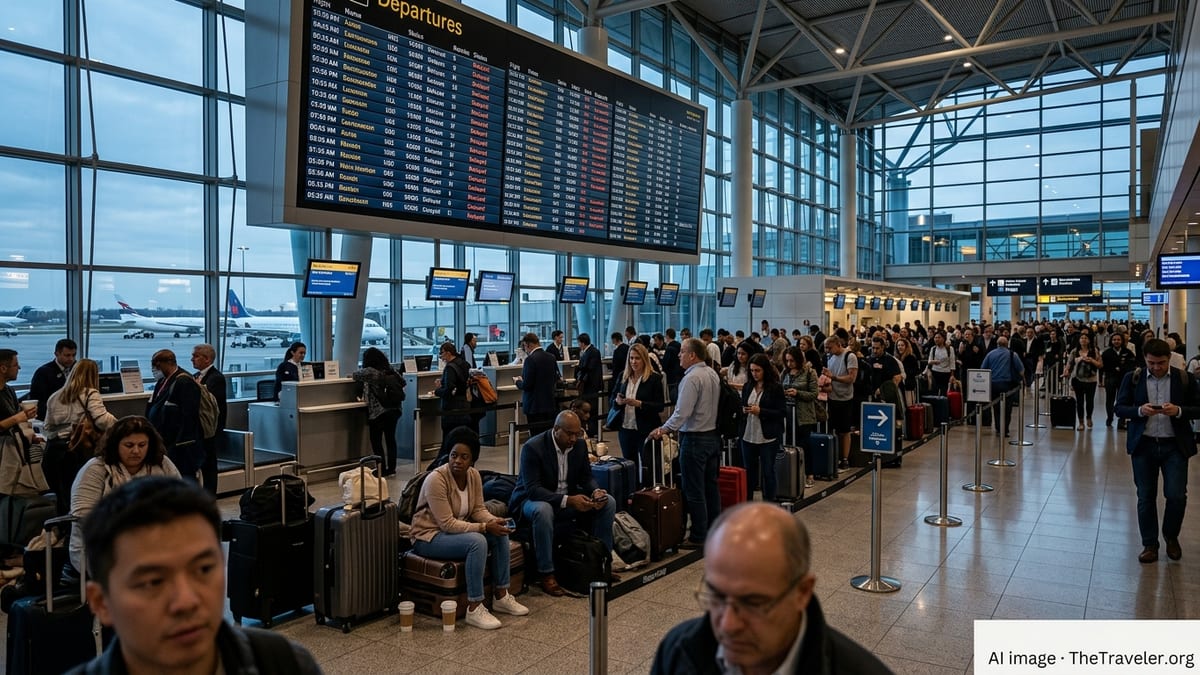
Strikes on Riyadh’s Main Airport Raise Safety Fears
Published coverage from international and regional media indicates that King Khalid International Airport in Riyadh has been targeted multiple times in recent days by missile strikes linked to the wider conflict involving Iran and Yemen’s Houthi movement. Reports describe explosions at the airport, including at least one direct hit on a passenger terminal and damage to an aircraft on the ground.
According to open-source reporting compiled on October 10, 2026, Saudi Arabia’s civil aviation authorities temporarily suspended operations at the airport after the latest impact, citing multiple injuries. Earlier strikes this week were reported to have killed at least three people and wounded others, underscoring the growing risks around civilian aviation infrastructure in the kingdom.
News outlets also describe evacuations of parts of the airport and significant emergency response activity around Terminal 3. While the full extent of structural damage has not yet been detailed in public documents, the repeated targeting of the capital’s main gateway has raised fresh questions over the reliability of flight schedules and the safety of transit through Riyadh.
The attacks form part of a broader pattern of missile and drone fire aimed at Saudi cities, airports, and energy facilities as regional tensions escalate. Publicly available coverage links the latest strikes to groups aligned with Iran, with statements posted by Houthi representatives claiming responsibility for some of the recent launches.
US Travel Advisory Tightened for Saudi Arabia
In response to the deteriorating security environment, the United States has strengthened its travel advisory for Saudi Arabia. The State Department’s public advisory for the country now sits at Level 3, “Reconsider Travel,” with explicit warnings about the risk of missile and drone attacks affecting major urban centers and transportation hubs, including airports.
Recent advisory updates emphasize that attacks may occur with little or no warning and may target locations frequented by travelers, such as airports, hotels, shopping areas, and other public venues. The advisory further highlights that falling debris from intercepted missiles and drones can pose additional danger in populated areas, even where air defenses are active.
Earlier this year, publicly accessible State Department notices ordered the departure of non-emergency US government personnel and family members from Saudi Arabia in light of regional hostilities. The latest revisions, coming after the new strikes on King Khalid International Airport, refine the language on aviation-related risks and direct heightened caution around flight plans into and out of the country.
Separately, security alerts circulated by the US embassy in Saudi Arabia in recent days have drawn attention to the possibility of sudden airspace closures or diversions, advising individuals to maintain flexible travel arrangements and to follow updates from airlines and local authorities.
Impact on Flights, Airlines, and Transit Passengers
The reported attacks have already prompted operational changes from several carriers. International news coverage notes that airlines such as Lufthansa and Indian operators temporarily suspended services to Riyadh after earlier blasts near or at the airport this week, citing security considerations and uncertainty about the stability of air operations.
Riyadh’s King Khalid International Airport serves as a major hub for Saudia and the newly launched Riyadh Air, as well as a key connection point for regional and long-haul flights across Europe, Asia, and Africa. Disruptions to arrivals and departures there ripple across airline networks, affecting not only travelers headed to Saudi Arabia but also those transiting onward to other destinations.
Travelers connecting through Riyadh may face last-minute schedule changes, extended layovers, or rerouted itineraries if further security incidents occur or if airspace is temporarily restricted. Public statements and advisories issued by airlines in recent days have encouraged passengers to reconfirm their flight status before leaving for the airport and to expect possible delays at check-in and security.
For those already in Saudi Arabia, the tightening of the US advisory does not in itself close the airports or impose automatic bans on commercial travel, but it signals that individuals should be prepared for rapid shifts in the threat environment and potential interruptions to normal aviation services.
What the Updated Advisory Means for US Travelers
A Level 3 advisory from the United States indicates that travelers should reconsider non-essential trips due to serious safety and security risks. For Saudi Arabia, the publicly available advisory highlights two main concerns: the threat of terrorism and armed conflict, particularly involving missile and drone strikes, and specific danger zones closer to the Yemeni border.
The advisory urges US citizens to avoid areas near the border with Yemen, where the risk of cross-border attacks is assessed to be especially high. Separate security messages have instructed US government employees not to travel within a defined radius of that frontier, illustrating how official movements are being curtailed while hostilities continue.
For travelers who still choose to visit or transit Saudi Arabia, official guidance stresses the importance of enrolling in the State Department’s traveler registration programs, monitoring local and international news, and having contingency plans for sheltering in place or departing on short notice if conditions worsen.
Travel insurance is another consideration. While policy terms vary, some plans limit or exclude coverage for trip disruptions and medical emergencies linked to acts of war or terrorism. Prospective visitors are encouraged by consumer advisories to review their policy documents carefully and, where possible, to select coverage that explicitly addresses travel in higher-risk environments.
Practical Tips for Those With Imminent Travel
For travelers with near-term itineraries involving Riyadh, the most immediate step is to verify flight status directly with the operating airline before heading to the airport. Recent airport advisories in Saudi Arabia have explicitly urged passengers to do this, as flight operations can change quickly in response to new security incidents or technical assessments.
Travelers may wish to build extra time into their plans for check-in and security screening, particularly if additional protective measures are in place in the terminals. Where feasible, flexible tickets that allow free changes, or bookings that include accommodation of disruptions by the carrier, can provide an added layer of resilience should schedules be reshuffled at short notice.
Those connecting through Riyadh to onward destinations might consider, in consultation with their airline or travel agent, whether alternative routings are available through other regional hubs. Availability depends on the route and carrier, and published information shows that not all airlines have suspended Riyadh services, but the evolving security picture means that options can shift quickly.
Finally, travelers are encouraged by publicly available safety guidance to keep essential items such as medications, key documents, and basic personal supplies in their carry-on baggage rather than checked luggage, so that they retain access to them in case of unplanned diversions or extended time in airport facilities following security incidents.