


More news on this day
Dubai remains one of the world’s busiest tourism hubs, yet a shifting regional security landscape and extreme summer heat have prompted governments to toughen advisories and travelers to reassess how and when they visit.
Get the latest news straight to your inbox!
Travel Advisories Have Moved to ‘Reconsider Travel’
Travelers weighing a visit to Dubai now face a more cautious message from several governments. As of August 29, 2026, the United States advises “Level 3: Reconsider Travel” for the United Arab Emirates, citing terrorism risks and armed conflict following hostilities between the United States and Iran that began in late February 2026. Publicly available information notes the potential for drone and missile attacks and describes restrictions on the movement of U.S. government personnel around sensitive sites.
Australia’s Smartraveller service currently uses similar language, urging people to reconsider the need to travel to the UAE in light of an “unpredictable security situation” in the wider region. Its latest update warns that strikes and reprisal attacks have taken place in multiple Middle Eastern locations, with the possibility of further incidents affecting airspace and leading to rapid changes in flight schedules at Dubai and Abu Dhabi airports.
Canada’s travel advisory also highlights ongoing drone attacks that have reached or been intercepted over UAE territory, even as it notes that crime rates remain low by global standards. These government notices do not ban travel outright, but they signal that travelers should be prepared for elevated security risks, higher travel-disruption potential and a greater need for contingency planning than in previous years.
In response, Dubai’s Department of Economy and Tourism maintains an online travel advisory hub, updated in June 2026, which stresses that the city’s public services continue to operate and that local monitoring of regional tensions remains active. The site encourages visitors and travel businesses to follow verified UAE sources and to check flight details closely during periods of regional volatility.
On-the-Ground Safety: Low Crime, Visible Security
A key part of Dubai’s appeal has long been its reputation as a low-crime destination with extensive surveillance and policing. Public information from Dubai Police for 2025 shows extremely high scores in national safety perception indices, including a 99.9 percent rating for daytime safety and similarly strong figures for feeling safe at night. Local authorities credit long-term investment in digital systems and proactive policing for these results.
Independent comparative data and global city rankings consistently place Dubai among the world’s safer major metros for tourists, particularly in terms of violent street crime. Official summaries from the Government of Canada describe overall crime rates as low, and Dubai’s own economic reports underline safety as a cornerstone of the destination’s appeal for families and business travelers alike.
At the same time, visitors encounter a heavy security footprint at malls, hotels, transport hubs and major attractions. The United Kingdom’s foreign travel guidance notes that extremist groups continue to threaten possible attacks in the Gulf region and advises visitors to remain aware of their surroundings, avoid sensitive facilities and follow any local security instructions promptly. The picture that emerges is of a city that feels orderly and secure in daily life but exists within a region where strategic sites and symbolic locations face ongoing threats.
For most tourists, the main practical implications are tighter screening at airports, occasional rerouting or delays of flights, and intermittent security alerts rather than direct personal danger. However, those who are uncomfortable with any elevated regional risk level may wish to postpone nonessential trips until advisories ease.
Regional Conflict and Air Travel Disruption
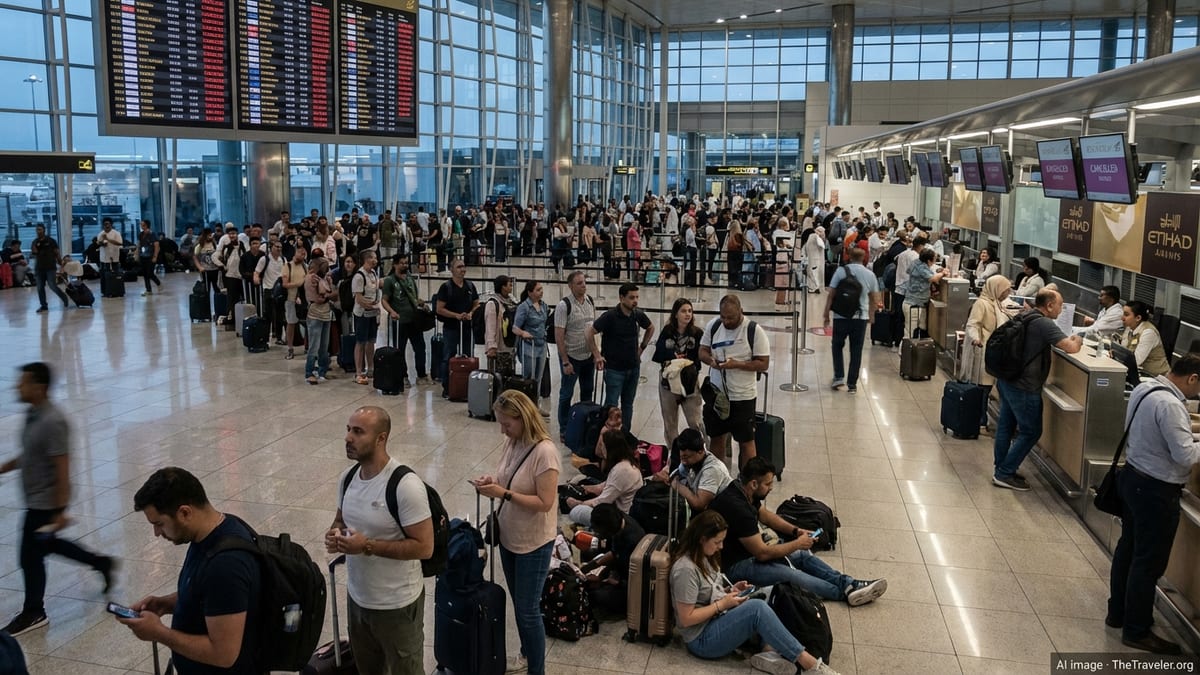
The most visible impact of the 2026 regional conflict on Dubai has been in the skies. Travel advisories from multiple governments warn that UAE airspace can close or partially restrict operations at short notice, which can translate into cancellations, diversions and extended layovers for passengers. Recent coverage of Dubai International Airport indicates that passenger volumes dipped in the second quarter of 2026 as some travelers chose to avoid Middle Eastern air corridors while tensions with Iran intensified.
Earlier this year, international media reported on Iranian strikes that reached UAE territory, shattering Dubai’s long-held image as a place largely insulated from nearby wars. While air defense systems intercepted many projectiles, the psychological impact on residents and visitors was significant. Some travelers found themselves stranded for days while airlines adjusted routes and schedules around changing risk assessments and temporary airspace restrictions.
Airlines and local tourism bodies now emphasize flexible rebooking policies and expanded travel insurance as part of their response. Dubai’s own advisory pages reference enhanced travel cover options and airline-managed support such as hotel stays and rebooking assistance when disruption occurs. Nonetheless, experts commonly recommend that travelers purchase robust, independent travel insurance that explicitly covers conflict-related disruption, and that they build extra time into tight itineraries that rely on smooth connections through Dubai.
Given the situation, would-be visitors are being encouraged by official information sources to monitor advisories right up to departure, register with their home country’s traveler enrollment programs where available, and keep contact details updated with airlines and tour operators in case of sudden schedule changes.
Extreme Heat and Health Considerations
Separate from security issues, the most predictable risk for visitors to Dubai is the climate. The city has a hot desert environment with long, humid summers, and recent data and anecdotal reports point to notably intense conditions in 2025 and 2026. Meteorological records show daytime highs regularly surpassing 40 degrees Celsius during the peak summer months, with heat index values that can feel substantially higher when humidity climbs.
Local health coverage in the UAE has spotlighted a rise in heat-related complaints during recent summers, particularly among people who spend prolonged periods outdoors. Doctors have reported more cases of dehydration, heat exhaustion and dizziness during hot spells, underscoring the need for visitors to pace activities carefully. Online discussions among long-term residents in 2026 frequently describe the current summer as one of the harshest they can remember, with users warning newcomers not to underestimate the conditions.
Recognizing these dangers, the UAE enforces an annual midday work ban for outdoor labor from mid-June to mid-September, prohibiting work in direct sunlight during the hottest part of the day. In 2026, the Ministry of Human Resources and Emiratisation confirmed that the policy is in effect for the 22nd consecutive year, framing it as part of a broader heat-stress prevention strategy. While this rule does not limit tourists directly, it signals how seriously local authorities treat heat risk.
Tourism guidance encourages visitors to prioritize indoor, air-conditioned activities in the height of summer, drink water regularly, limit alcohol, and avoid strenuous exercise during peak midday hours. Those with heart, respiratory or kidney conditions are advised to consult a doctor before traveling in the hottest months and to carry any necessary medications and documentation.
Local Laws, Customs and Practical Precautions
Dubai follows federal UAE laws alongside emirate-level regulations, which can differ from visitors’ home countries in important ways. Government travel pages stress that behavior considered minor misconduct elsewhere can carry serious consequences in the UAE. Public intoxication, aggressive behavior, offensive gestures and online posts deemed insulting or culturally insensitive can all trigger legal action.
Alcohol consumption is legal for non-Muslims in licensed venues in Dubai, subject to age restrictions, but neighboring Sharjah maintains a complete ban on drinking and possession. Official foreign travel advice notes that rules on photography are strict in sensitive areas, including some government buildings and military facilities, and that posting photos or comments on social media can attract scrutiny if they are viewed as violating privacy or public morality.
Dress codes are generally relaxed in many parts of Dubai compared with some other Gulf destinations, especially at resorts and private beaches, but guidance from foreign ministries encourages visitors to dress modestly in traditional neighborhoods, government buildings and places of worship. During Ramadan and other religious occasions, travelers are advised to be particularly attentive to local norms around eating, drinking and public behavior in daytime.
In practical terms, travelers considering Dubai now are encouraged by official information sources to take several steps: review the latest security advisories from their own government, register their presence if such a service exists, ensure comprehensive medical and travel-disruption insurance, and keep copies of important documents. Staying in established hotels, using licensed taxis or reputable ride-hailing services, and booking desert or adventure excursions with well-reviewed operators can further reduce risk.
Viewed together, current reporting suggests that day-to-day life in Dubai remains orderly, comparatively low in crime and highly geared toward tourism, but it is framed by a more volatile regional security environment and increasingly challenging summer heat. Whether it feels “safe enough” to visit now depends largely on each traveler’s risk tolerance, health profile and willingness to adapt plans based on fast-changing conditions.
U.S. Department of State – United Arab Emirates Travel Advisory
Australia Smartraveller – United Arab Emirates advice
Government of Canada – Travel advice and advisories: United Arab Emirates
Dubai Department of Economy and Tourism – Travel and business advisory
UK Foreign, Commonwealth & Development Office – UAE travel advice