


More news on this day
With another weekend of mass demonstrations planned in Paris over living costs and education reforms, many would-be visitors are weighing whether to cancel trips or proceed with caution.
Get the latest news straight to your inbox!
What Is Happening In Paris This Weekend
Paris is in the middle of a new protest cycle, with youth led marches over living costs and education drawing large crowds for several consecutive weekends. Recent coverage describes hundreds of thousands of people joining rallies across France, including significant gatherings in the capital centred on traditional protest routes such as Place de la République, Bastille and Nation.
Official travel advisories from several governments note that demonstrations have been taking place nationwide since late September 2026 and that further protests are planned in multiple French cities on Saturday, 31 October and around Sunday, 1 November. Some mayors in the Paris region have also introduced short term evening or overnight curfews in specific neighbourhoods following previous unrest, and similar measures may be used again if local conditions deteriorate.
Reports from recent weekends suggest a mixed pattern. Many rallies have been largely peaceful, but isolated incidents of vandalism, clashes with police and the use of tear gas have occurred on the margins of some marches. In affected areas, travellers have described burned vehicles, heavily tagged shopfronts and rows of riot police, typically concentrated along the central protest routes rather than around major museums or landmarks.
Authorities have responded with increased security across central Paris, including a visible police presence near transport hubs and potential flashpoints. Travellers can expect road closures around march routes, temporary shutdowns of certain Metro stations and diversions for buses and trams during peak protest hours, usually in the afternoon and early evening.
How Foreign Travel Advisories Currently Rate France
Travel advisories from major governments continue to allow tourism to France, but all highlight civil unrest as a key risk factor that visitors should factor into their plans. The United States travel advisory for France, updated in late October 2026, notes that protests and strikes occur regularly in Paris and other cities and can turn confrontational, particularly after dark, but does not advise against travel.
The United Kingdom’s foreign travel advice, updated on 1 November 2026, similarly warns of an increased likelihood of demonstrations, political gatherings and marches across France, sometimes at short notice. It stresses that while most events are peaceful, they can disrupt transport and occasionally lead to public safety measures such as localised curfews or temporary movement restrictions in specific districts.
Recent updates from Canada, Ireland, New Zealand and Australia all take a comparable line. Their advisories highlight large scale protests since late September 2026, note that further actions are planned in early November and urge travellers to avoid demonstration areas, monitor local news, and follow instructions on any curfew or crowd control measures that may be announced for parts of Paris.
These governments also reiterate longstanding guidance related to terrorism and petty crime in France. The overall assessment remains that France is a popular and generally safe destination for visitors, but that crowds at protests, transport hubs and major attractions can pose elevated risk, particularly during periods of political tension such as this protest wave.
Impact On Transport, Curfews And Tourist Sights
The most immediate effect of this weekend’s protests for visitors is likely to be disruption rather than direct personal danger. Demonstrations in Paris typically follow published routes along wide boulevards and major squares, which leads to street closures and diversions. Publicly available information from Paris transit operators and recent on the ground reports show that Metro and RER stations near protest routes may close temporarily, sometimes with limited notice.
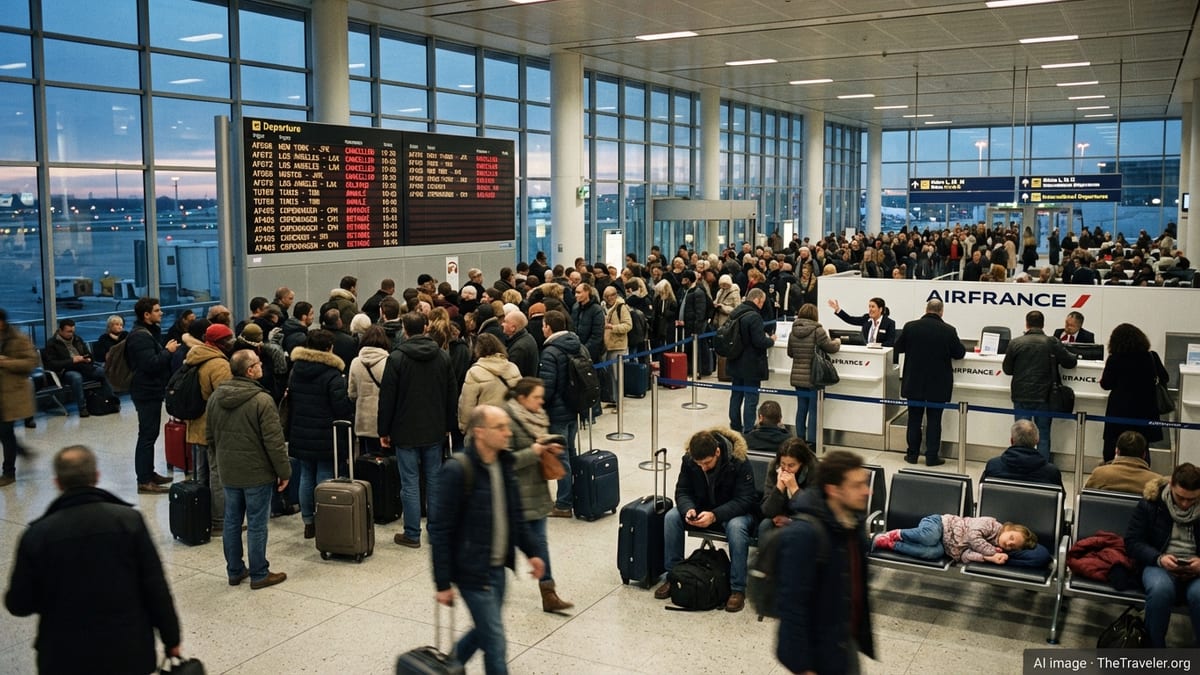
For this protest weekend, several travel advisories and media reports flag the possibility of road blockades, slower traffic on the city ring road, bus route cancellations and longer journey times between central Paris and the airports. Travellers arriving at or departing from Charles de Gaulle and Orly may need extra time to reach the terminals, especially on Saturday afternoon and Sunday evening, when marches and return traffic can overlap.
In response to earlier unrest in October, local authorities in parts of Paris and some suburbs have introduced short lived evening or overnight curfews, typically running from around 8 p.m. to early morning within narrowly defined zones. Advice from European foreign ministries indicates that visitors should confirm whether any curfew is in place for the arrondissement where they are staying and plan to be indoors during the restricted hours if one is announced.
Museums and attractions sometimes adjust their hours on major protest days. Travellers have reported occasional same day closures or early shutdowns at certain sites when marches pass nearby, along with ticket refunds where advance reservations were affected. However, many of Paris’s main attractions, including the Eiffel Tower, the Louvre and neighbourhoods away from the central protest corridors, have continued operating with only minor timetable changes.
Which Areas Travellers Should Approach With Caution
Recent demonstrations have largely focused on central and eastern districts of Paris that are long established gathering points for marches. These include squares such as Place de la République, Place de la Bastille, Place de la Nation and Place d’Italie, along with the major avenues that link them. When the largest rallies are under way, these areas can see high concentrations of protesters and police, loud sound systems and, occasionally, tear gas as officers attempt to disperse groups at the end of the march.
Foreign ministries and independent safety briefings recommend that visitors avoid these gathering points when a protest is scheduled, even if the atmosphere initially appears calm or festive. Crowds can swell quickly, and conditions can change in response to specific incidents or police decisions. Travellers are also advised to steer clear of any confrontations near high schools, universities and government buildings, where student led protests and smaller sit ins have taken place during the week.
Outside the immediate protest corridors, much of the city continues to function close to normal. Accounts from visitors who were in Paris during previous weekends of this protest wave suggest that in districts several blocks away from march routes, cafes remained open, neighbourhood shops traded as usual and some residents were only dimly aware that large demonstrations were taking place elsewhere.
Even so, visitors are encouraged to remain flexible. Those staying close to known protest hubs may wish to adjust hotel bookings toward quieter residential areas, particularly if they are travelling with young children or anyone who would be distressed by loud noise, crowd control sirens or visible security deployments in the streets below.
Practical Advice For Visitors Planning To Come Anyway
Current advisories do not generally call for cancelling trips to Paris, but they do encourage travellers to plan around the protests. One consistent theme in official guidance is to avoid all demonstrations, regardless of their apparent size or tone, and not to linger to watch or photograph them. Visitors are urged to move away at the first sign of large crowds forming, especially if they notice riot police, armoured vehicles or helicopters overhead.
Before heading out each day, travellers can check local news, the city transport operator’s updates and the social media feeds of the Paris police and mayor’s office to see whether marches or curfews have been announced for that date. Many recent visitors also report that hotel front desks have been proactive in advising guests on which areas to avoid at specific times and suggesting alternative routes to sights, restaurants and stations.
Allowing extra travel time is important, particularly when catching long distance trains or flights. With some unions calling for strikes in early November that may coincide with protests, rail and Metro services could be reduced or rerouted at short notice. Travellers are encouraged to build generous buffers into their schedules, keep digital boarding passes and booking confirmations accessible, and have a backup plan such as airport coach services or licensed taxis in case regular trains are disrupted.
Basic urban safety habits remain relevant. Travel advisories remind visitors to safeguard valuables in crowded spaces, be cautious around any damaged or burned vehicles left from earlier unrest, and keep identification documents available in case security checks are carried out near protest areas. Those who prefer to avoid any risk of encountering unrest at all may consider focusing their time on outer arrondissements, day trips to nearby regions, or rescheduling travel to later in November once the current calendar of planned nationwide protest dates has passed.