


For many travelers planning trips to Asia and beyond, KKday often appears in search results promising discounted attraction tickets, local tours, and handy extras like airport transfers and eSIMs. With so many competing platforms now offering similar services, it is fair to ask: is KKday actually worth using for tours, attractions, and local experiences abroad, or are you better off booking elsewhere?
Get the latest updates straight to your inbox!
What KKday Is and How It Works
KKday is a Taiwan-founded online travel platform that focuses on tours, attraction tickets, and local experiences rather than flights or hotels. Think of it as a marketplace that connects you with local operators: city walking tours, day trips to nearby sights, theme park tickets, transport passes, food tours, airport transfers, SIM cards, and more. You browse and pay on KKday, while the actual service is delivered by partner operators or venues at your destination.
The platform is especially visible in East and Southeast Asia. For example, if you are planning a trip to Japan, you will frequently see KKday selling tickets for Tokyo Disneyland and DisneySea, Osaka’s Universal Studios Japan, JR regional rail passes, and passes for attractions like teamLab Planets in Tokyo or the Osaka Aquarium. In South Korea, KKday lists Everland and Lotte World tickets, DMZ tours from Seoul, and airport transfer services. In Taiwan, the platform has extensive coverage of day trips from Taipei to Jiufen and Shifen, Sun Moon Lake boat tickets, and hot spring experiences in Beitou or Wulai.
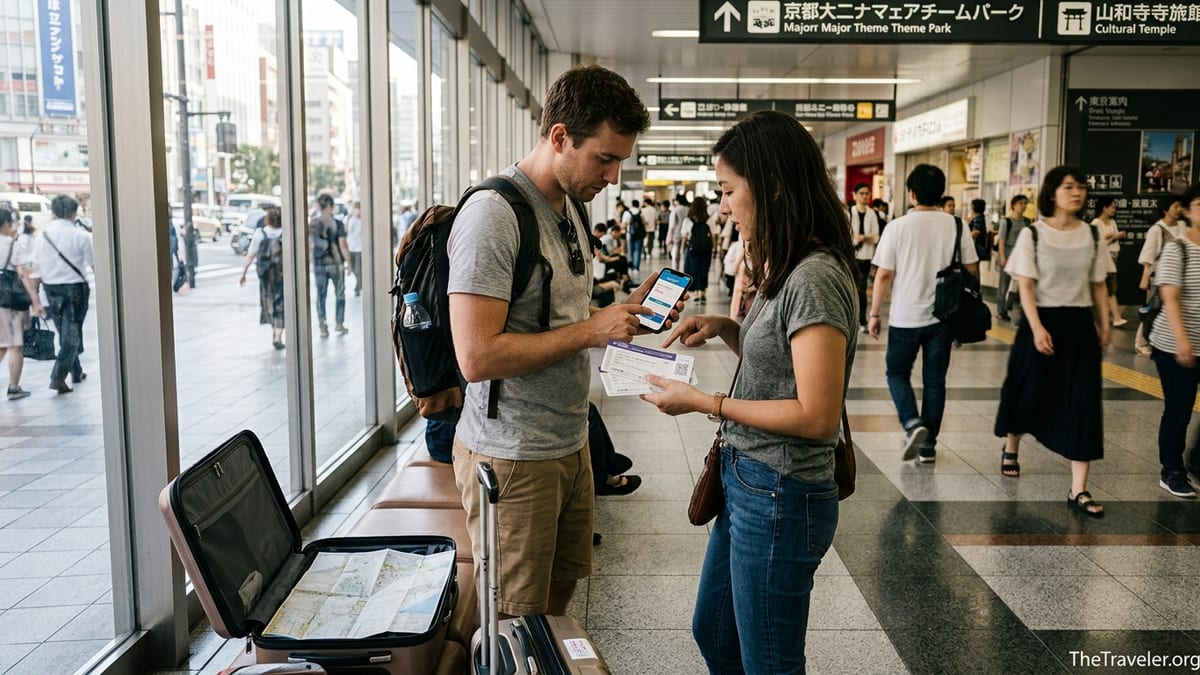
From a user perspective, the process is straightforward. You pick a date, choose ticket types or tour options, pay by card or common digital wallets, then receive a voucher or QR code via email and the app. At the attraction or meeting point, you present this voucher to redeem a physical ticket or join the tour. For some products, such as a Kyoto temple admission or a Bangkok airport transfer, the whole process can be as quick as booking in the app while sitting in your hotel lobby 30 minutes beforehand.
It is important to remember that KKday is a marketplace, not the operator itself in most cases. That has advantages, such as wide choice and discounts, but it also means your experience can vary depending on the local partner fulfilling your booking, and customer support may have to act as a middle layer between you and that partner.
Where KKday Offers Real Value
KKday tends to be most valuable in destinations where it has strong local partnerships and negotiated rates, particularly in Asia. Travelers often report that KKday offers genuinely competitive prices on attraction tickets and local transportation bundles in countries like Japan, South Korea, Taiwan, Thailand, and Vietnam. For example, a traveler booking a day trip from Tokyo to Mount Fuji might see KKday offering a bus tour including Lake Kawaguchi and the Oshino Hakkai springs for a modest discount compared with some international competitors, especially during promotional periods.
One area where KKday can shine is in ticketing for high-demand attractions that are complicated to purchase directly. A practical example is Universal Studios Japan in Osaka. KKday sometimes lists special VIP tours or Express Pass packages that can be tricky to reserve on the official site if you do not read Japanese or are unfamiliar with the booking windows. Similarly, for seasonal events like cherry blossom light‑ups at Kyoto’s Nijo Castle or night illuminations at heritage temples, KKday often aggregates tickets that would otherwise require navigating Japanese ticketing portals.
The platform also frequently runs seasonal promotions and coupon campaigns. Around major holidays or mid‑year sales, you might see eye‑catching discounts for specific products, such as “up to 50 percent off” on selected Bangkok day tours or combo deals where buying an Osaka Expo ticket includes a regional transport pass at a reduced price. When these deals align with your plans, KKday can make experiences significantly cheaper than buying from an attraction’s walk‑up counter or even from some rival marketplaces.
Finally, KKday’s catalog is broad in some niches. In Taiwan and Japan, for example, you will see not only big-ticket attractions but also cooking classes, small-group cycling tours, themed photo shoots in traditional clothing, sake or whisky tastings, and countryside experiences in secondary cities. Independent travelers who want to plug in one or two structured activities without joining a traditional group tour will often find enough variety to fill their itinerary.
Common Complaints and Real Risks
Despite these strengths, KKday has attracted increasingly critical feedback in recent years. On independent review platforms, its overall rating as of mid‑2026 is on the low side for a major travel marketplace, and recent reviews are mixed. Some travelers describe smooth, well priced experiences, especially for simple attraction tickets and rail passes. Others, however, report serious frustrations around customer service, last‑minute cancellations, refunds, and add‑on services such as visas and airport fast track.
One recurring theme is delayed refunds when an order fails or is canceled by the platform or supplier. For instance, a traveler buying Japan Rail tickets reported that KKday charged their card and then, almost immediately, sent a message stating tickets were sold out, promising a refund within about two weeks. Weeks later, they were still waiting, with multiple follow‑ups required. Others describe purchasing Universal Studios tickets that were later canceled by KKday, again with refund timelines stretching much longer than they expected for a digital transaction.
There are also accounts of services simply not being delivered. Some travelers who purchased airport fast track services in Southeast Asia, or urgent visa processing to Vietnam, mention that no staff member was waiting on arrival and that the promised visa arrived well after their travel date, rendering the service unusable. In these situations, travelers often feel bounced between KKday and the local partner, each pointing to the other when it comes to responsibility and refunds.
Customer support responsiveness is another weak point in many reviews. Travelers trying to clarify meal options for a cruise, confirm accessibility arrangements, or correct a booking detail sometimes report that their email inquiries went unanswered or received generic replies that simply repeated website information. When something goes wrong on the day of travel, this lag in communication can be more than an annoyance; it can mean missed experiences and lost money.
How KKday Compares to Rivals Like Klook and GetYourGuide
If you have used platforms such as Klook, GetYourGuide, Viator, or Headout, KKday will feel familiar. All of these services let you browse tours and attractions, filter by dates and language, read user reviews, and pay online. The differences are more about geography, depth of inventory, and how each handles pricing and support.
KKday and Klook are both Asia‑headquartered and have built particularly deep inventories across Japan, Taiwan, Korea, and parts of Southeast Asia. Many comparison articles and travel blogs note that Klook still has the widest spread of attractions and transport passes in places like Japan, but KKday can sometimes undercut Klook on specific Japan‑domestic deals or niche experiences when it has negotiated stronger local contracts. In practice, for something like a Mount Fuji bus tour from Tokyo or a Seoul city pass, travelers might find KKday a few dollars cheaper than Klook on certain days, and slightly more expensive on others.
GetYourGuide and Viator, by contrast, tend to dominate in North America and Europe for museum tickets, walking tours, and city passes. In Paris, Rome, or Barcelona, for example, KKday’s listings are usually far thinner than those on GetYourGuide or Viator, and may not be price‑competitive. If you are planning a Louvre or Colosseum skip‑the‑line ticket, KKday is rarely the first place experienced travelers check. On the other hand, for Osaka Expo tickets, Kyoto seasonal events, or Taiwan railway passes, KKday can be one of the main marketplaces with available stock.
In terms of reliability, none of the big marketplaces is perfect. Travelers also complain about Klook and GetYourGuide when things go wrong. However, KKday’s relatively low average rating on some review platforms, especially driven by late refunds and patchy customer service, suggests that it may lag behind the more established global players in post‑booking support. That does not mean you should avoid KKday entirely; it does mean that you should be selective about what you are comfortable booking through it, especially if the experience is expensive or time‑sensitive.
Booking Strategies to Use KKday Safely
If you decide to use KKday, a few practical strategies can help reduce risk and make the most of its strengths. First, differentiate between low‑risk and high‑risk bookings. Low‑risk items are those where schedules are flexible or costs are modest: for example, a discounted one‑day ticket to Lotte World in Seoul, a pocket Wi‑Fi rental in Taipei, or a shared airport shuttle in Bangkok. If something goes wrong, you may be mildly inconvenienced, but your overall trip is not ruined. Many travelers report that these straightforward products often work as advertised on KKday.
High‑risk items are those tied to a specific date, time, and significant cost: private VIP tours, rare event tickets, nonrefundable airport fast track, or urgent visa services. For example, a family booking a VIP private tour at Universal Studios Japan or hard‑to‑find tickets to a specific baseball game in Tokyo is taking more risk. A last‑minute cancellation or voucher issue can blow a hole in a tightly planned itinerary. For these kinds of purchases, it can be worth comparing KKday with Klook, GetYourGuide, Viator, and the attraction’s official site before choosing the platform with the best combination of price, cancellation terms, and reviews.
Second, read both product‑level and company‑level reviews. On KKday itself, focus on recent reviews for the exact tour or ticket you plan to buy, paying attention to comments about voucher redemption, meeting points, guide quality, and punctuality. Then cross‑check with independent review platforms and travel forums for broader feedback on KKday’s handling of refunds and customer support. If you repeatedly see complaints that a particular product is misrepresented or a certain local partner routinely cancels at the last minute, treat that as a red flag.
Third, pay attention to cancellation terms and refund windows. KKday’s own terms explain that each product has its own cancellation policy, often set by the supplier. Some tickets are fully refundable up to a certain number of days before use; others are strictly nonrefundable. For example, a Kyoto temple admission ticket might be cancelable until three days before, while an Osaka Expo package with a bundled transport pass could be nonrefundable once booked. If flexibility matters, filter for products with free or lenient cancellation and avoid nonrefundable add‑ons like visa processing unless you are comfortable losing that money if plans change.
Examples: When KKday Makes Sense and When It Does Not
Consider a traveler from the United States planning a two‑week trip to Japan in spring. They want to visit Osaka, Kyoto, and Tokyo, and are looking for attraction tickets, a few day tours, and some fun local experiences. Here is where KKday might fit naturally into the planning process. For Osaka, KKday might offer a competitively priced Universal Studios Japan ticket with an English‑speaking guide option that is hard to replicate elsewhere. In Kyoto, they could find seasonal night illumination tickets for Nijo Castle or a traditional tea ceremony and kimono photo session in Gion. In Tokyo, KKday might be a convenient way to pre‑book teamLab Planets tickets and a one‑day Mount Fuji group bus tour that picks up near Shinjuku Station.
In this scenario, the traveler might choose to book relatively straightforward, low‑risk items through KKday, such as attraction entries and group day tours, while reserving high‑stakes purchases, like a very expensive private tour or a complex rail pass package, for platforms with more consistently strong service reputations or for official sites. They could also leverage a KKday seasonal promotion, using a coupon code to shave a meaningful amount off the total cost of multiple tickets in Japan.
Now imagine a different scenario: a short city break in Paris. The same traveler wants Louvre and Versailles tickets, a Seine dinner cruise, and possibly a guided walking tour of Montmartre. Here, KKday’s inventory is relatively thin and may not include the most popular time slots or best‑reviewed operators. GetYourGuide or Viator, with tens of thousands of European experiences and deeply established partnerships with local companies, are more likely to offer greater choice, clearer time‑slot availability, and robust day‑of support. In this case, using KKday would bring little advantage and might actually reduce options.
There are also edge cases where KKday can be tempting but risky, such as urgent visa services or airport fast track in countries with complex entry requirements. Real‑world reports of visas arriving after travel dates or fast track staff not showing up suggest that you should only use KKday for these services if you can afford for them to fail. Often, booking through an airline, official immigration partner, or premium airport service with a long track record is safer, even at a higher price.
Tips for Getting the Most Out of KKday Abroad
If you decide KKday is worth trying for your next trip, a few extra habits can improve your experience. Always screenshot key details at the time of booking: product inclusions, meeting points, operating hours, and any fine print about what is not included. If, for instance, a Kansai area pass only covers certain private rail lines or a sightseeing bus in Taipei requires prior seat selection, having that information handy on your phone can help if a local staff member seems confused.
Communicate through official channels whenever possible. If you need to clarify a detail, use KKday’s in‑app chat or contact forms rather than informal channels like personal messaging apps, so there is a traceable log of your conversation. For example, if a traveler wants to confirm that a Tokyo food tour can accommodate a shellfish allergy, they should ask for written confirmation through official messaging and keep a copy of the response. This can be helpful evidence if the experience does not match what was promised.
It is also wise to avoid stacking too many KKday‑dependent activities back to back. If your only day in Seoul is built entirely around a KKday DMZ tour, a KKday‑booked evening performance, and a KKday airport transfer, any failure by a single supplier can cascade through your schedule. Spreading risk across platforms and leaving pockets of unstructured time gives you more room to improvise if something is canceled or delayed.
Finally, keep your expectations realistic. KKday operates in a middle zone between DIY travel and traditional package tours. You are trading some control and direct contact with operators in exchange for convenience, discounts, and aggregated choice. When it works, this can be a great deal, especially in Asia. When it does not, you may find yourself dealing with a support team that has limited power to override a local partner’s decisions. Understanding that trade‑off upfront can help you decide which parts of your trip you are comfortable entrusting to KKday.
The Takeaway
Is KKday worth using for tours, attractions, and local experiences abroad? The honest answer is that it depends heavily on where you are traveling and what you are booking. In its strongest markets, particularly Japan, Taiwan, South Korea, and parts of Southeast Asia, KKday can deliver solid savings on attraction tickets and a convenient way to book popular experiences in English. Many travelers have used it successfully for Disneyland and Universal Studios tickets, regional transport passes, and low‑risk day tours.
At the same time, KKday’s patchy customer service reputation, slow or complicated refunds in some cases, and inconsistent handling of high‑stakes services mean it is not the most reassuring choice for every kind of booking. For expensive private tours, urgent visas, airport fast track, or once‑in‑a‑lifetime event tickets, you may be better served by more established global marketplaces or official channels, even if the upfront price is slightly higher.
The most balanced strategy is to treat KKday as one of several tools rather than your only booking platform. Use it where its strengths are clear, such as discounted attraction tickets and simple day tours in Asia, compare prices and terms carefully against Klook, GetYourGuide, Viator, and official sites, and reserve your most critical bookings for the platforms with the most robust support and transparent policies. Approached that way, KKday can absolutely be worth using, but on your terms instead of by default.
FAQ
Q1. Is KKday a legitimate company for booking tours and tickets abroad?
Yes, KKday is a legitimate travel marketplace headquartered in Asia, used by many travelers to book attraction tickets, tours, and local experiences, especially in Japan, Taiwan, and South Korea. However, legitimacy does not guarantee flawless service, so it is still important to read current reviews and product details carefully.
Q2. Is it safe to buy theme park tickets like Universal Studios Japan or Disneyland through KKday?
In general, many travelers successfully use KKday for major theme park tickets, and the vouchers are accepted at the gates when instructions are followed. The key is to verify that your specific ticket includes the correct date, park, and entry type, and to avoid last‑minute bookings during peak holidays when availability and customer support may be more strained.
Q3. How does KKday compare to Klook and GetYourGuide on price?
KKday can be cheaper for certain Asia‑focused products, such as some Mount Fuji day tours, Osaka Expo tickets, or Korean theme park passes, especially when promotions are running. For European and North American attractions, competitors like GetYourGuide or Viator often have deeper inventory and similar or better prices, so it is wise to compare across platforms before paying.
Q4. What are the main risks of using KKday?
The main risks are late or complicated refunds when a booking is canceled, slow customer service responses if something goes wrong on the day, and occasional failures in services like airport fast track or visa processing. These problems seem more likely with complex, high‑stakes products than with straightforward attraction tickets.
Q5. Can I get a refund if I need to cancel a KKday booking?
Refund possibilities depend on the specific product’s cancellation policy, which is shown on the booking page. Some experiences allow free cancellation up to a deadline, while others are strictly nonrefundable. You should always check the cancellation terms before paying and take screenshots of them in case you need to request a refund later.
Q6. Is KKday a good choice outside Asia, for example in Europe or the United States?
KKday’s strengths are primarily in Asia. In Europe or the United States, its catalog is thinner and usually does not offer clear advantages over platforms like GetYourGuide, Viator, or direct booking with attractions. For most Western destinations, travelers generally find better choice and support on the larger global marketplaces.
Q7. Should I book urgent visa services or airport fast track through KKday?
Given real‑world reports of delays and no‑shows for some of these services, it is safer to be cautious. If you must use KKday, build in generous time buffers and consider the money at risk. Often it is better to book visas or premium airport services through airlines, official partners, or providers with a strong record in your destination.
Q8. How can I reduce the risk of problems when using KKday?
Focus on lower‑risk products like simple attraction tickets and group day tours; read recent reviews for the exact product you plan to book; verify cancellation terms; keep screenshots of inclusions; and use official KKday messaging channels so any promises or clarifications are recorded in writing.
Q9. Does KKday offer good local experiences like food tours or workshops?
Yes, in its core markets KKday lists a wide range of local experiences such as cooking classes, sake or whisky tastings, cycling tours in secondary cities, and cultural workshops. Quality varies by operator, so you should rely on detailed recent reviews and photos to decide whether a specific experience matches your expectations.
Q10. Overall, when is KKday worth using and when should I skip it?
KKday is usually worth considering for discounted attraction tickets and straightforward day tours in Asia, particularly in Japan, Taiwan, and South Korea. You should skip or at least think twice about using it for expensive private tours, urgent visas, airport fast track, or once‑in‑a‑lifetime tickets where failure would seriously damage your trip and where alternative booking channels with stronger support are available.