


More news on this day
A recent American Airlines flight has ignited fresh controversy over cabin class rules after a flight attendant confiscated a business class bread roll and dessert that a passenger tried to bring back to his economy seat from his wife in business class, reportedly throwing the food away rather than allowing him to eat it.
Get the latest news straight to your inbox!
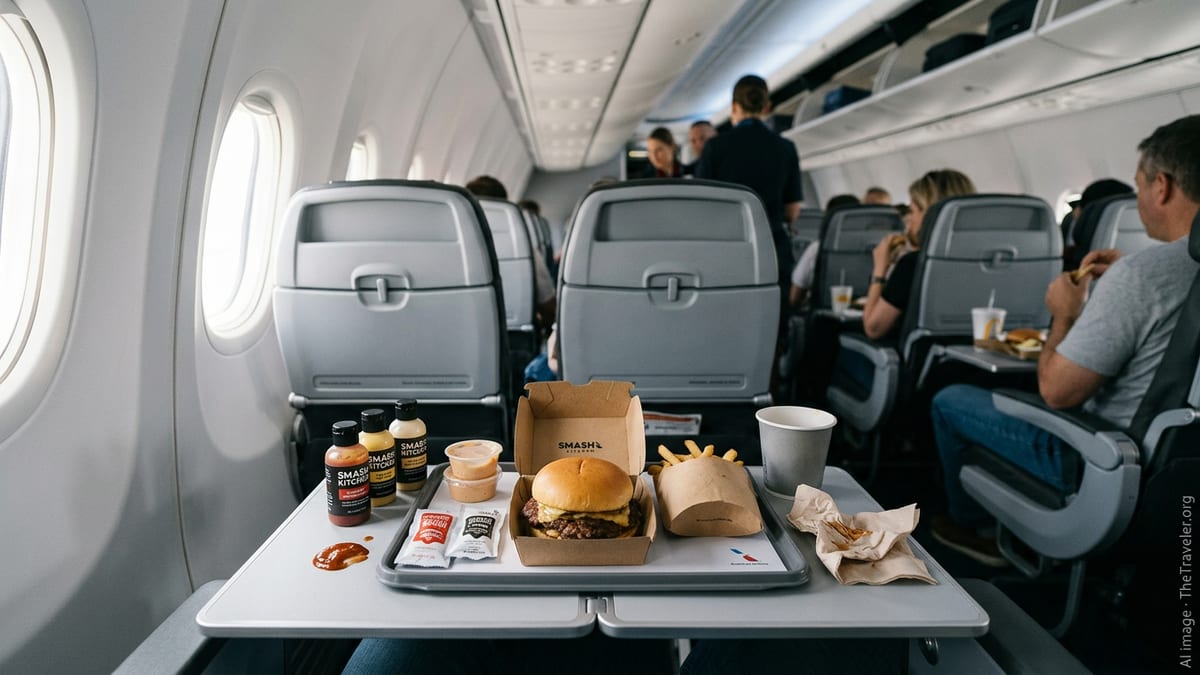
A Viral Complaint Over a Confiscated Dessert
According to widely shared online accounts, the incident occurred in July 2026 on an American Airlines flight where a couple had been split between cabins after an upgrade. The wife was seated in business class, while her husband remained in economy. When she could not finish parts of her meal service, she reportedly offered her untouched bread roll and dessert to her husband sitting further back in the aircraft.
Publicly available descriptions indicate that the husband walked the items from business class to economy. After he sat down with the food, a flight attendant working the main cabin allegedly intervened, stating that food from the premium cabin was not allowed to be consumed in economy. The attendant then took the roll and cake away and, according to the passenger’s account, disposed of them instead of allowing him to eat them in his seat.
The episode, initially detailed on aviation and travel blogs that track frequent flyer experiences, quickly spread across social media. Commenters questioned why a paid-for meal component, apparently still within its original service environment and simply carried down the aisle, could not be consumed by another ticketed passenger on the same flight.
Reports indicate that the husband declined offers to purchase buy-on-board snacks in economy after the confiscation and ended up eating only standard complimentary items such as pretzels and cookies. That detail further fueled frustration among readers who saw the confrontation as unnecessary and out of proportion to the value of the food involved.
Cabin Separation, Real Rules and Gray Areas
The dispute has highlighted a gray area in airline service practices. While airlines commonly distinguish sharply between cabins for service, seating and amenities, there is limited public documentation of explicit rules prohibiting a passenger from taking food from one cabin to another when both travelers are on the same ticket or traveling together. Aviation analysts note that most carriers market premium cabin meals as part of a bundled experience, rather than as individually inventoried items tied to a specific seat passenger.
Travel industry coverage of the case points out that no widely cited food safety regulation appears to prevent an untouched, plated dessert from moving between seats on the same aircraft. Instead, observers suggest the policy is more likely linked to revenue management and perceptions of fairness among other passengers, particularly when those in the main cabin have paid less and may not have the same food options included.
Commentary from frequent flyer communities also suggests that airlines often leave considerable discretion to cabin crew in handling edge cases. In some documented situations on various carriers, crew members have offered spare premium meals to passengers in other cabins to avoid waste or to resolve service issues, while in others they have enforced strict separations between classes, even when food would otherwise be discarded.
The lack of a clearly communicated standard has led to confusion, with some travelers saying they had previously been encouraged by crew to share unopened snacks or extra rolls across rows, and others describing equally firm interventions when attempting similar gestures on full-service flights.
Food Waste and Service Culture Under Scrutiny
Beyond the question of cabin rules, the American Airlines story has tapped into a broader public concern about food waste in commercial aviation. Airline crew members and passengers alike have frequently remarked in online forums that large quantities of uneaten food are thrown away after each flight, due in part to catering overage, strict food safety protocols and the logistical challenges of repurposing partially served trays.
In this case, the idea that a still-edible roll and dessert were removed and discarded rather than being eaten by a paying traveler resonated with readers who view waste reduction as a growing priority. Some questioned whether a more pragmatic approach could have resolved the situation, such as allowing the husband to consume the items discreetly or offering an alternative without escalating the interaction.
The incident also coincides with heightened attention on the consistency of service standards across the industry. As airlines compete for high-value corporate and leisure travelers, they increasingly promote premium dining experiences in business and first class, while simultaneously trimming offerings in economy. That gap, critics say, can exacerbate tensions when passengers in different cabins share family ties or are split due to last-minute upgrades.
Observers note that stories involving confrontations over meals, snacks or seat assignments have become a staple of viral travel news. Such incidents tend to crystallize broader frustrations over shrinking personal space, complex fare structures and the perception that good service is not evenly delivered, even within the same airline.
American Airlines and the Context of Premium Service
The dessert dispute arrives as American Airlines continues to emphasize its premium cabins and upgraded onboard dining. In recent months the carrier has highlighted new menu collaborations, including regionally inspired dishes and enhanced beverage offerings in its long-haul business class, positioning these as key differentiators for international and transcontinental routes.
At the same time, the airline has been the subject of a steady stream of viral stories focusing on cabin interactions, ranging from disputes over seat assignments in business class to debates about how crew members handle special requests and broken seats. Many of these accounts surface first on social media or frequent flyer blogs, then attract wider attention once they are amplified by mainstream and niche travel outlets.
Industry analysts point out that premium cabins typically account for a disproportionately large share of revenue on long-haul flights. That financial reality can make airlines particularly sensitive about the perception that benefits meant for business or first class are being informally extended into economy, whether through seat swaps, complimentary drinks or shared desserts.
However, the American Airlines episode has prompted some commentators to argue that rigid enforcement can backfire when it appears petty or inconsistent with the value of the product. They contend that an inflexible stance over a small bread roll and slice of cake risks undermining the very brand loyalty that premium investments are intended to strengthen.
Calls for Clearer Communication and Training
In the wake of the controversy, travel commentators and frequent travelers are calling for clearer communication of cabin-specific rules, both on airline websites and during onboard announcements. Greater transparency, they argue, could help reduce misunderstandings about sharing food, moving between cabins or accepting occasional gestures of goodwill from crew.
Passenger advocacy voices also suggest that airlines revisit internal guidance and training materials to ensure that front-line staff feel empowered to balance policy with practical judgment. In scenarios involving family members split between cabins, some propose that allowing low-value items such as bread, dessert or sealed snacks to be shared might help humanize the travel experience without meaningfully eroding the premium product.
For now, the story of the confiscated dessert remains one more data point in an ongoing conversation about how airlines manage the boundaries between classes at a time when travelers are acutely sensitive to fairness and value. With every such incident that gains traction online, carriers face renewed pressure to show that their rules are not only consistent and commercially justified, but also aligned with ordinary passengers’ sense of reason and hospitality.