


As a UK-based traveler who flies regularly between London and cities like New York, Barcelona and Cape Town, the British Airways American Express cards have been in my wallet for years. Between the lure of Companion Vouchers, generous Avios earning and some quietly valuable travel protections, they promise a lot. But once you factor in fees, foreign transaction charges and competing cards, are they still the smartest choice for frequent flyers in 2026? After a recent round of comparisons and a few real trips booked on Avios, here is how the British Airways American Express Credit Card and the British Airways American Express Premium Plus Card really stack up.
Get the latest updates straight to your inbox!
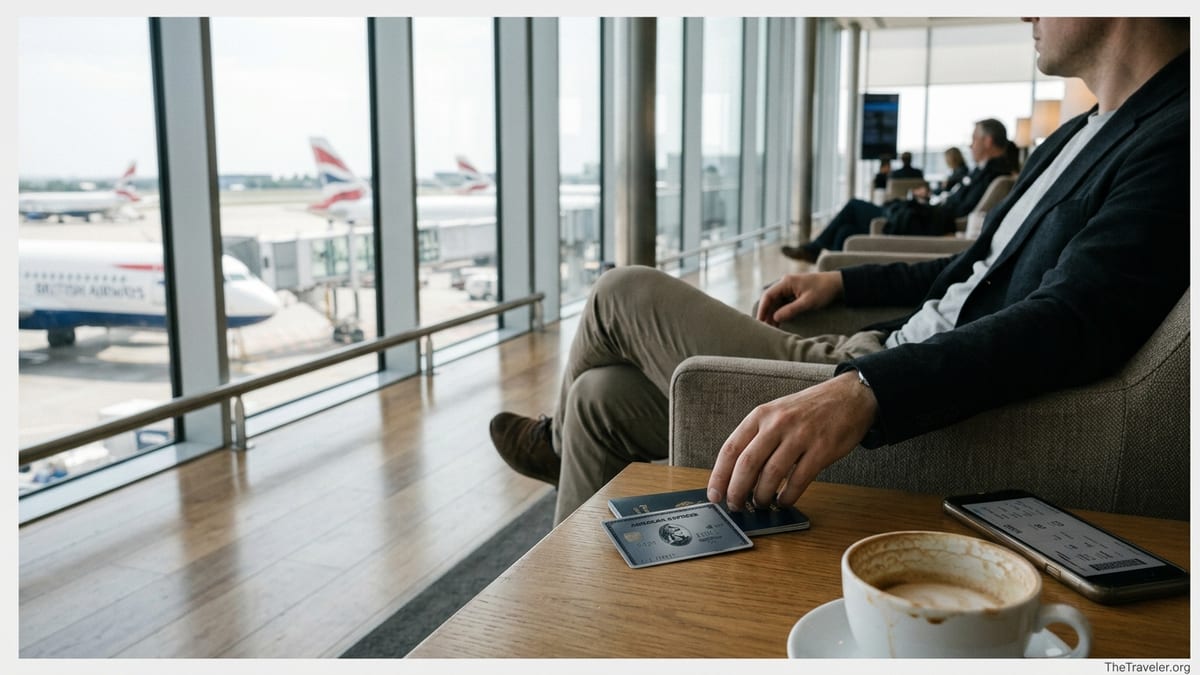
The Two Main British Airways American Express Cards Explained
British Airways and American Express offer two core personal cards in the UK: the no-annual-fee British Airways American Express Credit Card and the fee-paying British Airways American Express Premium Plus Card. Both earn Avios on your everyday spending and unlock the coveted Companion Voucher, but they differ meaningfully in fees, earning rates and how powerful that voucher becomes when you finally redeem it.
The free British Airways American Express Credit Card typically earns 1 Avios per £1 spent on most purchases and comes with no annual fee. It is the obvious entry point for someone who wants to dip a toe into the Avios game without paying for the privilege. The Premium Plus version usually earns 1.5 Avios per £1 and charges a substantial annual fee of around £250, which makes sense only if you can extract more value than that fee every year through redemptions and perks.
On paper, both cards share core features such as access to the Companion Voucher after hitting a defined spend, standard American Express travel assistance and the ability to earn Avios on everything from your weekly supermarket run to large home-improvement bills. In reality, the Premium Plus card is built for people planning at least one long-haul redemption in a premium cabin every couple of years, while the free card is more of a casual earner suited to mostly economy travelers.
Before applying for either card, it is worth noting that eligibility rules apply. For example, recent cardholders of a British Airways American Express product are often not eligible for a welcome bonus, and acceptance levels for American Express can vary by merchant, especially outside cities like London and Manchester. These practicalities matter just as much as the glossy marketing headlines when you are trying to build a workable travel strategy.
Companion Vouchers: Where The Real Magic (Sometimes) Happens
The single biggest reason these cards still generate so much interest is the British Airways Companion Voucher. Put simply, it allows you to either take a second person on the same reward flight for no additional Avios, or to get a 50 percent reduction in the Avios needed when travelling solo on a reward booking. The voucher is earned by hitting a minimum spend in your card year and is then deposited into your British Airways account.
On the free British Airways American Express Credit Card, you will usually need to spend around £15,000 in a membership year to trigger the voucher. That voucher is valid for 12 months and can be used only in economy cabins such as Euro Traveller and World Traveller. In contrast, the Premium Plus card generally requires £10,000 of annual spend and rewards you with a voucher that is valid for 24 months and usable in any cabin, including Club World business class and First, with improved reward-seat availability in business class.
In real terms, the difference is enormous. Imagine you and a partner want to fly London to New York in Club World. A typical peak-date off-peak reward might cost in the region of 120,000 to 160,000 Avios per person return, plus taxes and fees. With a Premium Plus Companion Voucher, you would only pay the Avios for one person, cutting your Avios cost roughly in half. Meanwhile, with the free card, you could only use the voucher in economy, where cash fares are sometimes low enough that using Avios can feel less compelling.
There is also a lesser-known use case: solo travelers. Since changes introduced in recent years, Companion Vouchers can now be used by a single passenger to get a 50 percent Avios discount instead of bringing a companion. That means a solo traveler flying London to Johannesburg in World Traveller Plus could potentially shave tens of thousands of Avios off the booking, turning a voucher earned on supermarket and fuel spending into a tangible saving on a long-haul trip.
Avios Earning, Welcome Bonuses and Everyday Spending
Outside the Companion Voucher, the cards live or die on how many Avios they can generate from normal spending. The free British Airways American Express Credit Card earns around 1 Avios per £1 spent on day-to-day purchases. The Premium Plus card, with its annual fee, compensates by boosting that to around 1.5 Avios per £1. Over a year, on £20,000 of spending in the UK, that difference adds up to roughly 10,000 additional Avios, which could be the difference between a short-haul economy return to Europe or not.
Welcome bonuses are another powerful nudge. Recent public offers have seen the free card offering a few thousand bonus Avios when you meet a relatively modest spend target in the first three months, while the Premium Plus card has been known to offer a much larger lump sum, sometimes in the region of tens of thousands of Avios for higher initial spending. That can be enough to immediately fund a long-weekend trip from London to Barcelona, Rome or Lisbon in economy, paying only the taxes and carrier fees.
However, the value of those welcome bonuses depends heavily on your personal timeline. If you already hold or recently held a British Airways American Express card, you may find you are not eligible for a new welcome offer. In that case, you are relying solely on the ongoing Avios earning rate and the Companion Voucher, which makes the maths of paying the Premium Plus annual fee more delicate.
In day-to-day life, the best way to maximise Avios is to put as much of your normal spending as possible through the card. That means using it at supermarkets, booking trains to Edinburgh or Paris, charging online purchases and paying for hotel stays where American Express is accepted. A family that spends £2,000 a month on cardable expenses could be collecting 24,000 Avios per year on the free card or 36,000 on the Premium Plus, before any welcome bonus or partner-merchant accelerators.
Fees, Foreign Transactions and When Not To Use It
The biggest friction point in my comparison was not the annual fee on the Premium Plus card, but the foreign transaction charges common to Amex cards issued in the UK. When you use these British Airways American Express cards abroad or with a non-UK merchant, a foreign transaction fee of roughly 2.99 percent often applies on top of the exchange rate. For a £1,000 hotel bill in euros in Italy, that works out at nearly £30 simply for the privilege of using the card.
For many travelers, that fee outweighs the value of the extra Avios. A typical long-haul economy redemption might deliver around 0.7 to 1 pence per Avios in value, while a 2.99 percent foreign fee is a straight cash cost. Used indiscriminately on a two-week trip to Thailand or the United States, the fee can easily add more than £100 to your holiday expenses, which is why many frequent travelers instead carry a separate Visa or Mastercard with no foreign transaction fees for spending abroad.
There are also cash-advance and ATM withdrawal fees to be aware of, both from American Express and from foreign banks. Using a British Airways American Express card to take out local currency cash is almost always a bad deal, combining cash-advance fees, immediate interest charges and foreign transaction fees. A better strategy is to use a no-fee debit or credit card for cash withdrawals and reserve your BA Amex for purchases where you really need the extra Avios to hit a voucher threshold.
Within the UK, the equation is kinder. You do not pay foreign transaction fees on domestic purchases, and the only big cost differential between the two BA Amex cards is the annual fee on the Premium Plus. If you can comfortably hit the £10,000 spend required for the premium voucher and you redeem it for a long-haul business-class trip, that annual fee can often pay for itself several times over. If your spending is lower or you only fly short-haul economy, the free card or a fee-free rival may make more sense.
Real-World Redemption Examples: When The Card Shines
To understand the cards’ real value, it helps to look at specific routes. Consider a couple planning a honeymoon from London to the Maldives in Club World. Cash fares can easily top £4,000 per person in peak season. Finding reward seats is challenging, but if they have accumulated enough Avios and hold a Premium Plus Companion Voucher, they might redeem roughly 180,000 to 200,000 Avios plus taxes and fees for two people instead of double that Avios total. The taxes and surcharges are still significant, but using a voucher can save the equivalent of several thousand pounds in airfare.
At the other end of the spectrum, a family of four from Manchester might aim for a summer trip to Spain in economy. Here, off-peak short-haul redemptions can be good value if cash fares are elevated during school holidays. With a voucher from the free BA Amex, two of the seats might be covered in Avios for the price of one, while the other two seats are paid in cash. In this scenario the voucher still saves real money, although the per-Avios value is lower than on a business-class long-haul flight.
Solo travelers can also do well. A remote worker based in London who regularly flies to New York for work could use a solo Companion Voucher to cut the Avios needed for an off-peak Club World flight in half. If they collect Avios primarily on reimbursable work expenses such as hotels and client dinners, the Premium Plus annual fee becomes a business cost that yields very comfortable flights home a couple of times a year.
These examples underscore a pattern that many Avios enthusiasts have discovered in practice. The more flexible you are with dates and destinations and the more likely you are to fly long-haul in premium cabins, the more value the BA Amex cards can deliver. If you only ever take one economy trip a year to a city with frequent low-cost carrier competition, the upside is much smaller.
Comparing British Airways Amex To Other Travel Cards
No card exists in a vacuum, and when I stacked the British Airways American Express cards against the wider market, a few key themes emerged. First, for pure Avios accumulation and access to the BA Companion Voucher, they are unmatched. Competing Avios cards from high-street banks in the UK can issue upgrade vouchers or extra Avios, but they do not replicate the specific Companion Voucher structure that makes a Club World redemption so much more attainable.
Second, on foreign transactions, the BA Amex cards are notably weaker than many travel-focused Visa and Mastercard products. There are widely available UK cards that charge 0 percent foreign transaction fees in the eurozone or worldwide, making them far better for everyday holiday spending in places like Portugal, Greece or the United States. Many frequent travelers therefore run a two-card strategy: a British Airways Amex for big UK-based spending and flight redemptions, plus a separate no-foreign-fee card for spending once they land.
Third, acceptance remains a live issue. In central London, Edinburgh or major European capitals, American Express acceptance is generally strong at hotels, chain restaurants and large retailers. But small independent shops, rural businesses and some transport providers still do not take Amex, which can slow your Avios-earning progress. Rival Visa or Mastercard travel cards with broader acceptance can sometimes generate more rewards overall, even at a slightly lower earning rate, simply because you never have to reach for a backup card.
Finally, when comparing travel benefits like lounge access, hotel status or travel insurance, the BA Amex cards are relatively lean. They are laser-focused on Avios and the Companion Voucher rather than being all-round premium travel products. If you want automatic lounge membership, hotel elite status or broad travel insurance baked into your annual fee, a premium non-Avios card may be a better fit and you can always earn Avios by flying or transferring points from other ecosystems instead.
The Takeaway
After revisiting the small print, testing a few redemption scenarios and comparing the British Airways American Express cards against the broader market, my conclusion is nuanced. For the right type of traveler, particularly someone based in the UK who flies British Airways long-haul in business or first class every year or two, the Premium Plus card can be extraordinarily valuable. One well-used Companion Voucher can more than pay for several years of annual fees.
For occasional travelers, mostly flying short-haul economy, or anyone who spends significant time outside the UK, the picture is less compelling. The foreign transaction fees, patchy acceptance and narrower set of perks mean a general-purpose travel card might serve you better. In that case, the free British Airways Amex can still play a supporting role, quietly collecting Avios on UK spending without charging an annual fee while you rely on another card for overseas travel.
Ultimately, the question is not whether the British Airways American Express cards are good, but whether they are good for you. If you can comfortably hit the spend required for a voucher, can plan ahead to find reward availability on the routes you care about, and are willing to juggle a separate no-foreign-fee card for travel spending, then a BA Amex can be a powerful engine for discounted flights. If not, you may be better off keeping things simple with a single, more flexible travel credit card.
FAQ
Q1. What is the main difference between the free British Airways American Express Credit Card and the Premium Plus Card?
The free card has no annual fee, earns Avios at a lower rate and offers a Companion Voucher usable only in economy for one year, while the Premium Plus card charges a substantial annual fee, earns more Avios per pound spent and offers a two-year Companion Voucher that can be used in any cabin, including business and first.
Q2. How much do I need to spend to earn a Companion Voucher?
With the free British Airways American Express Credit Card you typically need to spend around £15,000 in a card year, while the Premium Plus voucher usually triggers after £10,000 of eligible spending within the same period.
Q3. Can I use the Companion Voucher if I travel alone?
Yes. Recent rules allow solo travelers to use a Companion Voucher for a 50 percent reduction in the Avios required for a reward flight instead of bringing a second passenger.
Q4. Are the British Airways American Express cards good for use abroad?
They are generally poor choices for day-to-day overseas spending because most UK-issued Amex cards, including the BA ones, add a foreign transaction fee of roughly 2.99 percent on non-sterling purchases, which can outweigh the value of the Avios earned.
Q5. Do I still have to pay taxes and fees when using a Companion Voucher?
Yes. The Companion Voucher only reduces the Avios required; you must still pay all applicable taxes, fees and carrier charges for every ticket issued on the booking.
Q6. How long are Companion Vouchers valid?
Vouchers earned on the free British Airways American Express Credit Card are typically valid for 12 months, while those from the Premium Plus Card are usually valid for 24 months from the date of issue.
Q7. Is the Premium Plus annual fee worth paying?
The fee is worth it only if you can reliably earn and use a Companion Voucher for long-haul premium-cabin flights or otherwise extract more value in Avios redemptions than the fee costs you each year.
Q8. What kind of traveler benefits most from a British Airways American Express card?
UK-based travelers who fly British Airways regularly, can plan trips in advance to secure reward availability and are comfortable managing at least two cards, one for Avios and one for fee-free foreign spending, benefit the most.
Q9. Can I downgrade or upgrade between the free and Premium Plus cards?
Yes, many cardholders move between the free and Premium Plus versions as their travel patterns or budgets change, although doing so can affect when and how you earn Companion Vouchers, so timing upgrades or downgrades carefully is important.
Q10. Are there better cards if I mainly want no foreign transaction fees?
Yes. Several UK Visa and Mastercard products focus on charging 0 percent foreign transaction fees, making them stronger options for everyday spending abroad, while a British Airways American Express card can be kept primarily for UK spending and Avios-focused redemptions.