


Lake Louise Ski Resort, set in the heart of Banff National Park, is one of those names that instantly conjures bucket‑list images: turquoise lakes, towering peaks, and big‑mountain terrain with serious bragging rights. It is also, increasingly, an expensive place to ski. For casual skiers and families watching their budget, the question is natural: is Lake Louise worth the price, or would your money go further at a smaller, more low‑key hill?
Get the latest updates straight to your inbox!
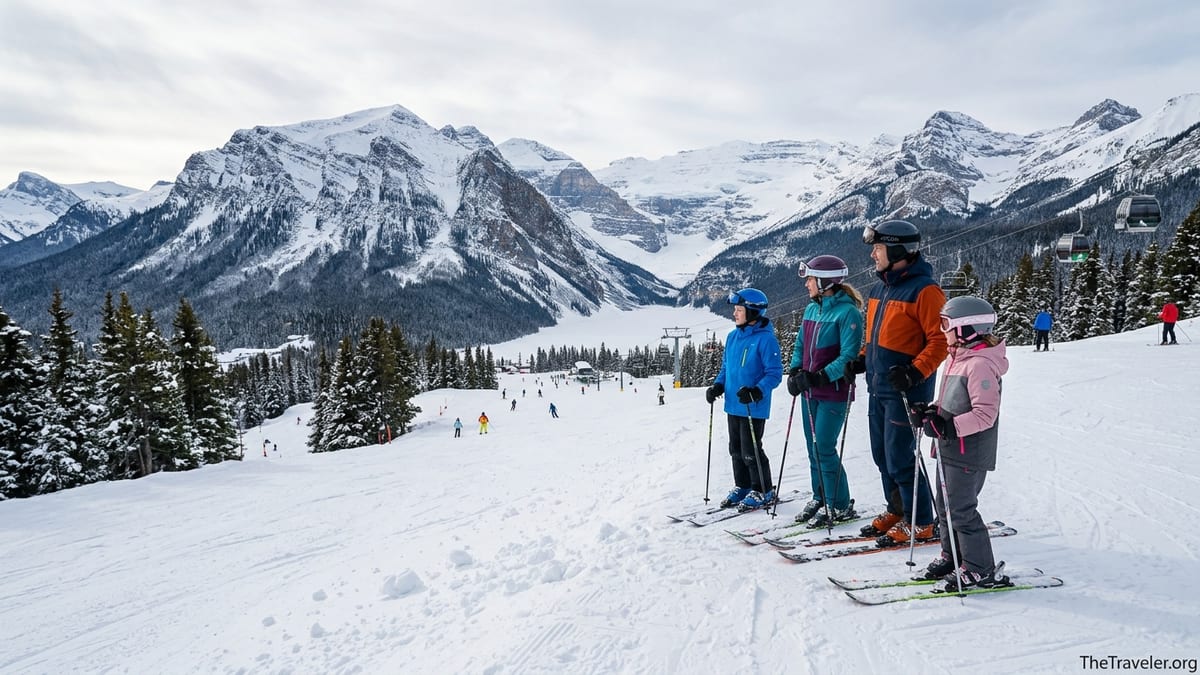
What You Actually Pay: Lift Tickets, Passes, and Packages
Sticker shock is often the first hurdle. Recent pricing guides for the 2025–26 season show adult full‑day lift tickets at Lake Louise starting around 145 Canadian dollars on lower‑demand days and rising toward the mid‑100s, with peak‑period windows approaching roughly 175 to 200 dollars plus tax. Independent trackers list top‑end window prices as high as the mid‑200s during major holidays. Children aged 6 to 12 are typically around 75 to 95 dollars, and kids 5 and under ski free but still require a lift ticket. These are headline numbers, not what savvy visitors usually end up paying, but they give a sense of scale compared with smaller Alberta hills that might charge half as much for an adult day ticket.
For many visitors, the better deal is to avoid single‑day window tickets entirely. Lake Louise is part of the SkiBig3 group with Banff Sunshine and Mt. Norquay, and multi‑day SkiBig3 tickets or advance‑purchase offers often bring daily costs down significantly from the window rate. Travelers who buy at least a few weeks ahead, especially outside Christmas and New Year, frequently report paying closer to the lower end of the published range rather than the peak price. Packages that bundle lodging in Banff or Lake Louise village with three to five days of SkiBig3 tickets can trim total costs further and are worth pricing out even if you are only skiing two or three days.
Season‑pass products can also change the value equation. Lake Louise is included in the Ikon Pass as part of the SkiBig3 grouping, which typically offers a set number of included days that can be split across Lake Louise, Banff Sunshine, and Norquay. For a family that already owns an Ikon Pass for a trip to Colorado or Utah, tacking on a Banff‑area visit can feel almost like “free” skiing, aside from travel and lodging. Even casual skiers who only take one big trip per year sometimes find a lower‑tier Ikon Session pass attractive when they add up four or five days at Lake Louise plus a long weekend elsewhere.
Where Lake Louise quietly helps family budgets is parking and local transit. On‑mountain parking is free, and the resort runs shuttles from its parking lots to the Lake Louise lakeshore and Moraine Lake in winter. Families who base themselves in Lake Louise village can often leave the car parked and ride hotel or SkiBig3 shuttles to the slopes, avoiding daily parking fees that are now common at many big U.S. resorts.
Terrain for Casual Skiers: How Friendly Is the Mountain, Really?
Lake Louise is a true big‑mountain resort. It offers around 145 marked runs across four mountain faces, with an official breakdown of roughly one‑quarter beginner, nearly half intermediate, and the rest advanced or expert terrain. That mix is important for casual skiers: while there is plenty of steep, technical skiing, there is also a genuine amount of forgiving terrain where you can cruise without feeling pushed beyond your comfort zone.
The biggest plus for casual and family skiers is how the easy and intermediate runs are spread across the mountain rather than confined to a tiny beginner pod at the base. Resort guides point out that almost every major lift at Lake Louise serves at least one green or blue run. That means a cautious intermediate can ride the Glacier Express, Top of the World, or Grizzly Express gondola and still find a way down on wide, groomed pistes rather than being forced into narrow steeps. In practice, this lets mixed‑ability groups stay together, riding the same lifts and simply choosing different routes down.
Concrete examples help here. A low‑intermediate skier might spend most of a day on runs like Wiwaxy and Easy Street off the lower lifts, then graduate to longer cruisers such as Deer Run or the gentler blue options under the gondola. Confident intermediates often rave about long, rolling blues that start near the summit and spill all the way back to the base, offering non‑stop views of Temple and Victoria peaks. Meanwhile, the experts in the group can dive into the back bowls or hike‑to chutes and still regroup at the same mid‑mountain meeting spots.
The flip side is that Lake Louise can feel overwhelming to true first‑timers compared with a small family hill with two or three chairlifts. The vertical drop is big, and runs are long. A father teaching his six‑year‑old to ski might find that a couple of laps on the magic carpet followed by one long green run is plenty for a day, especially in mid‑winter cold. For families with absolute beginners, it is worth planning shorter on‑snow days and budgeting extra for ski school to make those big lifts feel approachable.
Snow, Weather, and Crowds: The Hidden Costs of a Day on the Slopes
Conditions and comfort play a big role in whether an expensive ski day feels worth it. Lake Louise is high and cold by North American resort standards, which generally means reliable snow from November into early May and a long season. Visitors arriving in late March or early April often comment that the snow quality on shaded aspects remains wintery long after lower‑elevation resorts are slushy. For casual skiers who cannot chase perfect storms, that reliability can be a major part of the value.
However, cold has its own price. Deep‑winter days in January and early February can be brutally frigid, with windchill on exposed lifts that makes long summit rides uncomfortable for younger kids and infrequent skiers. A family from Seattle or San Francisco used to milder coastal mountains may find that they need to spend on better gloves, face protection, and extra hot chocolate breaks simply to enjoy the day. Those stops at mid‑mountain day lodges add up quickly when cocoa and fries are priced at big‑resort levels.
Crowds are another factor. Lake Louise sees significantly fewer visitors than marquee U.S. destinations like Vail or Park City, but weekends and powder days are busy, particularly in late February and March. On a Saturday of Alberta’s Family Day long weekend, lift lines for the Grizzly Gondola and popular high‑speed quads can stretch to 15 or 20 minutes at mid‑morning. For a casual skier paying a premium day rate, spending much of the day in queues can erode the sense of value. The flip side is that mid‑week in January or early December, many visitors report skiing straight onto lifts with almost no wait, especially on colder days when locals stay home.
Compared with smaller family‑oriented hills closer to Calgary or Edmonton, Lake Louise’s scale and views help compensate for these trade‑offs. Even on a moderately busy day, you can often escape to quieter corners such as the Larch area, where lift lines are shorter and long groomers roll under quiet chairlifts. Choosing your dates wisely, avoiding major holidays, and arriving at opening bell can dramatically improve how much skiing you actually get for the money.
Family Services, Ski School, and On‑Mountain Convenience
For families, Lake Louise’s value often hinges on services beyond the lift ticket. The resort offers a full‑service ski and snowboard school, from group lessons for children and adults to private sessions. Prices move each season, but parents can expect children’s group lessons with lift access and lunch to cost a significant fraction of an adult day ticket per child. For first‑timers and nervous intermediates, though, that investment can decide whether the trip feels like a triumph or a struggle.
Real‑world examples illustrate the trade‑offs. A Calgary family might choose a Saturday at a smaller local hill for around half the cost of a full day at Lake Louise, skiing mostly short runs off two or three lifts. The same family could instead book a full day at Lake Louise, enroll the kids in a morning lesson, and spend the afternoon cruising long green and blue runs together while enjoying some of the most famous scenery in the Canadian Rockies. The second option will almost certainly cost more by the end of the day, but many parents report that the kids progress faster and stay more engaged in the big‑mountain environment.
On‑mountain facilities are generally well set up for families. Base‑area day lodges provide large indoor seating areas, cafeterias, and gear storage spots where parents can regroup and warm up young children. Several mid‑mountain lodges on different sides of the resort make it easy to plan bathroom and snack breaks without descending all the way to the base every time. That said, the food and drink are priced on par with other large destination resorts, so families looking to save often pack snacks and use the lodges primarily as sheltered seating.
In terms of practical convenience, Lake Louise benefits from being a self‑contained resort hub with free parking steps from the base area. Families staying in Lake Louise village are a short drive or shuttle ride away, while those lodging in Banff or Canmore can rely on frequent SkiBig3 buses to reach the slopes. Parents juggling rental equipment, extra layers, and kids’ skis will appreciate that once you park, everything from ticket office to rental shop to base lifts is within a compact footprint rather than spread between distant lots.
Off‑Slope Experience: Lodging, Dining, and Non‑Skiing Options
For many casual skiers and especially for multigenerational family trips, what happens off the slopes is just as important as the skiing. Here, Lake Louise enjoys a powerful advantage: it sits inside Banff National Park, a UNESCO World Heritage site, surrounded by some of the most photographed scenery in North America. Non‑skiers in the group can spend the day walking along the frozen shores of Lake Louise, joining a guided snowshoe tour, or simply enjoying the view from a cozy lobby while others ski.
Lodging choices range from simple motels and hostels in Lake Louise village to iconic properties such as the large chateau‑style hotel on the lakeshore. Prices fluctuate with the season, but during peak winter weeks, lake‑view rooms at upscale properties can reach several hundred dollars per night. Budget‑minded families often base themselves in Banff or Canmore instead, where a broader mix of two‑ and three‑star hotels, condos, and vacation rentals can bring nightly rates down, especially for longer stays.
Dining follows a similar pattern. On‑mountain cafeterias and pubs serve the expected mix of burgers, pizza, soups, and Canadian staples at resort prices. In Lake Louise village, a handful of restaurants and hotel dining rooms offer more variety, though options are still limited compared with Banff, which has a full small‑city selection from casual pizzerias to upscale bistros. Families staying in condos with kitchens in Banff or Canmore often shop at local supermarkets, cook breakfast and some dinners, and treat the occasional meal out or on the mountain as a splurge.
Non‑skiing activities help justify the trip for less enthusiastic skiers and for rest days. Families can book dog sledding near Lake Louise, take a scenic winter gondola ride for wildlife spotting, try cross‑country skiing on track‑set trails around the village, or spend an afternoon ice‑skating on the lake under towering peaks. When you add up the memories from these experiences, a Lake Louise trip can feel like a broader winter holiday rather than just a few ski days, which improves the perceived value even for those who only ski one or two days.
How Lake Louise Compares to Cheaper Alternatives
To judge whether Lake Louise is worth the price, it helps to compare it with realistic alternatives. In Western Canada, families might weigh it against smaller, more local hills closer to major cities or against other destination resorts such as Big White or Kimberley in British Columbia. Many of those areas offer lower day‑ticket prices and more modest lodging costs, along with a friendlier feel for brand‑new skiers.
Take a family from Edmonton planning a four‑day trip. One option is to drive to a smaller regional resort with mostly beginner and intermediate terrain, staying in a basic slopeside condo. Lift tickets might be considerably cheaper than Lake Louise, and everything is compact and easy to navigate. The other option is to drive a bit farther into Banff National Park, base in Banff or Lake Louise, and split their skiing between Lake Louise and Banff Sunshine using a multi‑day SkiBig3 pass. The second plan likely costs several hundred dollars more across lodging, lift tickets, and food, but delivers world‑class scenery, more varied terrain, and the national‑park atmosphere.
For U.S. visitors, Lake Louise often competes with major Colorado and Utah resorts that have similar or higher day‑ticket prices but shorter flights from many American cities. Families who already own Ikon passes might find that using their included SkiBig3 days keeps their direct on‑snow costs low, making the main comparison one of airfare and lodging. In that scenario, Banff and Lake Louise can look like strong value, particularly in shoulder periods like early December or late March when Canadian hotel rates undercut peak‑season U.S. resort prices.
Ultimately, Lake Louise rarely wins on raw affordability. If the primary goal is to get as many cheap ski days as possible, a small local hill or a lower‑profile interior B.C. resort will nearly always come out ahead. Where Lake Louise starts to look “worth it” is when you factor in its scale, reliability of snow, iconic setting, and the ability to combine it with two other major ski areas under the SkiBig3 umbrella. For many casual skiers, especially those treating the trip as a special occasion, those extras are precisely what they are paying for.
The Takeaway
Is Lake Louise Ski Resort worth the price for casual skiers and families? The honest answer is: it depends on what you value most. Purely in terms of dollars per vertical foot, smaller regional hills and less famous Canadian resorts almost always offer cheaper skiing. Lift tickets, on‑mountain food, and some lodging around Lake Louise are firmly in big‑destination territory, and cold mid‑winter weather can mean you do fewer runs than you might on a milder mountain.
Yet Lake Louise offers things that are hard to replicate elsewhere. There is a genuine spread of beginner and intermediate terrain all over the mountain, not just at the base. Free parking and efficient shuttles simplify logistics for families. The combination of SkiBig3 access, a long, reliable season, and the wider Banff National Park experience means that even non‑skiers and occasional skiers come away feeling they have had a full Canadian Rockies adventure, not just a few days on lifts.
For a family taking its first tentative steps onto snow, or for those primarily searching for the lowest‑cost way to log a few local ski days, Lake Louise may be more mountain and more expense than necessary. But for casual skiers and families who are ready to treat skiing as part of a bigger winter holiday, who will savor gondola rides past hanging glaciers and afternoons skating on a frozen alpine lake, Lake Louise often justifies its price. Plan ahead, choose dates outside the most crowded holidays, and use multi‑day or pass products instead of window tickets, and the balance of cost and experience can tip firmly in your favor.
FAQ
Q1. Is Lake Louise a good choice for absolute beginner skiers?
Lake Louise has quality beginner areas and gentle green runs from several lifts, but the mountain’s size and cold temperatures can be intimidating for total first‑timers. For someone who has never skied, a day or two at a smaller local hill before a Lake Louise trip can make the big‑mountain environment feel more comfortable and help you get more value from the higher ticket price.
Q2. How expensive are lift tickets at Lake Louise compared with other resorts?
Recent public pricing shows adult full‑day tickets starting around the mid‑100s Canadian dollars and rising higher on peak dates, similar to or slightly below headline prices at major U.S. destination resorts. Smaller regional hills in Alberta and British Columbia often charge much less, so Lake Louise sits firmly in the premium category, especially if you buy last‑minute window tickets.
Q3. Can families save money by using passes at Lake Louise?
Yes. Lake Louise is part of the SkiBig3 group and included on Ikon passes, so families who plan ahead and buy multi‑day tickets or season‑pass products often pay significantly less per day than the walk‑up rate. If you already own an Ikon Pass for another trip, your direct cost to ski Lake Louise can be limited to travel and lodging, which helps the resort feel much better value.
Q4. Is Lake Louise too challenging for casual or low‑intermediate skiers?
Not necessarily. Although the resort has serious expert terrain, roughly one‑quarter of its runs are beginner and almost half are intermediate, and most major lifts serve at least one easy or moderate way down. Casual skiers who stick to marked green and blue pistes will find plenty of wide, groomed runs. The key is to start on the gentler lower‑mountain lifts and work up gradually as confidence grows.
Q5. How crowded does Lake Louise get, and when is the best time to avoid lines?
Weekends, holiday periods, and sunny powder days can bring noticeable lift lines at the main gondola and popular chairs, especially in late February and March. Mid‑week days outside peak holidays, particularly in early December or mid‑January, tend to be much quieter. Arriving at opening time, using less popular lifts such as those in the Larch area, and taking lunch earlier or later than the crowd also help you ski more and wait less.
Q6. What family‑friendly services does Lake Louise offer?
The resort provides a full ski and snowboard school with child and adult lessons, rental shops with kids’ equipment, large day lodges with indoor seating, and free parking close to the base. Shuttles connect local hotels and parking lots to the lifts, which simplifies logistics for parents. While lessons and on‑mountain food are not cheap, these services make it much easier for families to navigate a big‑mountain day together.
Q7. Is it better to stay in Lake Louise village or in Banff with kids?
Staying in Lake Louise village means a very short drive or shuttle to the resort and close access to the lake itself, but lodging and dining choices are limited. Banff offers a wider range of hotels, condos, and restaurants, often at more competitive prices, and regular SkiBig3 buses run to Lake Louise. Families who prioritize convenience for early‑morning starts may lean toward the village, while those seeking variety and evening activities often prefer Banff.
Q8. How does the cold affect the value of a ski day at Lake Louise?
Cold mid‑winter temperatures can shorten ski days, especially for young children and casual skiers who are not used to deep‑freeze conditions. You may find yourself taking more indoor breaks and doing fewer total runs than at a milder resort. Packing high‑quality layers, face protection, and hand warmers, and planning shorter on‑snow sessions can help you stay comfortable enough that the high ticket price still feels worthwhile.
Q9. Are there enough non‑ski activities to justify a trip for mixed‑ability groups?
Yes. Non‑skiers can enjoy ice‑skating on Lake Louise, guided snowshoe walks, winter sightseeing gondola rides, wildlife viewing, and simply exploring Banff and Lake Louise village. For a multigenerational family where not everyone skis every day, these options help ensure the overall trip feels rewarding even if some members only spend a day or two on the slopes.
Q10. For a budget‑conscious family, when is Lake Louise most likely to feel worth the price?
Lake Louise tends to feel most worthwhile for budget‑conscious families who visit outside peak holidays, book lodging and lift tickets in advance, and use multi‑day or pass products instead of single‑day window tickets. If you combine a few carefully planned ski days with off‑slope experiences in Banff National Park, the trip becomes a broader winter adventure rather than just an expensive day on the hill, which makes the overall cost easier to justify.