


First-time visitors arrive at Lake Louise Ski Resort expecting an easy, park-once, follow-the-gondola kind of day. Instead, many spend their precious first morning circling for parking, standing in lines, and accidentally committing to terrain that feels far beyond their comfort level. The single biggest mistake is underestimating how large, complex and spread out Lake Louise really is, both on the mountain and in its surrounding valley. The good news: with a bit of advance planning, you can avoid the classic pitfalls and have the kind of first day people dream about when they book a trip to the Canadian Rockies.
Get the latest updates straight to your inbox!
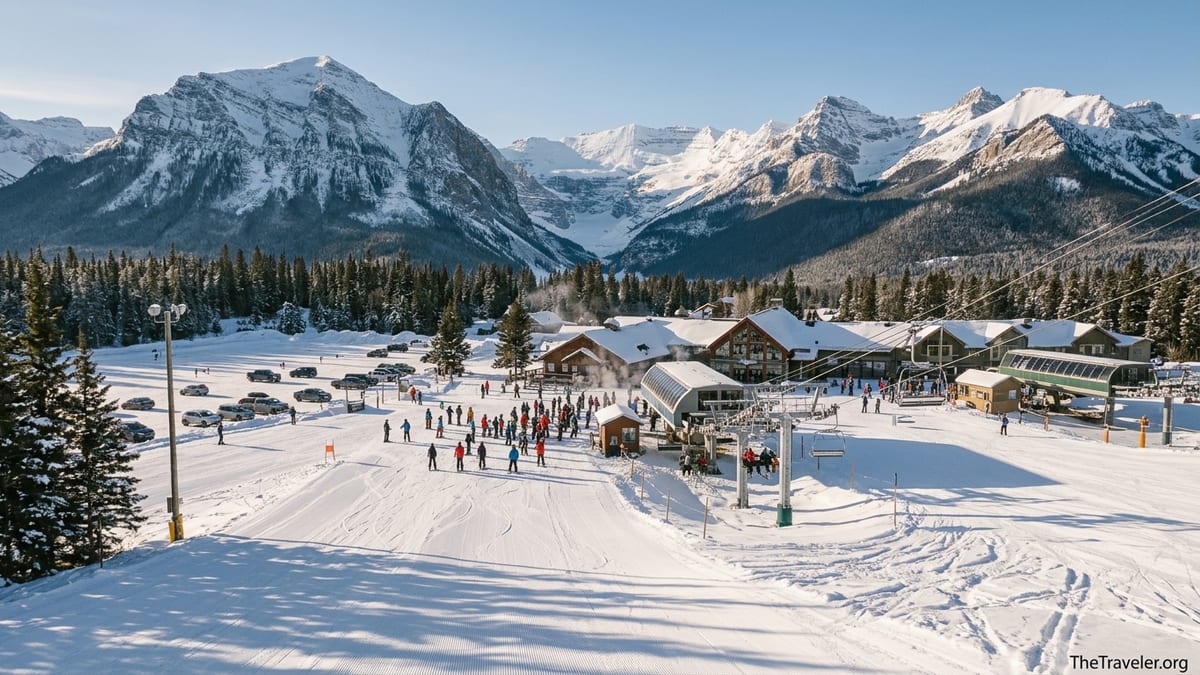
Misunderstanding Where Lake Louise Ski Resort Actually Is
One of the first surprises for many visitors is that the Lake Louise Ski Resort is not on the shores of the famous turquoise lake. The ski hill sits several kilometres down the valley beside the Trans-Canada Highway, while the postcard-view lake and the Fairmont Chateau Lake Louise are up a separate access road higher in the mountains. First-timers often book a mid-range hotel in Lake Louise Village thinking they can stroll to the lifts, only to discover it is a short drive or shuttle ride away. Others drive up to the lakeshore parking lot with skis on the roof, realise there are no chairlifts there, then have to backtrack down to the resort base, losing a chunk of their ski day.
This confusion matters because winter parking at the lakeshore is tightly controlled and mainly designed for sightseeing, ice skating and snowshoeing, not for skiers heading to the resort. If you are staying at the Chateau and plan to ski, you should factor in the resort shuttle schedule or a short drive down to the ski hill each morning. Visitors staying in Banff, about an hour away by road, should plan for highway driving and winter conditions long before they are thinking about where to click into bindings. Treat the lake, the village and the ski hill as three distinct places that you will move between, not a compact, walkable resort village.
In practice, that means confirming in advance whether your accommodation is in Banff townsite, Lake Louise Village, at the Chateau on the lake, or at one of the lodges closer to the highway, and then planning how you will get from there to the base area each morning. Travelers who skip this step often find themselves scrambling for seats on peak-time buses or paying for extra taxis because they assumed everything was within easy walking distance.
For many first-timers, the simplest approach is to choose a hotel that advertises a direct ski shuttle to the Lake Louise base and to time your departure around the first buses of the day. That way, you can avoid the stress of driving and parking at the resort on your very first morning on the mountain.
Arriving Late and Losing the Morning to Parking and Lift Lines
The single most common practical mistake is rolling into the parking lot between 9:30 and 10:30 in the morning, especially on a weekend or a powder day. By that time, many of the most convenient parking areas close to the base lodge are full, the highway turnoff can be slow, and primary ticket windows have noticeable queues. Instead of gliding onto the Glacier Express chair as the sun hits the Front Side, first-timers find themselves shuttling from overflow parking, walking across an icy lot with their gear on their shoulders, or standing in a long lift ticket line as more experienced visitors are already exploring the back bowls.
Lake Louise’s base has a large overall capacity, but winter driving conditions and regional traffic from Banff and Calgary can cause bottlenecks that are not obvious on a trail map. On busy Saturdays in January and February, for example, many local families arrive early to enrol kids in ski school, filling prime parking rows by 8:30. A visiting family arriving from Banff at 9:45 may end up parking much farther away and hustling tired children and gear uphill to meet lesson start times they now risk missing.
A practical strategy is to treat your first day like catching a flight: work backwards from the time you want to be on your first chair. If you aim to load a lift at 9:00, plan to park by 8:15, which might mean leaving Banff around 7:15 to account for winter road conditions and a possible slow-down at the resort entrance. If you are coming from farther afield, consider staying in Lake Louise Village the night before to cut the morning drive to just a few minutes.
Another way to avoid the classic late-arrival crunch is to purchase lift tickets and organise rentals the afternoon before. Many visitors drive up the day they arrive, pick up pre-booked passes from Guest Services, get fitted for gear either at a Banff shop or at the resort rental centre in the late afternoon, then head back to town. The next morning they can skip lines entirely and walk straight to the lifts while day-trippers are still queuing.
Overestimating Ability and Dropping into the Wrong Terrain
Lake Louise is celebrated for its big-mountain terrain. The same steep gullies and open bowls that attract expert skiers can be intimidating or outright dangerous for first-timers who overestimate their abilities. A classic mistake is taking the Top of the World or Summit lifts on a bluebird day, following a group down, and suddenly realising you are committed to a long, steep descent or ungroomed bowl with no easy way out. What looks like a gentle shoulder from the chair can reveal itself as a sustained pitch covered in soft bumps or variable snow.
The resort’s trail map can also be misleading to newcomers unfamiliar with Rockies-style grading. A blue run off the Glacier Express might feel manageable, while a different blue in the back bowls can be much narrower, steeper and ungroomed for long stretches. Visitors used to smaller hills in the US Midwest or Ontario often assume that any blue square will be comfortable because they handle blues at home. At Lake Louise, the same symbol can translate to a much longer and more demanding run.
To avoid this trap, start your first day on the Front Side and in the beginner zones near the base, even if you have skied before. Runs accessed by chairs like Glacier Express and Grizzly Gondola include a range of greens and mellow blues where you can recalibrate to the resort’s scale and snow conditions. If you handle those comfortably, you can gradually work your way toward intermediate terrain on the backside or in the Larch area. When in doubt, ask a lift attendant or ski patroller whether a particular run tends to form moguls, be icy, or stay groomed; locals usually have strong opinions about how certain named runs ski at different times of day.
Many experienced visitors book a half-day guide or join a hosted ski program on their first morning, especially if they are intermediate skiers aiming to sample the best terrain without unpleasant surprises. A private guide through the regional SkiBig3 services, for example, can help you string together a route of forgiving groomers and scenic viewpoints while steering you away from cliff bands and tight chutes that are clearly marked on the map but not always obvious from above.
Skipping Lessons and Underestimating the Learning Area
Because lift tickets and travel to the Canadian Rockies are not inexpensive, some first-time visitors hesitate to spend extra on lessons. They assume a friend or family member can teach the basics on the beginner slope, or they try to save money by heading straight to green runs from the main lifts. At a resort the size of Lake Louise, this can backfire quickly. The beginner learning area near the base is designed with gentle pitches and dedicated surface lifts for a reason. Leaving that zone too early often leads to long, exhausting runs that shake confidence and increase the risk of falls.
Typical full-day group lessons for adults and children at Lake Louise are priced in line with major North American resorts, with school-group materials for the 2025 to 2026 season showing that even subsidised educational packages can run to several dozen dollars per person for instruction alone. While public lesson rates differ for individual travellers, these figures underline that good coaching is a meaningful investment. Yet that investment often unlocks the entire resort: a beginner who spends their first morning with a certified instructor in the learning area will usually be linking turns comfortably on some of the easier green trails by afternoon.
Visitors who skip lessons also miss valuable local knowledge. Instructors not only teach technique but recommend which specific runs will suit you for the rest of your trip. An instructor might, for example, suggest that a nervous intermediate spend the next day lapping a particular sequence of mellow blues off Glacier Express rather than following friends into the back bowls. That targeted guidance is often more practical than anything a generic trail map can offer.
If you are visiting as a mixed-ability group, consider booking a lesson for the least experienced skiers while stronger skiers explore the mountain. Meeting up for lunch at a mid-mountain lodge allows everyone to share the day without compromising on terrain or safety. Many families also like to put children into full-day programs for at least the first day, giving kids a structured environment and parents a chance to orient themselves around the resort.
Ignoring Weather, Visibility and Mountain Scale
Lake Louise sits in Banff National Park and reaches elevations where weather can change quickly. First-time visitors often show up dressed for how it feels in Banff townsite or at the valley floor parking lot, not for conditions at the top of Whitehorn Mountain. A day that starts calm and just below freezing at the base can be significantly colder and windier on the upper chairs, and storms can roll in fast from the west. Those who head straight to the highest lifts without checking the latest forecasts, avalanche bulletins or lift status can find themselves in flat light, blowing snow and reduced visibility that makes route-finding tricky.
Low visibility in particular catches new visitors off guard. Above the treeline, landmarks are fewer and runs can feel similar, especially when the light is flat. You might exit a lift intending to follow a particular blue but, in the fog and wind, drift toward a steeper line or an area peppered with rocks and small cliffs. Even though the resort is well signed, it is still a large alpine environment. This is not a small local hill where you can see the parking lot from every run.
Smart first-timers build flexibility into their plans. If an incoming storm is forecast, they focus on tree-lined runs on the Front Side or in Larch, where contrast and depth perception remain better. On sunny days with good visibility, they gradually venture higher and farther, keeping an eye on time so they are not still on the far side of the resort late in the afternoon when legs are tired. Checking the resort’s snow report and any posted warnings at the base before heading up is a simple habit that can prevent a minor adventure from turning into a stressful situation.
Layering clothing is another practical detail that matters more than many expect. Wearing a moisture-wicking base layer, an insulating mid-layer and a windproof shell allows you to adapt as temperatures swing during the day. Having a thin face covering and low-light goggles can make the difference between enjoying a couple more runs off a higher chair or heading down early because the wind and flat light became unbearable.
Underplanning Lift Tickets, Rentals and Food
Another frequent mistake is treating lift tickets, rentals and meals as details to sort out once you arrive at the base. On busy days, that approach turns into an hour or more of queuing and last-minute decisions at rental counters. First-time visitors who did not pre-book anything may find that the specific boot sizes or demo skis they want are limited, or that their group gets split between different lesson times because remaining spaces are scattered.
Approximate public pricing for day tickets at Lake Louise in recent seasons has commonly been north of one hundred Canadian dollars for adults, with discounts available for children and multi-day purchases. For a family of four, that makes advance planning more than just a convenience; it is a way to control costs. Many visitors buy multi-day passes that cover Lake Louise and neighbouring Banff Sunshine and Mount Norquay, then choose each morning where to ski depending on conditions. Others look at lodging packages that bundle lift access with hotel stays in Banff or Lake Louise Village.
Rentals are another area where preparation helps. Travellers who arrange gear through a Banff shop often take advantage of fitting the evening before their first ski day, letting them drive or shuttle to Lake Louise the next morning fully equipped. Those who prefer to rent at the resort should arrive early, especially around Christmas, New Year and long weekends, when queues for boots and skis build quickly. Having every member of your group’s height, weight and shoe size written down can speed up paperwork and reduce errors in setup.
Food planning is easily overlooked but can shape how your day feels. On-mountain cafeterias at Lake Louise offer typical resort pricing, with hot meals and drinks that add up quickly for groups. Some experienced visitors pack sandwiches and snacks in a small backpack and buy only hot drinks on-site, while others budget for a full mid-mountain lunch experience at the main lodges. Either way, knowing your plan avoids the common first-timer scenario of wandering the base trying to decide where to eat at 12:30, just as everyone else has the same idea.
Expecting a Walkable Village and Après Scene at the Base
Travelers who have skied in parts of Europe or at some US destination resorts sometimes expect to find a dense, pedestrian village at the foot of Lake Louise’s slopes, lined with cafes, bars and shops. In reality, the base at Lake Louise Ski Resort is functional rather than sprawling: a collection of lodges, rental facilities and services focused on the sport itself. The broader amenities, including most restaurants, bars and grocery stores, are down the road in Lake Louise Village or farther away in Banff.
First-time visitors who picture strolling from their slopeside condo to a row of après-ski spots can feel underwhelmed if they arrive without understanding this layout. After skiing, many people drive or shuttle back to Banff for dinner or drinks, or they return to their accommodation in Lake Louise Village where hotel lounges and restaurants provide a cozier evening atmosphere. Recognising that the ski hill, village and town of Banff form a triangle of experiences allows you to plan realistic transitions between them.
For example, a group staying in Banff might ski at Lake Louise all day, have a quick drink at the base while returning rentals, then drive back to Banff for a late dinner on Banff Avenue. A family based in Lake Louise Village might do the opposite, coming straight back to the hotel after skiing so children can swim in the pool before a relaxed meal on-site. Framing Lake Louise as part of a wider regional ski experience, rather than a self-contained resort village, reduces the disappointment that sometimes arises when first-timers go looking for nightlife at the base and instead find a quiet parking lot.
On the positive side, this setup preserves much of the natural feel of Banff National Park. Instead of neon-lit streets at the base of the mountain, you step off the slopes into crisp alpine air and look up at the surrounding peaks before heading out. Those who value a national park atmosphere often find this balance more appealing once they adjust expectations.
The Takeaway
All of these small missteps flow from the same central error: underestimating the complexity and scale of Lake Louise Ski Resort and its surroundings. The mountain is large, the terrain is varied and the wider area includes a village, a famous lake and an hour-long link to Banff, all woven into a protected national park. First-timers who assume it will behave like a compact, purpose-built resort tend to lose valuable time to logistics, pick unsuitable terrain and feel flustered before they ever settle into a rhythm on snow.
The antidote is straightforward. Treat your first visit like a trip to a big-mountain destination, not a casual day at a local hill. Decide in advance where you will stay and how you will reach the base, purchase or at least reserve lift tickets and rentals, and strongly consider a lesson or guide to unlock the right terrain for your ability. Arrive early, start on forgiving runs, pay attention to weather and visibility, and remember that the lake, village and ski hill are separate but complementary pieces of the same experience.
With that mindset, Lake Louise delivers exactly what draws skiers and riders from around the world: sweeping views over the Canadian Rockies, long descents that leave your legs pleasantly tired, and the chance to combine big-mountain skiing with the iconic winter scenery of Banff National Park. The biggest mistake first-time visitors make is not logistical at all. It is arriving without the respect and preparation a mountain like this deserves.
FAQ
Q1. Is Lake Louise Ski Resort right next to the famous Lake Louise itself?
Not exactly. The ski resort base is several kilometres down the valley from the lakeshore. You ski at the resort, then drive or shuttle up a separate road to visit the actual lake.
Q2. Do I need a car to ski at Lake Louise for the first time?
A car is helpful but not essential. Many visitors stay in Banff or Lake Louise Village and use resort or hotel shuttles. If you do drive, be ready for winter highway conditions and plan to arrive at the base early.
Q3. How early should I arrive at Lake Louise to avoid parking and ticket lines?
On weekends and busy holidays, aim to be parked by around 8:15 in the morning so you can sort out gear and be on a lift close to opening, rather than arriving mid-morning when lines are longest.
Q4. Is Lake Louise a good place for beginners?
Yes, there is a dedicated learning area and a number of gentle green and mellow blue runs. The key is to stay in appropriate zones at first and not follow friends into steeper back bowls too quickly.
Q5. Should I book ski lessons at Lake Louise in advance?
Booking ahead is wise, especially during peak times. Lessons often fill, and having a confirmed spot means you can structure your day around professional instruction instead of improvising at the base.
Q6. Are lift tickets cheaper if I buy them before I arrive?
Prices change, but buying in advance, choosing multi-day products, or looking at regional passes often works out cheaper than paying last-minute day rates at the ticket window.
Q7. Can I visit the lake and ski on the same day?
Yes, many people ski during the day and visit the lakeshore for a walk or skate either early in the morning or later in the afternoon. Just remember they are different locations and factor in the extra drive or shuttle time.
Q8. What should I wear for winter conditions at Lake Louise?
Dress in layers with a moisture-wicking base, an insulating mid-layer and a windproof outer shell. Bring good gloves, a warm hat or helmet liner and goggles suited to both bright and low-light conditions.
Q9. Is there a big après-ski scene at the base of Lake Louise?
The base area has bars and places to grab a drink, but it is not a dense village. For a livelier evening scene, most visitors head back to Banff or spend time in hotel lounges in Lake Louise Village.
Q10. What is the one thing I should do to avoid the classic first-timer mistake?
Take time before your trip to understand the layout: where you are staying, how you will get to the base, and which terrain matches your ability. That basic preparation prevents most of the headaches new visitors experience.