


Renting a car abroad can be the difference between being stuck on a bus timetable and having the freedom to disappear down that enticing side road to a hilltop village or hidden beach. In recent years, Localrent.com has become a favorite among independent travelers heading to places like Georgia, Montenegro, Greece, Turkey, and beyond. But if you have never used it before, it is natural to ask: is Localrent.com legit and safe, or are you risking your money and your holiday? This article takes an up to date, real world look at how Localrent works, what other travelers are reporting, and how to use it wisely.
Get the latest updates straight to your inbox!
What Is Localrent.com and How Does It Work?
Localrent.com is an online broker that connects travelers with small, often family run car rental companies in various countries. According to its own company information, Localrent has operated since 2011 and positions itself as an aggregator that carefully selects local partners and monitors their performance using customer feedback. Instead of owning cars, it acts as a middleman between you and independent rental agencies.
In practice, the booking process looks similar to using a global broker. You select your destination city, dates, and pickup location, then browse available cars with photos, basic specs, and key terms. You pay a relatively small advance online, usually around 15 to 20 percent of the total cost, and pay the rest directly to the local rental company when you receive the keys. This split payment model is one of the reasons many travelers consider Localrent lower risk than paying for the entire rental upfront to an unknown company abroad.
The service is strongest in countries where big international brands are present but often expensive or limited. For example, travelers commonly use Localrent to hire Toyota Prius hybrids in Tbilisi, small hatchbacks in Montenegro’s coastal towns, or compact cars on the Greek islands. In these markets, Localrent’s partners are typically small garages or local agencies with fleets ranging from a handful of cars to a few dozen, which would otherwise be hard to find or evaluate from abroad.
Behind the scenes, Localrent provides rental companies with a management system for reservations and pricing, and it takes a commission on each booking. The company says it verifies partners before listing them and removes those that receive consistently poor feedback. That broker role is important, because your experience will depend as much on the specific local supplier as on Localrent itself.
Is Localrent.com Legit? What Independent Reviews Show
The most obvious indicator of legitimacy is whether a company has a visible track record and real customers. Localrent’s reviews on major platforms such as Trustpilot show thousands of ratings with an overall score in the mid to high range, suggesting that the majority of users report a positive experience. Recent summaries of reviews highlight smooth pickup and drop off, clean and well maintained vehicles, and helpful communication as common themes.
Independent review sites that specialize in checking the safety of websites generally rate Localrent.com as a legitimate business rather than a scam operation. These assessments point out that the site has been active for many years, uses standard payment processors, names a real Estonian legal entity, and has an established online presence. Long running discussion threads on traveler forums and subreddits in destinations like Georgia and Montenegro also show a pattern: Localrent is widely used, most rentals go fine, and the service is seen as a normal broker rather than a fly by night website.
At the same time, secondary review sites that score online reputation, such as those that assign a trust score out of 100, often give Localrent a “medium to good” rating rather than perfect. This reflects a mix of largely good feedback with a smaller number of complaints. These critical reviews usually relate to specific local suppliers, disputes over alleged damage, or confusion about insurance. The fact that these grievances are publicly visible and the company responds to many of them is another sign that Localrent is operating out in the open, even if not every case ends to the traveler’s satisfaction.
Overall, the pattern across multiple, independent sources is consistent with a real, established broker that generally delivers what it promises, rather than a site created purely to collect deposits and disappear. That does not mean every rental will be flawless, but it does mean you are not dealing with a fabricated or anonymous entity.
How Safe Is Localrent in Practice? Real Traveler Experiences
Safety, in the context of a car rental broker, usually means two things. First, can you trust the company with your money and personal data. Second, are you likely to be treated fairly if something goes wrong during the rental. On both fronts, Localrent’s record is mixed but generally positive, with important caveats.
On the financial side, many travelers appreciate that they only pay a modest advance to Localrent. If a supplier fails to show up or a booking is canceled improperly, the amount exposed is smaller than if the full rental had been prepaid. Numerous reviews describe scenarios where a reserved car was not available and Localrent either helped find an alternative or refunded the advance. That behavior is consistent with a legitimate broker interested in repeat business rather than a quick win.
Where problems do arise is usually at the level of the local rental partner. For example, in Georgia and Romania there are reports from recent years of small agencies trying to charge large sums for alleged damage or infractions that travelers dispute. In one widely discussed case on a Caucasus travel forum, a local company using a remote immobilizer disabled a car in the mountains and demanded several hundred euros, claiming a bogus contract violation. The travelers involved turned to Localrent, which opened an investigation but could not instantly override the local firm’s stance. These cases underline that no broker, however legitimate, can fully eliminate the risk of a bad actor in its network.
Other recurring themes in mixed reviews include receiving an older car than the photos suggested, being asked for passport or driver’s license scans via WhatsApp for insurance purposes, or encountering inconsistent interpretations of insurance coverage at pickup. While many travelers accept these practices as local norms, they can feel uncomfortable if you are used to large multinational brands with more uniform standards. The key safety takeaway is not that Localrent is unsafe, but that you must treat each rental as a local transaction and protect yourself accordingly.
Pricing, Deposits, and Insurance: What You Can Realistically Expect
One of the main reasons travelers choose Localrent is price. Travel bloggers and independent comparison sites note that Localrent’s partners often undercut global brands by roughly 15 to 30 percent for similar vehicles in the same destination. A week in a compact automatic on the Albanian Riviera or in Crete, for instance, might cost the equivalent of 180 to 250 euros through a Localrent supplier, while the same dates with a multinational brand might be 250 to 350 euros, plus airport location charges.
Deposit policies are another major draw. In many Localrent destinations, traditional rental desks routinely block 700 to 1500 euros on your credit card as a damage deposit. Localrent partners often work with far smaller sums, such as 150 to 350 euros, or occasionally no deposit at all if you buy an upgraded insurance package. Travelers renting a mid range car in Montenegro or Georgia frequently comment that their deposit was a few hundred euros in cash, handed back without quibbling at the end of the rental when no damage was present.
Insurance is where careful reading is essential. Localrent listings usually explain what is included, such as basic third party liability, a collision damage waiver with an excess, or a “full insurance” option that still carries exclusions. Independent guides to Localrent point out that even so called full coverage may not include underbody or glass, and will not protect you if you breach rental terms by, for example, driving off road or on unpaved mountain tracks. In Georgia, for example, some renters have received bills for punctured tires or cracked windshields that they assumed were covered, only to discover that their package excluded such items.
In practical terms, you should expect Localrent to offer competitive base prices and relatively modest deposits, but you should not assume that insurance is identical across suppliers or equal to the “super cover” you might buy from a global chain. Treat each listing like a separate company. Read the terms shown on the Localrent page, then read the rental voucher or contract that arrives after confirmation, and ask for clarifications in writing before arrival if needed.
Regional Patterns: Where Localrent Shines and Where to Be Extra Cautious
Localrent’s reputation varies by country, largely because it works with different partners in each market. In the Caucasus and the Balkans, such as Georgia, Armenia, Montenegro, and Albania, it is often considered one of the most practical and affordable ways to secure a car as an independent traveler. Many positive accounts describe courteous owners delivering a Toyota Prius to a Tbilisi guesthouse at 9 a.m., or meeting a family at Podgorica Airport with a Kia Sportage, walking around the car for five minutes, and sending them off to the coast.
On popular Greek islands and in Cyprus, Localrent is frequently praised for providing straightforward rentals where airport desks might be overcrowded or out of automatic cars. Travelers mention getting newer compact models with low mileage, simple contracts, and deposits around 200 to 300 euros in cash. In these Mediterranean destinations, local agencies depend heavily on online reviews and repeat business, which can help keep behavior in check.
In some Eastern European markets, especially big cities with many micro rental firms, the picture can be more uneven. Reviewers in countries like Romania and Bulgaria report both excellent experiences and serious disputes with certain agencies over alleged damages, extra cleaning fees, or toll violations. When such issues arise, the response from Localrent varies: in some cases, the broker intervenes and pressures the supplier; in others, it treats the matter as a contractual dispute between client and local firm.
For long distance, high risk driving, such as winter trips into remote mountain regions or cross border journeys into neighboring countries, Localrent can still be useful, but you should apply extra caution. Make sure cross border travel is explicitly allowed, confirm winter tire policies in writing, and favor suppliers with consistently strong, recent reviews mentioning similar routes. Where possible, choose slightly newer cars with modern safety features such as stability control and multiple airbags.
Common Pitfalls and How to Protect Yourself When Using Localrent
Most of the negative stories about Localrent do not stem from the website itself, but from travelers treating a local rental like a casual handshake deal. The safest way to use the platform is to approach every booking as if you were renting from a small independent business at home, where documentation and evidence matter.
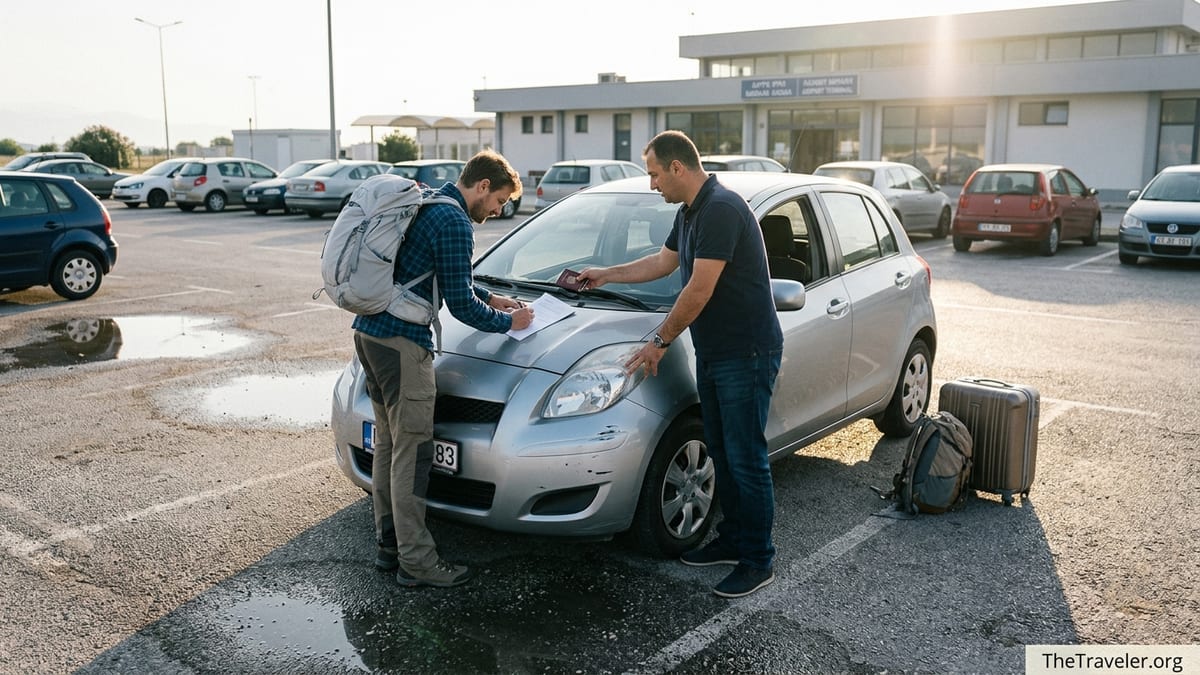
One frequent pitfall is not recording the condition of the car at pickup. In destinations with rough roads, some agencies are understandably strict about damage. Before driving away, take detailed time stamped photos and videos of the exterior, interior, tires, windshield, and roof, even if the agent is in a hurry. For example, in Tbilisi or Kutaisi, scratched bumpers and cracked hubcaps are common on city cars. Having your own images can make the difference between a smooth return and a long argument over pre existing marks.
Another risk is communicating only via informal channels about key terms. Many Localrent suppliers will contact you on WhatsApp to arrange delivery, exchange passport scans for insurance, or adjust pickup times. That is normal in many countries, but if they propose any change in deposit, insurance coverage, or fees, ask them to update the booking through Localrent or send a formal confirmation by email that matches the voucher. That way, if you later need the broker’s help, you have more than chat messages to support your case.
Finally, be very wary of offers that look substantially cheaper than the rest. Independent testing of car rental brokers shows that brokers are not always cheaper than booking direct, and headline prices can conceal aggressive up selling or strict damage policies. On Localrent, if one supplier is undercutting others by a large margin, dig into the reviews and contract details. A slightly higher daily rate with a well reviewed operator can easily be the better deal once you factor in peace of mind.
The Takeaway
Localrent.com is, by the weight of available evidence, a legitimate and widely used car rental broker for travelers heading to destinations where local agencies dominate. It has operated for more than a decade, processes thousands of bookings each year, and attracts largely positive feedback on mainstream review platforms and travel forums. For many travelers, especially in places like Georgia, Montenegro, and the Greek islands, it offers a practical way to access reasonably priced, locally run car rentals with lower deposits than international chains.
That said, using Localrent safely means recognizing what it is and what it is not. It is a marketplace for independent rental companies, not a single, standardized brand. While the broker can assist when disputes arise, your real world experience will depend heavily on the individual supplier you choose and how carefully you read and follow the rental terms. Issues around damage claims, insurance coverage, and vehicle condition almost always trace back to misunderstandings or to a small minority of problematic partners.
If you are prepared to do a bit of due diligence, document the car carefully, communicate key points in writing, and avoid deals that seem too good to be true, Localrent can be a safe and cost effective way to rent a car abroad. It is not risk free, but then neither are traditional rental companies. In many of the markets where Localrent operates, the choice is not between perfect and flawed, but between different sets of trade offs. For independent travelers who value flexibility and local interaction, Localrent is a tool worth considering, as long as you use it with your eyes open.
FAQ
Q1. Is Localrent.com a scam or a real company?
Localrent.com is a real car rental broker that has been operating for more than a decade and works with local rental companies in multiple countries. Independent review platforms and traveler forums show that thousands of people use it each year, with the majority reporting successful rentals, which is consistent with a legitimate business rather than a fake site.
Q2. How does payment work when I book a car through Localrent?
When you book through Localrent, you normally pay a small advance online, often around 15 to 20 percent of the total price, using a bank card. The remaining balance, plus any deposit, is paid directly to the local rental company at pickup, usually in cash or by card depending on the supplier’s rules. This structure limits how much money you pay in advance to an intermediary.
Q3. Is it safe to send my passport and driver’s license details to Localrent partners?
Localrent partners often ask for scans or photos of your passport and driver’s license in advance to prepare insurance and contracts, and many travelers share these without issues. However, you should only send documents once you have a confirmed booking, and ideally through channels you are comfortable with. If you are uneasy about sending copies via messaging apps, you can request to present them in person at pickup or use email and ensure any images are shared securely.
Q4. What happens if the local rental company does not show up with my car?
If the supplier does not appear at the agreed time and place, you should first try to contact them using the details on your voucher, then contact Localrent support as soon as possible. In many reported cases, Localrent has either helped arrange an alternative car with another partner or refunded the advance. Outcomes can vary by situation, but you are not simply abandoned to deal with the problem alone.
Q5. Are deposits on Localrent generally lower than with big international brands?
In many destinations, Localrent partners require lower deposits than large multinational rental companies. While traditional desks might block 700 to 1500 euros on your card, Localrent suppliers often work with deposits in the range of 150 to 350 euros, sometimes in cash. Exact amounts depend on the car class, destination, and insurance package, so always check the figure listed on the specific offer.
Q6. Does “full insurance” on Localrent really cover everything?
“Full insurance” on Localrent usually means a more comprehensive package with a reduced or zero excess, but it almost never covers absolutely everything. Common exclusions include underbody damage, tires, glass, interior damage, and any incident that occurs while breaking the rental terms, such as off road driving. You should read the insurance section in both the Localrent listing and the final contract to understand what is and is not covered.
Q7. How can I choose a reliable local partner on Localrent?
To pick a reliable partner, look for suppliers with a high average rating and a solid number of recent reviews, ideally from the past year. Read comments that mention deposit handling, damage inspection, and how problems were resolved, not just general praise. It is often safer to choose a slightly more expensive car from a company with consistently strong feedback than the very cheapest offer from a little reviewed supplier.
Q8. What should I do at pickup to avoid damage disputes later?
At pickup, walk around the car with the agent and note any existing scratches, dents, or interior marks on the form or voucher. Take your own time stamped photos and a short video showing all sides of the car, the roof, wheels, and interior. Make sure the fuel level and mileage match what is written in the contract. These simple steps give you clear evidence if a disagreement about damage arises when you return the vehicle.
Q9. Can I cross borders with a car rented through Localrent?
Cross border travel is sometimes allowed and sometimes forbidden, depending on the country and the specific rental company. Some Localrent partners will issue a “green card” or written permission to take the car into neighboring countries for an extra fee, while others prohibit it completely. Always check the listing and confirm cross border permission in writing before booking if your itinerary involves driving into another country.
Q10. Is Localrent cheaper than booking directly with a local rental company?
Localrent often offers competitive prices because it aggregates many small agencies, but it is not always cheaper than booking direct. In some cases, a local company’s own website or an in person inquiry may match or slightly beat the broker’s rate. However, using Localrent gives you the benefit of a standardized booking interface, multilingual support, and the ability to compare several suppliers in one place, which many travelers find worth a small potential price difference.