


On a coastline packed with glamorous beach clubs and busy promenades, Plage des Ondes on Cap d’Antibes promises something different: a small, sandy cove where the water is clear, the mood is low-key and the views sweep across the Bay of Juan-les-Pins and the Lérins Islands. For travelers deciding whether it deserves a place on their French Riviera itinerary, the question is simple. Is Plage des Ondes actually worth the detour if your priorities are swimming and pure relaxation?
Get the latest updates straight to your inbox!
Where Is Plage des Ondes and What Makes It Special?
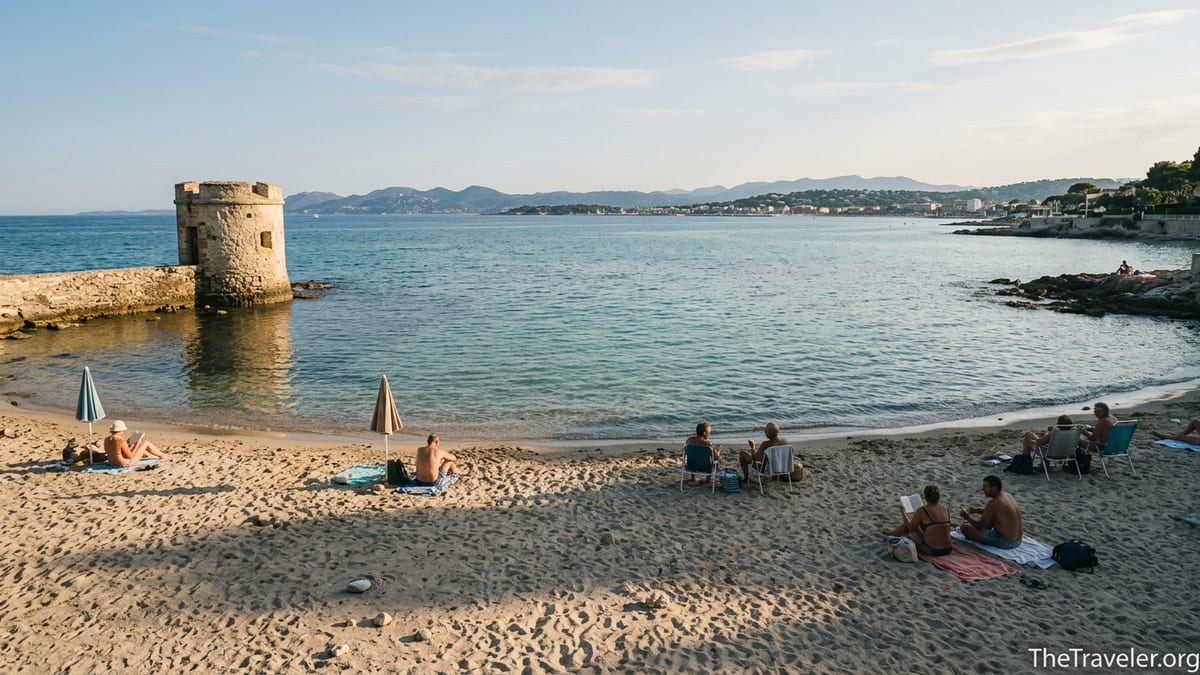
Plage des Ondes sits on the western side of Cap d’Antibes, roughly halfway between Antibes Old Town and Juan-les-Pins. It is officially a public beach, a slim crescent of sand tucked below the coastal road with a tiny stone turret at one end that has become one of the most photographed spots on the peninsula. Reviewers and local beach guides consistently describe it as a “hidden gem” or an “intimate” cove, especially compared with the long urban sands of Juan-les-Pins or the broader crescents of La Salis and Le Ponteil closer to central Antibes.
Part of its charm is the setting. Looking out from your towel you see the curve of Juan-les-Pins to the right, the low mauve outline of the Estérel hills in the distance, and, on clear days, the Lérins Islands sitting on the horizon. In the late afternoon the sun drops behind Juan-les-Pins, giving Plage des Ondes a soft golden light that many visitors single out as ideal for a last swim of the day or a picnic-style aperitif on the sand.
Unlike many Riviera beaches that are a mix of pebbles and imported sand, Plage des Ondes is predominantly sandy underfoot, which already makes it more comfortable for swimmers than the stony stretches you find in Nice or along parts of the Antibes seafront. The beach is narrow and only a couple of hundred meters long, so it feels human in scale: you are never far from the water’s edge and you can easily keep an eye on children without walking up and down a vast shoreline.
The immediate area is residential rather than commercial. Villas and small apartment blocks sit behind the road, and there are no loud bars or late-night clubs at the beach itself. That contributes to the peaceful atmosphere but also shapes some practical pros and cons, especially if you are planning to spend a full lazy day here rather than just drop in for a swim.
Water Quality and Swimming Conditions
For swimmers, the primary question is whether the water is clean, calm and safe. Official French bathing water monitoring data for 2025 lists “Les Ondes” as one of Antibes’ sea bathing points, with recent seasons consistently rated in the top quality bands. That essentially means the water is regularly tested and has been found suitable for bathing throughout the main season, in line with other well-regarded beaches on Cap d’Antibes and in Juan-les-Pins.
In practical terms, travelers describe the water at Plage des Ondes as clear and generally calm, with very gentle waves except on rare windy days. Because the beach sits in a protected curve of the peninsula and faces west into the bay rather than directly out to open sea, you are less exposed to swell than at some more rugged Mediterranean coves. Families on recent trips note that you can wade out quite far before the depth drops dramatically, which is reassuring if you have younger children or if you are not a confident swimmer.
If you are a keen lap swimmer rather than a paddler, Plage des Ondes can still work well, especially in the morning when the sea is typically glassy. There are no dedicated swimming lanes or lifeguard-marked zones, but the cove is compact enough that you can comfortably swim parallel to shore, doing relaxed 100 to 200 meter passes without cutting across boat channels. For more serious fitness swimming, locals often combine Ondes with nearby beaches, doing a longer coastal swim along the cap when conditions are perfectly calm and visibility is good.
One detail many visitors appreciate is the sandy seabed. You do not need water shoes here in the way you might on rocky calanques or at pebble beaches such as Nice’s Promenade des Anglais. That said, occasional stones, shells or seaweed patches near the edges are normal, especially after a storm. Jellyfish can appear anywhere along the Côte d’Azur in high summer, and Plage des Ondes is no exception, so following local advice and checking recent reports once you arrive in Antibes is sensible if you plan long swims.
Is It Truly Relaxing? Atmosphere, Crowds and Noise
For travelers seeking relaxation, the key draw of Plage des Ondes is its mellow atmosphere. Local-focused beach guides describe it as a spot primarily used by Antibes residents rather than tour groups, in part because parking is limited and there are no big beachfront businesses calling to passersby. As a result, even in July and August it often feels less frantic than La Gravette by the Old Town walls or the big central beaches of Juan-les-Pins.
However, “quiet” on the French Riviera is always relative. In the peak summer school holidays the sand at Ondes does fill up, and reviews from recent years mention towels laid close together by mid-morning. Expect normal family noise: children playing in the shallows, groups of friends chatting, and the hum of scooters and cars on the road above. If you want a truly meditative experience, aim to arrive before 9:00 a.m. or drop by in late September and early October when sea temperatures remain pleasant but visitor numbers have thinned dramatically.
The type of relaxation you get here is low-key and unfussy rather than high-luxury. There are no rows of paid sun loungers, beach clubs with DJ sets or cocktail menus on the sand at Plage des Ondes itself. One typical scene on a summer evening is local residents bringing foldable chairs, a simple apéritif of rosé and olives, and staying on until the sunset glow fades over Juan-les-Pins. If your idea of relaxation involves table service, daybeds and a buzzing people-watching scene, you may be happier at private beach clubs such as those on Plage de la Garoupe or at hotel beaches closer to Juan-les-Pins.
On the other hand, if you are searching for a place to read a book, listen to the gently lapping water and occasionally dip into the sea without constant loud music, Plage des Ondes is one of the more satisfying options around Antibes. The absence of large restaurants keeps lighting minimal after dark, so it also feels more tranquil once the day’s bathers have left, and it is a pleasant final stop on an early evening walk around the western side of the cap.
Facilities, Comfort and What to Bring
For a small, public cove, Plage des Ondes is reasonably equipped but not full-service. Travelers’ reports and regional beach guides highlight the presence of basic facilities such as showers for rinsing off and nearby public toilets, although you may need to cross the road or walk a short distance to find them. Trash bins are available, and the local municipality tends to keep the sand relatively clean, but this is not a groomed resort beach and you should not expect staff constantly raking the shore during the day.
There are no permanent sunbed concessions or official rental huts on the sand. Almost everyone brings their own towels, lightweight beach chairs or compact umbrellas. If you are planning to spend several hours here in midsummer, a portable shade solution is worth the space in your luggage, as the beach offers very limited natural shade once the sun is overhead. Many visitors pick up inexpensive umbrellas and mats from supermarkets in Antibes or Juan-les-Pins on arrival, often spending less than what a single day’s lounger rental would cost at a private beach elsewhere in the region.
You will also want to think ahead about food and drinks. There is no big beachfront restaurant directly on Plage des Ondes. Instead, people tend to stock up at bakeries and grocery shops in Antibes or Juan-les-Pins before arriving, then picnic on the sand. A typical budget-friendly setup might be a takeaway baguette sandwich for about the price of a coffee on the Riviera, a bottle of chilled water and some fruit from the market. If you prefer a sit-down lunch, you will likely walk 10 to 15 minutes to neighboring areas with cafés, or hop back on the bus toward Juan-les-Pins or Antibes after your swim.
For comfort, consider a pair of lightweight flip-flops or sandals, as the sand near the back of the beach can get very hot by early afternoon, and you will cross a strip of pavement and the roadside to reach it. A compact dry bag is also handy if you plan to swim out with valuables, since there are no lockers, and leaving phones and wallets unattended on a crowded stretch of sand is not advisable even in generally safe coastal towns like Antibes.
Getting There: Practical Access from Antibes and Beyond
One of the common complaints in reviews of Plage des Ondes is parking. The beach sits below a residential road without a large dedicated car park, and the limited street spaces on nearby side roads fill quickly in high season. Drivers who arrive after late morning in July or August often circle for some time or end up parking further away and walking back along the roadside, which can be stressful if you are carrying gear or traveling with children.
For most visitors, public transport is the easiest approach. Antibes and Juan-les-Pins are served by the Envibus network, which offers simple single tickets and short-term passes that are typically very affordable compared with taxi fares. Current route information shows local buses stopping at “Plage des Ondes,” connecting it with hubs such as Port Gallice in Juan-les-Pins and onward to the Juan-les-Pins SNCF train station. That means you can, for example, step off a regional train from Nice, Cannes or Marseille, walk a short distance to a bus stop in Juan-les-Pins, then ride just a few minutes to the beach.
If you prefer to walk, Plage des Ondes fits nicely into a leisurely coastal stroll. From central Juan-les-Pins, it is roughly 20 to 30 minutes on foot following the shoreline and then the road around the cap. From Antibes Old Town, it is longer but still manageable for reasonably fit walkers who do not mind some roadside sections without wide pavements. Many travelers choose to walk there in the cooler morning temperatures, swim for an hour or two, then catch a bus back once the sun is hotter and everyone is carrying sandy towels.
Arriving from Nice or the airport without a car, the typical route is to take a train to Antibes or Juan-les-Pins and then use the local bus mentioned above. Regional trains along this stretch of the Côte d’Azur run frequently in season, and journey times from Nice Ville to Antibes are usually under 30 minutes. Taxis or ride-hailing services can drop you directly at the roadside above the beach, but fares add up quickly in summer, especially if there is traffic along the coastal road.
Comparing Plage des Ondes with Other Nearby Beaches
Whether Plage des Ondes is “worth it” depends on how it compares with other options around Antibes for your particular style of swimming and relaxation. La Gravette, for instance, is the small sandy beach right beneath Antibes’ medieval ramparts. It is closer to cafés, markets and the Picasso Museum, and is especially convenient if you are staying in the Old Town, but it can feel more crowded and urban, with a stronger sense of being in the middle of a busy resort town.
La Salis and Le Ponteil, a short walk east of the Old Town, offer long, shallow bays with fine sand and a classic Riviera promenade behind them. They are excellent if you want space to spread out with children, easy access to snack kiosks and a developed seafront. However, those same advantages bring larger crowds, more noise and a slightly less intimate feel. Juan-les-Pins’ main beaches, meanwhile, are lined with private clubs where you can rent loungers and have lunch served at your chair, trading a more polished comfort for higher daily costs and a livelier, sometimes party-friendly soundtrack.
Cap d’Antibes’ other celebrated beach, Plage de la Garoupe, gives you postcard views and a mix of public space and private clubs. It often appears on lists of the most beautiful beaches in Antibes, but several parts of the shore are taken up by paying establishments, so free towel space can be tight in high season. Plage des Ondes is smaller yet feels more egalitarian; the entire cove is public, so everyone shares the same sand and sea, and the vibe tends to be quietly local rather than overtly glamorous.
If you only have one or two beach days in Antibes and you prioritize convenience to restaurants, bars and shops, you may be better off choosing La Gravette, La Salis, Le Ponteil or a Juan-les-Pins club and saving Cap d’Antibes for a scenic coastal walk. But if you are spending several days in the area, Plage des Ondes rewards a half-day visit as a change of pace: a pocket of relatively calm, with excellent swimming and expansive views, still close enough to town to reach by bus or on foot.
Who Will Love Plage des Ondes (and Who Might Not)
Plage des Ondes is particularly well suited to travelers who value simplicity over services. If your perfect beach day means rolling out a towel, reading under your own umbrella, swimming in clear, generally shallow water and not worrying about booking a lounger weeks in advance, this cove is likely to rank highly. Budget-conscious visitors also appreciate that there is no entry fee and no expectation to rent anything, beyond whatever small transport costs it takes to get there.
Families with younger children often find the gently shelving seabed and manageable scale of the cove reassuring. Parents have commented in recent years that their kids could play safely at the water’s edge while they watched from just a few meters away, without the distraction of crowds streaming along a wide seaside boulevard. The calm water is also friendly for older travelers or anyone recovering from injury who wants to float quietly or do light physiotherapy-style movements in the sea.
On the other hand, travelers seeking a full-service resort experience may find Plage des Ondes lacking. If you enjoy having a waiter bring you espresso and a club sandwich to your sunbed, or if you want on-site watersports rentals and an animated social scene, you will probably feel more comfortable at a private beach club in Juan-les-Pins, Nice or Cannes. Likewise, solo travelers who prioritize constant people-watching and nightlife right off the sand might find Ondes a little too sleepy, especially outside peak summer.
Accessibility is another consideration. Access from the roadside involves going down to the sand, and the immediate area lacks the wide, even promenades you find at beaches purpose-built with wheelchair access in mind. For visitors with mobility challenges, central Antibes and Juan-les-Pins may offer more user-friendly infrastructure, such as accessible parking bays directly behind flat, broad beaches and, in some cases, seasonal equipment to help with water entry.
The Takeaway
So, is Plage des Ondes worth visiting for swimming and relaxation? For many travelers, the answer is yes, provided you know what to expect. This is a small, public, largely uncommercialized beach with clear, well-monitored water, a sandy seabed and a calm, neighborhood feel. It is not a showpiece resort with daybeds and champagne service, but rather a quietly beautiful cove where you can spend a few unhurried hours in and out of the sea, looking across one of the loveliest bays on the Côte d’Azur.
If you are staying in or around Antibes for several days, Plage des Ondes makes an excellent half-day excursion: come by Envibus or on foot, bring your own picnic and shade, swim to your heart’s content and then move on when the afternoon crowds build. If your time on the Riviera is limited and you crave instant access to restaurants, services and nightlife, you might instead treat Ondes as an optional extra rather than a must-see.
In the end, its value lies precisely in its modesty. In a region famed for lavish beach clubs and packed promenades, Plage des Ondes offers travelers a small patch of sand, good water and room to breathe. For those who appreciate that understated kind of luxury, it is absolutely worth the visit.
FAQ
Q1. Is Plage des Ondes good for children and non-swimmers?
Yes, it is generally suitable for children and cautious swimmers, thanks to its gently shelving sandy seabed and usually calm water, though standard beach caution is still essential.
Q2. Are there lifeguards on duty at Plage des Ondes?
There is no consistent, full-scale lifeguard presence like on some larger resort beaches, so you should swim within your limits and keep a close eye on children.
Q3. How do I get to Plage des Ondes without a car?
The easiest way is to take a regional train to Antibes or Juan-les-Pins, then connect with a local Envibus route that stops at “Plage des Ondes,” or walk 20 to 30 minutes from Juan-les-Pins along the coast.
Q4. Is there parking near Plage des Ondes?
Parking is limited to nearby streets and fills quickly in high season, so arriving early or using public transport is strongly recommended to avoid circling for a space.
Q5. Are there restaurants or cafes directly on the beach?
No, there are no major beachfront restaurants right on the sand at Plage des Ondes, so most visitors bring picnic supplies or plan to eat before or after visiting in Antibes or Juan-les-Pins.
Q6. Can I rent sun loungers or umbrellas at Plage des Ondes?
There are no official rental stands on the beach, so you should bring your own towels, mats and umbrellas or buy inexpensive gear locally if you plan to stay for several hours.
Q7. When is the best time of year to visit for swimming?
Sea temperatures are usually pleasant from late May to early October, with June, early July and September often offering a good balance of warm water and manageable crowds.
Q8. How crowded does Plage des Ondes get in summer?
In July and August it can become quite busy by late morning, with towels close together, though it still tends to feel more relaxed than some larger urban beaches nearby.
Q9. Is Plage des Ondes accessible for people with reduced mobility?
Access involves roadside approaches and steps or slopes to the sand, and there is no broad, level promenade, so it may not be the easiest option for visitors with significant mobility challenges.
Q10. Is Plage des Ondes worth it if I only have one beach day in Antibes?
If you value a quieter, more local atmosphere and do not need full services, yes, it can be a rewarding choice; if convenience and amenities matter more, you may prefer a central Antibes or Juan-les-Pins beach.