


Seen from the sea, the Bay of Naples feels like a natural amphitheater: Vesuvius rising behind Naples, the cliffs of Sorrento to one side, and Capri and Ischia guarding the horizon. The challenge for travelers is not finding beautiful places, but connecting them efficiently so you do not waste precious days in queues, traffic or on the wrong side of the bay when the sun sets. This guide lays out clear, real world ways to experience the best coastal highlights of the Bay of Naples, mixing ferries, trains and on foot exploration so you see the essentials without burning out.
Get the latest updates straight to your inbox!
Choosing the Right Base on the Bay
Where you sleep shapes how you experience the Bay of Naples. Staying in central Naples puts you close to Molo Beverello and Calata Porta di Massa, the main piers for high speed hydrofoils and ferries to Capri, Ischia and Procida, plus seasonal boats to Sorrento and the Amalfi Coast. From many hotels around Piazza Municipio or Toledo you can walk to the port in 10 to 15 minutes, grab an early hydrofoil to Capri, and be sipping coffee in Marina Grande before most day trippers leave Sorrento.
Sorrento, on the south side of the bay, is the classic base for travelers who prize views and an easier pace. Ferries and hydrofoils run from its small port beneath the cliffs to Naples, Capri, Ischia and in high season to Amalfi and Positano, while the Circumvesuviana and Campania Express trains link Sorrento back to Naples, Pompeii and Herculaneum. Expect the regular commuter train to cost only a few euros per ride, with the tourist focused Campania Express sold at a higher fixed price that includes guaranteed seating and luggage space.
If you have five or more days, a split base can work well: start with two nights in Naples to see the archaeological museum and the historic center, then move to Sorrento or an island for three or four nights focused on the sea. For shorter trips of three or four nights, pick a single base to avoid losing half a day each time you move hotels, and use fast ferries for coastal day trips.
Travelers seeking quieter nights might consider Ischia or Procida as a base, using morning hydrofoils for day trips. It takes roughly one hour by hydrofoil from Naples to Ischia and about 40 minutes to Procida, and from both islands you can connect onwards to Capri or the Sorrento Peninsula on seasonal routes. This strategy works best in late spring or early autumn, when ferries are frequent but the islands are not overloaded.
Getting Around: Trains, Ferries and When to Use Each
The backbone of land transport around the bay is the Circumvesuviana railway between Naples and Sorrento, with intermediate stops for Herculaneum and Pompeii. A full run from Naples Garibaldi station to Sorrento typically takes around one hour and fifteen minutes, and tickets usually cost less than the price of a takeaway pizza. Trains run roughly every 20 to 30 minutes in daytime, but they can be crowded in peak season, especially on the sections popular with commuters and day trippers to Pompeii.
For a more comfortable but pricier ride, the Campania Express uses the same tracks but runs a limited number of departures per day, stopping only at major tourist stations like Herculaneum, Pompeii and Sorrento. Seats are reserved, air conditioning is much more reliable, and luggage racks keep the aisles clear. Travelers often pay several times the local train fare for this service, but it can be worth it if you are arriving with heavy bags or traveling with children and want to avoid standing for an hour.
On the water, fast hydrofoils connect Naples with Capri, Ischia and Procida from Molo Beverello. One way hydrofoil tickets between Naples and Capri often start in the mid twenty euro range before mandatory landing fees that can add a few euros to each passenger in peak season. Slower, larger ferries leave mainly from Calata Porta di Massa and are a little cheaper, though they take longer. Between Sorrento and Capri, fast boats can cover the crossing in as little as 20 to 30 minutes, which makes a half day on Capri realistic if you leave early.
Ferries are also a strategic alternative to crowded roads. In summer, boats run between Sorrento, Positano and Amalfi, and on some days to Naples. Travelers comparing options from Naples to Sorrento increasingly choose the seasonal ferry from Molo Beverello over the train because it is more relaxed, with guaranteed space and sea views. It costs more than the train, but for those with luggage or small children, boarding a boat and stepping off right below Sorrento’s elevators can feel worth the premium.
Essential Coastal Highlights You Should Not Miss
For most visitors the must see triangle of the Bay of Naples is Naples itself, Sorrento on the Sorrentine Peninsula, and the island of Capri sitting in the mouth of the bay. Added to this are classic side trips to Pompeii and Herculaneum, technically inland but closely linked via the same train line that follows the coast. On a clear day you can ride the Circumvesuviana from Naples, pass the station for Herculaneum, glimpse the sea between buildings, and continue down to Sorrento where cliffs fall into the water.
Capri is the single most famous island highlight. Hydrofoils from Naples or Sorrento arrive into Marina Grande, where you can either take the funicular up to Capri town or stay near the port for boat tours around the island. Many visitors book a two to three hour shared boat circuit that includes the Faraglioni sea stacks and a swimming stop in one of the coves, with optional time to queue separately for the Blue Grotto. These small group tours typically cost more than a simple ferry ticket but can save you time compared with buying separate boat rides at each point.
Ischia and Procida are less polished but deeply rewarding. Ischia’s coastal highlights include the view of the Aragonese Castle rising from the sea and the volcanic hot spring beaches at Maronti and Citara. Procida, much smaller, draws travelers with its pastel harbor of Marina Corricella, where fishing boats and cafes line the water. Both islands have extensive local bus networks, but many travelers choose to stay within one or two bays and explore on foot, especially on short visits.
Along the mainland coast, the cliffside towns of Sorrento, Vico Equense and Castellammare di Stabia offer more low key coastal experiences than the Amalfi Coast but still give plenty of sea views. An evening walk along Sorrento’s Villa Comunale gardens, overlooking the small bathing platforms of Marina Piccola, is often enough to capture the essence of the bay without undertaking a full Amalfi Coast day trip.
Planning Smart Day Trips Without Burning Out
A common mistake is trying to cram Capri, Pompeii, the Amalfi Coast and Naples into two or three days. Travel times are short on paper, but queues for ferries, funiculars and buses add up. A more sustainable plan is to focus each day on one major highlight and one or two smaller experiences nearby. For example, if you are staying in Sorrento, you might dedicate a whole day to Capri and reserve another day for Pompeii combined with an evening stroll in Naples.
Consider a sample four day itinerary based in Sorrento. On day one, arrive and explore Sorrento itself: walk through the historic center, have a sunset drink overlooking Marina Grande, and adjust to the local rhythm. Day two, take an early hydrofoil to Capri, circle the island by boat, then explore either Capri town or Anacapri before returning on a late afternoon ferry. Day three, ride the Circumvesuviana or Campania Express to Pompeii, spend several hours on site, and if you still have energy, continue into Naples for pizza and a look at Piazza del Plebiscito before taking an evening train back. Day four, use Sorrento’s small harbor as your starting point for a coastal ferry to Positano or Amalfi if the season allows.
If your base is Naples, you can simply invert the logic. A day trip to Sorrento from Naples is straightforward on the Circumvesuviana or Campania Express, and many visitors stop at Herculaneum on the way back. Another day might focus on Ischia: leave Molo Beverello in the morning, head to a thermal spa or a seaside lido for the day, and return by evening. A separate day could then take in Capri, leaving enough time on either side to wander Naples’ old streets or the revamped waterfront.
When planning, build margin around the last ferry or train of the day. Sea conditions, port congestion and summer crowds can all cause delays. For instance, returning from Capri to Naples in July, it is wise to aim for a boat at least one or two departures earlier than the last scheduled, especially if you still need to connect to a train or flight. Buying tickets a day or more in advance for popular routes like Naples to Capri in high season can save you from long port queues.
Seeing the Coast from the Water: Boats, Beaches and Views
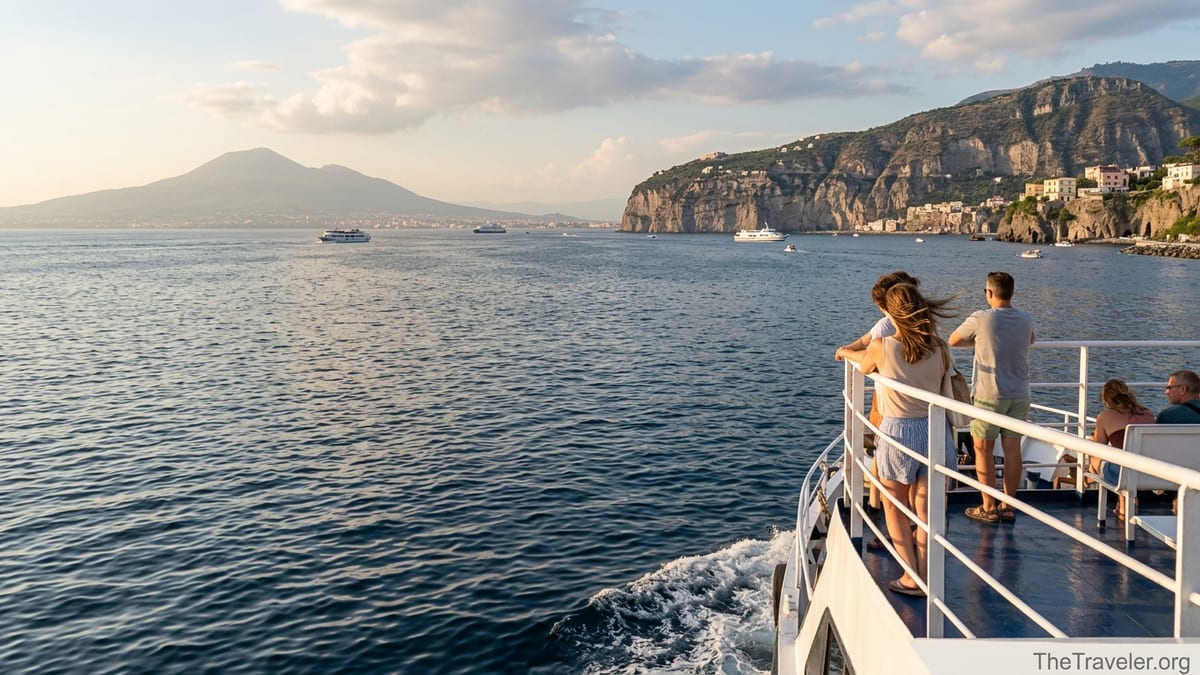
However you organize your days, make sure you actually see the Bay of Naples from the water at least once. The most straightforward way is simply to take a seat on the open deck of a scheduled ferry between Naples and Sorrento, Capri or Ischia. Pick a departure in mid morning or late afternoon, when the light is softer, and sit on the side facing Vesuvius as you leave the city. You will see the curve of the bay, the outline of the Sorrentine Peninsula, and on clear days, the bulk of Capri ahead.
For a more intimate coastal experience, consider a small group boat tour that leaves from Sorrento or Capri. Operators typically run 8 to 12 passenger boats that hug the shoreline, passing caves, grottoes and swimming coves that big ferries cannot enter. Prices are higher than public ferries, but you gain swim stops, snorkeling gear and commentary from local skippers who know where the water is calmest on a given day. Many such tours include simple snacks and drinks, so travelers often treat them as a half day picnic on the water.
Beach culture around the bay is distinctive. Wide sandy beaches are rare close to Naples; instead, you will find volcanic sand at places like Miseno and Miliscola west of the city, and a mix of rock platforms and narrow strips of shore elsewhere. In Sorrento, for instance, private beach clubs build wooden platforms over the water at Marina Piccola, charging a daily fee that typically includes a lounger, umbrella and access to ladders down into the sea. If you prefer public spaces, look for smaller free beach sections, but arrive early to claim a spot.
Cliffside viewpoints are another essential coastal highlight. In Naples, the walk from Castel dell’Ovo along Via Caracciolo toward Mergellina gives a wide angle view across the bay, with Vesuvius on one side and Posillipo’s villas on the other. In Sorrento, the terraces of the public gardens and the lane leading to the cloister of San Francesco open suddenly onto panoramas of Capri and the bay, especially at sunset. Carry a light jacket even in summer; breezes on exposed terraces and ferry decks can feel cooler than inland streets.
Timing, Seasons and Beating the Crowds
The Bay of Naples is a year round destination, but your experience of its coastal highlights will change dramatically with the season. From late June through early September, ferries and hydrofoils run at their most frequent, but so do crowds. Prices for accommodation and boat tours rise, and you can expect queues at Capri’s funicular, Sorrento’s elevators and the Circumvesuviana platforms. If you must travel in this period, book key ferry legs in advance where possible and aim for early morning departures.
Late April to early June and late September to October are often the sweet spots. Sea temperatures are already or still comfortable for swimming, many ferry routes are operating, and crowds are lighter than in high summer. During these shoulder seasons you can often walk up and buy same day tickets for hydrofoils between Naples, Sorrento and Capri, especially on weekdays, though popular mid morning departures may still sell out. Accommodation prices are usually more forgiving, which can free up budget for a splurge such as a private boat tour or a room with a balcony.
Winter brings a different kind of beauty. The air is clearer, Vesuvius stands stark against the sky, and Naples takes back center stage as island services scale down. Many seasonal routes between Sorrento, Capri and the Amalfi Coast pause or run only limited services, and some beach clubs close entirely. On the other hand, hotel rates drop, and walking the seafront in Naples or Sorrento can feel almost local. If you visit in the low season and want to include islands, check ferry timetables carefully and keep your plans flexible around weather.
In any season, timing your day can reduce friction. Leaving Naples or Sorrento before 9 am often means cooler temperatures, better chances of a seat on trains or ferries, and quieter streets when you first arrive. Returning from islands in late afternoon rather than the last evening departure gives you contingency time if the sea is choppy or boats fill. Planning a relaxed dinner near your hotel on days when you depend on the last ferry or train avoids rushing back across the bay after dark.
The Takeaway
Experiencing the Bay of Naples without missing its best coastal highlights is less about ticking off every famous name and more about choosing a few anchors and connecting them smartly. Decide early whether your base will be Naples, Sorrento, an island, or a mix, then use the Circumvesuviana and Campania Express trains for inland archeological sites and fast ferries for the sea facing icons like Capri, Ischia and Procida.
Build your plans so that each day has a main focus, whether that is a full circuit of Capri, a deep dive into Pompeii followed by pizza in Naples, or a slow day moving between Sorrento’s terraces and bathing platforms. Treat time on the water not just as transport but as an experience: sit on deck, watch Vesuvius recede, and let the geography of the bay orient you.
Above all, keep some flexibility. Weather, crowds and timetables will shift, but with a clear sense of the key routes and options, you can adjust on the fly. Done well, you will end your trip with memories of early morning ferries under a pale sky, evenings above glittering harbors, and the feeling that you truly understood how the Bay of Naples fits together.
FAQ
Q1. How many days do I need to see the main coastal highlights of the Bay of Naples?
Most travelers should plan at least four to five full days. That allows time for Naples, Sorrento, one island such as Capri or Ischia, and an inland visit to Pompeii or Herculaneum without feeling rushed.
Q2. Is it better to stay in Naples or Sorrento for exploring the bay?
Naples is best if you want big city culture, nightlife and early access to ferries for all three islands. Sorrento suits travelers who prefer a smaller, resort style base with easier access to Capri and the Amalfi Coast by seasonal ferries.
Q3. Do I need to book ferry tickets in advance for Capri and the islands?
In high season it is wise to book popular routes such as Naples or Sorrento to Capri at least a day or two ahead, especially mid morning sailings. In shoulder seasons you can often buy tickets on the day, but check timetables and arrive early for your chosen departure.
Q4. What is the difference between the Circumvesuviana and the Campania Express trains?
The Circumvesuviana is a frequent local commuter train that is very cheap but can be crowded and basic. The Campania Express runs fewer times per day on the same line, costs more, but offers reserved seats, better air conditioning and dedicated luggage space.
Q5. Can I visit Capri and Pompeii on the same day from Sorrento?
It is technically possible but not recommended. Both Capri and Pompeii deserve at least most of a day on their own. Trying to combine them usually means spending more time in transit and queues than actually enjoying the sites.
Q6. Are there beaches in Naples and Sorrento suitable for swimming?
Yes, though they are often small or private. Naples has accessible beaches west of the city with volcanic sand, while Sorrento relies largely on wooden bathing platforms and small strips of shore beneath the cliffs. For wider beaches, consider Ischia or the nearby Phlegraean coast.
Q7. When is the best time of year to visit the Bay of Naples for coastal scenery?
Late April to early June and late September to October usually offer the best balance of mild weather, operating ferry routes and manageable crowds. Summer has more heat and people, winter has clearer air and fewer services.
Q8. Do I need a car to see the coastal highlights?
No. In fact, a car can be a disadvantage due to traffic, parking costs and restricted zones. Trains and ferries cover the key routes, and local buses or taxis can handle short hops where needed.
Q9. Is it possible to do the Amalfi Coast as a day trip from Naples or Sorrento?
Yes, though it will be a long day. From Sorrento, seasonal ferries to Positano and Amalfi are often the most pleasant option. From Naples, many visitors either join organized tours or combine trains and buses, but they should expect crowded roads in peak season.
Q10. How far in advance should I book accommodation for summer visits?
For stays in July and August, booking several months ahead is sensible, especially for sea view rooms in Sorrento, Capri or Ischia. Early booking can secure better prices and locations close to ports or train stations, which simplifies day trips around the bay.