


For generations, the Jersey Shore has been a summer ritual for families from New Jersey, New York, and Pennsylvania. In recent years, though, many travelers have started asking a blunt question: is it still worth going, or has the Shore become too crowded, too expensive, and too stressful to enjoy? The answer is more nuanced than a simple yes or no. It depends very much on where you go, when you go, and what kind of beach experience you actually want.
Get the latest updates straight to your inbox!
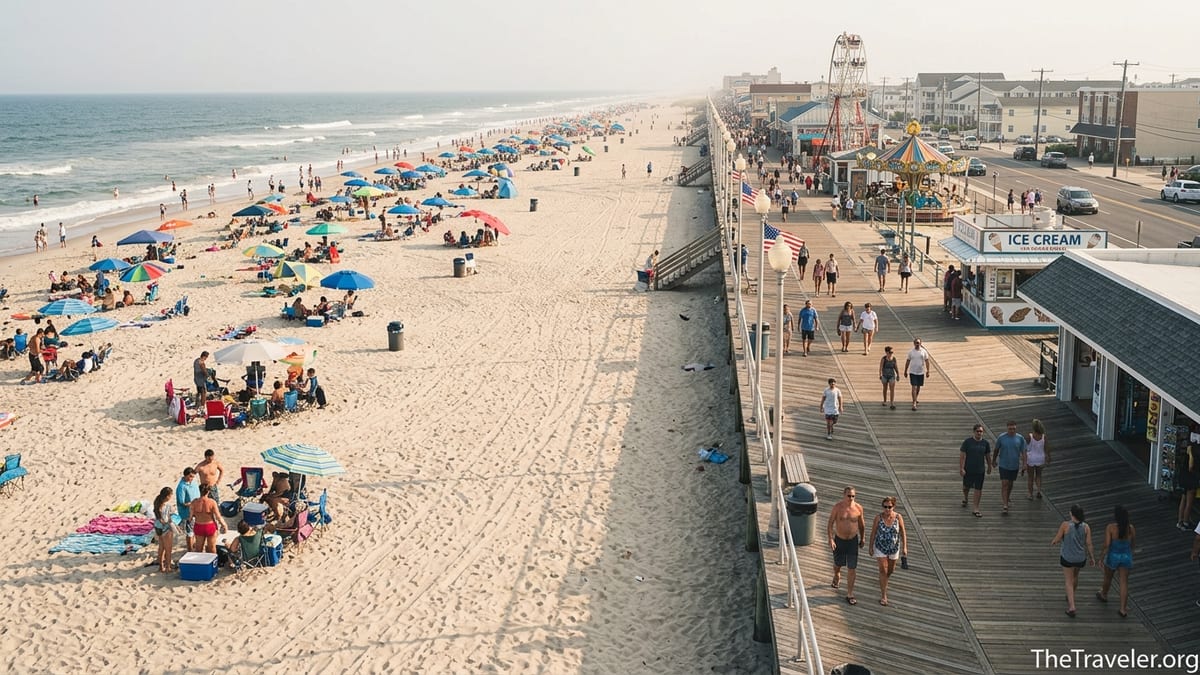
The Jersey Shore Today: Busier Than Ever, But Also More Varied
Tourism on the Jersey Shore is not slowing down. New Jersey’s four main shore counties – Monmouth, Ocean, Atlantic, and Cape May – collectively generated tens of billions of dollars in visitor spending in 2024, according to state tourism reports. That economic surge reflects a reality most beachgoers feel in their bones on a Saturday in July: there are simply more people visiting a relatively finite stretch of coastline, and peak-season weekends can feel like a crush.
On classic boardwalk strips like Seaside Heights, Point Pleasant Beach, and Wildwood, the crowds are part of the brand. Seaside Heights, for example, attracts many thousands of visitors on hot summer weekends, drawn to Casino Pier, Breakwater Beach waterpark, and late-night bars and clubs packed into a compact borough of less than a square mile. On those days, you can expect shoulder-to-shoulder foot traffic, lines for every ride, and a constant background thump of music.
Other towns have grown in popularity for different reasons. Asbury Park has undergone a widely documented renaissance, shifting from faded resort to buzzy cultural hub with a revitalized boardwalk, performance venues, and a dining scene that rivals small city neighborhoods. Cape May, with its Victorian architecture and birding reputation, now sees steady, often upscale crowds all season, not just during school holidays.
At the same time, quieter corners still exist. Long stretches of Island Beach State Park remain essentially undeveloped. Parts of LBI (Long Beach Island), such as Loveladies and Holgate, and barrier-island communities like Avalon and Stone Harbor skew toward residential streets and lower-key evenings. So while the overall region is unquestionably busier, it has also become more stratified: some areas embrace the carnival atmosphere, while others deliberately cultivate calm.
Where the Crowds Hit Hardest
When people complain that the Jersey Shore is “too crowded,” they are usually thinking of a specific type of destination: compact towns with a full boardwalk, amusement rides, nightlife, and easy rail or highway access. Point Pleasant Beach, Seaside Heights, Long Branch, and parts of Atlantic City fall squarely into this category. These are the places where you can arrive by train from North Jersey or New York City, walk a few blocks, and be on a boardwalk within minutes. The convenience makes them magnets for day-trippers, especially on hot weekends.
In practice, that can mean inching along Route 35 or Route 36 in bumper-to-bumper traffic by mid-morning, circling for a $25 municipal lot in Point Pleasant or Asbury Park, and then negotiating a jammed boardwalk lined with stroller traffic and teens in line for funnel cake. On some peak days, Seaside Heights’ boardwalk feels more like a festival than a neighborhood promenade: carnival barkers calling out over arcade noises, ride lines wrapping around the pier, and crowds so dense that families with small children often retreat to side streets just to move faster.
Crowding is not just about headcount, but also about behavior and density. In Seaside Heights, for example, inexpensive motels, small apartments, and group rentals can concentrate large numbers of young adults into a few blocks, which contributes to a party-heavy atmosphere. On busy Saturday nights in midsummer, it is common to see long lines outside bars, heavy police presence, and public safety announcements reminding visitors about curfews and alcohol rules. For some travelers, especially families with young kids, that intensity can feel like too much.
Even otherwise mellow towns can hit a breaking point on holiday weekends. In Ocean City and Sea Isle City, Saturday turnover in July means lines of SUVs and minivans arriving for weekly rentals at the exact moment prior guests are trying to leave. Check-in days can turn the Garden State Parkway exits into slow-moving queues. The beach itself may still be enjoyable, but the journey into town and search for parking become the most stressful parts of the day.
The Real Costs of a Crowded Shore: Time, Money, and Headspace
The sense that the Jersey Shore has become “too much” is often tied less to the beach itself and more to the energy spent accessing it. For a typical family of four driving from northern New Jersey or suburban Philadelphia on a sunny July Saturday, the trip might start with a pre-dawn departure to beat traffic. Hit the road after 8 a.m., and you could find yourself stuck in slowdowns approaching popular exits like 98, 100, or 105 on the Parkway as thousands of other cars funnel toward the same barrier islands.
Once you arrive, costs start adding up. Most towns now use a combination of meters, smartphone parking apps, and private lots, with daily rates in the 15 to 30 dollar range in popular areas during peak season. In Asbury Park, for example, the daily municipal lot rate can run around 10 dollars, while other towns list prime-lot parking close to 20 or more on busy weekends. Boardwalk concessions follow the same pattern. Travelers posting about 7 dollar lemonades, 6 dollar slices of pizza, and 15 dollar ride wristbands are not exaggerating; prices have climbed as operators try to cover seasonal wages, insurance, and maintenance.
Beach access itself is another factor. Most municipalities require beach badges between Memorial Day and Labor Day. Daily adult badges in 2026 commonly run about 7 to 12 dollars, weekly badges around 20 to 30 dollars, and seasonal badges from roughly 30 to 80 dollars depending on the town and when you buy them. Asbury Park charges about 7 dollars for weekdays and 10 dollars for weekends and holidays for adults, with seasonal badges in the 65 to 75 dollar range for those who purchase early. Ocean City’s 2026 rates are approximately 10 dollars for a daily badge, 20 for weekly, and mid-30s for seasonal. Some places, like Avalon and Stone Harbor, set daily tags around 8 dollars, weekly around the mid-teens, and seasonal at roughly 40 dollars pre-season.
There are notable exceptions. Beaches in Wildwood, Wildwood Crest, North Wildwood, and Atlantic City remain free to access, as do some state and federal parks where you pay for parking rather than per-person badges. But even on free beaches, other costs still apply: paying to park near the boardwalk, renting chairs and umbrellas, or splurging on arcade games and mini-golf. For many families, the combination of gas, tolls, parking, badges, food, and entertainment can easily push a simple beach day north of 200 dollars, especially if they visit during peak pricing periods.
Why Many Travelers Still Think the Jersey Shore Is Worth It
For all the gripes, people keep coming back. That is not just habit or nostalgia. The Jersey Shore offers a surprisingly broad range of experiences within a relatively short drive of some of the densest population centers in the country. Atlantic City’s free beaches, casino towers, and large-scale concerts are less than three hours from Philadelphia and New York. Quiet birding spots in Cape May are reachable on a weekend from Washington, D.C. Families from North Jersey can be eating pizza on the Seaside Heights boardwalk an hour and a half after leaving their driveway if they time it right.
There are also specific qualities you do not necessarily get in other East Coast beach regions. Many Jersey Shore beach towns are true communities with year-round residents, not only tourist strips. In small towns on Long Beach Island or around Barnegat Light, you can still find independent bakeries selling fresh crumb cake in the morning, volunteer fire department pancake breakfasts, and neighborhood ice cream stands where staff greet returning families by name. In Cape May, the combination of preserved Victorian architecture, dolphin-watching cruises, and a nationally known migratory bird path offers a depth of history and ecology that feels distinct from, say, the Outer Banks or Delaware beaches.
For nightlife-focused visitors, certain hot spots remain compelling precisely because they are busy. Young adults who grew up watching reality shows set in Seaside Heights still come for the concentrated energy of its bars, clubs, and late-night boardwalk food. Asbury Park attracts a different crowd with live music at venues like the Stone Pony and a cluster of LGBTQ-friendly bars and restaurants. On a summer Friday, the social scene can feel more like a city neighborhood transported to the waterfront, with crowded patios, DJ sets, and pop-up markets stretching along the boardwalk.
Crucially, it is possible to enjoy all this without being suffocated by crowds if you are willing to travel off-peak. A Wednesday in late June at Ocean City, a September Sunday afternoon in Avalon, or a breezy May evening on the Asbury Park boardwalk are dramatically calmer experiences than a Saturday in late July. Lodging prices often dip outside the most intense weeks too, making midweek or shoulder-season visits more appealing to travelers with flexible schedules.
Strategies to Beat the Crowds Without Skipping the Shore
If you like the idea of the Jersey Shore but dread the thought of claustrophobic boardwalks and gridlocked causeways, planning is everything. The first lever is timing. Crowd levels swing dramatically by day of week and time of day. Arriving by 9 a.m. on a weekend can mean you park within a block or two of the sand and stake out a front-row patch of beach; arriving at 11 a.m. might mean parking half a mile away and threading your towel between groups already set up for the day. Conversely, arriving after 4 p.m. often yields open parking, discounted metered rates in some towns, and a cooler, less intense few hours before sunset.
Travelers with flexible calendars should also lean into the shoulder seasons. In early June before most schools let out, or in early September after Labor Day, you can often walk onto beaches in towns like Belmar, Sea Isle City, or Stone Harbor and find space without much effort. Many restaurants and boardwalk businesses still operate on weekends well into September, giving you the benefits of warm water and open attractions without the peak-season volume.
Where you go within each region matters too. On the same barrier island, one town may feel jammed while another a few miles away feels relaxed. Seaside Heights’ central boardwalk blocks are intense, but a short drive south into Seaside Park or farther into Island Beach State Park leads to significantly quieter stretches of sand. On LBI, the area around Beach Haven’s Fantasy Island amusement park throngs with families at night, while the northern and southern ends of the island remain largely residential, with dark, quiet streets after sunset.
Budget strategies can also soften the blow. If you plan multiple visits, buying a seasonal badge in advance for a town you love can reduce per-day costs versus buying daily tags. In some communities, pre-season discounts drop a season badge by 10 to 15 dollars if you purchase by mid-May. Packing your own cooler with drinks and sandwiches, then splurging on just one or two boardwalk treats, can keep food spending in check. And using municipal parking farther from the central pier, then walking an extra few blocks, can shave 5 to 10 dollars off daily parking compared with private lots right on the boardwalk.
Alternatives and Quieter Corners Along the Shore
Part of answering whether the Jersey Shore is “worth it” involves acknowledging that the region is not one monolithic scene. If your mental image is all packed motels and loud arcades, you may simply be picturing the wrong towns for your taste. Some of the most rewarding Shore experiences now come from seeking out the quieter pockets that have, by design or geography, resisted over-commercialization.
Island Beach State Park is one of the strongest counterexamples to the “too crowded” narrative. Stretching for roughly 10 miles of barrier island south of Seaside Park, it offers a mix of guarded swimming beaches and long, undeveloped sections of dunes and maritime forest. Instead of per-person badges, you pay a car entry fee, and when the lots fill to their set capacity, rangers close the gate, which keeps the beach from becoming dangerously packed. On a typical weekday in June or September you can walk a short distance from the main entrances and find long, quiet stretches of sand with only scattered groups.
Farther north, Sandy Hook, part of Gateway National Recreation Area, provides another version of a less-developed Shore experience, with ocean beaches on one side and views of the New York City skyline on the other. Parking lots can and do fill on summer weekends, but families willing to arrive early or visit weekdays often report plenty of room between umbrellas. On the southern end of the coast, pockets of Cape May County like Avalon, Stone Harbor, and Cape May Point remain more residential and conservation-minded, limiting high-rise development and maintaining relatively calm streets after dark. Here, you are more likely to hear waves and seabirds from your rental than thumping bass from a late-night bar.
There are also surprising micro-environments even in busier towns. In Asbury Park, the central stretch between Convention Hall and the casino building draws the biggest rush, but beaches closer to the border with Allenhurst or Ocean Grove can feel more spacious. On LBI, towns like Surf City and Ship Bottom are popular but often less frenetic than the amusement-heavy blocks in Beach Haven. If you are willing to walk a few extra blocks away from the main access points and restrooms, you may find that even on crowded days, it is possible to create a bubble of relative calm.
Who Should Probably Skip the Jersey Shore Right Now
For all its appeal, the modern Jersey Shore is not a fit for everyone. Travelers seeking remote, empty beaches, very low prices, or fully car-free vacations may find themselves frustrated. If your ideal beach trip involves walking from a quiet cottage directly onto a nearly deserted shoreline, cooking all your meals at home, and hearing little more than waves at night, parts of coastal Maine, the Carolinas, or even the Delaware bayshore might better match your expectations than most Jersey boardwalk towns in July.
The Shore can also be challenging for travelers who find crowds overwhelming or stressful. Even if you choose a quieter town, you will likely still face traffic on the Garden State Parkway at some point, as well as lines at grocery stores and popular restaurants on weekends. Families with neurodivergent children sensitive to noise, flashing lights, or unpredictable crowds may need to plan carefully, focusing on smaller towns, state parks, and off-peak visits, or may reasonably decide the region is not worth the effort.
Budget-conscious visitors who compare prices may also decide their dollars stretch farther elsewhere. Once you factor in badge fees, parking, and food, a long weekend in a Jersey Shore motel can approach the cost of a flight-and-hotel package to destinations with free public beaches and cheaper dining, especially for families of four or more. That does not mean the Shore is inherently poor value, but rather that it now competes directly with a wider range of destinations than it did when gas was cheaper and travel options were more limited.
Finally, travelers seeking consistently swimmable water with minimal closures may need to pay attention. Like many developed coasts, some Jersey beaches experience occasional water-quality advisories or rip current warnings, especially after storms. Lifeguards and local authorities generally respond quickly, and most days pass without issue, but if you are unwilling to shift plans or accept the possibility of a red-flag day, you might prefer lakes or more sheltered bays where conditions are more predictable.
The Takeaway
So, is the Jersey Shore still worth visiting, or has it simply become too crowded? The honest answer is that it is both: in certain places, on certain days, it is indeed “too crowded” for anyone who values space, quiet, and spontaneity. But across the region as a whole, it remains a remarkably varied coastline within a short drive of millions of people, offering everything from late-night boardwalk chaos to near-silent dune walks.
If you crave the social energy of a jam-packed promenade, arcade lights, and boardwalk pizza at midnight, towns like Seaside Heights, Point Pleasant Beach, Wildwood, and Asbury Park have arguably never been more alive. If you want a calmer experience, places like Island Beach State Park, Sandy Hook, segments of LBI, Avalon, Stone Harbor, or Cape May Point can still deliver a sense of space and quiet, especially outside peak weekend afternoons in late July and early August.
Ultimately, the question is less “Has the Jersey Shore become too crowded?” and more “Are you choosing the right part of the Shore, at the right time, for the kind of trip you want?” With realistic expectations, a bit of planning around timing and location, and a willingness to trade convenience for calm, the Jersey Shore can absolutely still be worth visiting. Choose blindly, arrive at noon on a July Saturday, and expect a cheap, empty beach at the foot of a busy boardwalk, and you are almost guaranteed to be disappointed.
FAQ
Q1. Is the Jersey Shore always crowded in summer, or are there quiet times?
It is busiest on weekends between late June and late August, especially midday. Weekdays, early mornings, evenings, and shoulder-season months like June and September are noticeably calmer.
Q2. Which Jersey Shore towns are most crowded?
Boardwalk-heavy, easy-access towns such as Seaside Heights, Point Pleasant Beach, Long Branch, Wildwood, and central Atlantic City typically see the heaviest crowds on peak summer weekends.
Q3. Where can I find a less crowded Jersey Shore beach?
Island Beach State Park, Sandy Hook, parts of Long Beach Island away from amusement areas, and towns like Avalon, Stone Harbor, and Cape May Point are usually quieter than major boardwalk strips.
Q4. How much should I budget for a day at the Jersey Shore?
For a family of four, a typical summer Saturday might run 150 to 250 dollars once you include gas, tolls, parking, beach badges, casual meals, and a few boardwalk treats or rides.
Q5. Are there any free beaches at the Jersey Shore?
Yes. Wildwood, Wildwood Crest, North Wildwood, and Atlantic City do not charge per-person beach badge fees. You will still pay for parking and any boardwalk activities.
Q6. Is the Jersey Shore good for families with young children?
Yes, if you choose family-oriented towns and avoid peak crush times. Ocean City, parts of LBI, Sea Isle City, Avalon, and Cape May are popular with families seeking a calmer atmosphere.
Q7. Is it still worth visiting if I dislike crowds?
It can be, provided you visit on weekdays, travel in June or September, and focus on quieter areas like state parks and residential beach towns instead of main boardwalk hubs.
Q8. Do I need a car to enjoy the Jersey Shore?
You can reach some towns like Long Branch and Point Pleasant Beach by train, but having a car provides far more flexibility to explore different beaches, avoid crowded areas, and access quieter stretches.
Q9. When is the best time to visit the Jersey Shore for fewer people but warm weather?
Early to mid-June before most schools break, and early to mid-September after Labor Day, often offer warm water and air temps with significantly lighter crowds than peak late July.
Q10. Are Jersey Shore beaches still a good value compared with other destinations?
They can be, especially for drive-to trips from nearby states, but once you factor in badges, parking, and food, some travelers find that off-season or alternative beach destinations offer more for the same budget.