


Landing at Rome Fiumicino and wondering whether to book a hotel right by the runways or in the heart of the Eternal City? The choice between staying near the airport or in Rome’s historic center shapes everything from how tired you feel on day one to how much gelato you squeeze between sightseeing and your flight home. This guide breaks down real travel times, recent prices and concrete scenarios to help you choose the base that actually fits your trip.
Get the latest updates straight to your inbox!
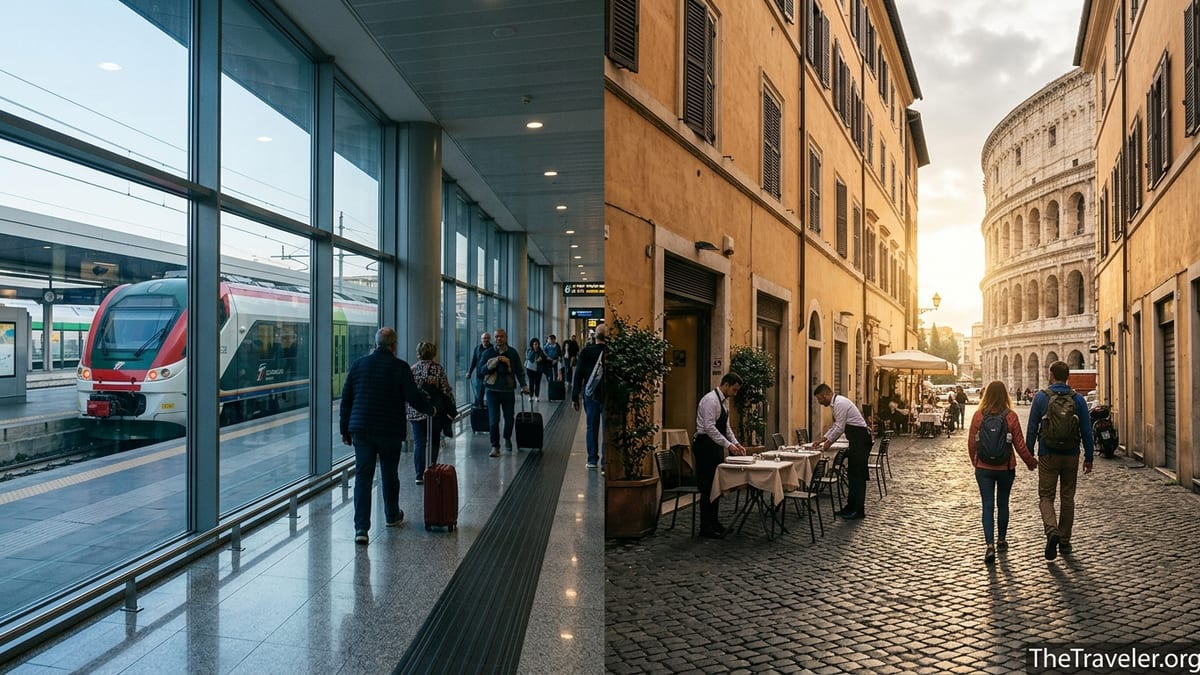
Understanding the Trade Off: Time vs Convenience vs Atmosphere
Choosing between Fiumicino and Rome’s city center is really about what you value most: minimizing arrival and departure stress, or maximizing immersion in Rome’s streets, piazzas and nightlife. Fiumicino, officially Leonardo da Vinci–Fiumicino Airport, sits about 30 kilometers southwest of central Rome. Fast trains like the Leonardo Express take roughly 30 to 32 minutes to reach Roma Termini, the main station, while regional trains and buses are slower but cheaper. In practical terms, an airport hotel turns a late arrival or early departure into a simple five to ten minute shuttle ride, but it adds a commute every time you want to see anything in Rome.
By contrast, a base in the historic center or around Roma Termini puts you within walking distance or a short metro hop of the Colosseum, Trevi Fountain, Spanish Steps and Trastevere. You spend more time in the city and less time shuttling back and forth. The trade off is that you must manage at least two airport transfers with your luggage, often on crowded trains, buses or in traffic. Most travelers who are in Rome for three nights or more lean toward the city center because the extra transit from the airport area quickly eats into precious vacation time.
Think of it this way: if you sleep three nights in Fiumicino but plan to explore Rome every day, you will likely make at least six airport to city journeys. Even using a regional train at a modest fare, this starts to cost both money and hours on platforms. If you instead endure one arrival transfer and one departure transfer and then walk out of your hotel straight into the city each morning, the equation looks very different.
Your decision should start with your flight times, your appetite for logistics and how often you plan to leave the Rome area for day trips. Once you map those out, the pros and cons of each base become clearer.
When Fiumicino Airport Is the Smarter Base
Fiumicino makes the most sense for a narrow set of situations, all tied to flight logistics. The first is very late arrivals. If you land after 22:30 or have to clear passport control from a long haul flight, reaching a city center hotel can easily push your check in to midnight, especially if baggage is slow. An airport hotel with a free or low cost shuttle lets you go from plane door to bed in around 30 to 45 minutes, with no need to navigate Roma Termini or haggle with a taxi after a long travel day.
Early morning departures are another strong argument for Fiumicino. Official taxis between Fiumicino and central Rome have a fixed airport fare that commonly sits in the 50 to 60 euro range to addresses within the Aurelian Walls, and driving time in light traffic is often 40 to 50 minutes. If your flight leaves around 07:00, most airlines recommend arriving by 04:30 to 05:00. Staying at the airport can mean a 05:00 wake up instead of 03:30, and you avoid the stress of hoping a pre booked taxi shows up on time or that the first Leonardo Express of the morning is running without disruption.
Fiumicino can also work as a base if Rome is just a short layover between international flights and you have already explored the city on a previous trip. In this case, you might spend one afternoon in nearby Fiumicino town itself, walking the canal promenade of Isola Sacra and eating seafood at a local trattoria, then return to your hotel for an early night. A quick airport shuttle back to the terminal the next morning may be more appealing than a late night trek back from central Rome followed by a dawn departure.
Finally, some travelers use Fiumicino as a base for road trip itineraries. Car rental facilities are located directly at the airport, and picking up a rental after a night’s sleep nearby allows you to start a drive to Tuscany, Umbria or the Amalfi Coast without ever dealing with central Rome’s traffic. In this scenario, staying at Fiumicino before or after the road trip can reduce stress and parking costs that you would incur at a city hotel.
Why Most First Time Visitors Prefer the City Center
For a classic Rome vacation of three to five days focused on museums, ruins, food and wandering, the city center almost always wins. Hotels and apartments in neighborhoods such as the Centro Storico, Monti, Trastevere, Prati and near Piazza Navona place you within a 10 to 25 minute walk or quick bus ride of most major sights. You can stroll out at sunrise to see the Trevi Fountain before the crowds, then wander back after dinner without consulting a train timetable.
Staying in the center also compresses your daily logistics. Imagine a traveler with three full days in Rome booked at a Trastevere guesthouse. After arriving by Leonardo Express and a short tram ride on day one, they can spend the next three days entirely on foot or using occasional metro rides. Contrast this with the same traveler sleeping at an airport hotel: each day begins with a 30 to 40 minute train or 45 to 60 minute bus ride into Rome, followed by another at night, which means spending roughly two hours daily going back and forth just to reach the same sights.
The city center also feels very different in the evenings. While Fiumicino’s hotel district around the terminals tends to be quiet and utilitarian after dark, central Rome offers café lined piazzas, wine bars and gelato shops that stay active well into the night. A hotel near Campo de Fiori, for instance, lets you step outside after dinner and enjoy the atmosphere without worrying about catching the last airport train back. For many travelers, these spontaneous evening moments become the most memorable part of the trip.
Finally, if you plan at least one day trip by train, basing yourself in the center has practical benefits. Roma Termini, Roma Tiburtina and Roma Ostiense stations are all within the urban fabric, and reaching them from a centrally located hotel often takes less than 20 minutes by metro or taxi. If you want to visit Florence, Naples or Orvieto for a day, traveling from an airport hotel first to the station and then out of Rome adds an extra layer of commuting that quickly becomes tiring.
Real World Cost and Time Comparisons
To understand how these choices play out on the ground, it helps to look at some sample numbers that reflect current ranges. Fast train connections from Fiumicino airport to Roma Termini typically cost in the mid teens of euros per person one way and take around 32 minutes, running roughly every 15 to 30 minutes for much of the day. Slower regional trains connecting the airport with suburban stations and sometimes Termini can cost roughly half that or less, at the price of a slightly longer travel time and a couple of intermediate stops.
Airport shuttle buses from Fiumicino to Termini or the Vatican usually sit in the single digits per person and take about 45 to 60 minutes depending on traffic. For couples or small groups on a budget, these coaches are a popular compromise: more comfortable than navigating suburban trains with luggage, cheaper than the express train, and still dropping you in a central location such as Termini station from which you can walk or connect to the metro.
By comparison, the fixed fare for official white taxis from Fiumicino to central Rome addresses within the Aurelian Walls is commonly set around the mid fifties in euros for the whole car. For a solo traveler, that is significantly more than a train ticket, but for a family of four with big suitcases it can be competitive with or even cheaper than buying four express train tickets, and it offers door to door convenience. Travel time by taxi usually falls between 40 minutes and an hour depending on traffic, with the worst delays during weekday rush hours and rainy days.
Consider a concrete example: a couple spending three nights in Rome, arriving at 14:00 on a weekday and departing at 11:00 on a Monday. If they stay near Piazza Navona and use a fast airport train each way plus a short taxi from Termini, they might spend around 70 to 80 euros total on airport transfers and lose about two hours of time in transit across the whole trip. If they instead sleep at an airport hotel and commute into the city daily by shuttle bus at around 9 euros per person each way, their total airport and city transfer cost could easily surpass 100 euros, and they might spend six or more hours of their long weekend on buses and platforms.
Transit Logistics: What Daily Life Looks Like From Each Base
Staying around Fiumicino means you treat Rome like a destination for day trips rather than your home base. A typical day might begin with breakfast at the airport hotel, followed by a shuttle back to the terminal, a walk to the station inside the airport complex, then a train or coach into Rome. Once at Termini, you may need a metro or bus to reach the sights, especially if you are heading to areas like the Vatican, Trastevere, or the Appian Way. At the end of the day, you reverse the entire chain, mindful of the time of the last comfortable train or bus back to the airport.
In contrast, sleeping in the city center simplifies the daily rhythm. Many visitors choose accommodations in Monti, the neighborhood between the Colosseum and Termini, precisely because it makes arrivals easy yet still feels local. After dropping bags on day one, you can walk to the Colosseum in under 15 minutes, or stroll to the Trevi Fountain and Spanish Steps in around 20. The fact that you never have to think about airport transfer schedules again until your final day removes a persistent layer of mental load.
Public transport passes also behave differently depending on your base. Tourist cards such as the Roma Pass focus on unlimited urban transport within the city’s buses, metro and trams rather than covering the trip to and from Fiumicino. If you stay in Rome, a 72 hour card can cover almost all your local movement between sights. If you stay at the airport, you still have to pay separately for the airport connection most days, which reduces the value of such passes.
One more practical point: luggage. Navigating commuter style trains or shuttle buses with large suitcases can be stressful, especially at busy times. From a city base, you only do this twice. From an airport base with daily commutes, you may also be tempted to bring day packs with extra clothes, chargers and snacks each morning, because going back for a rest in the afternoon is unrealistic. That small detail changes how light and free you feel while exploring.
Safety, Atmosphere and Nighttime Considerations
Both Fiumicino and central Rome are generally safe for visitors who take normal urban precautions, but they offer different atmospheres and potential annoyances. Around Fiumicino’s terminals and business hotels, evenings are quiet, with limited dining choice and little street life beyond hotel guests walking to nearby restaurants. Many properties are designed primarily for short stays and conferences rather than vacations, so public spaces may feel sparse once the day’s flights wind down.
In central Rome, you gain lively piazzas, buzzing trattorias and a constant flow of pedestrians late into the night, especially in the high season months from April through October. Staying in areas like Trastevere, Campo de Fiori or near Piazza Navona means you can enjoy dinner with local wine and then wander back to your room along cobbled lanes without worrying about catching a last train. For solo travelers, this walkable nightlife can feel more comfortable than waiting alone on a suburban train platform near midnight.
The main safety issue central Rome visitors encounter relates to petty crime and hassles in and around the major train stations, especially Roma Termini. Pickpocketing on busy metro lines, overly insistent taxi touts and unofficial shuttle operators approaching new arrivals are all recurring complaints. Choosing a hotel a short walk from, but not directly on, the front of Termini can reduce exposure to this environment while still keeping you well connected to transport.
At the airport, scams often involve taxi drivers who ignore the official fixed fare to central Rome, either by claiming extra supplements or by using unlicensed vehicles. Sticking to clearly marked official white taxis from the official taxi ranks, or pre booking a reputable car service, mitigates this risk. Ultimately, both bases can be used safely and comfortably, but the city center offers far more character and evening options, while Fiumicino offers predictability and calm.
Who Should Choose Which Base: Sample Traveler Profiles
To make the decision more concrete, imagine three different travelers. First, a couple from the United States arriving on an overnight flight at 07:30 and leaving three days later at 11:00. They want to see the Colosseum, Vatican Museums and enjoy long dinners. For them, a hotel in Monti or near Piazza Navona makes more sense. They can take a fast train into Termini on arrival, drop bags at a nearby hotel, and explore on foot for the next three days. On departure day, they can catch a mid morning airport train or taxi without brutal wake up times.
Next, consider a family of four landing at 23:20 with two young children and several checked suitcases, then flying onward to another European city at 09:00 the next morning. For this group, a Fiumicino airport hotel with a free shuttle is likely the better choice. Getting everyone onto a late night train into the city, then into taxis or the metro with luggage, just to turn around and leave again before sunrise, would add stress without adding meaningful sightseeing time.
A third example is a solo traveler using Rome as a rail hub to explore Italy. They arrive at midday, stay four nights, then catch an early morning high speed train to Florence. Booking a reasonably priced hotel a few minutes’ walk from Termini station allows them to minimize back and forth transfers while still having easy access to the historic center via the metro or a 20 to 25 minute walk. In this case, the city base near the station offers both connectivity and access to nightlife, while an airport hotel would isolate them from both.
Ask yourself which of these scenarios most closely matches your own. If the thought of rushing to catch the Leonardo Express before your 07:00 flight fills you with dread, Fiumicino might win for that night only. If instead you imagine morning espresso in a sunlit piazza and wandering home through Rome’s streets after dark, then give yourself as many city center nights as your schedule allows.
The Takeaway
For the vast majority of travelers, especially first time visitors and anyone with at least two full days in Rome, staying in the city center is the better choice. It turns Rome from a place you commute to into the place you live, even if just for a few nights. You spend more of your limited vacation time walking between piazzas and less time watching departure boards at the airport station.
Fiumicino shines in specific, practical situations: very late arrivals, brutally early flights, one night layovers and certain road trip itineraries. In those cases, an airport hotel can be a smart, restful choice that reduces risk and early morning stress. Many travelers even split their stay: a night at the airport at the end of the trip before a dawn departure, with all earlier nights spent in Rome’s historic neighborhoods.
As you plan, lay out your flight times, count how many times you realistically want to go back and forth between the airport and the city, and compare those numbers against how many evenings you hope to spend in Roman streets. Once you see the hours and costs written down, the answer to whether Fiumicino or the Rome city center is the better base for your travel plans usually becomes clear.
FAQ
Q1. Is it cheaper overall to stay at Fiumicino than in central Rome?
Not usually, once you factor in daily train or bus fares into the city. Airport hotels can be slightly cheaper per night, but repeated transfers quickly eat the savings.
Q2. How long does it really take to get from a Fiumicino hotel into central Rome each day?
Allow around one to one and a half hours door to door each way, including a hotel shuttle to the terminal, walking to the station or bus stop, and then the ride into Termini or another central stop.
Q3. Is it safe to stay near Roma Termini station?
Yes, if you use normal city awareness. The area can feel scruffy and busy, with more pickpockets and touts, but violent crime is rare and many hotels cater to tourists and business travelers.
Q4. Should I book the airport train in advance or buy tickets on arrival?
Many travelers simply buy tickets on arrival using machines or ticket desks at Fiumicino’s station. Buying ahead can lock in times, but some prefer flexibility in case of flight delays or long passport queues.
Q5. Does a Rome city transport pass cover the trip to and from Fiumicino?
Standard tourist passes mainly cover buses, trams, metro and urban rail within the city, not the dedicated airport trains. You should expect to pay separately for Fiumicino transfers.
Q6. Is it easy to get a taxi from central Rome to Fiumicino for an early morning flight?
Yes. Hotels can pre book a car, and official white taxis operate 24 hours with a fixed airport fare. Just allow extra time for potential traffic and aim to leave earlier than you think you need to.
Q7. If I only have one full day in Rome, where should I stay?
In almost all cases, stay in the city center. Sleeping at the airport would mean spending a significant chunk of that single day commuting instead of actually being in Rome.
Q8. Are there interesting things to do near Fiumicino if I decide to stay there?
The area has a pleasant seaside town, canal promenades and seafood restaurants in Fiumicino and Isola Sacra. They make for a relaxing afternoon or evening, but they do not replace Rome’s major sights.
Q9. Is splitting my stay between Fiumicino and the city a good idea?
It can be. Many travelers book all but their last night in the city, then move to an airport hotel for the final night before an early flight to avoid pre dawn transfers and last minute stress.
Q10. Which central neighborhoods offer the best balance of atmosphere and transport access?
Monti, the streets between Termini and the Colosseum, is a strong all round choice, along with areas near Piazza Navona, the Pantheon and parts of Trastevere, all of which combine character with reasonable access to buses and metro lines.