


Some places feel almost too perfectly matched to what travelers dream Italy should be. The Chianti region in Tuscany, wedged between Florence and Siena, is one of them: a rolling patchwork of vineyards, olive groves, stone farmhouses and hilltop villages. But is Chianti truly worth visiting if your main interests are wine, food and scenic drives, or has it become more postcard than authentic place? The answer depends on what you are looking for, your budget, and how you like to travel.
Get the latest updates straight to your inbox!
Where Exactly Is Chianti and What Makes It Special?
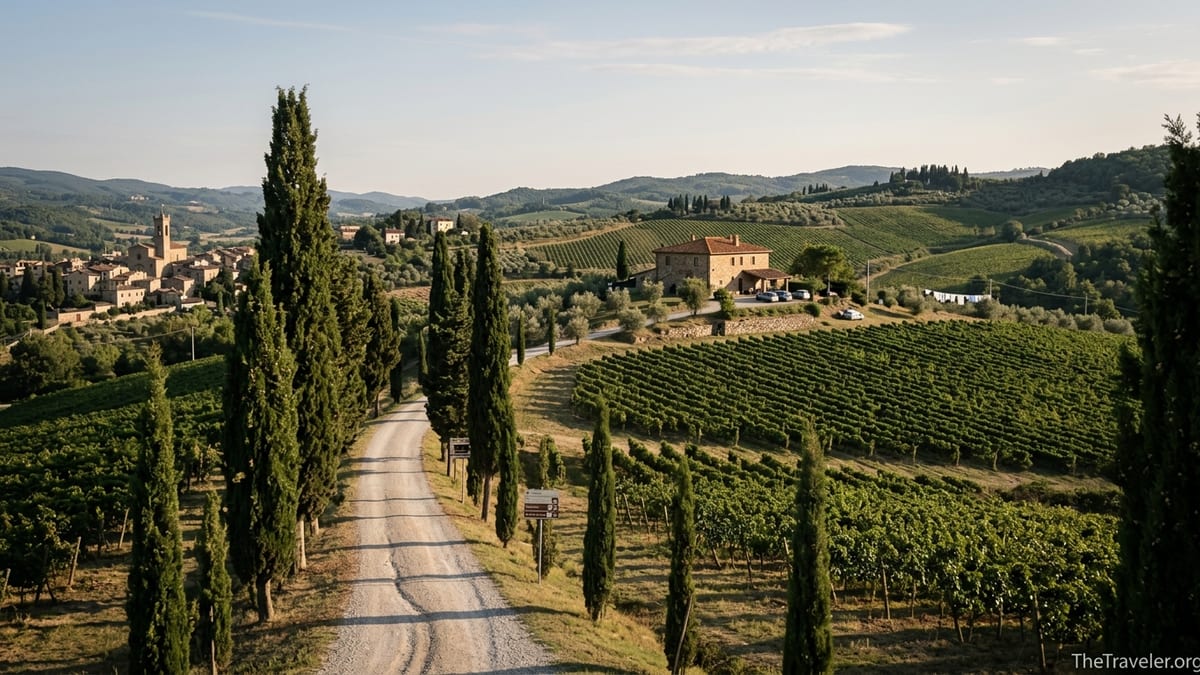
Chianti is not a single town but a historic wine region in central Tuscany, roughly between Florence and Siena. Its heart is Chianti Classico, marked on bottles by the black rooster seal, and dotted with small towns like Greve in Chianti, Castellina in Chianti, Radda in Chianti and Gaiole in Chianti. The main north–south backbone is the SR222, known locally as the Chiantigiana, a regional road that curves through vineyards, cypress-lined ridges and medieval stone villages.
Unlike some wine regions dominated by a few big estates, Chianti is still a patchwork of family-run wineries and agriturismi (farm stays). Around Greve in Chianti, for example, you can drive just a few minutes from the main piazza and pass working farms, vineyards and olive groves that are still central to local life, not just tourism. Wine production shapes everything from the architecture of the old stone cellars to the timing of village festivals in September.
For visitors focused on wine, food and scenery, Chianti’s scale is a major advantage. Distances are short: the drive from Florence to Greve in Chianti is roughly 45–60 minutes, and from Greve to Castellina in Chianti around 30–40 minutes along country roads. That makes it easy to base yourself in one village and explore others on relaxed half-day drives without packing and unpacking every night.
At the same time, Chianti is one of the most visited corners of rural Tuscany. In high season you will be sharing those winding roads and pretty piazzas with tour buses, cycling groups and other independent travelers. Whether Chianti is “worth it” for you has a lot to do with when you go and how you structure your days.
Wine Experiences: From Historic Cellars to Casual Tastings
Chianti’s biggest draw is, of course, its wine. The region is best known for Chianti Classico, a red based primarily on Sangiovese grapes, often blended with local varieties and aged in oak. Visitors can experience the wine culture in several ways, from pre-booked tours at major estates to informal tastings in small village enotecas.
In and around Greve in Chianti, for example, wineries such as Castello di Verrazzano and Villa Calcinaia host guided tours of vineyards and cellars followed by seated tastings. A typical visit might cost in the region of 25 to 40 euros per person, often including several wines and a plate of local cheeses and cured meats. Many estates offer more elaborate “wine and lunch” experiences that extend into a three-hour farm-to-table meal, which can be especially appealing if you prefer not to rush from one appointment to the next.
Smaller, family-run estates scattered between towns such as Castellina in Chianti and Radda in Chianti may be less polished but often feel more personal. You might find yourself tasting in a converted farmhouse kitchen or under a pergola, talking directly with the owner about the harvest or the changes in climate. These visits usually require prior booking by email or phone, and it is courteous to purchase at least a bottle or two if the tasting is free or low-cost.
If you would rather not schedule your days around appointments, village wine bars and shops provide an easy alternative. In Greve’s arcaded main square, Piazza Matteotti, several enotecas offer flights of Chianti Classico by the glass. In Castellina’s historic center, small wine shops pour local labels in vaulted stone interiors. Prices for a glass of Chianti Classico in a village bar typically range from about 5 to 8 euros, depending on the producer and the vintage, making it realistic to taste broadly without committing to full tours.
Food Culture: More Than Just a Glass of Red
Chianti’s food scene revolves around robust, simple Tuscan cooking: grilled meats, hearty soups, handmade pasta and generous use of olive oil rather than heavy sauces. Travelers focused on food will find that the region delivers the stereotype of long lunches with vineyard views, but also offers casual options like village bakeries and butcher shops for more budget-conscious days.
Greve in Chianti is known for historic butcher Macelleria Falorni, which has been operating for generations and sells cured meats, salumi and pecorino cheeses. You can assemble a picnic of sliced prosciutto, finocchiona (fennel salami), local cheese and bread for roughly 10 to 15 euros per person and then drive a few minutes into the hills for a vineyard-view lunch on a roadside bench or pull-out. It is an easy way to enjoy local flavors without committing to a long restaurant meal.
Across the region, agriturismi and country trattorie serve classic dishes like pappardelle al cinghiale (wide pasta with wild boar ragù), ribollita (a thick bread and vegetable soup) and bistecca alla fiorentina, a large T-bone steak usually sold by weight and often shared. A typical dinner at a mid-range trattoria in towns such as Castellina or Radda might cost around 25 to 40 euros per person for a starter, pasta or main course and a glass of wine, not including dessert. Fine-dining options with tasting menus and extensive wine lists exist as well, particularly at upscale wine resorts, and can cost substantially more.
Timing matters if you want to explore local markets and seasonal products. Many towns hold weekly markets in the mornings, where you can browse stalls piled with fruit, vegetables and local cheeses, as well as household goods. In September, Chianti’s wine festivals bring food stalls, tasting booths and live music to the streets, creating a lively backdrop for visitors who do not mind crowds.
Driving the Chiantigiana: One of Tuscany’s Great Scenic Routes
For travelers who love the journey as much as the destination, the SR222 Chiantigiana road is a major reason to choose Chianti. This regional route runs roughly between Florence and Siena and is frequently recommended by locals as one of the most scenic drives in southern Tuscany. It winds through valleys, ridges and hilltop villages, offering repeated views of vineyards, olive groves and stone farmhouses framed by cypress trees.
A classic drive might start just south of Florence and follow the Chiantigiana through Greve in Chianti, Panzano, Castellina in Chianti and on towards Siena. The distance is short on paper, but the road is narrow and winding, with frequent curves and elevation changes, so it is wise to allow more time than a navigation app might suggest. Many travelers turn the route into an all-day outing, stopping for coffee in Greve, a photo stop at a viewpoint above Panzano, lunch at a winery near Castellina and an afternoon stroll through Siena’s historic center.
The road surface and signage are generally good, but this is still rural Tuscany. Expect tractors, local drivers familiar with every corner, and in summer, cyclists and motorcyclists enjoying the curves. Parking in the villages is usually in small pay-and-display lots just outside the historic centers. It is useful to carry coins or a bank card that works in Italian parking meters, and to pay attention to time limits in blue-lined spaces.
One practical concern for wine-focused drivers is how to manage tastings. Italian law sets strict limits on blood alcohol levels for drivers. Many travelers handle this by designating one person to spit during tastings, choosing a single winery visit on a driving day, or booking a private driver or small-group tour for at least one full “no-driving” tasting day. That extra cost can be worthwhile if your priority is to enjoy the wines without counting every sip.
Where to Base Yourself: Towns, Villages and Agriturismi
Deciding whether Chianti is worth visiting often comes down to where you stay. The choice is between small towns with services and rural farm stays immersed in vineyards and olive hills. Each style suits a different traveler.
Greve in Chianti, often described as the main market town of Chianti Classico, is a convenient base if you want easy access to restaurants, a supermarket, wine bars and a bus connection to Florence. Staying in or just above the town gives you views of vineyards while still being able to walk to dinner, which can be useful if you prefer not to drive at night on unlit country roads. Typical mid-range guesthouses or boutique hotels in and around Greve may start in the region of 120 to 200 euros per night for a double room in high season, with lower prices in shoulder months such as April, May and October.
Castellina in Chianti, perched on a ridge and surrounded by three valleys, offers a slightly more compact, medieval atmosphere. Its stone streets, fortress and underground vaulted walkway appeal to travelers who enjoy wandering historic centers in the evening. From here it is easy to drive both north towards Radda and Gaiole and south towards Siena. Accommodation ranges from simple rooms in village houses to countryside agriturismi a few minutes’ drive away.
Agriturismi across the region, many located down gravel lanes lined with cypress trees, suit travelers who want immersive rural quiet. These working farms and country estates usually offer a handful of rooms or apartments, sometimes with a pool and on-site dinners made from estate products. A couple might pay roughly 100 to 250 euros per night for a comfortable agriturismo with breakfast, depending on the property, time of year and amenities. The trade-off is that you will almost always need a car, and you should be comfortable driving narrow, sometimes unpaved access roads.
If you are relying on public transport, basing in Florence or Siena and visiting Chianti on day trips by organized tour or private driver can make more sense. Direct bus connections between small Chianti villages are limited, and taxis are scarce outside major towns, particularly in the evenings.
Crowds, Seasons and Cost: Is Chianti Right for You?
Whether Chianti feels worth visiting often hinges on when you go. From late May through September, the region sees its highest visitor numbers. During this period, restaurant reservations are advisable in smaller towns, and popular winery tours can book out days or weeks in advance. The upside of high season is lively piazzas, extended evening light for outdoor dining, and a full calendar of food and wine events.
Spring and autumn can offer a better balance for many travelers. April, early May and October typically bring milder temperatures, quieter roads and easier last-minute reservations, while vineyards are either bright green with new growth or streaked with autumn color. Prices for accommodation tend to be lower than in peak summer, though exact differences vary by property. Winter is the quietest period: some agriturismi close, and daylight hours are shorter, but those who do visit can find lower room rates, cozy fireplaces and less competition for restaurant tables.
Budget is another factor in deciding if Chianti is “worth it.” As a popular region close to Florence, it is not the cheapest part of rural Italy. Wine tastings, restaurant meals and car rental costs can add up quickly. However, you can control expenses by mixing winery lunches with picnic days, choosing self-catering apartments instead of full-service hotels, and focusing on a smaller geographic area rather than trying to cover all of Tuscany from a Chianti base.
If your ideal trip involves nightlife, large museums and urban energy, you may find Chianti less satisfying than Florence, Rome or even Siena. Even in busy months, evenings in small towns are quiet, with conversation centered around dinners that start around 8 pm, not late-night bars. For many travelers that slow rhythm is precisely the attraction, but it is worth recognizing before you commit several days of your itinerary.
The Takeaway
For travelers whose priorities are wine, food and scenic drives, the Chianti region of Tuscany is generally worth a dedicated stay or at least a full-day excursion. Its compact scale, dense concentration of wineries, and the beauty of the Chiantigiana road make it one of the easiest places in Italy to string together vineyard visits, long lunches and slow, photo-filled drives between stone-built villages.
That said, Chianti is not the right choice for everyone. Those seeking bargain prices, intense nightlife or a fast-paced urban experience may find the region too quiet or too focused on a certain kind of romantic rural ideal. Visitors without a car will either need to rely on organized tours or accept some logistical limits on where and when they can explore.
If you picture yourself sipping Sangiovese on a terrace overlooking rows of vines, browsing a butcher’s counter in Greve in Chianti for picnic supplies, or easing a rental car along a winding ridge road lined with cypress trees, Chianti will likely feel exactly as magical as it looks in the photos. With realistic expectations about costs, crowds and driving, it can be one of the most rewarding parts of a Tuscan journey.
FAQ
Q1. How many days should I spend in the Chianti region?
Most travelers find that two to three full days in Chianti is enough to visit several wineries, enjoy long lunches, explore a couple of villages and take at least one scenic drive along the Chiantigiana. If you want a slower pace with time by the pool at an agriturismo, four or five nights can be ideal.
Q2. Do I need a car to enjoy Chianti’s wine and food?
A car gives you the most flexibility, especially for scenic drives and visiting smaller wineries. Without a car, your options are to stay in a town like Greve in Chianti, rely on local taxis where available, or book organized small-group or private wine tours from Florence or Siena for day trips into the region.
Q3. Is it safe to drive the Chiantigiana road for first-time visitors?
The SR222 Chiantigiana is generally well maintained and clearly signposted, but it is a narrow, winding rural road. First-time visitors should drive slowly, avoid distractions, and be prepared for sharp bends, cyclists and local drivers who know the route well. Driving in daylight and avoiding alcohol if you are the driver will make the experience more comfortable.
Q4. Can I visit wineries in Chianti without a reservation?
Some larger estates and village wine bars accept walk-in visitors, especially outside peak season, but many wineries prefer or require advance booking for tours and tastings. If there are specific estates you want to see, it is wise to contact them at least a few days ahead, and longer in summer or during harvest.
Q5. What is the best time of year to visit Chianti for wine and scenery?
Late spring, early summer and autumn are particularly appealing. April, May, June, September and October usually offer pleasant temperatures, active vineyards and good driving conditions. July and August can be hotter and busier, while winter brings quieter villages and shorter days but fewer crowds.
Q6. Is Chianti suitable for travelers on a tighter budget?
Chianti is not the cheapest area of Italy, but you can manage costs by choosing simple guesthouses or agriturismi, self-catering some meals, and balancing paid winery tours with visits to village wine bars. Picnics made from local market ingredients and occasional lunches at inexpensive trattorie can keep daily expenses under better control.
Q7. How does Chianti compare to other Tuscan wine regions like Montalcino?
Chianti is closer to Florence and has a larger number of small villages and wineries concentrated in a compact area, which suits shorter trips and scenic drives. Montalcino, known for Brunello, feels a bit more remote and can be better for travelers who want a quieter base and are particularly interested in age-worthy, structured wines.
Q8. Are there good options for non-wine drinkers in Chianti?
Yes. Non-wine drinkers can still enjoy the landscapes, medieval villages, local food, hiking and cycling. Many agriturismi offer cooking classes, olive oil tastings or farm experiences. Village cafés, gelato shops and bakeries provide plenty of non-alcoholic pleasures, and some tours focus more on scenery and food than on in-depth wine discussions.
Q9. Is Chianti family-friendly for travelers with children?
Chianti can be family-friendly, especially if you choose an agriturismo with outdoor space and a pool. Children often enjoy farm animals, open countryside and shorter walks in villages. Parents should plan limited, kid-friendly winery visits, bring snacks and games, and remember that late Italian dinner times may require some flexibility with younger children.
Q10. Do I need to speak Italian to get by in Chianti?
In most hotels, popular wineries and restaurants, staff speak at least some English, and menus are often bilingual. Knowing a few basic Italian phrases for greetings, thanks and simple requests is appreciated and can make interactions smoother, especially in smaller family-run places, but it is not essential for enjoying the region.