


Few landscapes capture the Tuscan dream quite like Chianti: rows of Sangiovese vines marching over rolling hills, stone farmhouses, and hilltop villages where the local bar knows every winemaker by name. Yet the region looks and feels very different in April than it does in late October, and timing your trip is the single biggest factor in whether you encounter misty green valleys, blazing golden vineyards, or crowded tasting rooms in the midday heat. This guide breaks down the seasons in Chianti so you can choose the moment that best matches your own vision of vineyards and golden views.
Get the latest updates straight to your inbox!
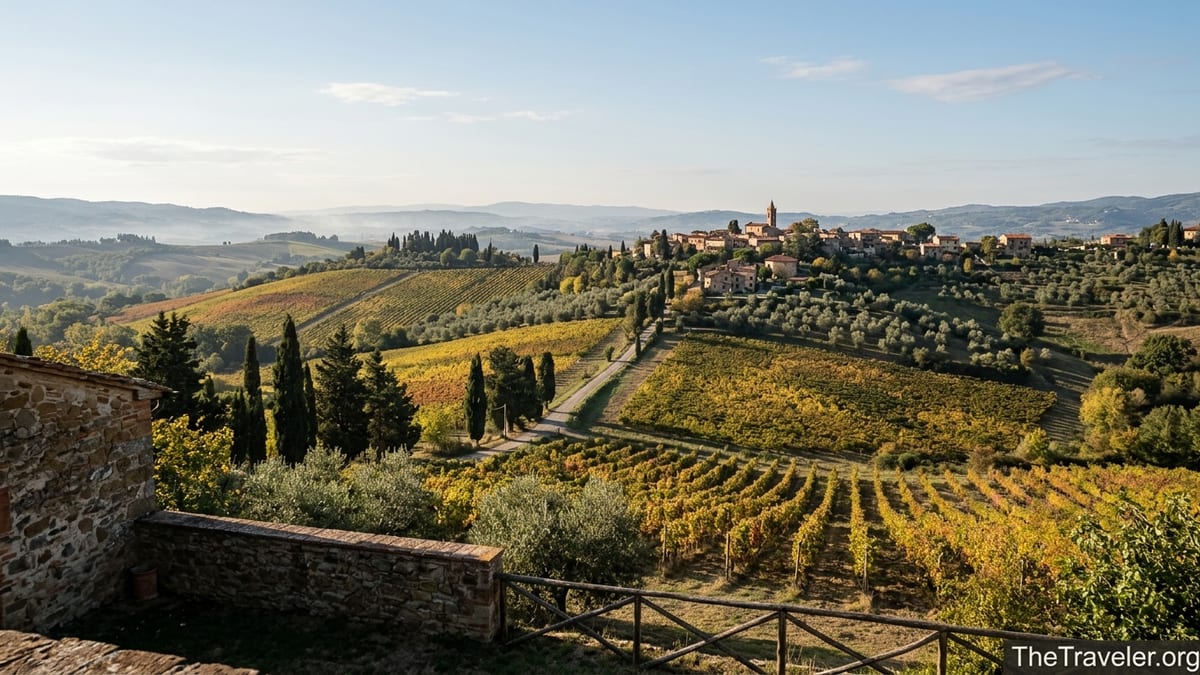
Understanding Chianti’s Seasons and Weather
Chianti sits between Florence and Siena, in the hills of central Tuscany, with a classic Mediterranean climate: hot, dry summers and cooler, wetter winters. For travelers focused on vineyard scenery and time outdoors, this translates into a long spring and autumn shoulder season wrapped around a very warm peak summer period. In practical terms, you can comfortably visit vineyards from March through early November, but what you see in the fields and how it feels to be outside change dramatically month by month.
From late March into May, daytime highs typically hover around the high 50s to low 70s Fahrenheit, with cool evenings that still call for a jacket. Hillsides are bright green, wildflowers pop along vineyard edges, and vines are just waking up: first buds, then small leaves, and by May the first clusters are visible. It is visually fresh and lush rather than “golden,” and this is the moment for travelers who love walking country lanes or cycling past newly leafed vines without heat or big crowds.
Summer, from June through August, brings hot, often very hot, afternoons. Florence can push well into the 90s Fahrenheit in July and August, and although Chianti’s higher elevation keeps it a few degrees cooler, many visitors still find midday sun intense in the vineyards. Evenings are warm and pleasant on a terrace in Greve or Panzano, but the vines themselves are a deep, uniform green, and any golden tones you see tend to come from sunlit wheat fields or sunburned grasses rather than autumnal foliage.
By contrast, September and October are the months when the light softens, the air cools, and vineyards shift from deep green to rust, ocher, and burnished gold. Daytime highs are often in the 60s and low 70s, nights cool enough for a sweater, and you have a good chance of clear, crisp days broken by a few rainy spells. This combination of comfortable temperatures and changing colors is why many local tourism boards and wine tour operators describe early autumn as the prime time for vineyard views in Chianti.
Harvest Season: When Chianti Comes Alive
For many wine travelers, the dream is to visit during vendemmia, the grape harvest. In Chianti Classico, where Sangiovese dominates, harvest typically kicks off in the second half of September and can run into early or even mid October depending on the year, altitude of the vineyards, and style of the producer. Some estates start with white or early-ripening grapes in early September, while higher-elevation plots near Radda or Gaiole may not be picked until well into October.
On the ground, this means that if you visit between roughly the third week of September and the first half of October, you are likely to see harvest activity somewhere in the region: tractors towing trailers of grapes on the road between Castellina and Greve, pickers moving row by row through the vines, or bins of fruit being sorted outside a cellar. At estates like Fontodi near Panzano or Felsina on the southeastern fringes of Chianti Classico, you may catch the heady smell of fermenting must as you walk through the winery courtyard, and some tours will pause by the open tanks so you can see the early stages of winemaking.
However, harvest is also the busiest working moment of the year for winegrowers. Many small family-run wineries limit or temporarily stop cellar tours while they focus on bringing in the crop. Others keep visits short or restrict tastings to prebooked groups. If your dream is to help pick grapes, be realistic: a few agriturismi occasionally organize symbolic harvest days for guests, but most serious producers will not allow visitors into the rows while their crews are racing against time and weather. A more practical harvest experience is to stay at a wine estate with vineyard views, such as a farmhouse outside Radda where you can watch pickers from your terrace in the morning and then join a tasting of fermenting juice and young wines in the afternoon.
For a balance of energy and access, consider scheduling your Chianti stay for late September or the very beginning of October. At that point, many estates have completed the rush of picking their earliest plots, you can still see activity in the fields or cellar at larger wineries, and yet tastings and tours are more likely to run on regular schedules. Booking tasting appointments in advance is essential in this period, especially at well-known names where international visitors flock for the harvest atmosphere.
Spring: Green Hills, Fewer Crowds, Softer Prices
If your priority is gentle hiking among vineyards, cycling the quiet roads between Greve, Panzano, and Castellina, or watching the landscape wake up after winter, spring in Chianti is a strong contender. From late March into mid May, the hills are their freshest green. Vineyards are lined with bright grass and wildflowers, olive groves are silvery against new growth, and woodland patches fill in with leaves. This is the time when you might start a morning walk in a light sweater and end it in shirtsleeves under a mild midday sun.
Spring also tends to bring somewhat lower accommodation prices than summer and harvest. An agriturismo apartment with views over the vineyards near Castellina that might cost significantly more per night in peak September could be available for noticeably less in April, and you are more likely to find last-minute availability for weekends. Restaurants in small villages such as Gaiole or Montefioralle are open but not overwhelmed, making it easier to secure dinner bookings without planning weeks ahead.
In terms of wine, spring is not an especially dramatic moment in the vineyards: the previous year’s wines are maturing quietly in barrel or tank in cool cellars, and current releases are on the tasting counters. The visual drama comes instead from the contrast between the deep green of cypress-lined driveways, the bright new vine leaves, and the dark stone of medieval villages. This is an ideal season if you are less concerned about seeing grapes on the vine and more focused on tranquil country scenery, picnics, and long views unbroken by heat haze.
Weather in April can be changeable, with a mix of sunny days and showers, and evenings are still decidedly cool. Packing layers is important: a light puffer jacket or wool sweater for nights on a terrace in Greve, a waterproof shell for passing showers, and comfortable shoes for sometimes muddy vineyard paths. If your vision of Chianti involves warm evenings by the pool, spring may feel a little premature, but if you like crisp air and quiet roads, it is a sweet spot.
Summer: Long Days, Busy Roads, and Deep Green Vines
Summer in Chianti brings guaranteed growth in the vineyards and equally guaranteed visitor numbers on the roads. By June, vines are in full leaf, and small green grapes are clearly visible. The landscape is a patchwork of dark green vineyards, silvery olive groves, and golden wheat fields, with long daylight hours that invite late dinners outdoors. This is the season when travelers combine Chianti with city time in Florence, using the cooler hills as a break from the urban heat.
The tradeoff is heat and busyness. Afternoon temperatures in July and August can climb high enough that walking through vineyards in the early afternoon feels punishing rather than romantic. Local drivers and guides often suggest starting tastings as early as 10 a.m., visiting two estates before lunch, and spending the hottest hours of the day by the pool at your agriturismo or in the shade of a hilltop village. Parking in popular towns such as Greve or Castellina can be more competitive, and advance reservations for estate tours are almost mandatory.
Visually, this is not the “golden Chianti” of many photographs. The palette is dominated by saturated greens and bright blue skies, with golden elements coming from dry grass along roadside verges or harvested grain fields rather than from the vines themselves. If you care more about long evenings sipping rosato on a terrace and less about the nuance of vineyard color, this may not matter. For serious photography of vineyards and rolling hills, though, the softer light and color of autumn are more forgiving.
Pricewise, high summer and early September often bring peak nightly rates for villas and agriturismi, particularly those with pools and panoramic views. A farmhouse near Panzano that welcomes weeklong family stays might be fully booked from late June through early September nearly a year in advance. If these are the only months you can travel, focus on villages at slightly higher elevations, such as Radda, where nights cool off a bit more and the air can feel fresher after sunset.
Autumn: Golden Vineyards and Soft Light
For travelers seeking “golden views,” early to mid autumn is the clear winner in Chianti. From around the last week of September through late October, vines begin to shift from deep green to yellow, amber, and red, especially on sun-exposed slopes planted to Sangiovese. The mix of turning vine leaves, ripening or freshly harvested grapes, and low, honey-colored afternoon light creates the kind of scenes that fill coffee table books and wine calendars.
In practice, the most photogenic period often falls between the first and third weeks of October. By then, many vineyards at mid-altitudes have been picked, but leaves are still on the vines, and the hills roll in bands of gold and rust. Roads between iconic spots such as the cypress-framed approach to Volpaia or the ridge between Panzano and Greve are especially beautiful in the hour before sunset, when the sun hits the rows at a slant and long shadows add depth to the contours of the land.
Autumn also brings a rich food and wine calendar. Village squares host harvest-themed events, and local enotecas build tasting flights around freshly released vintages. Even simple countryside trattorie adjust menus to highlight porcini mushrooms, game, chestnuts, and new season olive oil, which begins to flow from the presses later in October and early November. Sitting at a wooden table in a farmhouse restaurant outside Castellina, with a carafe of Chianti Classico and a plate of pappardelle al cinghiale, while the last light catches terraced vineyards below, is very much the essence of the season.
Crowds in October have grown in recent years as more travelers aim for shoulder seasons, so do not assume empty roads. However, the feel is different from high summer: tour groups are smaller, midday heat rarely oppressive, and there is a sense of locals settling back into routine after August holidays. If you can, plan midweek stays in October to avoid busier weekends when Florentines and Sienese drive into the countryside for lunches and foliage drives.
Festivals, Wine Events, and Local Life
Aligning your visit with a local festival can add another layer to your Chianti trip, especially if you are interested in tasting across many producers in one place. Early autumn is particularly rich in events. In September, the main square of Greve in Chianti typically fills with stands for a major Chianti Classico event that showcases dozens of wineries pouring their current releases. Buying a tasting glass at the entry lets you wander from producer to producer, comparing styles of Sangiovese grown on different soils and slopes within the appellation.
Another example is the Radda nel Bicchiere weekend in late May, when the small hilltop town of Radda turns itself over to wine stalls lining its medieval streets. Visitors can taste through a wide range of local Chianti Classico bottlings while ducking into wine bars and small restaurants offering special menus. Even if your trip does not coincide exactly with a major event, similar smaller-scale wine weekends and food festivals pop up through spring and autumn in villages such as Castellina, Gaiole, and Panzano, often focusing on seasonal ingredients or particular wine styles.
Summer has its own rhythm of open-air concerts, village patron saint days, and longer opening hours at some estates, which may organize sunset tastings or dinners on panoramic terraces. In August, initiatives where wineries or villages host nighttime tastings under the stars are common across Tuscany, blending wine, astronomy, and live music in castle courtyards or piazzas. These experiences are less about harvest and more about the social life of a wine region at its most extroverted.
Winter, while quietest in terms of events, can still hold appeal for dedicated wine drinkers, particularly in January and February when some producers in Chianti Classico participate in trade tastings and preview events for the latest vintages. Many small cellars reduce their visiting hours or close briefly after the New Year, but village enotecas remain open, and restaurant tables at classic spots in Greve or Castellina are easier to secure than at any other time of year. If you are content with bare vines and moody skies in exchange for maximum access and low-season rates, a winter visit offers a different, more introspective side of Chianti.
Practical Tips for Timing and Booking
Once you have chosen your preferred season, a few practical steps will help your Chianti plans match the reality on the ground. First, build in flexibility. Weather and harvest dates vary by year, so if golden foliage is your highest priority, aim for a travel window that covers at least a week between very late September and mid October rather than fixating on a single date. In cooler years, full color may come later; in hotter, drier years, vineyards can turn and drop leaves earlier.
Second, consider where you base yourself in the region. Higher-elevation villages such as Radda and Gaiole often run slightly cooler than lower zones near Greve, and their surrounding vineyards may be picked later and hold color longer into October. If visiting during the heat of summer, these higher spots can feel more comfortable at night. In spring and late autumn, they may see slightly more morning mist, which can add beauty to early photos but also means cooler starts to the day.
Third, book key elements early for peak times. For late September and October stays, reserve vineyard accommodations and rental cars several months in advance, especially for weekends. Wineries that are popular with international visitors often open tasting bookings for autumn many weeks ahead; securing a morning visit at two contrasting estates, such as a historic castle winery and a smaller family-run azienda, will give structure to your days and reduce last-minute stress.
Finally, pack with both vineyards and hilltop villages in mind. Regardless of season, Chianti involves uneven stone streets, gravel winery driveways, and dirt tracks between rows. Comfortable shoes with good grip are more important than elegant sandals. In shoulder seasons, a compact travel umbrella, breathable waterproof layer, and a warm extra layer for after-sunset temperatures can make the difference between cutting a terrace dinner short and lingering over a second glass while the lights of the valley come on below you.
The Takeaway
If your dream of Chianti centers on golden vineyards and soft, low light over rolling hills, aim for early to mid autumn, especially the period from late September through the first half of October. This is when Sangiovese leaves flame into yellow and red, harvest energy lingers in the air, and village restaurants pivot toward hearty seasonal cooking. You will share the roads with other wine lovers, but the experience aligns closely with the iconic images that draw many travelers to Tuscany in the first place.
For greener hills, quieter roads, and slightly softer prices, spring offers its own rewards. April and May frame the vineyards in fresh growth and wildflowers, with cool evenings and the sense of the countryside stretching awake after winter. Summer delivers long days, warm nights, and deep green vines but at the cost of heat and higher visitor numbers. Winter strips the vines bare yet hands the region back to locals and the most dedicated enthusiasts.
There is no wrong time to visit Chianti, only a question of which version of this landscape you want to meet: the bright, budding hills of spring, the sun-soaked vineyards of summer, the golden quilt of autumn, or the quiet rows at rest in winter. Decide what kind of light, color, and pace you prefer, then plan around it. With a bit of timing, the Chianti you carry home in photos and memory will match the Chianti you have been dreaming about.
FAQ
Q1. What is the single best month to visit Chianti for vineyards and golden views?
Early October is often the sweet spot, when many vineyards still have leaves turning yellow and red, harvest smells linger in cellars, and temperatures are mild enough for comfortable walks between estates.
Q2. Will I see grapes on the vines if I visit in late October?
By late October, most quality-focused estates have finished picking, so you are unlikely to see many grapes still hanging, but vine leaves can still show rich autumn colors, especially at higher elevations and in cooler pockets.
Q3. Is spring a good time to visit Chianti if I care more about scenery than harvest?
Yes, spring offers very beautiful scenery, with bright green hillsides, blooming wildflowers, and vines pushing new leaves. You will not see ripe grapes, but you will enjoy quiet roads, cooler air, and a softer pace.
Q4. How crowded is Chianti in September and October compared with summer?
September and October are now popular shoulder months, so you should still expect other visitors, but the mood is generally less hectic than peak July and August, and temperatures are more comfortable for tastings and outdoor meals.
Q5. Do wineries close to visitors during harvest?
Some small family-run wineries reduce or pause tours during their busiest harvest days, while larger estates often keep tastings and visits going with adjusted schedules. Booking appointments in advance is the best way to avoid disappointment.
Q6. What should I pack for an October trip to Chianti?
Bring layers: a light sweater or fleece, a waterproof jacket for showers, comfortable closed shoes for vineyard paths, and a scarf or light jacket for cool evenings on terraces or in hilltop villages.
Q7. Is it worth renting a car, or can I rely on tours and public transport?
Public transport in Chianti is limited and slow. Renting a car gives you maximum flexibility to chase views and visit small estates, while organized small-group or private tours from Florence or Siena work well if you prefer not to drive after tastings.
Q8. Are there specific Chianti towns that are better in certain seasons?
Higher-elevation towns such as Radda and Gaiole are pleasant in summer thanks to cooler nights, while lower areas near Greve can feel slightly milder in early spring and late autumn. All main Chianti villages are attractive year-round.
Q9. Can I swim at agriturismi pools in spring and autumn?
Many agriturismi open their pools from late May through September. In early May or late September, water can feel cool but still usable on sunny days. By October, most outdoor pools are unheated and too cold for extended swims.
Q10. How far in advance should I book accommodation for an October stay?
For popular weeks from late September into mid October, it is wise to book vineyard stays and well-known agriturismi several months in advance, especially if you are traveling over a weekend or with a larger group.