


The Chianti region of Tuscany is often reduced to a single image: a bottle of red wine and a curving road between Florence and Siena. In reality, Chianti is a patchwork of hilltop villages, fortified castles, tiny hamlets and working vineyards, spread across more than 100 kilometers of back roads. To experience it properly, and not leave wondering what you missed, you need a bit of structure: which villages to prioritize, how to move between them, and where to stop so the trip feels like a coherent story rather than a blur of wine tastings.
Get the latest updates straight to your inbox!
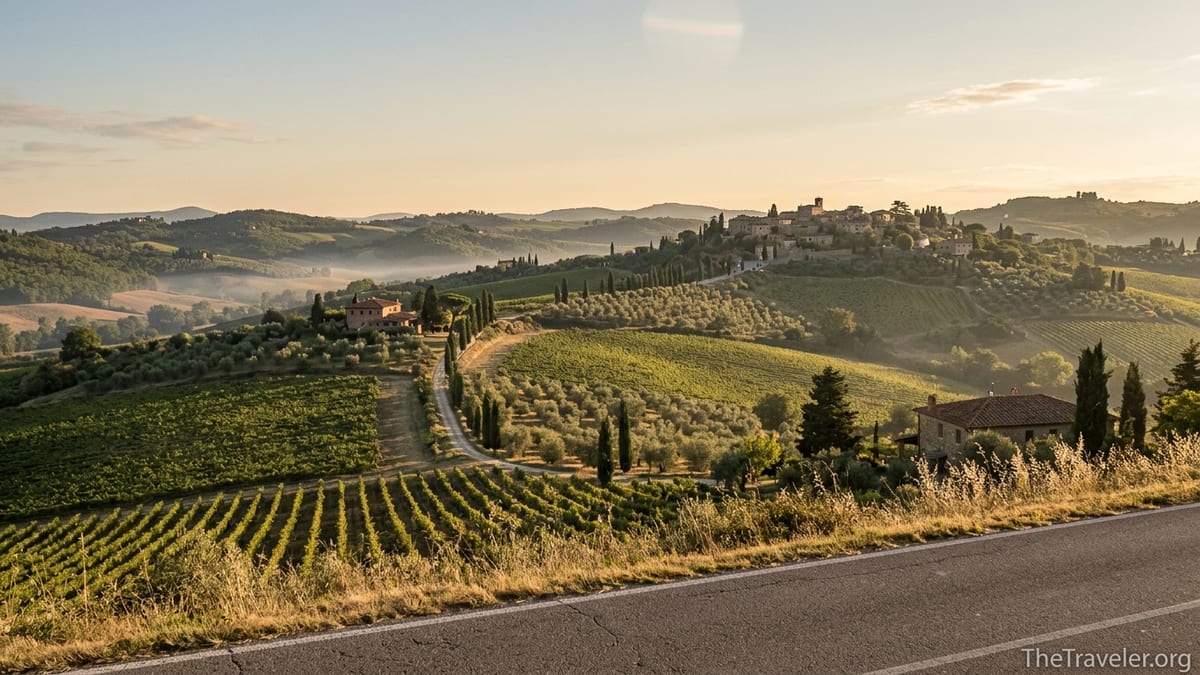
Understanding the Shape of Chianti Before You Go
Chianti is not a single town but a historical wine territory that stretches roughly between Florence and Siena. Within it, Chianti Classico forms the historic heart, anchored by villages such as Greve in Chianti, Panzano, Montefioralle, Castellina, Radda and Gaiole. These names appear again and again on wine labels and road signs, and understanding how they fit on the map will keep you from zigzagging randomly. Picture a loose triangle: Florence to the north, Siena to the south, with Greve and Panzano on the northern side and Castellina, Radda and Gaiole orbiting closer to Siena.
Most first-time visitors either base themselves in Florence and dip into Chianti on day trips, or they spend a few nights in an agriturismo or small hotel inside the region. If your time is short, it is entirely possible to get a rich taste of Chianti in one long day, but two or three days allow you to connect more than one cluster of villages instead of seeing only a single valley. Routes known locally as the “Grand Tours” of Chianti Fiorentino and Chianti Senese link the main villages in scenic loops, which can help you sketch out a logical order instead of guessing village by village.
It also helps to know that many of the most atmospheric spots are not large towns but tiny hamlets just off the main roads. Montefioralle, for example, sits on a hill only a few minutes above Greve yet feels worlds away; Volpaia perches above Radda at the end of a narrow lane. These places are easy to miss if you only follow the obvious road signs. Planning even a basic circuit that deliberately weaves in two or three of these small gems will make your Chianti experience feel deeper and less generic.
Finally, keep expectations realistic about distances and speed. The drive from Florence to Greve is only about 30 kilometers, but once you plunge into the countryside you will be on narrow, winding roads where average speeds dip below 50 km/h. In practice, visiting three or four villages with unhurried walks and one proper lunch already fills a day. The trick is not to see every name on the map but to curate a set of contrasting stops that together express what Chianti is about.
Getting Around: Car, Bus, Driver or Bike
How you move through Chianti will shape which villages you can reasonably see. The most flexible option is to rent a compact car in Florence, Siena or the Florence Airport and drive yourself. This lets you follow the classic SR222 Chiantigiana road between Florence and Siena, detouring whenever a cypress-lined lane or castle tower catches your eye. Expect standard rental costs similar to the rest of Italy, and consider paying a little more for an automatic transmission if you are not comfortable handling a manual on steep, twisting hills.
If you would rather avoid driving, it is still quite practical to experience Chianti from a base in Florence using public transport and short taxis. A regional bus service runs from the Florence bus terminal near Santa Maria Novella to Greve, continuing to other villages on certain runs. Travellers commonly use the 365 bus line to reach Greve or Panzano, then explore on foot and by short local taxis from there. Schedules change seasonally, so it is worth checking them close to your travel dates, but ticket prices are typically just a few euros each way, making this the most economical entry into Chianti.
For those prioritizing comfort and wine tasting, hiring a private driver for a day is a popular middle ground. In 2025 and 2026, full-day private transfers for a couple or small group generally start in the low hundreds of euros, depending on distance and itinerary. That cost buys the freedom to taste at multiple wineries without worrying about driving, plus the local knowledge of a driver who knows which roads are scenic, which villages are slowest at midday, and where to stop for a coffee overlooking the vineyards.
Active travelers may want to experience Chianti by e-bike, especially around Greve, Panzano and Castellina, where local shops rent modern e-bikes by the day. Daily rental prices often fall somewhere around the cost of a modest restaurant meal per person, and the electric assistance makes it feasible to ride the rolling hills between villages even if you are not a regular cyclist. This approach works best if you already have accommodation inside Chianti and can start and end your rides at your door, minimizing time on the region’s busier roads.
Greve and Montefioralle: The Perfect First Taste
Greve in Chianti is many travelers’ first village in the region, partly because it lies on the main route from Florence and partly because it is an easy, compact introduction to Chianti life. The town’s triangular central piazza is framed by porticoed buildings housing wine shops, butchers, bakeries and simple trattorie. On Saturday mornings, the square transforms into a lively market where local producers sell seasonal vegetables, cheeses and cured meats. For a first walk in Chianti, start here with a coffee at a bar under the arcades and simply watch small-town life tick by.
Wine lovers can get their bearings in Greve before plunging deeper into the countryside. Several enotecas in and around the main square offer tasting counters where, for a moderate fee, you can sample a few different Chianti Classico labels side by side. This is a low-pressure way to understand how wines from villages such as Radda, Gaiole or Castellina differ in character before you visit them. Tastings at these shops often cost less than formal winery visits, which makes them appealing for travelers on a tight budget or without a car.
From Greve, a short but steep road climbs to Montefioralle, a tiny fortified hamlet that many Italians cite among the most beautiful villages in the country. With just a handful of stone houses circling a small church, Montefioralle invites slow wandering. You can walk the entire village in ten minutes, but lingering among its narrow lanes at sunset can feel like stepping into a medieval painting. Small family-run restaurants here, some with terraces looking over the valley toward Greve, offer classic dishes such as fresh egg pasta with wild boar ragù or porcini mushrooms, usually priced in line with simple trattorie across Tuscany.
Staying overnight around Greve or Montefioralle is a good strategy if you want to experience Chianti without rushing. Agriturismi on the surrounding hillsides, many of them working vineyards or olive farms, often include breakfast and a small pool. From such a base, you can spend day one on Greve and Montefioralle and day two looping south toward Panzano and beyond, confident that you are not missing the essence of this corner of Chianti.
Panzano and the Chiantigiana Ridge
Roughly eight kilometers south of Greve, Panzano in Chianti sits on a ridge with broad views over the famous Conca d’Oro, a basin of vineyards that produces some of the area’s most admired wines. The village itself is modest in size but punches above its weight in atmosphere and food. Its main street leads uphill to a small, old quarter around the church, with stone houses and glimpses of the vineyards below. On Sundays, stalls sometimes line the streets during small markets or local events, and the whole village feels like a gentle festival of slow life.
Panzano has become particularly well known among food enthusiasts thanks to its butchers and trattorie. Visitors often plan their day so they arrive in late morning, stroll through the village, then sit down for a generous lunch on a terrace overlooking the vines. Expect menus built around grilled meats, handmade pasta and seasonal vegetables, with main courses typically priced in the mid-range for Tuscany. House Chianti Classico by the glass is easy to find and allows you to enjoy the wine without committing to a full bottle at each stop.
From Panzano, the Chiantigiana road continues south in a series of scenic bends toward Castellina, passing countless wineries marked by discreet signs at the roadside. Many estates welcome visitors for pre-booked tastings, which usually include a short tour of the cellars followed by a seated tasting of several wines. Typical tasting fees for standard flights are similar to what you would pay for a simple restaurant meal, and are often waived or reduced if you purchase bottles. Because capacity is limited, especially in smaller family-owned cellars, contacting them a few days in advance is prudent, particularly from May to October.
If you have time in Panzano, consider walking a short section of country lanes around the village rather than only viewing the vineyards from a terrace. Even a one-hour stroll along quiet gravel roads between vines and olive groves can change your impression of Chianti from a purely wine-focused destination to a living agricultural landscape. Just remember that summer afternoons can be hot, so early morning or late afternoon walks are more comfortable, with longer vistas softened by low light.
Castellina, Radda and Gaiole: The Historic Chianti Core
Further south, the trio of Castellina, Radda and Gaiole forms the historic core of Chianti. In medieval times these villages were part of the Chianti League, a defensive and administrative alliance that helped define the region. Today they remain excellent bases for exploring the southern half of Chianti, each offering a distinct personality. Linking all three in a single day is possible by car, but many travelers prefer to focus on just two and explore them in depth.
Castellina in Chianti is perhaps the most immediately photogenic of the three, with a compact historic center crowned by a stone fortress. One of its signature features is the Via delle Volte, a covered walkway that runs under the old town walls. As you walk through this vaulted passage lined with small shops and openings over the countryside, you feel the layered history of a place that once guarded the frontier between Florence and Siena. Small wine bars in and around the main street pour local Chianti Classico by the glass, making it easy to sit for half an hour with a view and absorb the atmosphere.
Radda in Chianti, once the administrative headquarters of the Chianti League, offers a slightly quieter, more contemplative experience. Encircled by remnants of its medieval walls, Radda’s stone streets wind past the Palazzo del Podestà and a graceful parish church. It is an excellent place for slow evening walks and simple dinners of ribollita soup or bistecca alla fiorentina in modest trattorie. Around Radda, small hamlets such as Volpaia cluster amid vineyards and woods. Driving the narrow road up to Volpaia rewards you with a stone-bound village that feels almost suspended in time, with wine cellars and small eateries woven into its medieval fabric.
Gaiole in Chianti has a different flavor again. Historically it served as a market and supply center for nearby castles and estates, and it remains a practical, lived-in town rather than a polished stage set. The surrounding countryside holds some of the region’s most notable castles, including Brolio, associated with the development of the modern Chianti blend. Visitors often combine a walk around Gaiole’s small center with a castle visit and perhaps a section of the vintage cycling route associated with the annual Eroica event. If you arrive on a weekday morning, you may find the town at its most authentic, with locals running errands and delivery vans edging through the narrow streets.
Wineries, Tastings and Food Without Overdoing It
Chianti’s wine culture is central to its identity, but it is easy to overload your days with back-to-back tastings that blur together. To keep your experience both pleasurable and safe, think in terms of one or two substantial winery visits per day, complemented by casual glasses with meals or in village bars. Large estates often offer more structured tours that run at fixed times, while smaller family-run wineries may arrange visits around your schedule if you contact them directly. In both cases, expect a typical tasting session to last one to two hours.
Prices for tastings vary widely. Simple flights of a few wines at smaller estates or cooperative tasting rooms might be priced comparably to a tasting flight in a city wine bar, while more elaborate experiences that include older vintages, additional appellations or food pairings cost more. Many travelers find good value in tastings that include a light lunch of local cheeses, cured meats and bread, turning the visit into a relaxed mid-day break rather than a rushed stop. If your budget is tight, limit paid tastings and instead try individual glasses at casual wine bars in villages such as Greve, Castellina or Radda, where you can pay only for what you drink.
Food in Chianti ranges from simple countryside trattorie and family-run osterie to refined restaurants attached to wine estates. A typical lunch of pasta, a main course and a glass of house wine at a modest trattoria in a village like Panzano or Montefioralle usually falls in the moderate price range for central Italy. Dinner with multiple courses, a bottle of Chianti Classico and coffee will be higher but often still reasonable by Western European standards, especially outside peak weekends in late summer. As always in Italy, checking the menu displayed outside before sitting down will give you a clear sense of typical prices and house specialties.
To avoid fatigue, balance wine-heavy meals with lighter options. Many village restaurants offer salads built around local vegetables, platters of grilled seasonal produce or plates of pecorino cheese with honey and fruit. If you book accommodation with a small kitchenette, picking up ingredients from local markets or supermarkets for one simple picnic-style meal each day can both soften your budget and diversify your diet. Remember that Chianti is as much about olive oil, bread, wild game and truffles as it is about wine; seeking out these products gives your palate a richer, more complete sense of the region.
When to Visit and How to Build a Smart Itinerary
Choosing when to visit Chianti will strongly influence how you experience its villages. Spring and early autumn are generally the sweet spots. From April to early June, vineyards turn bright green, wildflowers edge the roads and temperatures are mild enough for long walks. From September into early October, the harvest season brings buzzing activity to vineyards and wineries, and the hills glow in softer light. Summer, especially July and August, offers long days and open pools but also higher temperatures, heavier traffic on main roads and more crowded village centers at midday.
Winter has its own quiet appeal, with empty roads and fires crackling in restaurant hearths, but some smaller agriturismi and restaurants reduce hours or close entirely in the coldest months. If you visit then, be sure to confirm opening days for any key wineries or restaurants you do not want to miss. Weekends, especially during wine and food festivals, can see parking in popular villages like Greve or Castellina fill up quickly, so arriving early in the day gives you a calmer start and easier access to central squares.
For a first-time visitor with two full days in Chianti, one effective itinerary is to focus on the northern villages on day one and the historic core on day two. For example, you might travel from Florence to Greve in the morning, explore the piazza and a wine shop, continue up to Montefioralle for lunch and a short walk, then finish the afternoon in Panzano before returning to your base. The next day, drive or transfer south to Castellina, walk the Via delle Volte and the fortress, then continue to Radda and Volpaia or to Gaiole and a nearby castle, depending on your interests.
Travelers with an extra day can slow this pace and add more walking. You might base yourself near Radda or Castellina and spend one day simply roaming local lanes on foot between tiny hamlets and vineyards, returning to the same village for both lunch and dinner. This kind of day, with only one or two distinct “destinations,” often yields the most vivid memories. The key is to resist the temptation to “collect” villages; instead, choose a few and give yourself time to notice details such as the sound of church bells at midday or the way evening light falls across the vines.
The Takeaway
Experiencing Chianti without missing its best villages is less about exhausting every option and more about making a few deliberate choices. Understanding how the region is laid out between Florence and Siena, choosing a mode of transport that matches your comfort level, and structuring your days around a small number of carefully chosen villages will give your trip shape and coherence. Greve and Montefioralle offer a gentle introduction, Panzano provides ridge-top drama and food, and Castellina, Radda and Gaiole anchor the historic core with their own distinct personalities.
Layering in one or two winery visits per day, unhurried meals built around local products and short walks on country lanes transforms these villages from postcard backdrops into living places. Whether you come for a single day from Florence or linger for several nights among the vines, approaching Chianti with this kind of focus ensures you leave with clear memories of specific squares, streets and flavors, rather than a vague recollection of having “done” the region. In the end, the best measure of success is not how many villages you can list, but how many you can describe in detail once you are back home.
FAQ
Q1. How many days do I need in Chianti to see the main villages?
Most travelers find that two to three full days are enough to visit several key villages, such as Greve, Montefioralle, Panzano, Castellina, Radda and Gaiole, without feeling rushed.
Q2. Can I visit Chianti’s villages without renting a car?
Yes. You can reach Greve and some nearby villages by bus from Florence, then use local taxis, guided tours or e-bikes. A car offers more flexibility, but it is not strictly essential.
Q3. Which village is the best base for first-time visitors?
Greve in Chianti is a strong choice thanks to its bus connections, central piazza and range of restaurants and shops. Castellina and Radda also make atmospheric bases if you have a car.
Q4. Do I need to book winery visits in advance?
Booking ahead is highly recommended, especially from May to October and on weekends. Many estates limit daily visitor numbers, and smaller family-run wineries often host tastings only by reservation.
Q5. Is driving in Chianti difficult for visitors from abroad?
Driving is manageable if you are comfortable with narrow, winding roads and manual transmissions. Take your time, avoid driving after heavy tastings, and use village parking areas instead of trying to navigate tiny historic lanes.
Q6. When is the best time of year to visit Chianti’s villages?
Spring and early autumn are ideal, with mild temperatures, greener landscapes and generally lighter crowds than peak summer. Summer offers long days but can be hot and busier on the roads.
Q7. Are Chianti’s hilltop villages suitable for travelers with limited mobility?
Many historic centers have uneven stone streets and slopes, which can be challenging. However, village squares and some main streets are often accessible, so choosing accommodation near a central area and planning shorter walks can help.
Q8. How expensive are meals and wine tastings in Chianti?
Prices vary, but a simple lunch with a glass of wine in a village trattoria is usually moderately priced by Italian standards. Standard tastings at wineries are often comparable in cost to a modest restaurant meal.
Q9. Can I combine Chianti with a day trip to Siena or Florence?
Yes. Many travelers base themselves in Florence or Siena and dedicate one or two days to Chianti, or stay in Chianti and visit one of the cities for a day, as driving times are usually around one hour each way.
Q10. Is it safe to drink wine during tastings and still drive between villages?
Italy has legal blood alcohol limits for drivers, and enforcement can be strict. To stay safe, share tastings, spit during formal tastings, limit yourself to small amounts, or use a designated driver, private driver or organized tour.