


Premium travel memberships have exploded in recent years, promising everything from instant elite status to private check-in lines and complimentary upgrades. FoundersCard sits in a curious middle ground: it is not a credit card, not a traditional airline or hotel loyalty program, and not a pure lounge pass. Instead, it bundles negotiated discounts and status-like perks into a single paid subscription. For frequent travelers, the question is simple: how does FoundersCard compare with well known options such as American Express Platinum, Priority Pass, and airline or hotel elite status programs, and when does it actually make financial sense?
Get the latest updates straight to your inbox!
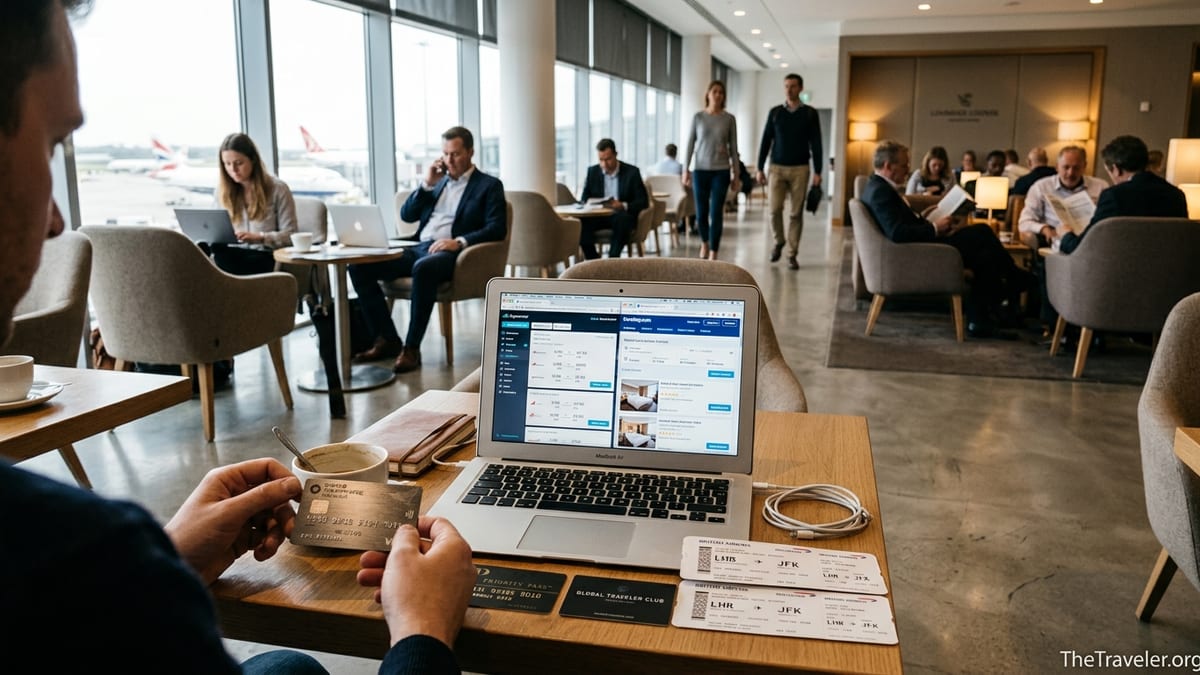
What FoundersCard Actually Is in 2026
FoundersCard is a paid membership program marketed primarily to entrepreneurs and executives. Members pay a recurring fee in exchange for a catalog of travel, lifestyle and business benefits, much of it centered on discounted rates and light status upgrades with partner brands. The company promotes access to more than 500 individual benefits across airlines, hotels, rental cars, business tools and lifestyle partners, and claims a community of hundreds of thousands of members globally.
Pricing can vary depending on how you sign up, but recent public reviews peg the standard FoundersCard membership at around 595 dollars per year, with occasional promotions, trials or reduced first year rates through partners. In practice, many people encounter FoundersCard through targeted offers such as a six month free trial or discounted introductory year, then must decide whether the full annual fee makes sense once the trial ends.
The core of the product is not points or miles. Instead, you receive a login to a benefits portal where you can access negotiated airline discounts, preferred hotel rates, limited elite status with certain chains, car rental upgrades, and statement-style discounts with a long list of partners. In that sense, FoundersCard functions more like a curated coupon and corporate rate book for individuals than a traditional loyalty program.
For example, a frequent business traveler based in New York might use FoundersCard to book discounted JetBlue or American Airlines flights, reserve a preferred rate at a partner hotel in Miami or Austin, and then stack a car rental discount with an upgrade offer at Hertz or Sixt. If those discounts line up neatly with itineraries the traveler would book anyway, FoundersCard can recoup its fee reasonably quickly. If they do not, the membership can sit largely unused.
Headline Benefits: Where FoundersCard Shines and Where It Falls Short
In 2026, FoundersCard’s most widely discussed travel benefits center on airline discounts and preferred hotel rates. Public reviews and marketing materials highlight percentage discounts with select carriers such as American Airlines and Alaska Airlines, along with special fare classes or bonus miles on some routes. In one widely cited example, Alaska’s discount through FoundersCard is described as roughly 5 percent, while some transatlantic partners offer up to around 10 percent off certain fare types. That level of savings can be modest on a short domestic hop, but more meaningful on a 1,500 dollar business class fare.
On the hotel side, FoundersCard often negotiates member-only flexible rates with recognizable brands in major cities. A member booking a three night stay at a lifestyle property in Las Vegas, Miami or London might see a FoundersCard rate that includes daily breakfast and a modest discount compared with the public flexible rate shown on the hotel’s own website. For business travelers who consistently book upscale boutique or chain hotels in gateway cities, this can stack up to several hundred dollars of annual savings.
Where FoundersCard clearly falls short compared with premium credit cards and true elite status is in airport lounge access and guaranteed benefits. Membership alone does not include any airport lounge network; there is no automatic Priority Pass membership or proprietary lounge system. Travelers who value a quiet place to work with complimentary food and drinks between flights will still need a separate solution such as the Amex Platinum Global Lounge Collection or a Priority Pass membership paid directly or received through a credit card.
The other limitation is that many benefits are conditional and can change. A discount might apply only to specific fare classes, or only when booking through a particular portal. Hotel perks may be capacity controlled or limited to certain room types. Unlike an airline’s published elite status benefits, which tend to apply across the network with clear rules, FoundersCard’s catalog can feel like a patchwork of special offers that require careful reading to avoid surprises at checkout.
Cost Comparison: FoundersCard vs Priority Pass and Amex Platinum
To understand where FoundersCard fits, it helps to compare the out of pocket cost with two of the most common travel memberships: Priority Pass and the American Express Platinum card. As of spring 2026, direct Priority Pass memberships typically start around 99 dollars per year for a basic Standard tier, climb to approximately 329 dollars for Standard Plus, and about 469 dollars for Prestige. On many of these tiers, you still pay an additional fee per lounge visit, usually around 35 dollars for the member and a similar amount for each guest, unless you are on the unlimited Prestige-type plan.
By contrast, the Amex Platinum card charges a high annual fee that is currently well above 600 dollars for new U.S. cardholders, though the exact figure and statement credits vary by market and promotions. In exchange, Amex Platinum offers access to the Global Lounge Collection, which covers more than 1,500 lounges worldwide, including Centurion Lounges, a Priority Pass Select membership for the cardholder, partner lounges like Escape and Plaza Premium, and limited access to Delta Sky Clubs when flying on Delta. That lounge access alone, if used regularly, can justify the fee for frequent travelers even before considering other credits.
FoundersCard’s roughly 595 dollar membership price places it directly against these heavy hitters. Unlike Priority Pass, it does not give you any lounges. Unlike Amex Platinum, it does not earn points on spending or offer travel credits that can directly offset the fee. Instead, its economic value depends almost entirely on whether you actually use the negotiated discounts and elite-style perks on flights, hotels and business services.
Consider a consultant who takes one round trip coast to coast flight each month at an average cost of 400 dollars per leg, or 9,600 dollars in flights annually. If a FoundersCard airline partnership yields an average 7 percent discount across those tickets, the traveler could save roughly 670 dollars in a year, which would more than cover the membership fee. By contrast, a Priority Pass Prestige membership at 469 dollars plus a handful of guest fees might offer comfort but no direct fare savings, while Amex Platinum could provide lounge access and travel credits that indirectly subsidize costs but not outright discounts on base fares.
Real World Use Cases: When FoundersCard Works Best
FoundersCard tends to work best for a specific type of traveler: someone who books frequent, full fare or flexible tickets on partner airlines and stays in mid-range to premium hotels in major business hubs. An entrepreneur who regularly flies between San Francisco, New York and London, buys refundable economy or business class fares, and stays at upscale properties in SoHo or Mayfair is much more likely to unlock meaningful value than a leisure traveler chasing the cheapest possible economy ticket on any available carrier.
For instance, imagine a startup founder based in Austin who travels monthly to New York for investor meetings and quarterly to London for industry events. She might use FoundersCard to shave a percentage off transatlantic flights with a partner airline, book a preferred rate with breakfast at a boutique hotel in Shoreditch, and apply elite-like benefits such as late checkout and room upgrades at a partner brand in Manhattan. Over twelve months, those combined savings and perks might easily top 1,000 dollars, especially if she would have booked the same brands anyway.
Another scenario is a small agency owner who frequently books last minute hotel rooms for client meetings in Los Angeles, Chicago and Miami. Publicly available rates for a flexible king room at a popular business hotel in downtown Chicago might be 320 dollars per night midweek. If the FoundersCard rate for the same night is 290 dollars and includes free Wi-Fi and late checkout, a few short trips per quarter could add up to several hundred dollars of savings and improved comfort.
Where FoundersCard performs poorly is in highly price sensitive or infrequent leisure travel. A family that flies once or twice a year to Orlando, books a budget hotel near the theme parks, and rents the cheapest compact car on a comparison site will struggle to use the niche benefits. In that case, an airline co-branded credit card offering a free checked bag, or a hotel card that gives a free night certificate, will likely deliver more tangible value than a 500 plus dollar coupon-like membership that requires booking through specific channels.
How FoundersCard Stacks Up Against Airline and Hotel Elite Programs
At first glance, some FoundersCard benefits look similar to airline or hotel elite status perks: priority check-in, occasional upgrades, flexible cancellation policies and enhanced earning on stays. The key difference is that FoundersCard provides these benefits through one-off partnerships, while traditional elite programs provide them through published tiers such as Gold, Platinum or Diamond linked to your loyalty number across the network.
Take hotel programs as an example. A traveler with Marriott Bonvoy Platinum status, earned through 50 nights per year or by holding a qualifying premium credit card, can expect benefits such as complimentary breakfast at many brands, space available upgrades to suites and guaranteed late checkout at 4 p.m. across thousands of hotels worldwide. Those published benefits apply regardless of where the stay was booked, provided rules are followed. A FoundersCard hotel partnership, by comparison, might offer a rate that includes breakfast and late checkout at a specific property or group of properties, but only when booked through a particular FoundersCard booking page and subject to availability.
On the airline side, true elite status often delivers upgrades, waived change fees, bonus miles and same day standby options. FoundersCard airline discounts typically reduce the base fare or offer bonus mileage accrual on certain tickets but do not grant upgrade priority or systemwide coupons. A Delta Platinum Medallion or American Airlines Executive Platinum member will still enjoy a level of recognition at check-in and on board that a FoundersCard member without status simply does not receive, even if both paid roughly the same amount for their ticket after discounts.
For travelers who are far from requalifying for high status tiers, however, FoundersCard can approximate some soft benefits. A mid level business traveler who will only fly 20 or 25 segments this year might never see the inside of an airline upgrade cabin, but could still benefit from discounted flexible fares and occasional preferred seating through FoundersCard partnerships. In that sense, it can be a way to buy a slice of the corporate travel experience without committing to a single airline or hotel chain’s qualification ladder.
Comparing Flexibility and Complexity Across Programs
Another important comparison point is how much effort each type of membership requires. Priority Pass is straightforward: you pay a fee, receive a card or digital membership, and show it at participating lounges. The main complexity lies in understanding which lounges participate in which airports and what the guest rules are, but day to day usage is simple: arrive at the airport, open the app and present your membership at a lounge entrance.
The Amex Platinum card is more complex in terms of credits and benefit tracking, but lounge usage is still intuitive. You present your card and same day boarding pass at a Centurion Lounge, eligible Delta Sky Club, or other partner facility. Beyond lounges, the complexity comes from maximizing credits such as annual airline incidental credits, hotel booking offers through Fine Hotels & Resorts or The Hotel Collection, digital entertainment credits and retailer credits. Many cardholders refer to needing a spreadsheet or benefit tracker to ensure they are using enough of the card’s perks to offset the fee.
FoundersCard sits closer to the Amex Platinum model in terms of cognitive load, but without the built in rewards engine or lounge access safety net. Members must log into the portal, search for specific benefits, read the fine print and then ensure they book through the prescribed channels. A member planning a trip from Los Angeles to Tokyo, for example, would need to check whether any partner airlines operate that route, what restrictions apply, and whether the FoundersCard rate is still competitive with a public sale fare or a points redemption.
For some travelers, especially deal hunters who enjoy optimizing, that level of involvement is acceptable or even fun. For others, it can feel like work. A common theme in user reviews is that FoundersCard’s value is highly uneven: a subset of members who structure their travel around the benefits derive significant savings, while others find that the offers do not line up naturally with their preferred airlines, destinations or dates and therefore go mostly unused.
Stacking Benefits: Can You Combine FoundersCard With Other Memberships?
In practice, many frequent travelers do not choose between FoundersCard, Amex Platinum, Priority Pass or airline status; they combine them. Since each program focuses on different aspects of the travel experience, careful stacking can create substantial value if rules allow it. For example, a traveler might use FoundersCard to secure a discounted flexible fare on a partner airline, then rely on Amex Platinum for lounge access on the day of travel, all while crediting flight miles to an airline frequent flyer account to work toward elite status.
Similarly, a business owner who holds both FoundersCard and Amex Platinum might book a prepaid stay at a Fine Hotels & Resorts property through Amex to earn a 200 or 300 dollar semi-annual hotel statement credit and receive benefits like guaranteed 4 p.m. checkout and on property experience credits, while reserving other stays directly with partner hotels via FoundersCard to take advantage of negotiated rates in cities not covered by Amex’s premium hotel network. Over the course of a year, this layered approach can create a mosaic of savings and perks that none of the programs could deliver alone.
The key question is always whether stacking changes your behavior. If you start picking more expensive hotels or less convenient flights solely to use a FoundersCard rate or a credit card credit, you may be eroding much of the economic benefit. Travelers who do best with multiple memberships are those whose natural patterns already align with the partners involved. A consultant who already favors a specific global hotel chain and a short list of full service airlines, for example, is far more likely to see clean, incremental savings from FoundersCard on top of their existing elite status and credit card perks.
There are also occasional conflicts and trade offs. Some hotel loyalty programs do not award points or elite credit on stays booked through third party channels, including some negotiated corporate rate style programs. In those cases, using a FoundersCard rate could mean giving up progress toward a free night certificate or a milestone bonus. Before committing to a given discount, it is wise to confirm whether the rate will qualify for points and elite night credit and to weigh the long term value of status progression against the short term discount.
The Takeaway
In 2026, FoundersCard occupies a distinct niche in the travel membership landscape. It is not a direct substitute for Priority Pass, which focuses on lounge access, nor for premium rewards cards like Amex Platinum, which bundle rich lounge networks with statement credits and points earning. Instead, it acts as a targeted discount and perks platform that can meaningfully reduce out of pocket costs for travelers whose habits align with its airline and hotel partners.
For heavy business travelers booking flexible fares and staying in mid to high end hotels in major global cities, a FoundersCard membership can pay for itself with a handful of well chosen trips each year. A couple of discounted transcontinental or transatlantic flights, combined with a few preferred hotel bookings that include breakfast or late checkout, may easily surpass the roughly 595 dollar annual fee. When layered on top of an Amex Platinum or co branded airline and hotel cards, the effect can be a broad portfolio of small but cumulative advantages at nearly every stage of the journey.
For infrequent or highly budget conscious travelers, however, FoundersCard is usually less compelling than a straightforward lounge membership or a strong general travel credit card. If you only fly a few times per year, prefer low cost carriers and budget hotels, and do not enjoy sifting through portals for targeted offers, a direct Priority Pass membership or a mid tier airline co branded card that waives checked bag fees might provide more visible day to day value.
The most important step before joining is an honest audit of your travel patterns. Look at your last 12 months of flights and hotel stays, note your preferred brands and routes, and compare those directly to FoundersCard’s current partner list and discount structures. If you can identify several concrete instances where you would have saved real money or received meaningful perks without changing your plans, FoundersCard may be worth a trial. If your recent trips would not have benefited from the catalog, the membership is likely to feel like an expensive coupon book you rarely open.
FAQ
Q1. Does FoundersCard include airport lounge access like Priority Pass or Amex Platinum?
FoundersCard does not include its own airport lounge network, nor does it automatically provide Priority Pass or similar access. Members who want lounge access typically pair FoundersCard with a separate product such as Amex Platinum, a premium Visa or Mastercard that includes Priority Pass, or a direct lounge membership.
Q2. How much does FoundersCard cost compared with Priority Pass?
Recent public pricing suggests FoundersCard’s standard membership is around 595 dollars per year, while direct Priority Pass memberships typically range from about 99 dollars for a basic tier up to around 469 dollars for an unlimited Prestige style plan, plus per visit or guest fees on some tiers. Exact amounts can change, so travelers should always verify current pricing before deciding.
Q3. Can FoundersCard save me more than a premium travel credit card?
It can in specific situations. If you routinely book higher fare tickets and stay at partner hotels where FoundersCard has strong discounts, the direct savings on those bookings might exceed what you would get from a premium card’s statement credits alone. However, credit cards like Amex Platinum also earn valuable points on everyday spending and offer broad lounge access, so many frequent travelers choose to use both rather than treating them as either or choices.
Q4. Is FoundersCard worth it for infrequent leisure travelers?
Usually not. If you travel only a few times a year, prefer the cheapest available fares and budget hotels, and do not care much about late checkout or small room upgrades, it is difficult to recoup a 500 plus dollar membership fee through FoundersCard’s niche discounts. A mid tier airline co branded card, hotel card with a free night certificate, or a basic Priority Pass membership will often be a better fit.
Q5. Do FoundersCard hotel bookings earn loyalty points and elite night credit?
It depends on the specific partnership and how the rate is structured. Some FoundersCard rates are treated like corporate or preferred rates that still earn points and night credits with the hotel’s loyalty program, while others may not. Before booking, it is wise to check the terms of the specific rate and confirm with the hotel or loyalty program whether the stay will qualify for points and elite credit.
Q6. How does FoundersCard compare to airline or hotel elite status?
FoundersCard can mimic certain soft benefits, such as discounted fares, flexible booking policies or occasional upgrades at specific partners, but it does not replace full elite status. Airline and hotel elites generally enjoy system wide perks like upgrade priority, guaranteed late checkout and bonus points across an entire network, while FoundersCard’s benefits are more fragmented and tied to individual offers and properties.
Q7. Can I stack FoundersCard discounts with credit card rewards and points earning?
In many cases yes. You can often pay for a FoundersCard discounted flight or hotel stay with a rewards credit card, earning points on the purchase and potentially triggering relevant statement credits. The main caveat is that if a rate is considered ineligible by a hotel or airline loyalty program, you might not earn loyalty points or elite credit on top of the discount, even though you still earn credit card rewards.
Q8. Are FoundersCard airline discounts available on all routes and fare classes?
No. Airline benefits are usually limited to specific fare types, routes or booking channels, and may exclude the cheapest sale or basic economy fares. For example, a discount might apply only to full fare economy, premium economy or business class on certain international routes. Travelers should always compare the FoundersCard price against public fares and award options to ensure the discount is truly beneficial.
Q9. How much time does it take to use FoundersCard effectively?
Using FoundersCard well requires some planning. Members generally need to log into the portal, search for applicable benefits, read terms and then book through the indicated channels. For travelers who enjoy optimizing and who travel frequently, this can become part of their regular planning routine. For infrequent travelers or those who value simplicity, the required effort may outweigh the incremental savings.
Q10. Should I try FoundersCard on a trial before paying the full annual fee?
For most travelers, a trial is the smartest approach. A three to six month promotional period allows you to test whether the available airline and hotel discounts align with your real trips without committing a full year’s fee. During the trial, compare what you actually save against what you would have paid using your existing cards and loyalty programs, then decide whether continuing the membership makes financial sense.