


More news on this day
With Royal Caribbean continually launching bigger and flashier ships, it can be easy to overlook the vessels that first defined the line’s high-energy style. Yet a closer look at deployment schedules and refurbishment programs shows that several older favorites have been significantly refreshed in recent years, making them strong contenders for repeat sailings.
Get the latest news straight to your inbox!
Allure of the Seas: An Oasis Icon Reimagined
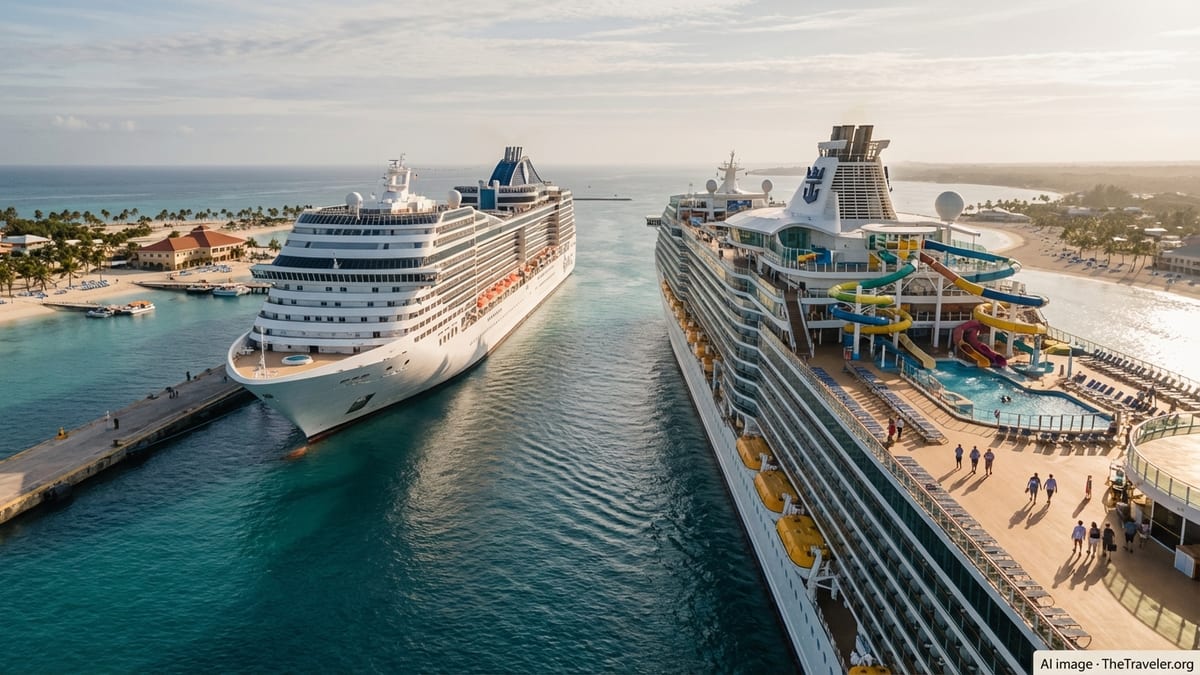
Allure of the Seas has long been one of Royal Caribbean’s most recognizable ships, and it is now back in the spotlight after a major amplification. A dry dock in early 2025 in Spain, widely reported to cost more than 100 million dollars, introduced new top-deck attractions, updated dining and bars, and refreshed cabins. The work brought Allure in line with other upgraded Oasis class ships, with water slides, enhanced family features, and technology improvements reshaping the onboard experience.
Industry coverage highlights that Allure’s revamp mirrors popular additions seen on Oasis class sisters, including expanded casual dining and reworked nightlife venues. For cruisers who previously sailed Allure in the early 2010s, the ship now represents almost a different era of big-ship design, combining its original neighborhood layout with contemporary branding and experiences. It is an example of how Royal Caribbean is using its Royal Amplified program to extend the life of some of its largest vessels.
Deployment information shows Allure positioned heavily in Europe and the Caribbean, catering to travelers seeking weeklong itineraries with a resort-style atmosphere at sea. For those who remember the ship before its latest refurbishment, returning now effectively means revisiting a favorite resort after a complete renovation, with familiar spaces layered under a new entertainment and dining mix.
Navigator of the Seas: A Voyager Classic With a Fresh Feel
Navigator of the Seas, part of the Voyager class that debuted in the early 2000s, has undergone one of the fleet’s most talked-about modernizations. The ship received an extensive Royal Amplified makeover that introduced new water slides, a reimagined pool deck, updated bars and lounges, and refreshed family zones. Cruise industry reports and line materials describe this refit as one of the standout transformations within the program, reshaping an older vessel into a contemporary short-cruise favorite.
Recent dry dock work in 2024 in Asia focused on maintenance and technical upgrades, according to cruise-tracking services, helping the ship remain competitive on routes from the United States West Coast. Public commentary from frequent cruisers often notes that Navigator’s amplified top deck, compact layout, and updated casual dining outlets make it feel like a testbed for features later seen across the fleet. The combination of the original Royal Promenade with newer attractions such as enhanced water slides has helped sustain interest among repeat guests.
For travelers who remember Navigator before its major refit, a return visit now offers a different balance of sea days and onboard energy. The ship continues to sail shorter itineraries that emphasize port-intensive getaways, but the amplified spaces mean that even repeat routes feel new. That mix of nostalgia and novelty is part of the reason many cruise watchers single out Navigator as a ship worth revisiting.
Voyager of the Seas: Where Royal’s Modern Era Began
Voyager of the Seas was the ship that introduced several features now associated with Royal Caribbean, including the first rock climbing wall at sea, an ice skating rink, and the indoor Royal Promenade. When the vessel launched in 1999, it was the largest cruise ship in the world and effectively ushered in a new phase of big-ship design. Industry overviews regularly cite Voyager class as the template for many of the brand’s subsequent innovations.
The ship’s 2019 amplification in Asia, documented by ship databases and cruise media, added water slides, a refreshed children’s program, and digital enhancements. Although the vessel is now among the older ships in the fleet, refurbishment work and ongoing maintenance keep core public areas aligned with current expectations for family cruising. For passengers who first sailed Voyager in its early years, the ship now represents both a piece of cruising history and an updated platform for regional itineraries in markets such as Australia and Asia.
Voyager continues to attract attention among enthusiasts precisely because it bridges eras. Its Promenade and entertainment venues feel familiar to anyone who has sailed newer Royal Caribbean ships, yet the overall scale is more modest than the giant Oasis and Icon classes. A repeat sailing allows travelers to rediscover the atmosphere that helped define the brand at the turn of the century while still benefiting from modernized amenities.
Ovation of the Seas: Quantum-Class Innovation in Scenic Regions
Ovation of the Seas, part of the Quantum class built at Meyer Werft in Germany, is often associated with itineraries in regions such as Alaska, Australia, and Asia. Quantum ships were designed to function well in both warm and cool climates, featuring more indoor spaces than some earlier classes. Among the most distinctive elements are the North Star observation capsule, which rises high above the ocean, and the SeaPlex multipurpose sports and entertainment venue.
According to shipyard and line materials, Quantum class vessels share large glass-walled public areas with sweeping ocean views, enabling guests to enjoy scenery even in cooler weather. Industry profiles of the class emphasize features such as advanced entertainment technology, virtual balcony cabins on some ships, and a range of dining concepts that move beyond traditional main dining room formats. Ovation has been repeatedly highlighted in travel coverage as a strong option for scenic itineraries where ship-based viewing is critical.
For travelers who sailed Ovation earlier in its career, particularly on inaugural or early-season voyages, a return now would showcase how itineraries and onboard programming have evolved. As deployment patterns shift between North America, Asia-Pacific, and Europe, the ship continues to serve as a mobile showcase of Quantum-class design in some of the world’s most visually striking cruising regions.
Radiance and Brilliance of the Seas: Radiance-Class Favorites in High-Demand Markets
Radiance of the Seas and Brilliance of the Seas, both part of the Radiance class, remain fixtures in deployment plans for Alaska and Europe. Radiance class is known for extensive glass surfaces and relatively smaller size compared with the newest mega-ships, a combination that gives these vessels a reputation for strong sightlines and a more relaxed onboard environment. Official deployment guides show Radiance sailing Alaska seasons and Brilliance focused on European itineraries through at least 2026, underscoring continued demand.
Royal Caribbean’s press information notes that Radiance class ships are equipped with high-speed internet connectivity and updated fitness and recreation spaces, aligning them with current fleet-wide standards. At the same time, their layout favors ocean views and outdoor promenades, features that appeal to travelers seeking scenery-forward routes. Reports of past technical issues, such as occasional propulsion challenges, are balanced by ongoing maintenance programs that keep the ships in regular seasonal service.
For returning guests, Radiance and Brilliance offer an opportunity to revisit a more traditional style of cruising within a modern fleet. These ships lack some of the headline-grabbing attractions found on newer classes, but they often receive favorable commentary for itineraries that prioritize destination immersion. As Royal Caribbean continues to expand with larger vessels, Radiance class increasingly stands out as a platform that rewards repeat visits from travelers who value views, ports, and a familiar onboard rhythm.