


More news on this day
Freight rail operators using Hungary’s strategic east–west and north–south corridors are facing a growing patchwork of traffic restrictions in 2026, as infrastructure works, safety measures and cross-border interruptions combine to slow and periodically halt cargo movements through the country.
Get the latest news straight to your inbox!
Infrastructure works tighten capacity on key corridors
The most visible constraints for freight trains in Hungary this year stem from major infrastructure projects on lines serving Budapest and international corridors. Publicly available timetables and notices from Hungarian and international rail companies highlight extended single-track operations, reduced paths for cargo trains and recurring daytime closures on heavily used approaches to the capital.
On the southern approach to Budapest, construction related to the Southern Circular Railway has altered train movements for several weeks at a time, reducing flexibility for both passenger and freight operations. Diversions and temporary track closures between Budapest-Kelenföld and major junctions have meant fewer slots for freight, particularly during daytime hours when passenger traffic is prioritized.
Industry advisories for customers moving intermodal cargo across Hungary describe the combination of long-running construction and limited overtaking opportunities as a major capacity squeeze. Some notices indicate that, at peak periods, only a small number of freight trains per hour can be accommodated alongside passenger services on busy sections, forcing operators to reschedule or reroute trains via secondary lines.
Rail logistics companies active on the Budapest–Belgrade axis also point to the continuing commissioning phase of that line as a source of disruption. While the upgraded route is expected to become a high-capacity freight artery once full operations stabilize, the current phase involves intermittent testing windows, altered timetables and, in some cases, temporary suspensions of freight traffic to protect the new infrastructure and keep passenger connections running.
Weather and safety suspensions compound network disruption
Beyond planned engineering works, freight rail flows in Hungary in 2026 have been affected by weather-related safety measures. A customer advisory issued in late March reported an emergency situation after storms and fallen trees disrupted tracks in Hungary and neighboring countries, forcing a temporary suspension of freight train operations on some cross-border routes.
These suspensions, which are implemented to allow infrastructure managers to clear debris and inspect lines, tend to halt freight movements with little advance notice. Reports from logistics providers suggest that rerouting options are often limited when multiple countries in the region are impacted simultaneously, leaving cargo stranded or delayed at border terminals and inland hubs until lines reopen.
Network vulnerability analyses conducted in recent years have already highlighted how specific Hungarian line segments carry disproportionate importance during disruptions. When these segments are affected by severe weather or incidents, the reallocation of scarce capacity in favor of passenger trains often tightens restrictions on freight, especially on radial routes into Budapest and on the north–south transit axes linking Central Europe to the Balkans.
Operators indicate that these unplanned suspensions have reinforced the need for additional buffer time in schedules and greater use of storage tracks and terminals to hold trains during network closures. For shippers, this translates into longer transit times and greater variability, particularly for time-sensitive intermodal and automotive traffic crossing Hungary.
Border bottlenecks and temporary freight blocks
Hungary’s role as a rail gateway between the Schengen area and the Western Balkans has made cross-border restrictions a critical factor for freight planners. Early in 2026, information published by Hungarian outlets described a temporary closure of freight lanes at border crossings between Serbia and Schengen states, effectively blocking some rail and road cargo flows for defined periods.
Such measures, even when time-limited, can have knock-on effects along entire corridors. When freight is blocked or heavily restricted at a border, trains must be held at upstream yards inside Hungary or rescheduled for later border slots. This can quickly congest marshalling yards and reduce the ability of infrastructure managers to accept additional freight movements, leading to further ad hoc limitations on train length or departure times.
The reopening of freight traffic on the renovated Budapest–Belgrade line earlier this year was expected to ease some of these pressures by creating a more efficient rail link between Central Europe and Serbia. However, during the initial months of operation, capacity has been carefully controlled, with infrastructure managers and operators balancing testing, passenger services and freight flows. Logistics updates suggest that, while the long-term outlook is positive, near-term capacity for cargo remains constrained and subject to sudden adjustments.
On Hungary’s western borders, rail operators have also reported capacity limits on routes into Austria and Slovenia. Advisories pointing to restrictions such as reduced maximum train length on certain international legs show that, even where lines remain open, technical and operational limits are effectively traffic restrictions that reduce the volume of freight that can be moved in a single path.
Interaction with road freight restrictions and modal choices
Hungary’s long-standing weekend and public-holiday driving bans for heavy goods vehicles add a further layer of complexity when freight trains face their own restrictions. The national regulatory framework, updated in recent years, generally limits road vehicles over a certain weight from using key routes between Saturday night and Sunday night, as well as during specified holiday periods, subject to exemptions.
Industry bulletins for international hauliers in 2026 describe a pattern of partial suspensions or temporary relaxations of these road bans during heat waves or specific holiday weekends, reflecting efforts to maintain supply chains. Even so, for planners seeking to shift cargo between road and rail in response to rail disruptions, the existence of weekend driving restrictions can limit the feasibility of large-scale diversion from rail to road at short notice.
When rail capacity is reduced by construction or safety measures at the same time as standard weekend truck bans are in force, logistics providers report that some traffic must be advanced or delayed by several days to align with available slots. This can affect industries operating on just-in-time principles, including automotive and retail distribution, and may incentivize shippers to adjust inventories or select alternative routings through neighboring countries.
Conversely, when authorities temporarily ease heavy-vehicle restrictions in response to exceptional heat or infrastructure issues, published notices suggest that some operators seize the opportunity to re-route part of their flows from congested rail lines to road. This interplay between rail and road regulations is becoming a central consideration in multimodal planning for freight crossing Hungary.
Implications for travelers and the wider region
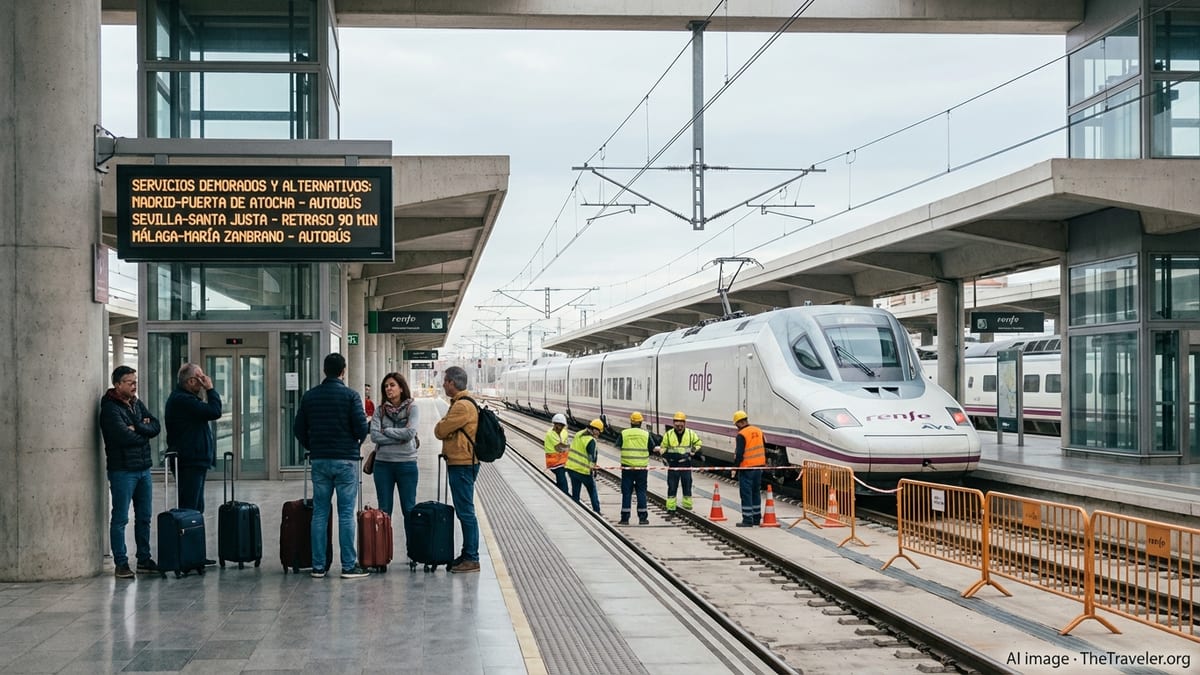
While the current measures primarily target freight traffic, the resulting constraints on track capacity and timetable flexibility have indirect implications for passenger rail users and tourism. During work on key junctions and approaches to Budapest, passenger services are largely maintained but often require altered schedules, longer journey times or bus replacement services, particularly on regional lines that share infrastructure with heavy freight.
For international travelers using rail to reach or transit Hungary, reports from passenger advisory platforms and rail operators emphasize the importance of checking updated timetables close to departure. Freight-related restrictions, such as single-track working or cross-border capacity limits, can translate into fewer direct services, earlier departure times or longer connection windows at major hubs.
At the regional level, Hungary’s temporary freight rail restrictions interact with similar pressures across Central and Southeastern Europe, where infrastructure modernization and climate-related disruptions are prompting repeated adjustments to freight traffic patterns. The cumulative effect is a more fragile transit environment, in which delays or restrictions in one country can quickly propagate across others connected by long-distance rail corridors.
Logistics-sector analyses suggest that the experience of 2026 is likely to accelerate discussions on redundancy and flexibility in Hungary’s rail network, including the role of secondary lines, additional passing loops and upgraded signaling to handle disruptions more effectively. For travelers and shippers alike, the immediate message is that rail in Hungary remains a vital but capacity-constrained artery, with freight traffic subject to frequent and sometimes sudden limitations as the network undergoes a period of intensive change.