


More news on this day
Rail passengers endured hours of disruption this morning after an emergency incident led to all train lines being blocked, halting peak services and leaving thousands of commuters facing long delays and cancellations.
Get the latest news straight to your inbox!
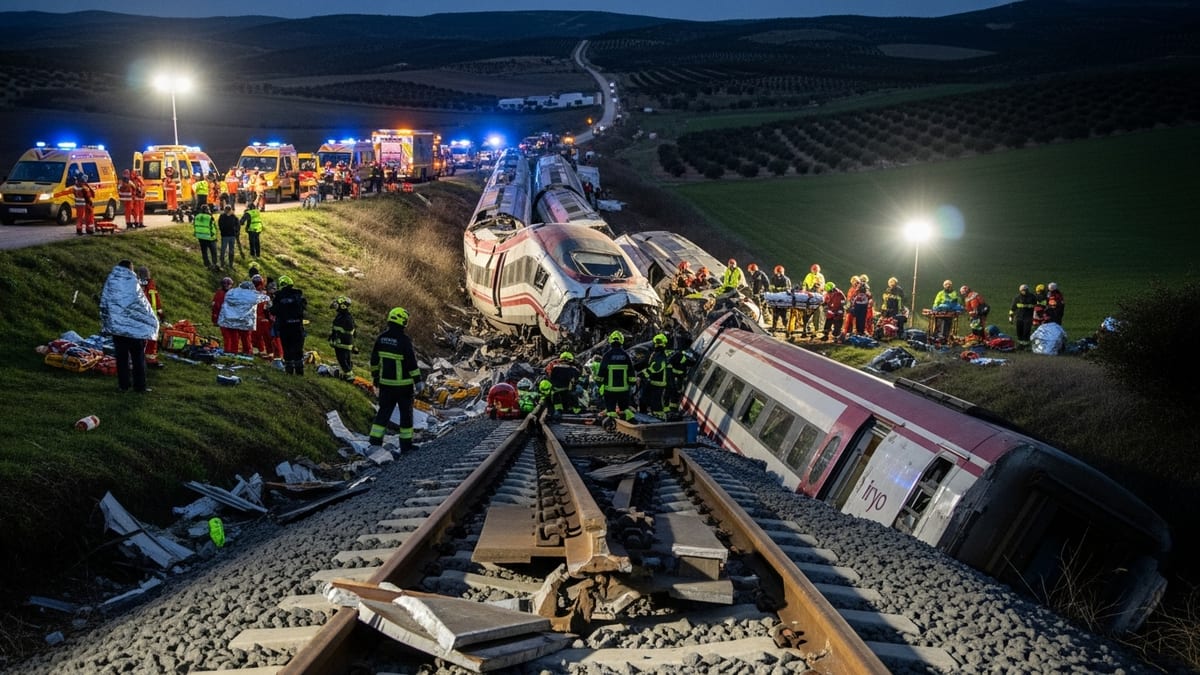
Emergency incident halts all movements on the network
According to early reports from rail operators and local media, services across the network were suspended shortly after the start of the morning peak when an emergency incident occurred on a key section of track. Rail control teams responded by placing an immediate block on all lines in the affected corridor, a precautionary step that effectively stopped all movements through one of the network’s busiest bottlenecks.
Publicly available information indicates that trains already in service were held at stations or between key junctions while responders attended the scene. Some services were turned back short of their planned destination, while others were fully cancelled as the scale of the disruption became clear.
Witness accounts shared on social media describe platforms becoming crowded as departure boards switched rapidly from delayed to cancelled. Rail operators issued repeated advisories urging passengers to delay travel where possible and to consider alternative modes of transport while emergency teams remained on site.
The nature of the incident has not yet been fully detailed, but coverage from multiple outlets points to emergency services activity in the immediate vicinity of the tracks. Such situations typically trigger automatic safety protocols that require all lines in the affected area to be brought to a standstill until the site is declared safe.
Hours of delays, diversions and residual knock-ons
The initial full block on all lines remained in place for several hours, with reports indicating a gradual lifting of restrictions only once the incident scene had been secured and inspections of track and signalling equipment were under way. Even after some lines reopened, services continued to experience heavy delays as trains and crews were out of position.
Rail timetables are tightly planned around the availability of rolling stock and staff, and an extended suspension during the morning peak can take much of the day to unwind. Cancellations of mid-morning and lunchtime services are often required so that trains can be repositioned for the afternoon rush, and this pattern appeared to be repeated today as operators reconfigured diagrams in response to the disruption.
In previous incidents of a similar scale on busy commuter routes, disruption has frequently extended well beyond the initial emergency phase, with residual delays and short-notice alterations affecting passengers many hours after lines technically reopen. Published research on urban rail resilience notes that knock-on effects can persist even once the physical cause of a disruption has been removed, particularly where a key junction or interchange is involved.
Passengers today reported congested platforms, crowding on any services that did run, and long queues for replacement buses and ride-hailing services. Some travellers opted to abandon rail journeys altogether, instead turning to road transport that itself became heavier than usual during the peak.
Impact on commuters and regional connectivity
The timing of the incident during the morning rush led to severe disruption for commuters travelling into major employment, education and healthcare hubs. Office workers described missing important meetings, parents struggled to complete school runs, and shift staff reported spending significantly longer getting to and from workplaces that depend heavily on rail access.
Beyond the immediate commuter belt, regional and intercity services were also affected where their routes relied on the blocked section of line or where rolling stock needed for longer-distance journeys was trapped out of position. Rail network maps show that closures at a single critical junction can ripple outward across a much wider area, forcing operators to terminate or divert trains far from normal routes.
For businesses, delayed staff arrivals and missed customer appointments translated into lost productivity, particularly in city centre locations that rely on high-frequency train services. Hospitality and retail venues near major stations saw quieter than usual trade during what would normally be a busy morning, while taxi and rideshare providers experienced a surge in demand as passengers sought alternatives.
Rail user groups and transport commentators highlighted the incident as another reminder of the vulnerability of heavily used networks to unplanned events. While major emergencies remain relatively rare, any block affecting all lines through a key corridor can quickly bring large parts of the system to a standstill, with significant economic and social costs.
Rail operators activate contingency and recovery plans
As information about the incident filtered through, operators activated established disruption plans designed to manage large-scale outages. These plans typically include holding patterns for trains already in service, controlled turning of services before bottlenecks, arrangements for substitute road transport, and co-ordinated passenger information through station announcements, apps and social media channels.
Once emergency teams granted access, engineering and safety staff carried out checks on track, signalling and overhead equipment in the affected area. Network operators routinely conduct these inspections after any incident involving emergency attendance near the line, both to confirm that the infrastructure is safe and to understand whether any damage has occurred that could affect future operations.
Transport analysts note that modern rail control systems are designed to default to the safest possible state. When alerts are raised or communication is lost in a critical area, the system restricts or halts train movements until human controllers are able to verify conditions on the ground. This safety-first approach, while disruptive, is credited with preventing more serious accidents when unexpected events occur on or near the tracks.
As services were gradually reintroduced, operators warned passengers to expect altered stopping patterns, reduced frequencies and crowding on available trains. Experience from other large disruptions suggests that full timetable normality may not resume until later in the day, once trains and crews have been fully rebalanced across the network.
Questions over resilience and passenger communication
The incident is likely to prompt renewed debate over how rail networks can better withstand major disruptions affecting multiple lines simultaneously. Transport experts point to the importance of infrastructure redundancy, such as alternative routes around key junctions, crossovers that allow trains to switch tracks, and signalling systems that can support flexible rerouting during emergencies.
Academic work on disruption management highlights the benefits of detailed contingency planning and rapid rescheduling tools that help network controllers adapt timetables in real time when a line is blocked. Some studies argue that investment in these capabilities can significantly reduce the duration and passenger impact of unplanned events by making it easier to prioritise critical services and reposition trains efficiently.
Passenger groups also focus on the quality and timeliness of information provided during major incidents. Travellers affected this morning reported a mix of clear updates in some locations and confusion in others, reinforcing long-standing calls for more consistent real-time communication across station announcements, digital displays and mobile apps.
While investigations into the specific circumstances of today’s emergency are still at an early stage, the scale of the disruption underlines how quickly a modern rail network can be brought to a halt when all lines through a strategic corridor are blocked. As services slowly return to normal, attention is expected to turn to what lessons can be drawn to improve resilience, communication and recovery when the next major incident occurs.