


More news on this day
Jakarta’s Soekarno-Hatta International Airport is grappling with another wave of disruption after Batik Air and Garuda Indonesia cut 13 flights and delayed around 180 others, rippling through domestic and regional connections across Indonesia, Singapore, China, Thailand, Vietnam and Saudi Arabia.
Get the latest news straight to your inbox!
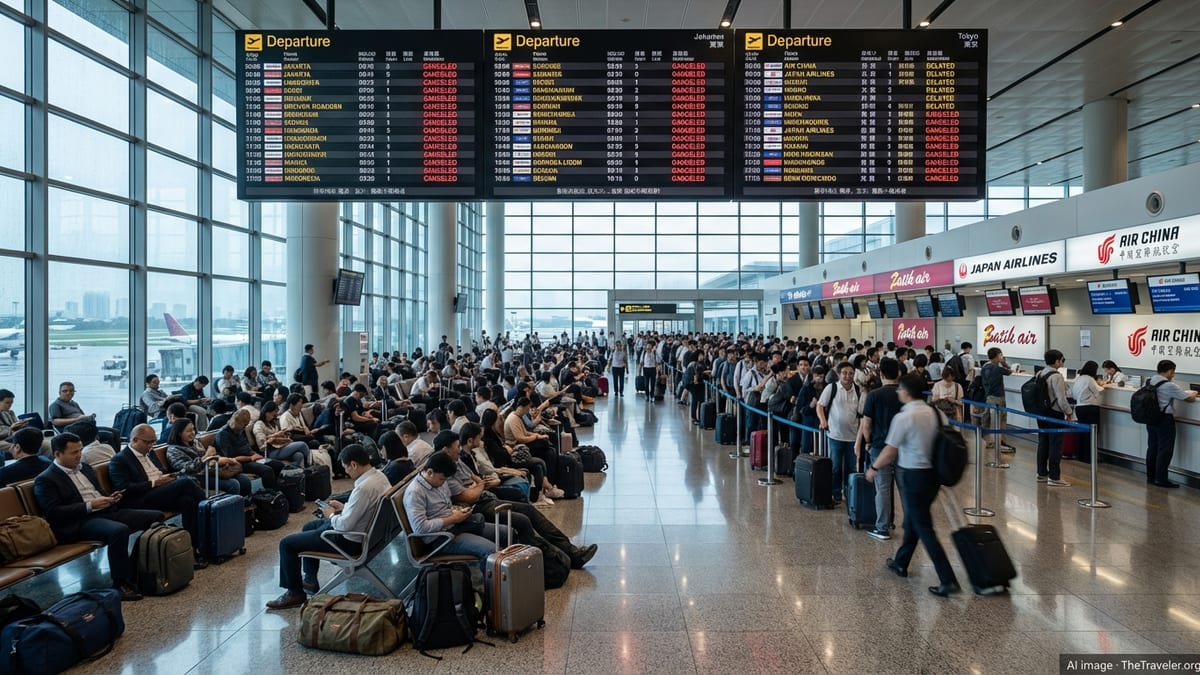
Disruption Peaks at Indonesia’s Busiest Aviation Hub
The latest disruption hit Soekarno-Hatta on the back of an already strained summer travel period, with operational data indicating a concentrated spike in cancellations and late departures over the past 48 hours. Batik Air and Garuda Indonesia, both based at the Jakarta hub, feature prominently in the tally of 13 axed services and approximately 180 delayed flights, affecting departures and arrivals throughout the network.
The impact extends beyond Jakarta’s terminals. Because both carriers use Soekarno-Hatta as a primary hub, schedule changes on key trunk routes quickly cascade into missed rotations and tighter aircraft availability. As aircraft and crews arrive late into Jakarta, knock-on delays have been reported on onward legs to major Indonesian cities including Surabaya, Denpasar, Makassar, Medan and Manado, as well as on regional services into Southeast and East Asia.
Recent statistical snapshots published by aviation and travel-industry outlets have repeatedly placed Soekarno-Hatta among the most heavily disrupted airports in Indonesia this season, citing a combination of congested airspace, tight turnaround times and weather-related constraints. Batik Air and Garuda Indonesia, as two of the largest operators at the airport, have consistently appeared among those most affected whenever disruption spikes.
Regional Routes to Singapore, China, Thailand, Vietnam and Saudi Arabia Hit
The current wave of disruption is not limited to domestic flights. Publicly available schedule and operations data show delays and cancellations affecting short- and medium-haul routes linking Jakarta with Singapore, Bangkok, Ho Chi Minh City, Guangzhou and other Chinese gateways, as well as long-haul services connected to Saudi Arabia via Jeddah and other hubs.
These routes are particularly sensitive, as they carry a mix of business travelers, holidaymakers and religious pilgrims, many of whom rely on tight connections. In recent months, coverage from travel trade media and flight-statistics platforms has highlighted several days when Middle East and Saudi-linked flights from Indonesian airports have been cut or heavily retimed, underscoring the vulnerability of long-haul itineraries to any operational strain at Jakarta.
In addition to outright cancellations, many affected services are departing with significant delays that push them into different connection banks at major transit airports. This can leave travelers arriving after their onward flights have closed, triggering rebookings and overnight stays that quickly fill airport hotels and pressure ground-handling resources.
How Batik Air and Garuda Indonesia Are Exposed
Batik Air, part of the Lion Air Group, has expanded rapidly over the past decade into a dense network of domestic and regional routes centered on Jakarta. Industry analyses and prior operational reports have frequently noted that the carrier’s tight scheduling and high aircraft utilization can leave little slack in the system when weather, air-traffic restrictions or technical issues arise. On high-disruption days, Batik Air often records some of the highest numbers of delayed movements at Soekarno-Hatta.
Garuda Indonesia, the country’s flag carrier, operates a more premium, full-service model but is not immune to the same structural constraints. Published coverage of previous disruption episodes has shown Garuda managing to avoid mass cancellations at times, yet still reporting large clusters of delayed departures as the airline seeks to operate the majority of its planned program from Jakarta with limited spare capacity.
When both airlines are hit simultaneously, the effects on the wider Indonesian network are magnified. Aircraft arriving late from secondary hubs reach Jakarta behind schedule, reducing the time available for essential ground handling before the next departure. Even modest delays of 30 to 60 minutes, when repeated across dozens of rotations, are enough to push some later flights into cancellation as duty-time limits for crew and overnight airport curfews come into play.
Passenger Experience: Missed Connections and Uncertain Timings
For passengers, the most immediate consequence of the latest disruption at Soekarno-Hatta is uncertainty. Travelers on connecting itineraries, especially those involving regional hops to Singapore, Thailand, Vietnam or onward long-haul flights, are facing missed connections and extended waits in crowded terminals. Travel forums and social media posts over recent months have chronicled similar episodes, with travelers reporting missed holidays, business meetings and religious trips after long delays on Batik Air and other Indonesian carriers.
On the ground, long queues at check-in and transfer desks are common whenever a surge of delayed flights converges, particularly at peak periods. Ground handling teams must simultaneously process rebookings, arrange meal vouchers or hotel rooms where applicable, and provide updated departure information for flights whose timings continue to slide as the day progresses.
Publicly accessible passenger-rights information indicates that compensation and care obligations for delays and cancellations vary widely by jurisdiction and ticket type, and travelers connecting into Indonesia from other regions often face complex rules. In this environment, consumer advocates typically urge passengers to review booking conditions carefully and to build additional time into itineraries when planning tight connections through Jakarta in periods of heightened disruption.
What Travelers Should Expect in the Coming Days
While operational performance can improve quickly once the immediate triggers for disruption subside, recent history at Soekarno-Hatta suggests that knock-on effects may linger for several days. Aircraft and crew remain out of position even after weather or air-traffic conditions normalize, and airlines often need multiple rotations to fully realign schedules.
Travel-industry coverage advises passengers booked on Batik Air and Garuda Indonesia in the near term to monitor their flight status frequently through official channels and to arrive at the airport early, particularly if connecting onward to another international service. Where possible, choosing longer connection windows can reduce the risk of missed onward flights if Jakartan departures continue to face hold-ups.
For Indonesia’s broader aviation sector, the episode adds to mounting scrutiny over punctuality and capacity management at its busiest hub. Industry observers note that sustained growth in passenger numbers, combined with infrastructure and staffing constraints, is likely to keep Soekarno-Hatta under pressure during peak seasons. Unless additional resilience is built into schedules, further waves of cancellations and delays remain a real possibility for travelers moving through Jakarta in the months ahead.