


More news on this day
Holidaymakers eyeing late‑summer escapes to Spain and Greece are being urged to brace for possible flight cuts and higher fares, as Europe’s jet fuel crisis creeps closer to the peak travel season.
Get the latest news straight to your inbox!
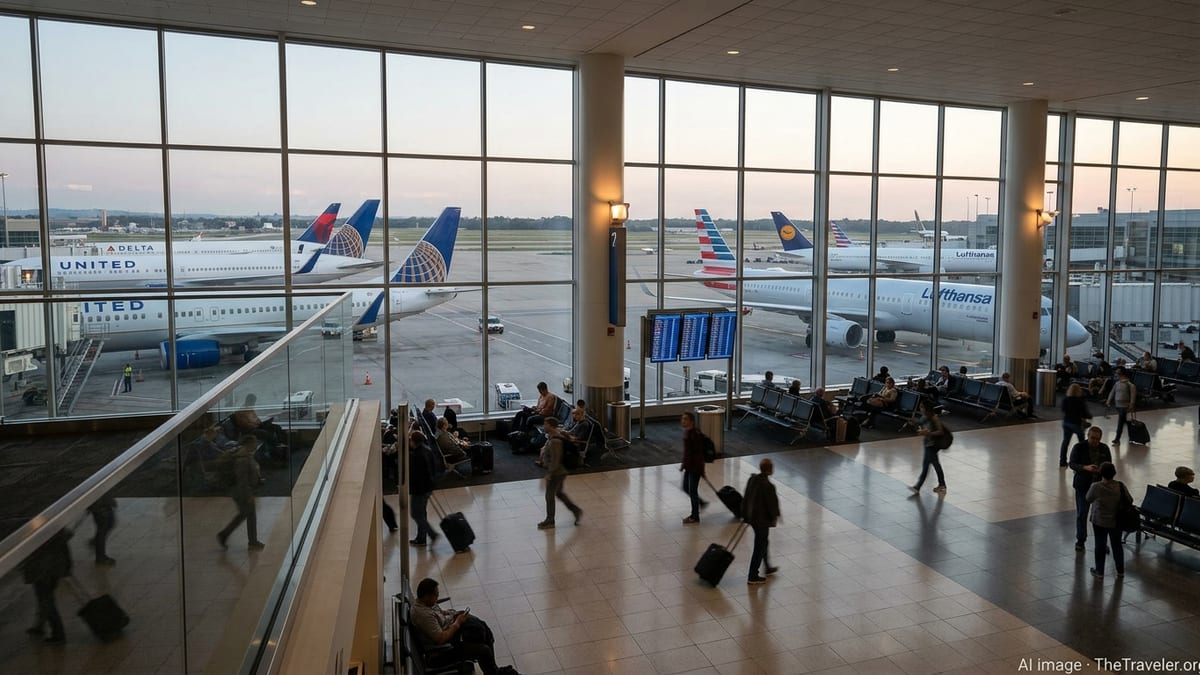
Fuel shock reaches Europe’s busiest holiday skies
The conflict in the Middle East and the prolonged closure of key oil shipping routes have sharply reduced jet fuel shipments into Europe, pushing prices higher and leaving refineries and airlines racing to secure supplies. Industry situation reports and market analyses published this spring describe a structural shortfall that has already led carriers worldwide to trim schedules and remove millions of seats from their summer timetables.
Spain and Greece, two of Europe’s most tourism‑dependent economies, sit at the heart of this pressure. Both rely heavily on inbound air traffic from northern Europe and the UK, and both have seen record demand for 2026 after several strong post‑pandemic seasons. The combination of surging leisure demand and constrained fuel supply is now emerging as a key risk for late August and September travel, when Mediterranean temperatures ease but tourist flows remain intense.
Aviation data firms tracking airline schedules indicate that the first wave of capacity reductions has been modest compared with overall demand, amounting to a small percentage of global seats. However, analysts warn that if fuel deliveries do not stabilize by mid‑summer, airlines serving southern Europe could be forced into a second, more aggressive round of cuts that would disproportionately affect high‑frequency leisure routes.
Spain signals confidence, but “tactical” cuts remain on the table
In Spain, publicly available data from the national airline association shows that carriers have scheduled a record number of seats for the 2026 summer season, with planned capacity exceeding 2025 levels despite the fuel crisis. Recent coverage in Spanish business media notes that refineries on the Iberian Peninsula have ramped up jet fuel output, and that major airlines based in the country currently consider domestic supply relatively secure.
At the same time, several reports describe contingency planning behind the scenes. Airlines are reviewing so‑called “tactical” cancellations, which would allow them to consolidate lightly booked flights, prioritize core hubs such as Madrid and Barcelona, and reduce operations at smaller regional airports if supplies tighten later in the summer. Low‑cost carriers that rely on quick turnarounds at secondary airports across Spain are seen as particularly exposed to any localized shortages.
International coverage of the European market indicates that some airlines have already trimmed seat offerings elsewhere on the continent in response to the fuel crunch, giving an early indication of how Spanish networks might be adjusted if the situation worsens. Industry commentators suggest that late‑summer services to popular islands and coastal gateways could be most vulnerable, especially where multiple daily frequencies offer room to merge departures without fully abandoning routes.
For now, major Spanish carriers continue to state through public statements and financial disclosures that they do not foresee widespread cancellations during the core summer months. However, the tone of recent analysis points to a narrow margin of comfort, dependent on continued refinery output, stable imports and the absence of further geopolitical shocks.
Greece weighs strong demand against fragile fuel outlook
Greece faces a similar balancing act. Tourism research institutes and economic think tanks have highlighted that 2026 began as another exceptional year for Greek tourism, with strong booking trends from key source markets such as the UK, Germany and Scandinavia. Airlines and tour operators have responded by adding capacity across major gateways including Athens, Heraklion, Rhodes and Corfu, as well as smaller island airports that depend almost entirely on seasonal traffic.
According to recent domestic media coverage, Greek authorities and airport operators report that aviation fuel stocks are adequate through at least early summer, and that inbound flights continue to operate normally. Nonetheless, the country’s heavy reliance on imported fuel and maritime logistics leaves it sensitive to any prolonged disruption of global supply routes, particularly heading into late August and September when many European families and couples opt for quieter shoulder‑season trips.
Industry briefings and European policy documents point to the risk of “select airport” shortages if inventories fall below critical thresholds. For Greece, where many island airports have limited storage capacity and depend on frequent tanker deliveries, even temporary constraints could force carriers to adjust schedules, tanker extra fuel from other hubs, or, in extreme cases, cancel individual rotations.
Tour operators with large programmes into Greece have recently emphasized through public communications that they have secured fuel for the coming months and intend to operate full schedules. However, analysts note that such assurances typically apply to the early and mid‑summer period, while the outlook for late summer and early autumn remains more uncertain and subject to developments in global energy markets.
Regulators and airlines map out worst‑case scenarios
European transport regulators have begun to outline how the jet fuel crisis could interact with passenger‑rights rules if airlines are forced to cut services more deeply later in the year. Guidance documents published in early May clarify that financial compensation obligations largely remain in place for cancellations, even when they are linked to fuel supply problems, although specific circumstances can affect individual claims.
Separately, governments and airport slot coordinators in several countries are examining temporary rule changes that would allow airlines greater flexibility to consolidate flights ahead of time rather than cancel them at short notice. Under such measures, carriers might be permitted to drop certain frequencies on busy routes without losing valuable take‑off and landing rights in future seasons, reducing the likelihood of last‑minute disruption for travellers.
Industry analyses of the crisis describe a wide range of potential outcomes for late summer. In more optimistic scenarios, rerouted shipments and higher refinery runs gradually restore balance to the European fuel market, leaving Spain and Greece with only scattered cancellations and higher fares. In more pessimistic projections, a prolonged closure of key shipping lanes or additional geopolitical shocks could force airlines to implement rolling schedule cuts, concentrating scarce fuel on the most profitable routes and airports.
Across these scenarios, experts consistently highlight the vulnerability of highly seasonal leisure markets. Routes linking regional airports in northern Europe with Spanish and Greek beach destinations are often the first candidates for consolidation because passengers can sometimes be rebooked via larger hubs, even though such changes can significantly disrupt holiday plans.
What late‑summer travelers should expect now
With so many variables still in play, late‑summer travelers to Spain and Greece are facing an unusually uncertain outlook. Published coverage from aviation consultancies and financial institutions suggests that outright collapse of air links to the Mediterranean is unlikely, but that a pattern of targeted capacity cuts, schedule reshuffles and sustained high prices is increasingly probable if fuel markets remain tight.
Passengers planning trips in late August or September may see airlines adjust departure times, merge lightly booked flights, or reroute services through different hubs. Some carriers could also scale back shoulder‑season operations earlier than usual, trimming frequencies once the peak school‑holiday period ends in a bid to conserve fuel.
Travel industry commentary advises that those with fixed‑date plans monitor their bookings closely and stay alert to schedule changes, particularly on services involving smaller regional airports or island destinations. Package holidays that bundle flights and accommodation through a single provider may offer more straightforward rebooking options if a flight is altered or cancelled, though terms can vary.
For Spain and Greece, the coming months will test how well Europe’s aviation and energy systems can adapt to a prolonged supply shock. The extent to which late‑summer flights are ultimately cancelled or preserved will depend not only on fuel shipments and prices, but also on the ability of airlines, regulators and tourism stakeholders to coordinate responses in real time as the crisis evolves.