


More news on this day
A spike in cancellations and delays involving China Eastern Airlines, Air China, Spring Airlines and Xiamen Airlines has triggered fresh travel disruption across several of China’s busiest airports, stranding passengers in Shanghai, Xi’an, Guangzhou and other major hubs.
Get the latest news straight to your inbox!
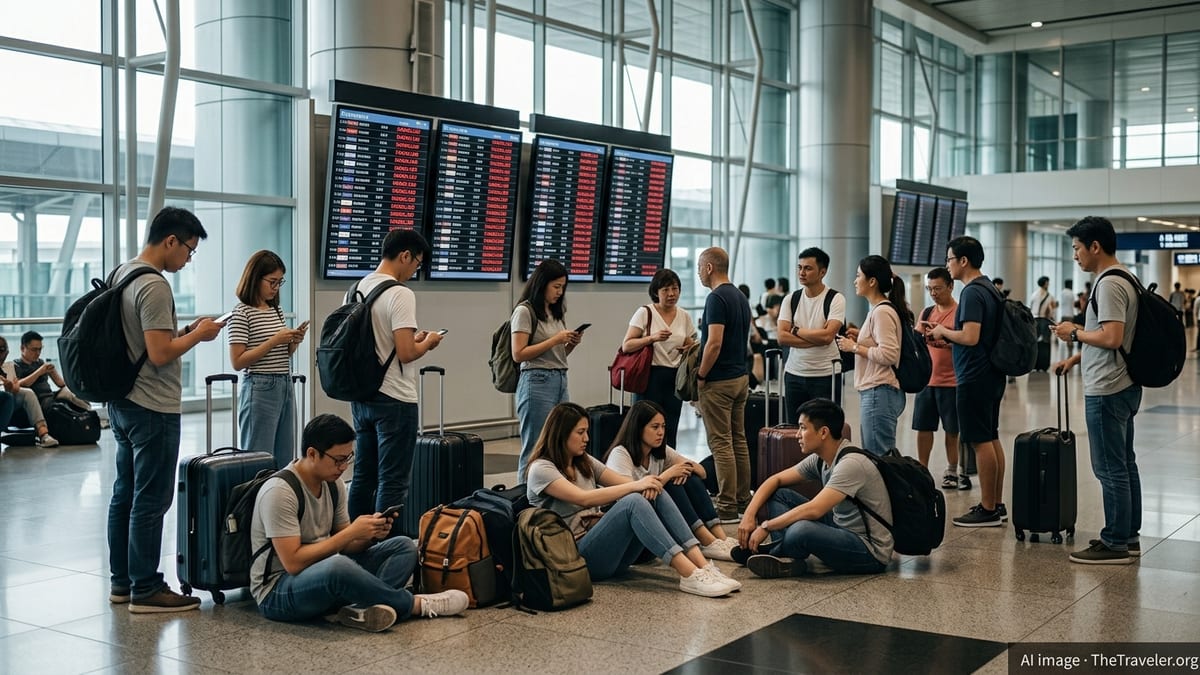
Wave of Cancellations and Delays Across Key Chinese Airports
Recent operational data and traveler reports point to a concentrated wave of disruption affecting multiple Chinese carriers, with at least 67 flights cancelled and more than 400 delayed across domestic and regional routes. The impact is being felt most acutely at Shanghai Pudong International Airport, Xi’an Xianyang International Airport and Guangzhou Baiyun International Airport, all of which serve as critical transfer points for China’s vast domestic network.
The affected flights span a mix of trunk routes and feeder services operated or codeshared by China Eastern Airlines, Air China, Spring Airlines and Xiamen Airlines. Routes linking Shanghai to Xi’an and Guangzhou, as well as connections through Xi’an and Guangzhou to other cities, feature prominently in the disruption patterns. Publicly available flight tracking boards show clusters of late departures, rolling delays of more than an hour and same day cancellations in these corridors.
While large Chinese hubs routinely handle schedule changes and weather related disruptions, the current concentration of cancellations and delays across several carriers on overlapping routes has strained ground operations. Passengers are reporting missed connections, extended overnight layovers and difficulty rebooking, particularly where downline flights are already operating near full capacity.
The disruption comes at a time when Chinese domestic traffic continues to rebound strongly, with many routes operating at or near pre pandemic capacity. As airlines push aircraft and crews to maximize utilization, irregular operations can quickly propagate across networks, turning a single cancellation or air traffic control delay into a series of downstream schedule problems.
Shanghai Pudong, Xi’an and Guangzhou Bear the Brunt
Shanghai Pudong remains at the center of the current disruption narrative. As a primary hub for China Eastern and an important base for both Spring Airlines and Xiamen Airlines, even modest irregularities can have outsized ripple effects. Arrival and departure boards for Pudong show multiple delayed flights for major domestic destinations such as Xi’an and Guangzhou, along with scattered cancellations on medium haul international services.
Xi’an Xianyang, a key inland hub linking central and western China to the coastal cities, has also seen elevated delay levels. Terminal assignments at Xi’an place Spring Airlines and several China Eastern and Air China services in facilities that are already busy with transfer traffic. When multiple flights are retimed or consolidated, gate availability and baggage handling can quickly become bottlenecks, causing ground side congestion even when airside operations remain technically open.
In southern China, Guangzhou Baiyun is experiencing heavier than usual knock on effects from delays higher up the network. Flight schedule data shows dense waves of departures and arrivals between Guangzhou and Shanghai, with China Eastern and partner carriers operating frequent services on the route. When one or two rotations are cancelled or significantly delayed, crew and aircraft positioning issues can then spill into subsequent flights to and from secondary cities.
Passengers transiting these hubs report crowding at customer service counters and long queues at transfer desks, especially during late evening banks when alternative flights are limited. Those on tight connections are particularly exposed, as a relatively short delay on a feeder flight can make it impossible to clear security and reach onward gates in time.
Contributing Factors: Weather, Capacity and Network Complexity
Publicly available information suggests that several overlapping factors are driving the current wave of disruptions. Seasonal weather systems can prompt sudden air traffic control restrictions around Shanghai and other eastern hubs, reducing available slots and forcing airlines to retime or cancel services at short notice. Even when storms or low visibility conditions are localized, the resulting airborne holding patterns and runway constraints can ripple across entire route networks.
At the same time, Chinese carriers are operating in a high demand environment with tight capacity. Load factors on popular domestic routes between coastal and inland cities remain elevated, leaving airlines with little slack to re accommodate passengers when a flight is pulled from the schedule. Tight crew rostering adds another layer of vulnerability, as duty time limits can prevent crews from operating delayed flights, leading to additional cancellations.
Network complexity is also playing a role. Code sharing between China Eastern, Air China, Spring Airlines and Xiamen Airlines increases choice for travelers but can complicate disruption management. When a flight marketed by one carrier and operated by another is cancelled or retimed, passengers sometimes find that responsibility for assistance and rebooking is split between multiple companies, extending the time needed to secure a workable alternative.
Some of the recent cancellations also reflect strategic schedule adjustments. Airlines periodically trim less profitable routes or reduce frequencies in response to shifting demand, but such changes can appear as abrupt cancellations to passengers who booked months in advance. When these adjustments coincide with weather or airspace constraints, the result can look like a sudden surge of operational failures, even when the underlying causes differ from flight to flight.
Impact on Travelers: Missed Connections and Long Layovers
For travelers, the most immediate consequence of the disruption is missed connections and extended layovers at already crowded terminals. Those using Shanghai, Xi’an or Guangzhou as transfer points for long haul itineraries are particularly exposed, as a cancelled or severely delayed domestic leg can cause passengers to miss international departures that operate only once per day or a few times per week.
Reports from recent days describe passengers facing unexpected overnight stays when onward flights are full or depart before they arrive. In some cases, travelers have been rebooked onto alternative routings with additional connections, increasing total journey time by many hours. Others have opted to purchase new tickets on competing carriers where availability and schedule alignment are better, particularly on international segments.
Queues at service counters and call centers are another common pain point. When multiple airlines at the same hub are simultaneously working through delays and cancellations, available agents can quickly become overwhelmed. Passengers without local language skills or familiarity with Chinese airline policies may find it challenging to understand their options, especially if their itinerary involves codeshare flights or tickets issued by third party online travel agencies.
Beyond immediate schedule disruptions, the current situation has also raised concerns among future visitors planning multi city trips in China. Online forums and social media posts show travelers re evaluating tight same day domestic connections and considering longer layover buffers, particularly when routing through Shanghai Pudong or other major hubs where weather, air traffic and high demand frequently intersect.
What Passengers Can Do if Their Flight Is Affected
Travelers booked on China Eastern Airlines, Air China, Spring Airlines or Xiamen Airlines in the coming days are being advised by publicly available guidance and travel industry analyses to monitor their flights closely. Checking both the airline’s official channels and independent flight tracking boards can provide early warning of schedule changes. Day of departure, passengers are encouraged to arrive at the airport with extra time, as longer lines at check in and customer service are likely when disruption levels are elevated.
If a flight is cancelled or significantly delayed, passengers should first confirm whether they are on a single through ticket or multiple separate bookings. Those on a through ticket generally have stronger protection, with airlines more likely to offer rebooking on the next available service or alternative routings within the same group. Travelers on itineraries pieced together across different tickets may need to negotiate separately with each carrier or consider purchasing a replacement segment to preserve critical connections.
Chinese regulations and airline contracts of carriage typically provide for rebooking or refunds in cases of confirmed cancellations, though cash compensation is more limited than in some other jurisdictions. Passengers should review the relevant terms for their carrier and fare type, keeping in mind that policies can differ between purely domestic tickets and international itineraries. Where accommodation or meal support is not automatically offered, travelers may need to retain receipts for any additional expenses for later claims.
For upcoming trips, airline and route choice can also make a difference. Experts often recommend allowing generous connection times when transiting busy hubs such as Shanghai Pudong, Xi’an or Guangzhou, and avoiding last flight of the day options when a missed segment would cause an overnight delay. Purchasing flexible fares or adding travel insurance that specifically covers missed connections and schedule changes can provide an extra layer of protection in a period of heightened operational volatility.