


More news on this day
A sudden spike in jet fuel prices linked to renewed Middle East instability is rippling through the global airline industry, with major carriers cancelling an estimated 13,000 flights and warning of higher summer fares and reduced capacity across North America, Europe, the Gulf, Asia and Africa.
Get the latest news straight to your inbox!
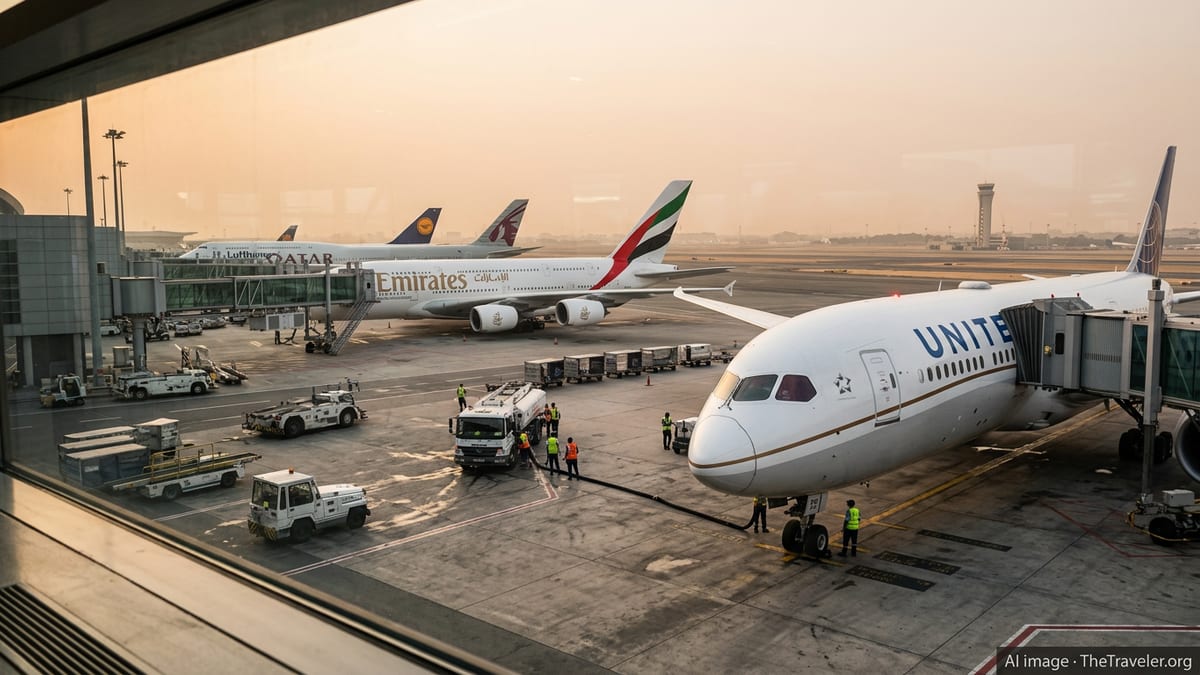
Jet Fuel Prices Soar as Supply Routes Are Disrupted
Publicly available industry data show jet fuel benchmarks climbing at an unprecedented pace since early March 2026, with some regional spot prices nearly doubling in a matter of weeks. Analysts attribute the surge largely to disruptions in crude and refined product flows from the Middle East, including constraints around key maritime chokepoints that supply refineries in Europe, Asia and North America.
Reports from aviation agencies and market intelligence firms indicate average jet fuel prices in major hubs such as New York, London, Frankfurt, Dubai and Tokyo are at or near their highest levels since records set in 2022. The pace of the increase has caught many airline fuel-hedging strategies off guard, forcing carriers to absorb sharply higher operating costs just as peak summer travel demand builds.
Sector-wide outlooks have been revised lower as a result. Investment research published in recent weeks shows analysts cutting profit forecasts for both network and low-cost airlines, warning that higher-for-longer fuel prices will squeeze margins even if carriers succeed in passing part of the cost onto passengers through higher fares and surcharges.
Aviation policy briefings in the United States and Europe further underscore the pressure, noting that fuel now accounts for well over a third of many airlines’ operating expenses. With limited short-term alternatives for long-haul travel, the immediate response has centred on trimming schedules and selectively withdrawing from less profitable routes.
Thousands of Flights Axed in the United States, Europe and Canada
According to aggregated schedule data compiled by aviation analytics providers, airlines have removed around 13,000 flights from May through August 2026, targeting routes across the United States, United Kingdom, Germany and Canada in particular. The reductions range from single daily frequencies to the suspension of entire city pairs where high fuel costs make previously viable services uneconomic.
In North America, publicly available filings and schedule updates show United Airlines and Delta Air Lines among the carriers rebalancing capacity, with reductions concentrated on secondary domestic routes and some transatlantic services with thinner demand profiles. Industry trackers report that several hundred flights per week have been dropped from US schedules as airlines seek to consolidate passengers onto fuller aircraft.
Across the Atlantic, European flag carriers including British Airways and Lufthansa are making similar adjustments. Coverage in European business media describes Lufthansa accelerating an existing restructuring plan and banking cost savings by cutting short-haul frequencies and retiring older, less fuel-efficient aircraft ahead of schedule. British Airways is reported to be recalibrating its UK and European network, with some frequencies into regional UK airports pared back in favour of concentrating capacity at major hubs.
In Canada, Air Canada’s published schedule changes point to a thinning of services on select domestic and cross-border routes, particularly those operated with smaller jets that are more sensitive to fuel price swings. Travel agencies report that passengers booked on affected flights are being re-accommodated where possible, but note that options are increasingly limited during peak summer weeks.
Gulf, Asian and African Markets Hit as Capacity Is Pulled
The jet fuel shock is also resonating across the Gulf and wider Middle East, where Emirates and Qatar Airways play a central role in global long-haul connectivity. Industry coverage indicates that Emirates has been using fare increases and fuel surcharges to offset higher costs, while trimming some frequencies on less trafficked routes to Europe, Africa and Asia to preserve profitability.
Qatar Airways, which had already announced temporary capacity reductions linked to infrastructure works in Doha, is now facing a more challenging backdrop as rising fuel prices interact with those constraints. Analysts following Gulf carriers suggest that route rationalisation in the region could intensify if the fuel spike persists into the third quarter.
In Asia, AirAsia and its long-haul affiliate AirAsia X have emerged as emblematic of how low-cost carriers are being tested by the fuel surge. Company statements and regional aviation reports show Thai AirAsia X reducing frequencies from Bangkok and temporarily suspending selected routes to China and the Middle East, citing escalating aviation fuel costs and the need to realign capacity with the new operating environment.
AirAsia X has also introduced sizable fare increases and additional surcharges on remaining services after reporting that jet fuel costs had roughly doubled compared with earlier in the year. Other Asia-Pacific airlines, including Qantas, have flagged similar measures, with investor updates indicating higher ticket prices, capacity trims on certain domestic segments and delays to planned aircraft deliveries.
In Africa, Nigerian travelers are among those feeling the effects, as international services linking Lagos and Abuja to European and Middle Eastern hubs face schedule adjustments. Local travel trade outlets report that some carriers have quietly reduced frequencies or upgauged aircraft to concentrate traffic, moves that can leave fewer departure options even when total seat numbers remain relatively stable.
Summer Fares Climb as Travelers Face Disruption and Crowded Alternatives
The timing of the fuel shock, just ahead of the Northern Hemisphere summer holiday peak, is amplifying its impact on travelers. Booking data highlighted in recent travel industry analyses point to double-digit year-on-year airfare increases on many long-haul routes from the United States, United Kingdom, Germany and Canada, with particularly sharp rises on itineraries touching the Middle East or routed via Gulf hubs.
For US-based travelers, major carriers such as United and Delta typically avoid explicit fuel surcharges, instead lifting base fares and adjusting dynamic pricing algorithms. Consumer watchdogs monitoring published fares report that summer 2026 ticket prices on popular transatlantic and transpacific routes are now significantly higher than a year ago, even before ancillary fees are added.
European and Asian carriers, by contrast, have more commonly reintroduced or expanded fuel surcharges on tickets. Recent fare filings show increased surcharges on itineraries operated by Lufthansa, British Airways, Qantas, Air China and several Gulf and Asian competitors, adding to the headline price that passengers see at checkout. Travel agents say that while promotional sales still appear sporadically, the underlying trend is one of sustained upward pressure on prices.
As routes are cut or frequencies reduced, remaining flights are often running close to full capacity, raising the risk of extended disruption when irregular operations occur. Travelers whose flights are cancelled are frequently being rebooked onto later services that may already be heavily booked, leading to longer delays, more missed connections and, in some cases, forced overnight stays.
Airlines Balance Cost Control With Capacity and Climate Pressures
The current wave of cancellations and fare hikes is forcing airlines to revisit strategic questions about fleet, fuel efficiency and network design. Publicly available corporate presentations from carriers such as Lufthansa, Qantas and Air Canada emphasise the long-term shift toward more fuel-efficient aircraft, but the speed and scale of the recent price jump have highlighted the limitations of gradual fleet renewal in the face of sudden market shocks.
Analysts note that airlines with stronger fuel hedging positions or greater financial reserves may be better placed to ride out the current volatility without resorting to deep capacity cuts. However, even relatively well-hedged carriers are signalling that sustained high prices will eventually filter through to fares, particularly on long-haul routes where fuel represents a large share of total costs.
The crisis also intersects with environmental and regulatory pressures. As governments in Europe and elsewhere advance climate policies that could increase the cost of traditional jet fuel over time, some aviation experts warn that the present spike offers a preview of a structurally higher-cost era for air travel. Airlines are promoting investments in more efficient aircraft and sustainable aviation fuels, but acknowledge that such transitions take years and substantial capital.
For now, the immediate reality for millions of travelers is a more fragile global air network heading into the busiest travel season of the year. With jet fuel prices elevated and airlines from AirAsia and Thai Airways to United, Delta, Air China, British Airways, Lufthansa, Emirates, Qantas, Air Canada and Qatar Airways all adjusting schedules and pricing, passengers are being advised by travel intermediaries to book early, build in buffer time and prepare for potential last-minute changes.