

More news on this day
Sabah is confronting a new phase of aviation turbulence as higher fuel prices, geopolitical tensions and airline-wide capacity reviews trigger selective cuts and suspensions on international routes serving the Bornean state, even as tourism arrivals continue to climb.
Get the latest news straight to your inbox!
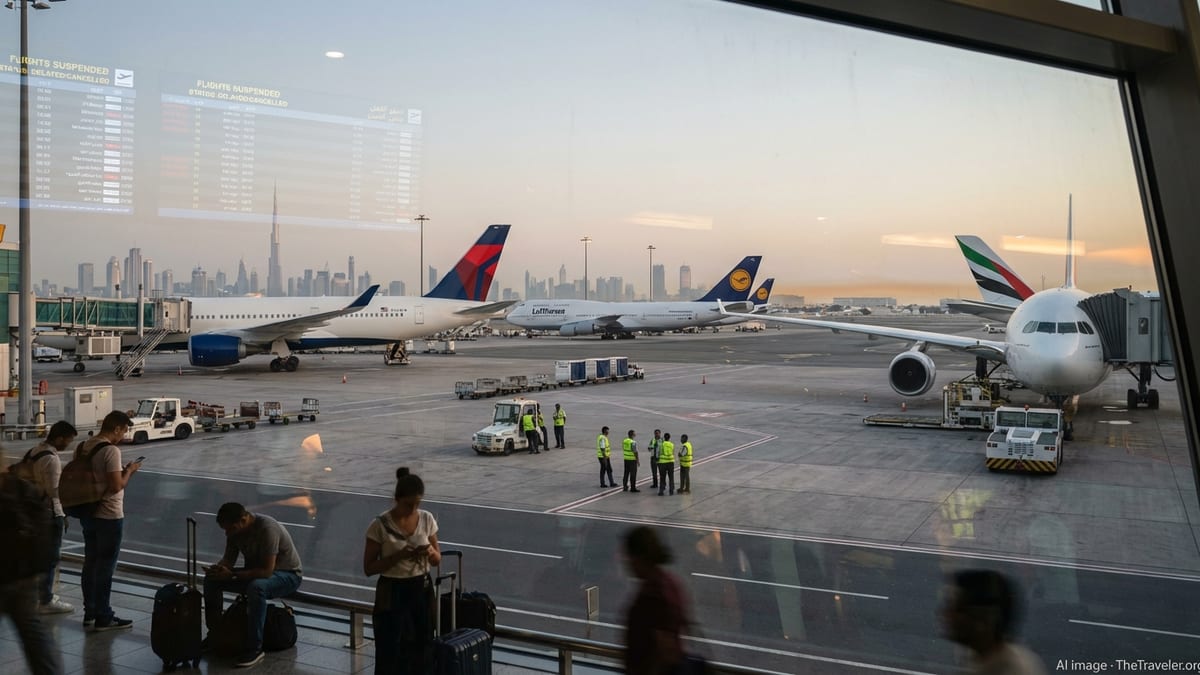
Global Aviation Headwinds Reach Sabah
Sabah’s tourism sector is entering 2026 on a mixed footing, with strong demand tempered by a more fragile global aviation environment. Recent industry outlooks highlight that airlines across Asia are trimming capacity or suspending marginal routes in response to volatile fuel prices linked to conflict in the Middle East and broader cost pressures across the sector. While Sabah is far from the front line of these disruptions, its reliance on air access for nearly all international visitors leaves it exposed whenever carriers rebalance their global networks.
Publicly available information from Malaysian and regional aviation regulators shows that airlines have embarked on network reviews that prioritize higher-yield trunk routes and consolidate frequencies on leisure sectors. In that context, secondary international destinations such as Kota Kinabalu are especially vulnerable to periodic schedule adjustments. Capacity decisions by Malaysian carriers, low-cost operators and foreign airlines can therefore have outsized effects on Sabah’s connectivity to key source markets in Northeast Asia.
Reports from Malaysia’s aviation authorities and regional news outlets indicate that the current round of adjustments is being shaped less by weak demand and more by cost management. Rising operating expenses have encouraged airlines to rotate aircraft toward routes where premium traffic, cargo yields or slot values are highest. For a destination like Sabah, which competes in the regional sun-and-nature segment, this introduces additional uncertainty over the stability of certain international links.
Route Suspensions Test Sabah’s International Links
The sensitivity of Sabah’s air connectivity became evident when capacity cuts by Malaysian carriers and selected foreign airlines affected flights into East Malaysia from late 2024 onward. Publicly available airline statements show that Malaysia Airlines reduced overall domestic capacity to Sabah, Sarawak and Labuan during that period as part of a wider fleet and maintenance rationalisation, with low-cost operators stepping in to add seats where commercially viable. Although much of this adjustment focused on domestic trunk routes, it underscored how quickly capacity can be pulled from the region when airlines confront industry-wide constraints.
According to published coverage from Malaysian media, Sabah’s tourism authorities have been monitoring suspensions and frequency reductions on selected international services from Kota Kinabalu, particularly to parts of China and Northeast Asia. These changes have generally involved seasonal or temporary halts, or the consolidation of multiple weekly flights into fewer, higher-load services. While such shifts are common in airline planning, they pose challenges for tour operators who depend on predictable schedules to package and price travel products months in advance.
Industry commentary also points to a broader pattern in which carriers retrench toward primary hubs such as Kuala Lumpur or Singapore when cost pressures intensify, leaving secondary gateways to rely more heavily on a smaller pool of operators. For Kota Kinabalu International Airport, which has built its tourism growth story on direct links to Chinese, South Korean and regional markets, maintaining route diversity is crucial to cushioning the impact when any single carrier cuts back.
Tourism Growth Remains Resilient
Despite the aviation headwinds, tourism data released by Sabah and federal agencies shows that visitor numbers have continued to recover and expand. Official statistics for 2025 indicate that the state recorded just under 3.8 million visitor arrivals, generating an estimated RM8.74 billion in tourism receipts and surpassing its earlier recovery targets. International markets played a central role, with China emerging once again as Sabah’s largest overseas source of visitors alongside strong contributions from markets such as South Korea, Singapore, Taiwan, Australia and Europe.
More recent figures for the first quarter of 2026 point to continued momentum. Preliminary counts cited in Malaysian news reports state that Sabah welcomed around 933,000 visitors between January and March, split between approximately 537,000 domestic travellers and nearly 396,000 international arrivals. This performance suggests that, so far, route consolidations and capacity tweaks have not derailed the broader recovery, although industry players caution that growth may be more uneven across individual markets and seasons.
National statistics on tourism expenditure reinforce the sector’s importance to Sabah’s economy. Data released in late 2025 shows that tourism-related activities contributed a significant share of the state’s gross domestic product in 2024, with inbound tourism expenditure supported by expanded direct flights from key markets. Even as some services are temporarily scaled back, the cumulative effect of restored and newly launched connections has lifted overall access to Kota Kinabalu and other Sabah gateways compared with the immediate post-pandemic years.
Adaptive Strategies for Air Connectivity
In response to the shifting aviation landscape, Sabah is repositioning its tourism planning around flexibility and diversification. Recent statements in national media by Sabah’s tourism leadership describe a “more adaptive approach” that incorporates regular assessments of global developments, from fuel price movements to geopolitical risks that might influence airline route decisions. Rather than anchoring projections to specific flight commitments, the state is increasingly working with scenario-based planning to align marketing, events and infrastructure with various connectivity outcomes.
Part of this strategy involves deepening collaboration with multiple airline partners instead of relying heavily on a single carrier or market. Reports on route development efforts highlight ongoing engagement with low-cost and full-service airlines from China, South Korea and the wider region to sustain or revive services into Kota Kinabalu. Transit-focused itineraries via Kuala Lumpur, Singapore and other regional hubs are also being promoted more actively, providing alternative pathways for long-haul visitors if direct flights are constrained.
Sabah is concurrently investing in its aviation infrastructure. Public information on federal transport plans outlines a major upgrade for Kota Kinabalu International Airport intended to expand capacity and modernise facilities. This is positioned as a long-term signal to airlines that the state is ready to handle larger passenger volumes and more diverse traffic, strengthening its case for additional frequencies or new routes once the current cycle of global capacity tightening eases.
Broadening Markets and Products to Reduce Risk
Alongside connectivity initiatives, Sabah is working to spread tourism risk by broadening both its market mix and product offerings. Tourism statistics indicate that while China remains the top international source, arrivals from South Korea, Brunei, Singapore, Australia and European countries have grown steadily, supported by direct and connecting services. By cultivating a wider range of origin markets, the state reduces its vulnerability to demand or policy shifts in any single country, particularly at a time when aviation decisions can ripple quickly through travel flows.
On the product side, Sabah is extending its traditional focus on island, diving and mountain experiences to include stronger promotion of culture, community-based tourism and nature conservation themes. Campaigns showcased at major trade fairs in recent years have highlighted culture, adventure and nature as core pillars, aiming to attract higher-value segments such as eco-conscious travellers, small-group tours and experiential seekers. These visitors are often less price-sensitive and more willing to route through hub airports, which can help sustain arrivals even when direct capacity is temporarily reduced.
Tourism planners are also giving more attention to domestic and intra-Borneo travel. Road links from neighbouring Brunei and Sarawak, as well as regional air services operated by carriers such as the newly launched AirBorneo, provide additional channels for visitor flows that are less exposed to long-haul aviation shocks. By stitching together these varied access points, Sabah is seeking to build a more resilient tourism ecosystem that can absorb periodic global flight cuts while keeping its long-term growth trajectory intact.