

More news on this day
A fresh spike in jet fuel prices and a wave of new environmental charges are converging to push airfares higher across key global markets, with major carriers in the United States, Europe and Asia warning that travelers should brace for costlier tickets through 2026.
Get the latest news straight to your inbox!
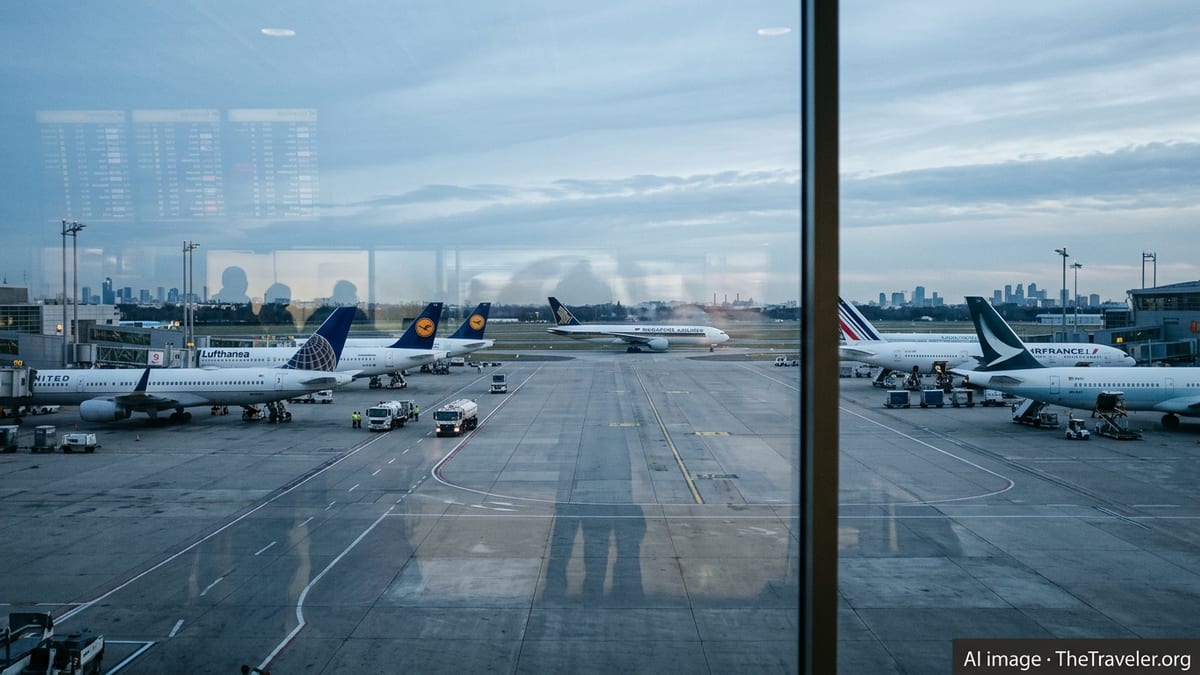
Conflict-Driven Fuel Shock Hits Global Airlines
Published coverage indicates that jet fuel prices have surged sharply since late February 2026, driven by escalating conflict in the Middle East and disruptions around critical oil shipping lanes. Industry reports suggest jet fuel has climbed more than 100 percent so far this year, amplifying cost pressures on airlines already operating on tight margins.
In the United States, recent reporting shows that large carriers, including United Airlines, are absorbing hundreds of millions of dollars in additional fuel expenses as prices jump following renewed tensions in the Gulf region. Jet fuel typically accounts for around a quarter of an airline’s operating costs, meaning even modest price swings can have an outsized impact on profitability and, ultimately, on passenger fares.
Analysts tracking the sector note that while many airlines hedge a portion of their fuel exposure, the speed and scale of the latest price spike have outpaced some of those protections. Public commentary from industry groups points to an expected increase in global ticket prices of around 8 to 9 percent if oil and jet fuel remain elevated, with international long-haul routes particularly exposed.
As carriers recalibrate their schedules and pricing models, travelers in North America, Europe and Asia are beginning to see the effects in the form of higher base fares, steeper surcharges and reduced access to the lowest promotional prices on popular routes.
United States: United Airlines Signals Higher Prices
In the United States, publicly available statements from major airlines show that carriers are preparing passengers for higher costs as the fuel shock works its way through the system. Recent investor briefings reported by American media indicate that United Airlines, alongside Delta Air Lines and American Airlines, is already facing a substantial jump in jet fuel bills this quarter.
While strong leisure and business demand is helping to offset some of the impact, market commentary suggests that U.S. airlines are unlikely to absorb the entire increase. Instead, higher operating costs are expected to be passed on gradually through a mix of fare adjustments, dynamic pricing on peak travel days and, where permitted, targeted surcharges.
For U.S. travelers, the immediate effect may be most visible on international routes and last-minute bookings. Analysts say transatlantic and transpacific services consume large volumes of fuel and often rely on complex routings that can be further lengthened by diversions around conflict zones, magnifying fuel usage. This makes services to Europe and Asia from major U.S. hubs especially sensitive to fuel volatility in the coming months.
Domestic U.S. routes are not immune. Although competition can temper price movements, higher fuel costs and constrained spare capacity in some markets are expected to push average fares higher into the busy summer travel season, particularly on routes with limited low-cost carrier presence.
Europe: Lufthansa and Air France-KLM Layer on New Charges
In Europe, the pressure of higher fuel prices is combining with a tightening regulatory framework around emissions. The Lufthansa Group has already outlined an Environmental Cost Surcharge that will apply to tickets issued from mid-2024 for travel from January 2025 on flights departing the European Union, the United Kingdom, Norway and Switzerland. Public documents indicate that the surcharge ranges from low single digits on short-haul economy tickets to several dozen dollars on premium long-haul seats, reflecting the added cost of European climate regulations and sustainable aviation fuel mandates.
Reports from European business media note that this move is designed to help Lufthansa cover a portion of the additional expenses linked to the European Union’s sustainable aviation fuel blending requirements and revisions to the emissions trading system. Although the surcharge is framed as an environmental measure, for travelers it functions as a de facto fare increase layered on top of existing ticket prices.
Air France-KLM is also navigating higher fuel and regulatory costs, but has relied more heavily on hedging strategies to smooth the impact over time. Financial disclosures show that the Franco-Dutch group has expanded its fuel hedging horizon and raised the proportion of its future consumption that is price-protected. Even so, European press coverage indicates that the group, like its peers, anticipates upward pressure on average fares this year if current fuel levels persist.
For passengers flying between hubs such as Paris, Amsterdam, Frankfurt and major U.S. or Asian cities, this combination of elevated fuel prices and additional environmental charges is expected to translate into higher end-to-end ticket costs, even where base fares appear stable at first glance.
Asia Responds: Singapore Levies and Cathay Pacific Surcharges
Across Asia, governments and airlines are responding with their own mix of policy tools and pricing moves. Singapore, one of the region’s most important aviation hubs, recently introduced its first sustainable aviation fuel levy on tickets for flights in and out of Changi Airport. According to international news agency reports, the charge ranges from less than a dollar on some short-haul economy tickets to over thirty dollars on premium long-haul itineraries, with proceeds earmarked to support the development and deployment of cleaner aviation fuels.
Regional travel analysts note that while the Singapore levy is relatively modest compared with the overall ticket price, it sets a precedent for other hubs considering similar mechanisms to fund decarbonization. Over time, such levies may become a routine line item for travelers alongside traditional taxes and fees.
Hong Kong’s Cathay Pacific, meanwhile, is taking a more direct approach tied to the current fuel spike. Recent coverage from Asian business outlets details how the carrier is nearly doubling its fuel surcharge on many routes from mid-March 2026, citing surging jet fuel prices and the impact of rerouting flights to avoid conflict areas. Long-haul surcharges on flights between Hong Kong and destinations in North America, Europe and the Middle East, as well as on some Japan–United States routes, are set to rise to more than double their previous levels.
This follows a series of incremental surcharge adjustments over the past year as fuel markets tightened. Travel industry commentary suggests that Cathay’s latest increase is among the sharpest single-step surcharge changes by a major Asian carrier since the post-pandemic recovery began, and may influence pricing behavior among regional competitors.
What Travelers Can Expect in 2026
For travelers in the United States, Germany, Japan, Singapore, South Korea and France, the cumulative effect of these developments is a more expensive aviation landscape through at least the remainder of 2026. Airline executives and industry bodies have publicly stressed that when fuel prices rise as rapidly as they have in the first quarter of this year, fare increases are difficult to avoid.
Industry observers expect airlines to continue using a mix of tools to manage the impact on customers. These include targeted surcharges on specific markets, differential pricing between peak and off-peak travel dates, tighter capacity on marginal routes and expanded use of fuel hedging to limit the need for sudden price jumps. At the same time, governments are layering on climate-related charges that, while relatively small per ticket today, point to structurally higher travel costs over the longer term.
In the near term, travelers looking for better value may need to be more flexible on dates, routings and departure airports, and to book well in advance to secure lower fare buckets before they sell out. Travel agencies and online platforms are already flagging that last-minute long-haul itineraries involving Europe or Asia are especially exposed to the latest round of fuel-driven increases.
Despite these headwinds, demand for international travel remains robust according to recent traffic and booking data, suggesting that many passengers are, for now, willing to absorb higher prices. How long that resilience lasts may depend on whether jet fuel prices stabilize in the months ahead or whether further geopolitical shocks add yet another layer of turbulence to the global aviation market.