


More news on this day
Pre–Fourth of July holiday travel at New York’s John F. Kennedy International Airport is under pressure today, with publicly available tracking data showing 124 delays and four cancellations affecting major carriers and key routes across the United States, Europe and the Caribbean.
Get the latest news straight to your inbox!
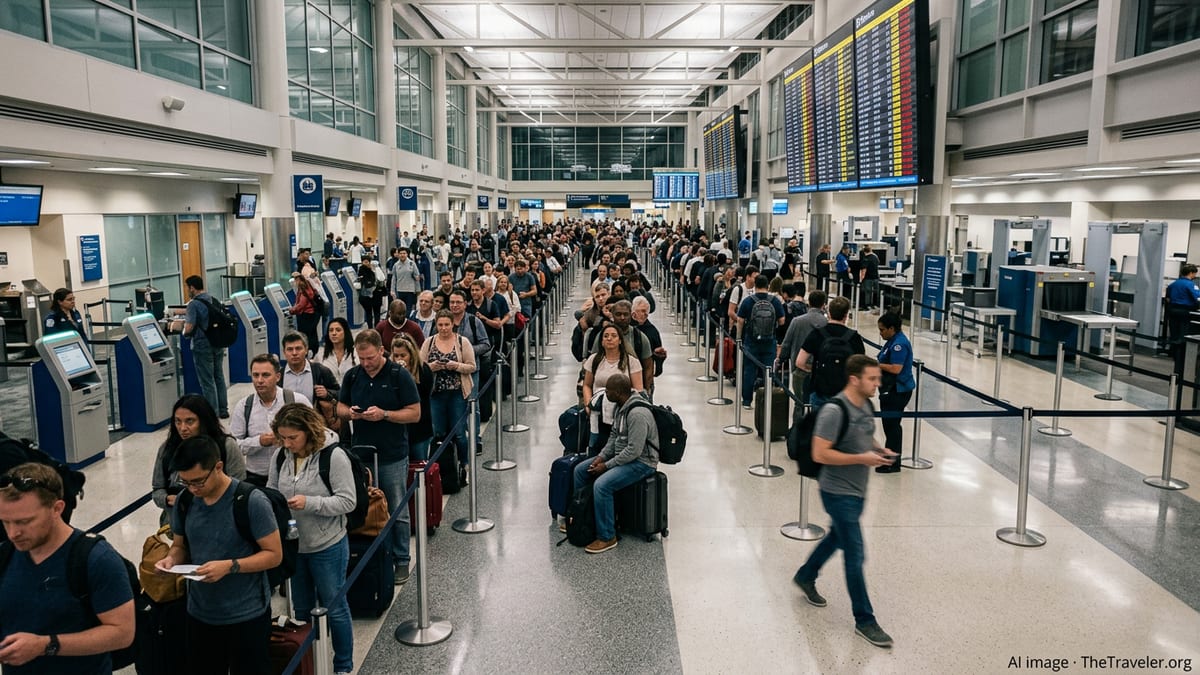
Major Carriers Face Disruption at JFK Hub
Tracking boards for John F. Kennedy International Airport on July 3 indicate that JetBlue, American Airlines, Delta Air Lines and Air France are bearing the brunt of disruption as peak holiday traffic builds. The four carriers, which together handle a large share of JFK’s long haul and transcontinental traffic, account for the majority of the 124 delayed departures and arrivals, alongside four outright cancellations concentrated in the afternoon and evening bank of flights.
Published coverage of the day’s operations describes rolling delays of between 45 minutes and several hours on some transatlantic and Caribbean departures, as aircraft and crew cycle through congested airspace. Several widebody services jointly marketed by Delta and Air France, as well as high frequency JetBlue and American narrowbody routes, have seen departure times pushed back repeatedly as the New York area works through a busy departure wave.
Operational data and airline information pages show that affected flights are not limited to one direction or time of day. Morning departures to Florida and the Caribbean have encountered extended taxi and sequencing times, while evening departures to Europe are being held to manage congestion and ensure crews remain within duty limits. The result is a knock-on pattern where delays ripple through later rotations, tightening aircraft availability at the start of the holiday period.
The timing of the disruption is particularly challenging for travelers because July 3 historically marks one of the heaviest outbound days for the Independence Day period. Industry and government statistics show that New York’s three major airports frequently experience elevated delay rates around the Fourth of July, with weather, traffic volume and air traffic control initiatives all contributing in varying degrees depending on the year.
London, Paris and Rome Capacity Squeezed
Transatlantic travelers appear to be feeling the most immediate impact, with London, Paris and Rome singled out in airport and media reports as among the most constrained JFK markets on July 3. These three cities rank among JFK’s busiest European destinations, served by multiple daily frequencies from American and Delta, as well as key partners such as Air France on the Paris route.
Seat availability on same day and next day departures to major European capitals has tightened quickly, according to airline inventory snapshots and publicly visible fare displays. Many non-stop services between JFK and London Heathrow, Paris Charles de Gaulle and Rome Fiumicino are listed as either fully booked or selling the last remaining seats in premium cabins. Rebooking options for disrupted passengers are therefore limited, especially for travelers seeking to arrive before the holiday weekend.
The squeeze on Europe-bound capacity is compounded by the hub role JFK plays for connecting passengers. Travelers originating in smaller U.S. cities or the Caribbean often funnel through the New York gateway en route to European destinations. When long haul flights from JFK depart late or cancel, passengers can be stranded mid-journey with fewer alternative routings, particularly late in the day when onward options are already heavily committed.
Historical traffic data for JFK underline how sensitive these routes are during peak seasons. Paris and Rome, in particular, have seen rising volumes in recent years, with leisure travelers drawn by summer tourism and a rebound in transatlantic demand. Any schedule disruption at the start of July can therefore create imbalances that take several days to unwind as aircraft and crews reposition.
US and Caribbean Links to Miami Under Strain
Southbound flights from JFK into Florida and the wider Caribbean are also under pressure, with Miami emerging as a key pinch point. Same day schedule data and delay boards show slippages on multiple New York to Miami departures, operated primarily by American and Delta, at the same time that JetBlue is managing delays on high demand services into other Florida and Caribbean destinations.
Miami functions as both a terminating leisure market and a major connecting hub for Caribbean and Latin American traffic. When JFK to Miami services run late, travelers risk missing onward flights to island destinations and regional cities, amplifying the impact beyond the New York and South Florida corridors. Reports indicate that some itineraries involving tight connection windows have become untenable, prompting involuntary reroutings onto later services where seats are available.
Caribbean leisure traffic is typically intense in early July as families take advantage of school holidays and combine the U.S. Independence Day period with week-long resort stays. That pattern is visible again this year, but the added layer of delays has heightened the risk of missed hotel nights and disrupted cruise departures for some travelers leaving through JFK.
Available federal data on historic tarmac delays highlights how quickly operational challenges in the New York region can escalate into extended waits when weather or traffic constraints appear. While there is no indication of systemic tarmac incidents at JFK today, the elevated delay totals serve as a reminder of the vulnerability of tightly banked holiday schedules.
Operational Factors Behind Today’s Irregular Operations
Publicly available information from federal aviation systems, airline trackers and aviation analytics platforms suggests that a combination of heavy demand, weather-related flow control measures in the broader Northeast corridor and residual staffing constraints are contributing to today’s irregular operations at JFK. Even when local conditions at the airport remain within normal operating parameters, restrictions elsewhere in the national airspace system can force ground holds and airborne spacing that cascade into delays.
JFK’s role as a multi-runway, multi-terminal international hub means that even small disruptions can propagate rapidly. When one carrier experiences a mechanical issue requiring an aircraft swap, it can occupy gates and ramp resources needed by others. Similarly, when connecting passengers miss tight links from earlier delayed flights, airlines must rework seat assignments and baggage transfers under intense time pressure.
Data from previous federal Air Travel Consumer Reports illustrates that carriers operating at New York airports, including JetBlue, American and Delta, have faced recurring delay challenges during peak periods in recent years, particularly around summer holidays and during active weather patterns. While those reports pertain to earlier travel seasons, they provide context for why travelers often plan additional buffer time through the region.
Industry analysts note that the increasing complexity of airline networks, with more code shares and joint ventures on transatlantic routes, can also complicate disruption management. When a single delayed widebody flight carries passengers ticketed under multiple airline codes, rebooking and customer communication become more intricate, lengthening the time required to resolve cascading issues.
What Holiday Travelers Can Expect in the Coming Days
Based on patterns seen in previous Independence Day travel periods, operational pressures at JFK are likely to remain elevated through at least Sunday, July 5, as outbound demand on July 3 and July 4 is followed by a return wave. If weather remains cooperative and no additional air traffic control restrictions are imposed, airlines typically work through early disruptions within a day or two, gradually restoring schedule stability.
However, the concentration of delays and cancellations at the very start of the holiday window means that aircraft and crew rotations are already less flexible than usual. Passengers holding tickets for departures over the next 48 to 72 hours may therefore encounter lingering minor delays, particularly on routes that rely on aircraft arriving from today’s disrupted flights.
Travel planning resources commonly recommend that passengers who are still in the booking phase consider early morning departures, which historically have a higher on time performance than afternoon and evening flights because they are less exposed to knock-on delays. For those already ticketed, airline and airport advisories emphasize frequent monitoring of flight status and leaving additional time for check-in and security at JFK’s busiest terminals.
As the holiday weekend unfolds, operational data from airports across the United States and major international hubs such as London, Paris and Rome will indicate whether today’s disruption remains largely concentrated at JFK or spreads more broadly through transatlantic and Caribbean networks. For now, the numbers from New York’s primary international gateway signal a challenging start to one of the busiest travel weekends of the year.