


More news on this day
Industrial action at Nairobi’s Jomo Kenyatta International Airport (JKIA) has once again left travelers facing long queues, missed connections and last minute flight cancellations, raising urgent questions about what passengers are entitled to when operations grind to a halt.
Get the latest news straight to your inbox!
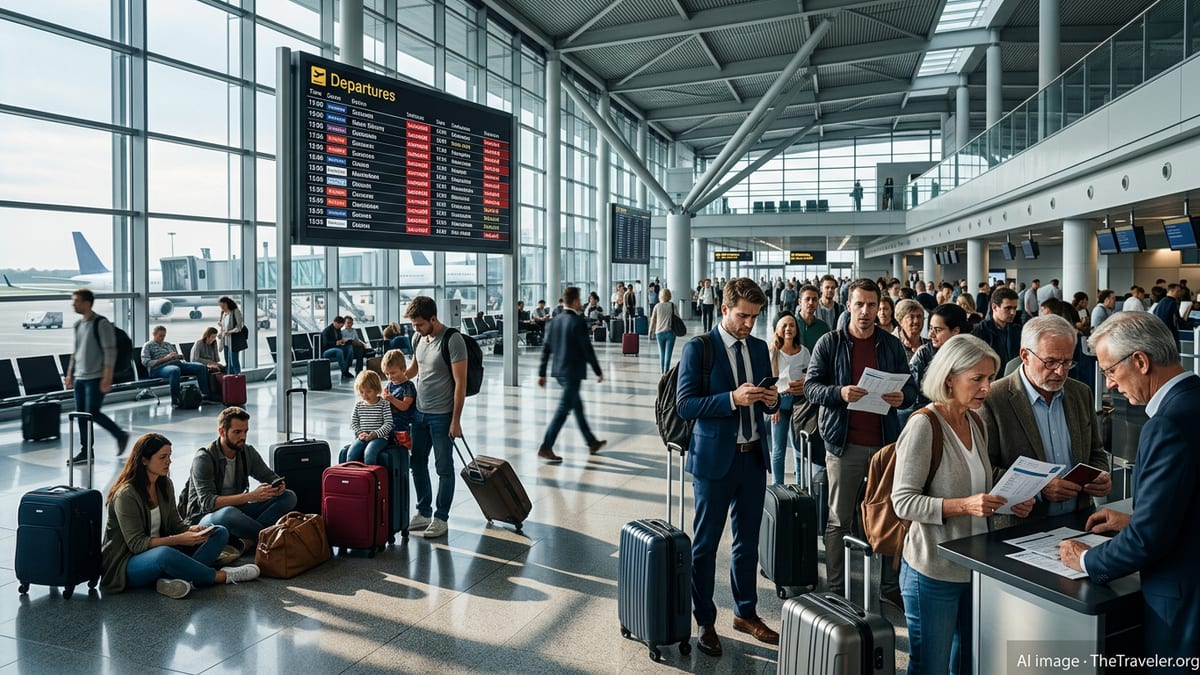
Strikes at a key African hub disrupt regional and long haul travel
JKIA is one of Africa’s busiest hubs, handling tens of thousands of passengers a day on Kenya Airways and a wide range of regional and intercontinental carriers. Publicly available data describes it as a critical transit point for East and Central Africa, meaning disruption at Nairobi quickly ripples across the wider network.
Recent industrial actions by aviation workers and air traffic control staff have repeatedly slowed or temporarily paralysed operations, leading to flight delays, diversions and cancellations. Coverage of past events, including a major stoppage in September 2024 linked to a proposed lease of the airport and more recent action in early 2026, shows how quickly terminals can become overcrowded when ground and safety-critical staff withdraw their labour.
Government statements and independent airport information sites describe JKIA as an essential facility, so even short work stoppages tend to trigger backlogs that take days to clear. As aircraft, crew and slots fall out of position, airlines are forced to trim schedules, consolidate services and push departures back while the system resets.
For passengers, the immediate impact is confusion at check in, congested security lanes and uncertainty at departure gates as airlines adjust operations in real time in response to reduced airport capacity.
What airlines are offering when flights are delayed or cancelled
During the latest wave of disruption, Kenya Airways travel alerts indicate that carriers are offering a mix of rebooking flexibility and refunds for flights directly hit by the strike. In recent advisories, the national airline has outlined policies allowing travelers whose bookings are affected to move their journeys to later dates without change penalties, subject to seat availability and any fare differences for new routings.
Publicly available information also shows that passengers on cancelled or heavily delayed flights are being given the option of refunds. Where tickets are wholly unused, airlines may provide a full refund, while partially used tickets can be reimbursed for the remaining, unflown segments. In several recent alerts, refund penalties have been waived with submission deadlines set a few weeks after the disruption period.
These measures aim to give travelers flexibility while airlines try to stabilise schedules. However, rebooking is not always immediate. When large numbers of flights are disrupted, the pool of available seats on alternative departures or partner airlines can quickly dry up, especially on busy regional and long haul routes that already operate close to capacity.
Travelers connecting via Nairobi are particularly affected, as a missed inbound leg can invalidate onward sectors. According to airline advisories, many carriers are attempting to re-protect transit passengers on the next available service or reroute them via other hubs in the region, but this is constrained by seat inventory and operational priorities.
Passenger rights in an international hub without a single global rulebook
Unlike in regions with unified passenger rights frameworks, such as the European Union’s EC261 regime, protections for travelers at JKIA depend heavily on the airline’s country of registration, the origin of the journey and the fare rules on the ticket. Published guidance from carriers serving Nairobi indicates that obligations during strikes are often framed as “assistance” and “goodwill” rather than as automatic cash compensation.
Many airlines classify industrial action by third parties, such as airport workers or air traffic control staff, as extraordinary circumstances. In practice, this can limit eligibility for financial compensation even when delays are lengthy. Instead, support tends to focus on practical measures like rebooking, fee waivers, and in some cases meals or overnight accommodation where local regulations or company policy require it.
Kenya based consumer resources advise passengers to pay close attention to the conditions of carriage on their tickets, which spell out what is offered during significant disruptions. Some full service airlines provide hotel stays and transfers for travelers stranded overnight due to cancellations, while others limit assistance to meal vouchers and rescheduled flights.
Given the mix of international and domestic legal regimes governing flights that pass through JKIA, travelers on multi leg itineraries may find that different segments are covered by different rules. This can lead to situations where a delay on one leg has knock on effects for connecting flights without triggering the same level of support on each part of the journey.
How to navigate a strike day at JKIA
Airport information portals and airline advisories consistently urge passengers to verify whether their flight is operating before travelling to JKIA during periods of industrial action. Online flight status tools and mobile app notifications have become the primary channels for last minute updates as schedules are adjusted.
Travel alerts from Kenya Airways and other carriers recommend that passengers update their contact details so they can receive SMS or email notices about delays, gate changes and cancellations. In some recent disruptions, airlines have asked customers not to go to the airport unless their flight is explicitly confirmed, a step aimed at reducing terminal overcrowding and allowing staff to assist those with imminent departures.
For travelers already inside the terminal when a strike escalates, publicly available guidance suggests staying close to departure boards and service desks, as gate assignments and departure times can change repeatedly. When flights are cancelled outright, queuing at airline counters or using digital channels to request rebooking is often necessary, though heavy demand can mean long waits for both options.
Independent advice platforms encourage passengers to keep boarding passes, receipts and any written communication from airlines, as these documents are often required later when claiming refunds, insurance or out of pocket expenses incurred during the disruption.
After the chaos: backlogs, missed connections and travel insurance
Even after a strike is formally called off, recovery at a major hub like JKIA can take several days. Government and industry updates from previous episodes note that aircraft, crew and airport operations may remain out of position, causing schedule changes and rolling delays as airlines work through the backlog of displaced passengers.
Travelers arriving in Nairobi after operations resume can still find that their original bookings have been retimed or rerouted. Airlines may consolidate flights, swap aircraft types or adjust frequencies as they rebuild normal patterns, affecting seat assignments and connection times. It is common for carriers to continue publishing travel alerts and flexible-change policies for a short period after industrial action ends.
For many passengers, the financial impact is felt after the journey, when claims are submitted to airlines or insurers. International travel insurance policies often treat strikes as a covered event if the disruption is not known at the time of booking, but coverage varies significantly by provider and policy. Documentation of delays, cancellations and additional costs is usually required to support any claim.
Consumer advocates therefore recommend checking both the airline’s published disruption policy and the terms of any travel insurance before departure, especially when travelling through hubs that have recently experienced labour disputes. In the event of renewed industrial action at JKIA, this preparation can make the difference between absorbing unexpected costs and recovering at least part of the expense.
https://www.kenya-airways.com/en/travel-alerts/