


More news on this day
As July heatwaves intensify across major hubs in North America and Europe, thousands of air travelers are once again confronting long delays, sudden cancellations and missed connections. Understanding the difference between weather disruption and airline-responsible chaos has become critical to knowing when you can insist on a reroute, a refund or cash compensation.
Get the latest news straight to your inbox!
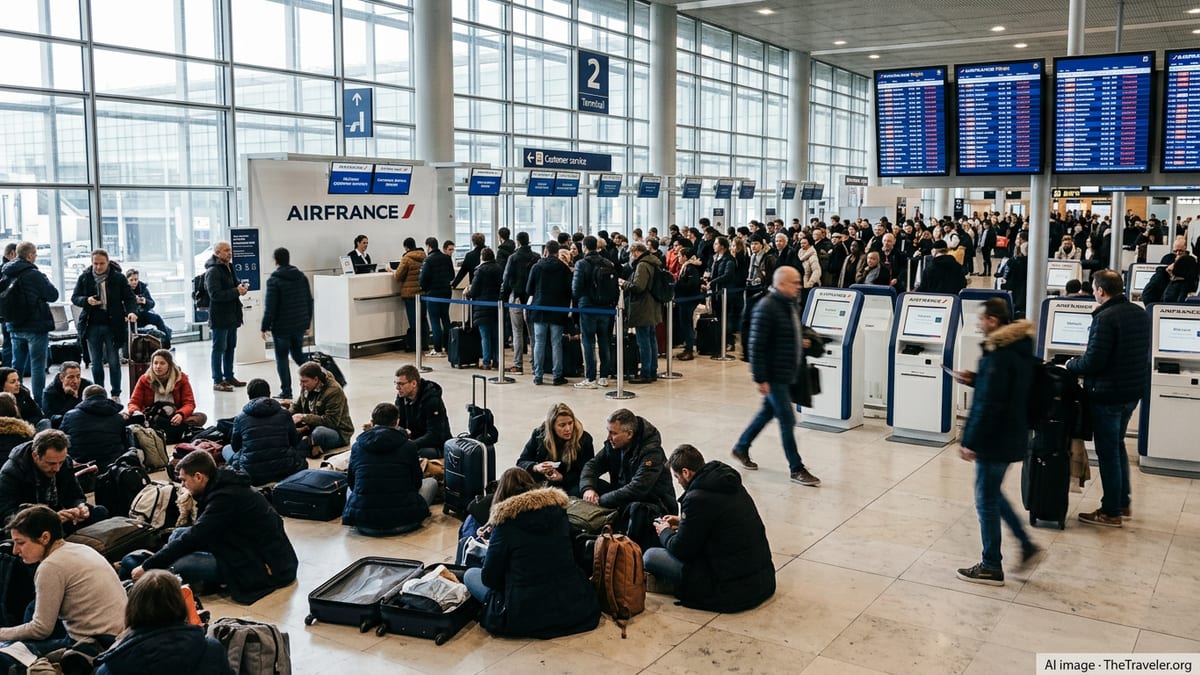
Heatwaves, weather disruptions and why flights are grounded
High temperatures can create a chain reaction of problems for airlines. Extreme heat may force aircraft to reduce weight for takeoff, limit operations on certain runways or trigger air traffic control restrictions when storms and convective weather build around busy corridors. When this happens during the height of summer travel, delays can spread rapidly across networks.
Publicly available airline data and government reports show that weather remains one of the leading causes of flight disruption in the United States, particularly during the summer months when thunderstorms and heat-driven instability are common. Similar patterns are reported across Europe, where airports in Spain, Italy and Greece have faced repeated heat advisories in recent summers.
When disruption is categorized as a weather event, it generally falls outside the airline’s direct control, which has important consequences for what travelers can claim. In both U.S. and European systems, passenger rights are strongest when an airline is responsible for the problem, such as technical faults, crew shortages or scheduling decisions, rather than when flights are grounded for safety reasons linked to heat and storms.
For travelers, the first step during a heatwave disruption is to establish how the airline has classified the cause of the delay or cancellation on internal systems and public departure boards. That description often determines whether you will be offered compensation, rebooking only, or a full refund of your unused ticket.
U.S. rules: refunds, rebooking and what heat-related delays mean
In the United States, there is no general federal requirement for airlines to pay cash compensation when a flight is delayed or canceled because of weather, including heat-related operational constraints. However, recent rule changes from the Department of Transportation have reinforced passengers’ rights to refunds when airlines cancel or significantly change flights and the traveler chooses not to travel.
Under rules that carriers were required to follow from late October 2024, passengers are entitled to an automatic refund of the original form of payment if a flight is canceled or undergoes a significant schedule change and the traveler does not accept the airline’s alternative arrangements. This applies regardless of the reason for the disruption, including extreme weather, but only when the passenger opts out of traveling on the revised itinerary.
For those who still need to travel, most U.S. airlines will attempt to rebook passengers on the next available flight without additional fare when disruption is classified as weather-related. Additional benefits such as hotel rooms, meal vouchers or ground transportation are typically a matter of each airline’s customer service policy rather than a legal requirement, especially when the cause is outside the carrier’s control.
Travelers can check airline-specific commitments on delay and cancellation care, including whether hotels or meal vouchers are offered during overnight weather disruptions. If an airline fails to provide a refund when due or misleads passengers into accepting vouchers instead of cash, complaints can be filed with the Department of Transportation’s consumer protection office.
Stronger protections in Europe under EU261 and UK261
Passengers flying to, from or within the European Union, or on UK departures covered by UK261, benefit from a different legal framework. EU Regulation 261/2004 and its UK counterpart set out standardized rights to care, rerouting and compensation when flights are heavily delayed, canceled or overbooked, provided certain conditions are met.
Under these rules, travelers may be entitled to fixed-sum cash compensation when the disruption is caused by factors within the airline’s control, such as technical issues, operational decisions or crew mismanagement. However, the regulation makes a clear exception for “extraordinary circumstances,” which include severe weather and air traffic control restrictions linked to safety. Heatwave-driven storms and unsafe operating conditions typically fall into this category.
Even when compensation is excluded because of extraordinary weather, passengers in the EU and UK still have the right to assistance once delays reach specified thresholds. That can include meals and refreshments, hotel accommodation when an overnight stay becomes necessary, transport between the airport and hotel, and the option to be rerouted at the earliest opportunity or receive a ticket refund if the trip no longer makes sense.
Travelers caught in July heatwave disruption on European itineraries are therefore unlikely to receive cash compensation solely for a weather-classified cancellation, but they can still insist on practical support and, if they choose not to travel, reimbursement of the unused portion of their ticket.
When weather turns into airline responsibility
The dividing line between weather-related disruption and airline-responsible chaos can be blurred, particularly during prolonged heatwaves that strain schedules and aircraft. In both U.S. and European systems, the classification of a disruption can change if operational decisions by the airline worsen the impact beyond what the initial weather event required.
In recent years, high-profile investigations and consumer coverage have focused on situations where airlines cited external causes while regulators later determined that large portions of the disruption were controllable. These cases often involve cascading crew shortages, aircraft positioning failures or recovery decisions that left passengers stranded long after the underlying weather problem had eased.
For passengers, this means that a cancellation initially attributed to bad weather might still give rise to stronger rights if evidence suggests that the airline could reasonably have prevented extended disruption. In the EU and UK, compensation has sometimes been awarded when courts or enforcement bodies decide that carriers used “extraordinary circumstances” too broadly and did not take all reasonable measures to avoid or limit cancellations.
In practice, travelers should keep records of boarding passes, written notices, app notifications and screenshots of departure boards when significant disruption occurs. If the airline later denies compensation or care by pointing to weather, these records can help support a challenge, particularly on routes covered by EU261, UK261 or similar national frameworks.
How to act during a July heatwave disruption
When a July heatwave begins affecting flights, the most effective approach is to combine awareness of formal rights with practical steps at the airport. As soon as a delay lengthens or a cancellation is announced, passengers should check whether they wish to continue with their trip or would prefer to abandon it and seek a refund. That decision will determine which rights apply under both U.S. and European regimes.
Travelers who must reach their destination should request rebooking at the earliest opportunity, asking agents to search for alternatives on partner airlines where interline agreements allow. In the EU and UK, passengers whose flights are covered by EU261 or UK261 can also remind the carrier of its duty of care for meals and accommodation once delay thresholds are crossed, even if the cause is extreme weather.
Those opting to cancel their plans should be clear that they are declining rebooking and are seeking a full refund of the unused ticket rather than a credit or voucher. Under current U.S. rules, airlines are required to provide that refund automatically when flights are canceled or significantly changed and the passenger chooses not to travel, while European regulations give similar refund rights alongside rerouting options.
If a dispute arises over compensation or care, travelers can pursue follow-up through the airline’s formal complaint process and, where available, national enforcement bodies or consumer protection agencies. With heatwaves becoming a regular feature of the summer travel calendar, understanding how weather interacts with passenger rights has become essential for anyone planning to fly in July.