


More news on this day
A rare June winter storm sweeping across parts of the United States has disrupted air travel nationwide, triggering ripple-effect delays and cancellations for passengers passing through Phoenix Sky Harbor International Airport despite mostly clear conditions in Arizona.
Get the latest news straight to your inbox!
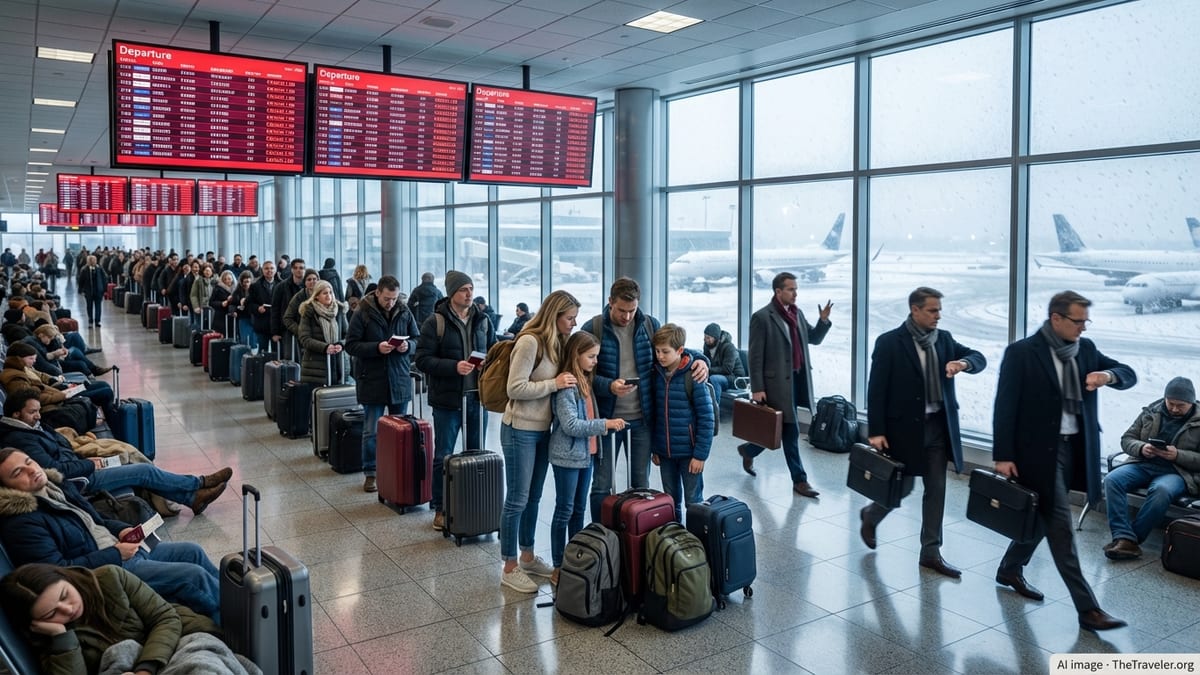
Unusual June storm collides with peak travel demand
Weather in June typically brings rising heat and dry skies to Phoenix, but this year a powerful late-season winter system over other regions coincided with the early summer travel rush. Publicly available flight tracking data shows that the storm produced widespread snow, ice and thunderstorms in parts of the central and eastern United States, forcing airlines to slow operations at several major hubs.
Those conditions created complications for aircraft and crews scheduled to pass through Phoenix, one of the country’s busiest connecting airports. While local operations at Sky Harbor remained largely free of wintry weather, the airport’s role in the national network meant that disruptions hundreds or thousands of miles away translated into late arrivals and missed departures in Arizona.
Travel industry analysis of recent events highlights how quickly such patterns can develop when severe weather collides with already full schedules. With June passenger volumes building toward the peak of the season, airlines had limited flexibility to absorb cascading delays once the winter storm pushed key hubs into ground-delay programs and de-icing operations.
Delays and cancellations build through the day
Published coverage and live flight status boards for the day of the storm point to a familiar sequence for travelers at Sky Harbor. Morning departures faced modest pushbacks as aircraft originating in affected regions left gates late, compressing turnaround times in Phoenix. As the storm intensified over the Midwest and Northeast, additional slowdowns at connecting hubs began to ripple outward.
By midday, publicly available tracking data indicated a growing number of late inbound flights to Phoenix, with some arrivals posted significantly behind schedule. Those delays narrowed the window for crews to prepare aircraft for their next legs, leading to rolling adjustments on the departure side. In some cases, flights were ultimately canceled when aircraft or flight crews could not be repositioned within federally regulated duty limits.
Local broadcast and online travel reports framed the Phoenix numbers within a broader national picture that included thousands of delays and hundreds of cancellations across the United States. For Sky Harbor passengers, the practical impact was visible in crowded gate areas, long customer service lines and departure boards that shifted repeatedly as airlines reworked schedules in real time.
How a distant winter storm can snarl sunny Phoenix
Operational data and aviation analyses emphasize that Phoenix does not have to experience winter conditions directly for a storm to affect its flights. Airlines typically route aircraft through complex sequences of cities, meaning a jet delayed by de-icing in a snow-covered hub may arrive late to Phoenix and then depart late again for its next destination.
When a winter system extends across multiple regions, as it did in this June episode, major hubs can see ground stops, runway capacity reductions and restrictions on departures into storm-affected airspace. Each of those steps slows the flow of traffic, creating what federal reviews describe as knock-on disruptions that reach airports far from the center of the bad weather.
Sky Harbor’s role as a connecting point for flights linking the Southwest with the Midwest, East Coast and mountain states leaves it especially exposed to these kinds of chain reactions. Even when skies above Phoenix remain clear, airlines must work within national airspace constraints and weather-driven congestion elsewhere, which can push back departure times or force last-minute reroutes.
Advice and options for affected travelers
Travel organizations and airline guidance surrounding recent disruption events underscore several practical steps for passengers caught in weather-related slowdowns. Checking flight status repeatedly in the 24 hours before departure is widely recommended, as route restrictions and ground-delay programs can be implemented on relatively short notice. Many carriers now push real-time updates through mobile apps and text alerts, which can provide earlier warning than airport departure boards.
Analysts frequently suggest booking earlier flights on days when severe weather is forecast anywhere along a planned route. Morning departures are often less affected by cumulative delays, giving travelers more time in the day to recover from missed connections. Opting for nonstop flights where possible can also reduce exposure to bottlenecks at vulnerable hubs during major storms.
For passengers whose flights are canceled, consumer advocates indicate that options vary by airline and ticket type, but many carriers offer rebooking on the next available flight, and some provide travel credits or limited lodging assistance during large-scale disruption events. Travelers are encouraged to review airline policies in advance so they understand what support may be available if a winter storm strikes during their journey.
Ongoing vulnerability as storm patterns evolve
The June winter storm affecting Sky Harbor-linked flights arrived amid ongoing discussion about increasingly volatile weather patterns and their impact on aviation. Climate data for Phoenix typically points to hot, dry summers and very rare snowfall, yet national weather records show that winter storms are persisting later into the year in some regions, occasionally intersecting with the start of the busy summer travel period.
Aviation planners and industry observers note that such timing can be particularly disruptive, since schedules in June are already densely packed and aircraft utilization is high. When a widespread storm system introduces de-icing delays, low-visibility operations or thunderstorm avoidance routes at multiple hubs, the margin for recovering on-time performance narrows quickly.
For Phoenix travelers, the latest episode serves as another reminder that local sunshine does not guarantee smooth flying when the broader network is under strain. As airlines continue to refine scheduling, staffing and technology to cope with weather extremes, passengers moving through Sky Harbor in future seasons are likely to remain sensitive to storm forecasts well beyond Arizona’s borders.