


More news on this day
China is recording a rapid rebound in foreign arrivals as expanded visa exemptions and longer visa free transit options turn the country into a more accessible destination, with recent travel data highlighting South Korea, Malaysia and Russia among the fastest rising source markets.
Get the latest news straight to your inbox!
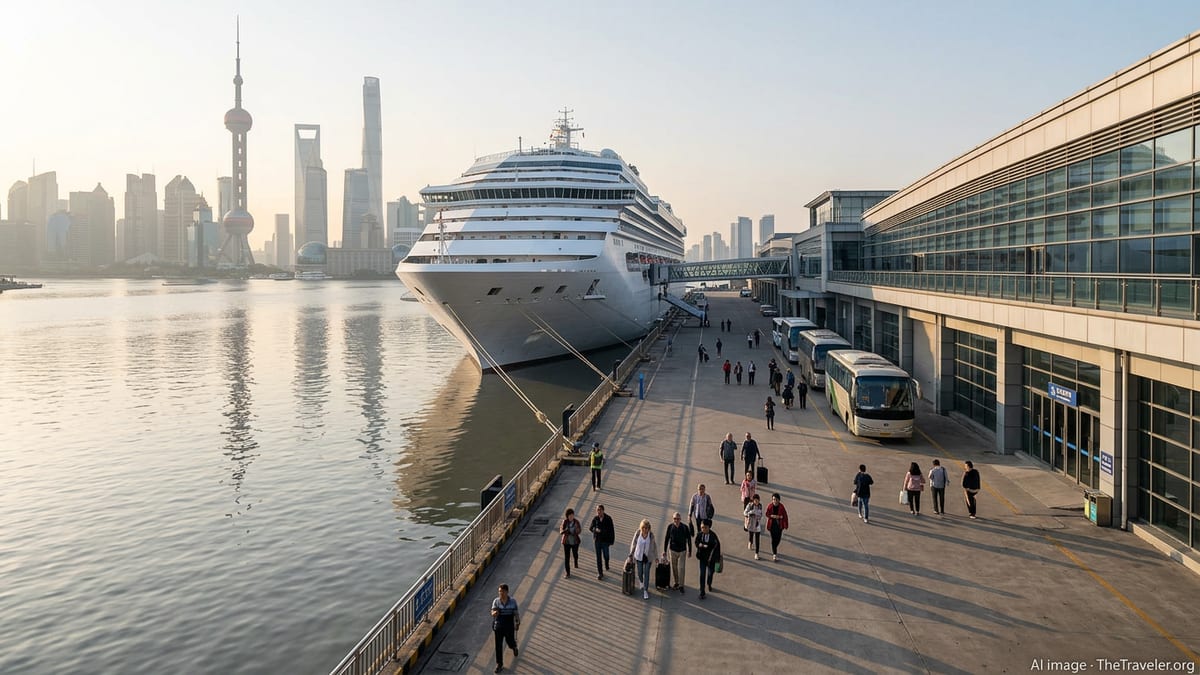
Visa Free Expansion Reshapes China’s Inbound Market
Publicly available policy records show that since late 2023 China has rolled out one of the world’s most extensive visa facilitation drives, steadily adding European and Asia Pacific countries to its visa free entry list while also extending transit waivers. For many nationalities, short stays of around two weeks to one month for tourism, business or family visits no longer require a traditional visa application, significantly cutting both cost and planning time for trips to major Chinese cities.
Information compiled from official notices indicates that Malaysian passport holders were among the earliest Southeast Asian beneficiaries, initially receiving unilateral visa free access for up to 15 days in December 2023 before the arrangement was upgraded to a mutual exemption. South Korean citizens, long a major presence in Chinese cities for business and study, later joined the list under a 15 day visa waiver framework, a move that simplified city break travel and visits to friends and relatives.
Policy updates referenced in open sources also show that Russian citizens have been brought into China’s visa easing campaign, including through group travel schemes that allow short visits organized by designated agencies without individual visas. These shifts collectively mark a notable adjustment from the tight border controls of the pandemic period and are designed to bring inbound tourism closer to pre 2020 levels.
In parallel, China has expanded its visa free transit options. Reports on immigration announcements describe a 10 day transit scheme for travelers from dozens of countries, allowing them to enter through selected airports and rail hubs while in transit to a third destination. That measure is particularly relevant for travelers from Europe, the Middle East and the Asia Pacific region who now combine multi stop itineraries that include a stay in a Chinese gateway city.
South Korea Emerges as a Leading Driver of Recovery
South Korea has quickly become one of the most important contributors to China’s inbound rebound. Industry analyses based on large online travel agency booking databases for early 2024 and the first half of 2025 portray South Korea as either the top or among the top three foreign origin markets for trips into mainland China. Flight connections between Seoul, Busan and major Chinese cities are dense, enabling short leisure and shopping trips that match the duration of visa free stays.
Travel trend reports suggest that pent up demand after several years of travel restrictions is supporting this surge. Korean visitors are focusing on familiar destinations such as Beijing, Shanghai and Qingdao, along with cultural and culinary hubs in regions historically linked to Korean communities. The combination of relatively short flying times, competitive airfares and reduced administrative barriers has encouraged more frequent but shorter visits, in line with broader patterns in Northeast Asian travel.
Spending data from regional tourism and payments industry studies indicate that cross border card usage by South Korean travelers in China has risen in tandem with visitor volumes. Retail, food and beverage, and entertainment sectors in major cities are among the main beneficiaries. Although total arrivals between the two countries have not yet fully matched pre pandemic peaks, the trajectory points to South Korea retaining its long standing role as one of China’s most valuable inbound tourism partners.
Analysts also note that the easing of digital payment frictions has helped. Large Chinese mobile payment platforms have opened registration options using foreign bank cards, while more hotels and attractions in major cities have restored conventional card acceptance. For South Korean tourists, who are accustomed to cashless transactions at home, this greater compatibility has made short trips more convenient and attractive.
Malaysia’s Deepening Links Boost Two Way Travel
Malaysia’s position in China’s inbound story is supported by both policy and market dynamics. Tourism statistics released in Kuala Lumpur for 2024 indicate that China has re emerged as one of Malaysia’s key source markets, while Malaysia itself remains a favored destination for Chinese travelers. On the inbound side into China, Malaysian travelers are now benefiting from a mutual visa exemption framework that permits longer visa free stays than under the earlier unilateral arrangement.
According to cross border tourism consumption reports, Malaysia has climbed into the top tier of origin markets for travel into China in several recent quarters, at times ranking alongside or even ahead of Japan and South Korea in selected booking datasets. This reflects strong business, education and diaspora links between the two countries, alongside longstanding interest in Chinese heritage destinations among Malaysian Chinese communities.
The flight network between Malaysia and China has been rebuilt at a steady pace, with Kuala Lumpur and key secondary Malaysian cities regaining direct links to major Chinese hubs and some provincial capitals. Airlines have deployed additional capacity in response to improving load factors, while promotional campaigns by travel agencies focus on multi city tours that combine historical attractions with shopping and culinary experiences.
Travel observers note that price competitiveness is another factor drawing Malaysians to China. Package tours that bundle flights, accommodation and guided sightseeing can be significantly cheaper than equivalent itineraries in parts of Northeast Asia or Europe, particularly during promotional seasons. Combined with the simplicity of visa free travel, this has positioned China as an accessible option for family trips and group tours from Malaysia.
Russia’s Growing Presence in China’s Visitor Mix
Russia features prominently in recent assessments of China’s evolving inbound visitor structure. Data driven reports from international payments companies and online travel platforms highlight Russia as an emerging high growth source market for travel into Asia, with China listed among the destinations benefiting from this trend. Geographic proximity and existing air and rail connections across Northeast Asia support both leisure and shopping oriented travel.
Visa facilitation has played an important role for Russian travelers as well. Publicly accessible policy summaries describe group visa exemption arrangements under which tour groups organized by approved operators can enter China for short stays without individual visas. These schemes are tailored to charter flights and organized tours that focus on major Chinese cities and selected regional centers close to the Russian border.
In cities such as Harbin and other parts of northeastern China, tourism authorities and local businesses have responded to the uptick in Russian arrivals by increasing Russian language signage and adapting retail offerings. Seasonal events, including winter festivals and ice themed attractions, have become popular draws for Russian visitors seeking familiar climates but different cultural experiences. The result is a gradually deepening tourism corridor that complements established trade relations.
While total Russian arrivals remain smaller than those from nearby Asian economies, their year on year growth rates stand out in several published datasets. Analysts suggest that sustained air connectivity and continued visa facilitation could see Russia consolidate its place among China’s top inbound markets over the next few years, particularly in northern provinces.
Outlook: Visa Easing Underpins China’s Tourism Strategy
Across recent tourism and economic insight reports, a consistent picture emerges of China using visa liberalization as a central tool to reinvigorate inbound travel. The extension of visa free entry to large parts of Europe and the Asia Pacific region, combined with expanded transit privileges, has already fueled a marked increase in international arrivals from a low base. South Korea, Malaysia and Russia are highlighted as three markets where these changes are most clearly visible in booking and arrival statistics.
Even with the strong rebound, multiple analyses point out that China’s inbound tourism has not yet fully matched pre pandemic volumes. Language barriers, digital ecosystem differences and lingering perceptions about travel complexity continue to influence some travelers’ decisions. However, improvements in payment options, clearer communication of entry rules and expanded air capacity are gradually addressing these hurdles.
For neighboring countries, the trend adds a new dimension to regional travel flows. South Korea, Malaysia and Russia are not only sending more visitors to China but are also engaging in reciprocal tourism recovery, as Chinese outbound travel recovers. This two way growth reinforces the role of visa policy cooperation and transport connectivity in shaping Asia’s tourism map as the region moves further into the post pandemic era.