


More news on this day
Juneyao Airlines is sharpening competition on the Australia to Europe corridor in 2026, using its Shanghai hub to connect new services from Sydney and Melbourne with an expanding network of European destinations.
Get the latest news straight to your inbox!
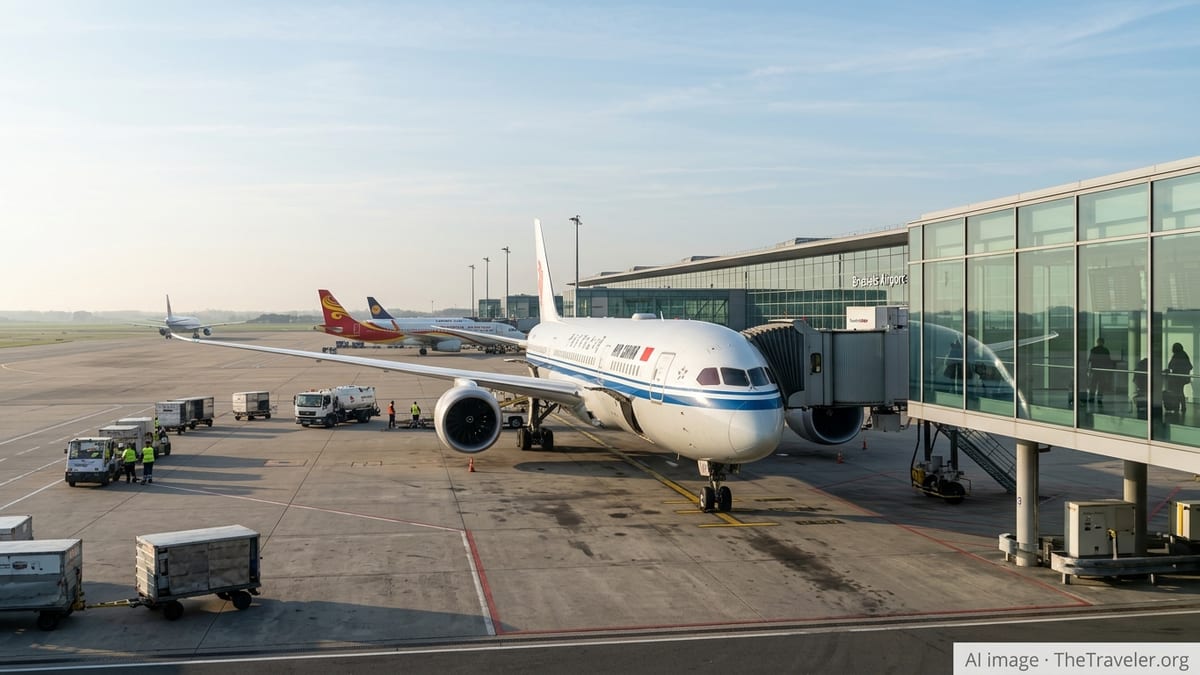
Shanghai Hub Connects Australia to a Wider European Network
Publicly available schedules show Juneyao Airlines operating nonstop flights from both Sydney and Melbourne to Shanghai Pudong International Airport, consolidating the Chinese megacity’s position as a key transit point between Australia and Europe in 2026. The carrier, which first entered the Australian market with Shanghai to Sydney services in late 2024, has since grown its presence to include Melbourne and now promotes onward connections to multiple European gateways.
Published coverage in the Australian travel trade indicates that Juneyao’s Australia flights run several times per week from Sydney and Melbourne, with frequencies rising toward daily during peak holiday and Lunar New Year periods. The airline uses Boeing 787 aircraft on the long haul legs to Shanghai, aligning its schedule with banked departures to Europe to create same day or overnight one stop itineraries for Australian travellers.
Route mapping services and timetable data list Juneyao’s European network from Shanghai as including Helsinki, Manchester, Brussels and Athens, together with additional seasonal or frequency adjusted services. When combined with interline and codeshare options, this footprint allows the airline to position Shanghai as a competitive alternative to more established hubs in the Middle East and Southeast Asia for travellers starting in Sydney and Melbourne.
Industry analysts note that the development fits a wider trend of Chinese carriers leveraging their domestic megahubs to capture long haul traffic flows. For Australians seeking to reach Europe without transiting through traditional hubs such as Singapore, Dubai or Doha, the Shanghai option broadens the field of one stop choices and introduces new combinations of schedules and fares.
Six European Cities Marketed as Modern One Stop Options
Travel industry reporting describes Juneyao Airlines actively marketing one stop journeys from Australia to six European cities via Shanghai, centering its pitch on modern aircraft, coordinated connections and competitive pricing. Among the destinations highlighted are Helsinki, Manchester, Brussels and Athens, which together provide coverage across Northern, Western and Southern Europe.
Additional European cities are served either directly by Juneyao or through partnerships, giving Australian travellers options that differ from the more typical London, Paris or Frankfurt itineraries. For some markets, such as Athens and select Northern European points, Juneyao’s schedules from Shanghai can produce total journey times that are competitive with routings via Southeast Asian or Gulf hubs, particularly on eastbound legs from Australia.
Published schedules show that many of the Europe bound departures from Shanghai leave within several hours of the Australia flights arriving, allowing for relatively short transfer times in the hub while still meeting connection buffers. This structure is central to the carrier’s claim of offering a modern one stop product, as it avoids excessively long layovers and keeps total travel time manageable on what are already among the world’s longest air corridors.
The six city offering also supports niche itineraries such as leisure trips to Greece or Finland and visits to friends and relatives in the United Kingdom and Benelux countries. For Australian agents and tour operators, the broader spread of entry points into Europe can assist with itinerary design at times when capacity or fares on the busiest Western European gateways are constrained.
Competitive Pressure on Established Australia Europe Transit Hubs
Juneyao’s growing Australia Europe proposition arrives in a market long dominated by one stop routings through hubs in Southeast Asia and the Middle East. Airlines based in Singapore, Hong Kong, Doha and Dubai have traditionally concentrated substantial capacity on the so called Kangaroo Route between Australia and Europe, while European carriers operate fewer direct services into the Australian market.
By bringing a Chinese hub into the equation, Juneyao adds another layer of competition in both price and connectivity. Aviation route data and booking engine displays suggest that Shanghai based one stop itineraries are often priced aggressively to attract first time users to the airline and to its transfer experience. This may be particularly appealing to cost conscious leisure travellers and students who are more flexible on routing as long as total travel time and reliability remain acceptable.
Observers also point to the growing appeal of China as a stopover destination in its own right. With more Australians returning to outbound travel and Chinese visitor numbers to Australia recovering, a hub model that allows short or extended stays in Shanghai on either leg of a Europe trip can support tourism flows in both directions. Juneyao’s dual focus on point to point traffic and transfer customers reflects this strategic positioning.
For incumbent carriers, additional one stop competition can place downward pressure on some fare segments, especially outside peak seasons when Australian and European school holidays do not overlap. However, capacity constraints at major airports and broader demand for long haul leisure travel mean that new entrants such as Juneyao more often diversify options rather than trigger sharp price collapses across the market.
Timetables, Fleet and Onboard Experience
Operational data shows Juneyao deploying long haul configured Boeing 787 aircraft on its Australia routes, the same type it uses on many of its Europe services from Shanghai. This commonality allows the airline to promote a consistent onboard product across both long legs of the Australia Europe journey, including lie flat business class seating and modern in flight entertainment systems.
Travel trade reports note that schedules in 2026 balance overnight and daytime sectors. Eastbound flights from Australia to Shanghai generally operate as overnight or late evening departures, arriving in China early the following morning to feed into European banks. Westbound services back to Australia then operate later in the day from Shanghai, providing reasonably timed arrivals into Sydney and Melbourne.
On the ground, Shanghai Pudong’s role as Juneyao’s primary hub offers dedicated check in areas, branded lounges for premium passengers and access to partner facilities for eligible travellers. Connection processes are described in public information as streamlined for passengers transiting on a single ticket, though travellers must continue to monitor entry and transit requirements for China, which can affect minimum connection times and stopover plans.
The airline’s frequent flyer program extends mileage earning and redemption across its long haul network, including Europe, which may appeal to repeat travellers who value loyalty benefits. For occasional travellers, transparent fare families and clearly described baggage policies remain an important factor when choosing among competing one stop options on the Australia Europe corridor.
What the Expansion Means for Australian Travellers in 2026
For Australians planning Europe trips in 2026, Juneyao’s expanded presence translates into a wider spread of schedules, airports and price points. Holiday makers heading to destinations such as Greece or Finland can consider flying directly into those markets rather than backtracking from more traditional hubs, while those bound for secondary cities in the United Kingdom or continental Europe may benefit from shorter onward connections.
Travel agencies and online booking platforms are beginning to feature Juneyao more prominently alongside established carriers when customers search for one stop options out of Sydney and Melbourne. According to published coverage, the airline has been working with Australian distributors to raise awareness of its brand, its Shanghai hub and the specific advantages of routing through China compared with other transit points.
At the same time, observers caution that travellers should compare not only fares but also total journey time, connection quality and their own preferences for stopover locations. While Shanghai provides a compelling link to Europe for many itineraries, some passengers may still prioritise familiar hubs, alliance networks or loyalty ties. The presence of Juneyao’s new services adds another tool to the toolkit rather than replacing existing options.
As 2026 progresses, the performance of the Australia Shanghai Europe flows will be closely watched by industry analysts as an indicator of how rapidly Chinese carriers can scale long haul transfer traffic from Oceania. If demand strengthens across both leisure and visiting friends and relatives segments, Juneyao may further refine its schedules, frequencies and European coverage, deepening Shanghai’s role as a bridge between Australian cities and an increasingly diverse set of European destinations.