


More news on this day
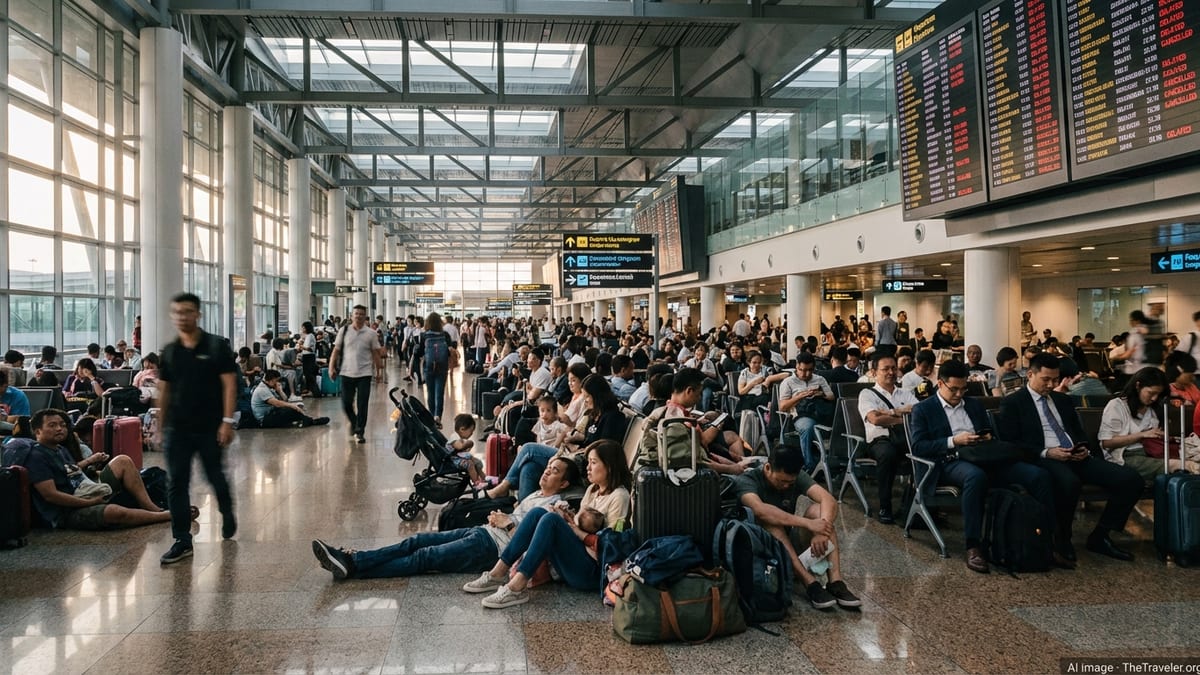
Thousands of air travelers across Asia faced hours-long queues, missed connections and overnight airport stays this week as regional hubs in Thailand, Japan, Hong Kong, Malaysia, the Philippines and neighboring markets recorded at least 133 cancellations and more than 2,500 delayed flights, snarling operations for Thai Airways, AirAsia, All Nippon Airways, Air China and other major carriers.
Get the latest news straight to your inbox!
Fresh Wave Of Disruption Hits Key Asian Hubs
Aggregated flight-tracking data and regional aviation coverage for the latest 24-hour period indicate that a dense cluster of irregular operations has taken hold across multiple Asian gateways, with 133 scheduled flights scrapped and around 2,552 running late. The disruption is concentrated at major hubs including Tokyo, Bangkok, Kuala Lumpur, Jakarta, Hong Kong and Manila, where high passenger volumes amplify the impact of each operational slip.
Publicly available figures show that large network and low-cost airlines alike feature in the disruption statistics. Thai Airways and other Thailand-based operators are contending with heavily stretched schedules around Bangkok’s Suvarnabhumi and Don Mueang airports, while Japanese carriers such as ANA navigate rolling delays on services to and from Tokyo. In Southeast Asia, AirAsia and affiliated brands are again prominent within delay and cancellation tallies linked to Kuala Lumpur and regional spokes.
The latest wave follows several months in which Asian aviation has repeatedly grappled with high levels of day-of-travel schedule volatility. Previous snapshots in February, April and early May already documented dozens of cancellations and well over a thousand delays on single days, particularly around Jakarta, Kuala Lumpur, Bangkok and Tokyo, leaving operators with little slack when fresh disruptions emerge.
Although the precise mix of contributing factors varies by airport and carrier, the pattern has become familiar for travelers. Once early-morning departures are disrupted, missed aircraft rotations and crew scheduling challenges propagate through the day, creating late-night congestion that spills into the following morning’s departures and complicates recovery efforts.
Thai Airways, AirAsia, ANA And Air China Under Pressure
According to recent aviation analyses and airline notices, Thai Airways has been implementing rolling reductions and adjustments across portions of its regional network in June, cutting or thinning frequencies on routes linking Bangkok with India, Taiwan, Hong Kong, Japan and mainland China. These capacity changes, combined with day-of-operations delays, have tightened margins on key connections and contributed to longer rebooking windows when services do not operate as planned.
Low-cost giant AirAsia, including its Thailand, Malaysia and Philippines units, continues to feature heavily in disruption reports. Travel notices and passenger accounts shared in recent weeks point to a pattern of rescheduled or suspended flights on routes such as Manila to Tokyo and selected Thailand–India sectors, with some services paused for extended periods across the June to September window. When irregular operations strike on already-thinned schedules, options for same-day reaccommodation become more limited.
In Japan, ANA has appeared prominently within regional delay statistics tied to Tokyo’s major airports and onward domestic connections. Industry coverage has highlighted how the need to keep core trunk services operating between Tokyo and other major Japanese cities can force last-minute aircraft and crew reallocations, occasionally leading to knock-on delays on secondary routes or regional international links.
Air China, meanwhile, remains a key player within the disruption picture for flights linking East Asia with long-haul destinations and regional points. Publicly accessible passenger reports and schedule data point to recent cancellations on itineraries connecting cities such as Beijing with Tokyo and onward to Europe, reinforcing the vulnerability of complex multi-leg journeys when a single segment is removed from the schedule or runs heavily late.
Storm Systems, Operational Strain And Thin Buffers
The latest spike in cancellations and delays arrives shortly after a powerful early-season storm system over East and Southeast Asia, which prompted large-scale suspensions and rollbacks across Japan, China, South Korea and Thailand. Aviation-focused outlets recently documented several thousand combined cancellations and delays tied to that weather event, with ANA, China Eastern, Air China and regional carriers among the most affected.
Even as weather-related restrictions ease, many airports and airlines are still working through the residual effects on aircraft positioning, maintenance windows and crew rostering. Where fleets had to be diverted, parked or heavily re-tasked to cope with storm-driven shutdowns, it can take days for networks to fully re-stabilize, particularly on routes that rely on tight aircraft turnaround times and overnight layovers.
At the same time, schedule adjustments introduced earlier in the northern summer season have reduced built-in buffers on certain corridors. Carriers trimming underperforming or fuel-intensive routes, or temporarily pausing services amid higher operating costs, have left some city pairs with fewer daily frequencies. When irregularities arise on those thinner routes, passengers can face prolonged waits for the next available seat, especially if alternative carriers are also experiencing congestion.
Regional analysts note that this combination of lingering weather effects, operational strain and leaner schedules has produced a fragile operating environment in which a relatively modest number of cancellations can cascade into widespread disruption. The latest 133 cancellations and 2,552 delays represent only a fraction of the total daily flight program across Asia, yet the crowded nature of key hubs magnifies their impact on travelers.
Passengers Face Long Queues, Misconnections And Hotel Scrambles
Across affected airports, reports describe crowded check in halls, long security lines and extended waits at transfer desks as passengers attempt to salvage disrupted itineraries. In hubs such as Bangkok, Kuala Lumpur and Tokyo, where multiple airlines funnel connecting traffic through shared terminals, displaced travelers can find themselves queueing alongside others affected by different carriers and routes, complicating efforts to secure prompt assistance.
Missed onward connections are a recurring theme in publicly shared passenger experiences. Travelers booked on itineraries that link Southeast Asian cities to Japan, Hong Kong or mainland China via regional hubs have reported losing both regional and long-haul segments after a single delayed departure. Reaccommodation often requires rebooking across constrained seat inventories, particularly during peak weekend and holiday waves when aircraft already depart near capacity.
Hotel availability around major airports has also tightened at short notice on peak disruption days. With airlines and passengers simultaneously seeking overnight accommodation, nearby properties in Bangkok, Tokyo, Kuala Lumpur and Jakarta can quickly fill, pushing some travelers into more distant suburbs or forcing overnight stays within terminal buildings while awaiting morning flights.
For travelers, the uneven application of passenger protection rules across jurisdictions adds further complexity. While some routes fall under robust compensation or care frameworks, many intra-Asian itineraries are governed by more limited obligations, leaving passengers reliant on airline policies and travel insurance for reimbursement of out-of-pocket costs arising from delays and cancellations.
What Travelers Planning Asia Trips Should Expect Next
Recent disruption patterns suggest that volatility is likely to remain elevated across Asian networks in the short term. Flight data and industry reporting for the past several months reveal a series of high-impact days in which cancellations range from several dozen to well over one hundred, while delays regularly exceed two thousand across the region’s busiest hubs. The latest count of 133 cancellations and 2,552 delays fits squarely within this broader trend.
Travelers with upcoming itineraries through airports such as Bangkok, Tokyo, Hong Kong, Kuala Lumpur, Jakarta and Manila may wish to build additional resilience into their plans. Practical steps highlighted by consumer advocates and travel industry coverage include allowing longer connection windows, favoring earlier departures where possible, and closely monitoring airline notifications and flight-tracking tools in the 24 to 48 hours before travel.
Those already ticketed on carriers that have announced schedule reductions or route suspensions in recent weeks, including segments operated by Thai Airways, AirAsia units, ANA and Air China, can review booking details for any quiet schedule changes and confirm that contact information is up to date in airline profiles. Where airlines are offering no-cost changes or alternative routings due to ongoing adjustments, taking action early can provide more options than waiting until day-of-travel queues form at the airport.
While there is no immediate sign of a region-wide capacity crunch comparable to early post-pandemic periods, the current mix of weather volatility, operational constraints and targeted capacity cuts is creating conditions for periodic spikes in disruption. For now, Asia-bound and intra-Asian travelers face an environment in which careful planning and real-time vigilance are increasingly essential parts of any trip through the region’s busiest hubs.