


More news on this day
Chinese carrier Juneyao Airlines has postponed the launch of its much-anticipated Shanghai to Jakarta and Shanghai to Manila routes from June to October 2026, leaving peak-season travelers scrambling for alternatives just as demand for Southeast Asia soars.
Get the latest news straight to your inbox!
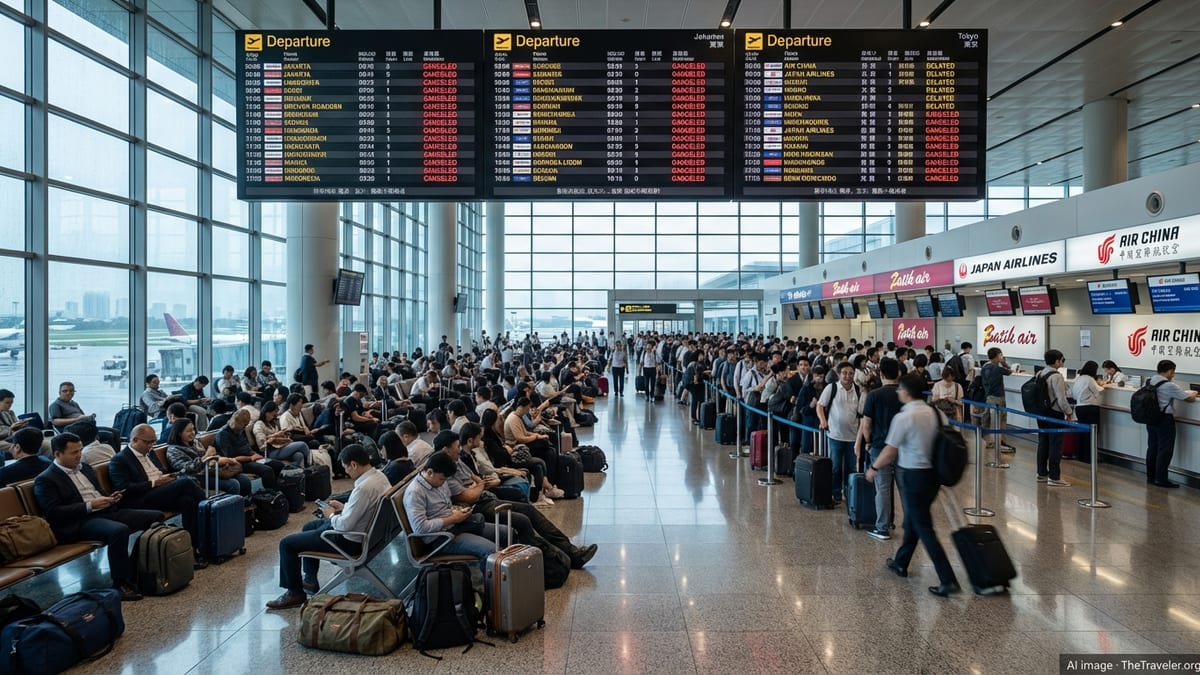
New Southeast Asia Routes Quietly Slip to Late October
According to recent schedule filings tracked by specialist route analysts, Juneyao Airlines has moved the start of its Shanghai Pudong to Manila service from mid June to 17 October 2026. The carrier’s planned Shanghai Pudong to Jakarta route has similarly shifted from a June debut to 20 October 2026, turning what was billed as a key summer expansion into an autumn launch.
Published timetables indicate that the Manila route will operate five times weekly from Shanghai using Airbus A320 aircraft. The Jakarta connection is set to run three times per week, also from Shanghai Pudong, with an A320neo assigned to the route. Both links will plug two major Southeast Asian capitals directly into Juneyao’s Shanghai hub, but only after the Northern Hemisphere summer peak has passed.
Prior to the schedule change, both routes had been promoted for a June 2026 start, with travel-industry coverage highlighting Manila as a new point in the network and Jakarta as a strategic addition in Indonesia. The sudden three to four month delay has left prospective passengers holding tickets for services that no longer exist in the peak holiday window.
The revisions come despite broader expansion by Juneyao on other long haul and regional links, including a ramp up of its Shanghai to Athens operation during the same summer period. The contrast underlines how capacity is being reshuffled rather than broadly withdrawn.
Passengers Face Rebookings and Refunds at the Peak of Summer
The timing of the postponements is particularly disruptive for travelers in China, Southeast Asia, and beyond who had planned June to September holidays around the direct Shanghai to Manila and Jakarta flights. With the routes now pushed to late October, carriers already operating between China and Southeast Asia are left to absorb last minute rebooking requests.
Publicly available consumer discussions suggest that Juneyao customers have faced communication gaps on international itineraries even under normal operating conditions. The abrupt schedule changes for Manila and Jakarta, introduced just as peak summer demand sets in, risk amplifying those frustrations as travelers navigate refunds, rerouting through other hubs, or complete cancellations of their trips.
Industry observers note that passengers booked on the affected flights are generally entitled to be re-accommodated on alternative services or to claim refunds, depending on fare rules and the point of purchase. However, with school holidays and fixed vacation periods, replacement flights are likely to be scarce and more expensive, compounding the sense of disruption for families and tour groups.
Travel agents in both the Philippines and Indonesia had begun packaging the new nonstop links into China-focused tour products for the June launch window. The sudden loss of direct capacity from Shanghai is forcing itineraries to be rebuilt via other Chinese or regional hubs, potentially adding connections and travel time that undermine the appeal of quick city breaks and short holidays.
Strain on Manila and Jakarta Gateways Already Near Capacity
The delay of Juneyao’s new routes lands in two of Southeast Asia’s most congested aviation markets. Manila’s main airport has been operating close to capacity, with authorities and airlines repeatedly adjusting schedules and route allocations to ease bottlenecks on the runway and in terminal infrastructure.
In this context, the absence of new Shanghai services this summer may briefly ease some slot pressure in Manila, but it also removes fresh competition and seat capacity between China and the Philippines at a time when tourism stakeholders are eager to rebuild arrivals. Other airlines serving the Shanghai to Manila corridor may see stronger bookings and higher yields as travelers shift their plans.
Jakarta’s main gateway has been undergoing its own post pandemic recalibration, with carriers tweaking frequencies and aircraft types as Indonesia’s outbound and inbound markets recover. Juneyao’s postponed entry delays additional one stop options onward into China and beyond for Indonesian passengers, leaving incumbent airlines more room to consolidate their positions through the high season.
For regional planners and tourism boards, the setback illustrates how fragile route development can be when schedules are caught between infrastructure constraints, evolving demand, and airlines’ financial calculations. A route that exists in reservation systems one month can disappear the next, with little recourse for destinations that have already begun marketing campaigns built around new air links.
Strategic Pivot Toward Autumn and Shoulder Season Demand
Analysts of airline scheduling patterns point out that shifting route launches from June to October may allow Juneyao to avoid the operational risks of introducing entirely new international services in the most congested weeks of the year. By targeting an autumn start, the carrier can test load factors, refine pricing, and integrate the routes into its broader Shanghai network under slightly less pressure.
From a commercial standpoint, entering the Philippine and Indonesian markets in October also positions the airline ahead of key travel peaks linked to China’s early October holiday period and Southeast Asia’s year end vacation season. If initial performance is strong, frequencies could be ramped up into the northern winter timetable, giving the airline time to adjust without the intense scrutiny that accompanies summer launch failures.
However, this strategic recalibration comes at a cost to brand perception. Travelers who had associated Juneyao’s expansion announcements with immediate new options for summer 2026 may now view the airline more cautiously when booking new or seasonal routes. The risk is that repeated postponements on different international markets start to erode confidence among both consumers and trade partners.
For now, the delayed Shanghai to Manila and Jakarta links remain on sale for late October onward, signaling that Juneyao still sees long term potential in both markets. The next test will come when the new launch dates draw closer and travelers look for assurances that this time, the flights will operate as advertised.
What the Delays Signal for China–Southeast Asia Travel
The abrupt rescheduling of Juneyao’s Southeast Asia expansion underscores broader volatility in the China to ASEAN aviation corridor. Demand between China and destinations such as the Philippines and Indonesia has been rebounding, but the pattern remains uneven and heavily influenced by currency movements, visa policies, and lingering operational constraints at key hubs.
Other carriers have been selectively increasing capacity into Southeast Asia while trimming or postponing services elsewhere, suggesting that airlines are still testing the depth of recovery rather than fully committing to pre pandemic growth trajectories. In that environment, pulling back on summer launches that might underperform can be seen as a risk management tool as much as a sign of weakness.
For passengers, the lesson is to expect continued churn in international schedules, particularly on newly announced routes and secondary city pairs. Travel specialists often recommend building extra flexibility into itineraries, monitoring booking conditions, and considering airlines with multiple daily frequencies on a route where reliability is paramount.
As peak summer 2026 unfolds without the promised Juneyao links between Shanghai, Manila, and Jakarta, the focus will shift to whether the October debut proceeds as filed. The outcome will help indicate how confident Chinese carriers feel about sustained demand for leisure and business travel across the region, and how quickly China–Southeast Asia networks can return to stable growth.