


Few routes in Istanbul capture the city’s character as vividly as the short hop between Karaköy and Sultanahmet. In just a couple of kilometers you cross the Golden Horn, pass fishermen on the Galata Bridge, glide past mosques and ferries, and step from trendy cafés into the heart of the Old City. This guide compares the main ways to travel between Karaköy and Sultanahmet and shows you how to turn that simple transfer into one of the most rewarding walks of your day.
Get the latest updates straight to your inbox!
Understanding the Karaköy–Sultanahmet Corridor
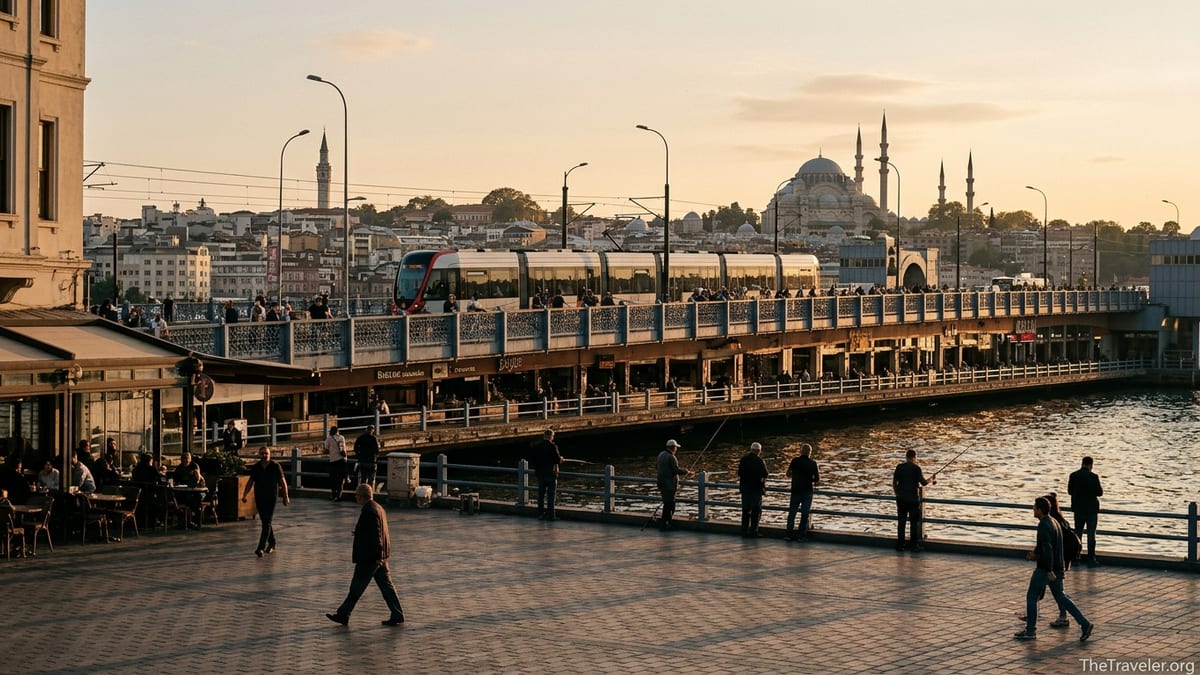
The journey from Karaköy to Sultanahmet is short in distance but rich in experiences. Karaköy sits on the northern shore of the Golden Horn, in the Beyoğlu district, with a mix of historic streets and hip cafés. Sultanahmet lies across the water on the historic peninsula, home to Hagia Sophia, the Blue Mosque, Topkapı Palace and the Hippodrome. The two are connected mainly by the Galata Bridge, with the modern T1 tram line running across it.
On a map, the tram distance between Karaköy and Sultanahmet is about 2 to 2.5 kilometers, which translates into roughly a 25 to 35 minute walk at a relaxed tourist pace, depending on your photo stops. The sea crossing on a ferry between nearby Karaköy and Eminönü takes around 5 to 10 minutes of actual sailing, while the tram ride themselves is often under 10 minutes once you are on board. The real variable is not distance but crowds, traffic and your own energy level.
For most visitors, the question is not simply how to get from A to B, but how to weave both neighborhoods into a single, satisfying day. A realistic itinerary might start with brunch at a Karaköy café, continue with a walk across Galata Bridge to the Spice Bazaar in Eminönü, then climb into Sultanahmet for an afternoon of mosque and museum visits before returning by tram in the evening.
Taking the T1 Tram: Fast, Cheap and Predictable
The backbone of travel between Karaköy and Sultanahmet is the T1 Bağcılar–Kabataş tram line. It crosses the Galata Bridge and stops at Karaköy, Eminönü, Sirkeci, Gülhane and Sultanahmet, putting you within minutes of nearly every major Old City sight. Trams run frequently throughout the day, with headways typically in the 5 to 10 minute range during daytime and slightly longer later at night, making this one of the most reliable ways to move between the two districts.
To ride the T1 tram, you need an Istanbulkart, the city’s contactless transport card, or a compatible bank card with contactless capability. Fares are modest by European standards and are deducted when you tap in at the turnstile. As of mid 2026, a single tram ride within the inner city typically costs the equivalent of a few US dollars or less, subject to periodic fare adjustments. If you are transferring from another tram or metro line within the allowed time window, your second ride may be discounted automatically.
In practical terms, the tram makes the most sense during the heat of the day, when walking across the bridge can feel exhausting, or when you are short on time. For example, if you are standing near Karaköy pier at 2 pm with pre-booked tickets for the Basilica Cistern at 2.30 pm, tram is your safest bet. Board at Karaköy in the direction of Bağcılar, then get off at Sultanahmet station and follow the clearly marked pedestrian paths uphill to the Hippodrome and Hagia Sophia in about 5 to 7 minutes.
Timing is crucial. Trams can be extremely crowded in the late afternoon rush, especially around 5 to 7 pm on weekdays, as commuters share the space with tourists. During those peak hours, you might wait for one or two trams to pass before you can squeeze in. If you are traveling with small children or are sensitive to crowds, try to move between Karaköy and Sultanahmet either late morning, early afternoon, or later in the evening when the commuter wave has eased.
Walking via Galata Bridge: Turning a Transfer into a Mini Tour
For many travelers, walking between Karaköy and Sultanahmet is the highlight of their day. The classic route is straightforward: from Karaköy tram station or the ferry pier, you stroll a short distance to the start of the Galata Bridge, cross the bridge on the upper deck alongside local fishermen, descend into Eminönü on the far side, then continue through the Spice Bazaar and up into Sultanahmet. At a leisure pace with photos, snacks and quick market browsing, this stroll can easily fill an hour or more.
The bridge itself is flat and easy for most visitors, with railings and sidewalks on both sides. Underneath the roadway deck you will find a row of fish restaurants and cafés, which can be pleasant for a coffee or tea stop if you want a view close to the water. On the upper level, the main attraction is the constant activity: fishermen casting lines, ferries sliding underneath, and panoramic views of the mosques and skyline on both shores. A typical unhurried walk across the bridge takes 10 to 15 minutes, but many visitors linger longer for photos or to watch the fishing boats.
From Eminönü, walking into Sultanahmet is technically uphill but very manageable if you are reasonably fit and not overloaded. A popular route is to enter the Spice Bazaar from the square in front of the New Mosque, wander through its aromatic halls, then exit toward Sirkeci and follow the tram line up past Gülhane Park and into the Sultanahmet square. Another option is to follow the streets near Sirkeci station and climb gently via quiet back lanes, which can be slightly less crowded though less clearly signposted.
Seasonal conditions matter. On a sunny spring or autumn day, the walk across Galata Bridge is ideal, with soft light and mild temperatures. In July and August, however, midday sun can be intense on the exposed bridge, and heat radiating off the pavement may be uncomfortable. In winter, cold winds can whip along the Golden Horn even when inland streets feel calmer. In those cases, you might choose to walk only one way in the more comfortable direction and rely on the tram for the return.
Best Times and Directions to Cross the Galata Bridge
The experience of walking across the Galata Bridge varies dramatically depending on when you go. Early mornings around sunrise offer soft light, relatively empty sidewalks and a chance to see fishermen setting up for the day, along with commuters walking to work from Karaköy toward Eminönü. If you start a full day of sightseeing from Karaköy, crossing the bridge around 8 to 9 am can be a peaceful prelude to busy museums and mosques.
Afternoons between 12 and 4 pm bring the strongest sunlight and the busiest pedestrian flows, particularly in high season. At this time, the direction from Sultanahmet down toward Karaköy may be more comfortable, as you will be walking slightly downhill and can reward yourself with a café break in Karaköy’s back streets. Crossing from Karaköy to Eminönü in mid afternoon is still fine, but you may want a hat, sunscreen, or at least a quick break under the awnings of the lower deck.
Sunset is arguably the most atmospheric time to cross. In summer, this might be between roughly 8 and 9 pm; in winter, closer to 5 to 6 pm. As the sun drops behind the hills, minarets are silhouetted and the water below glows gold. Many photographers choose the direction from Eminönü toward Karaköy at this hour to capture the Old City skyline in front of them. You could, for example, leave Sultanahmet after an early dinner, walk down via Sirkeci and Eminönü, then cross the bridge into Karaköy right as the mosques light up.
Late at night the bridge remains open and reasonably busy with traffic, but the vibe shifts. Fishermen thin out, the lower-deck restaurants empty, and the area can feel more isolated in patches. It is not generally considered unsafe, but if you are alone and unfamiliar with the city you may feel more comfortable taking the tram after about 11 pm, especially outside the peak summer season when there are fewer pedestrians.
Ferry Alternatives Between Karaköy, Eminönü and Beyond
While there is no separate ferry strictly between Karaköy and Sultanahmet, ferries do play a role in linking the neighborhoods. Karaköy and Eminönü both serve as major ferry hubs, with frequent city ferries to Üsküdar and Kadıköy on the Asian side. Some routes run in a triangle pattern, such as Kadıköy to Karaköy to Eminönü, allowing you to move between the two Golden Horn shores while also getting a short Bosphorus cruise feeling in the process.
For example, a traveler based in Sultanahmet might walk or take the tram down to Eminönü in the late afternoon, board a city ferry to Karaköy, enjoy a brief ride across the water with open-air decks, then explore Karaköy’s coffee shops before returning to Sultanahmet by tram after dark. Fares on these ferries are typically similar to, or slightly higher than, tram fares and are also paid with the Istanbulkart at turnstiles on the pier. Sailing time is short, often around 10 minutes or less between piers, but you should factor in boarding and waiting time.
Using ferries is particularly appealing on hot days, when the sea breeze can feel refreshing compared with congested streets. It is also a good way to rest your feet after walking between Karaköy and Sultanahmet earlier in the day. Just remember that ferry timetables are less frequent late at night, and in stormy winter weather sailings can be delayed or canceled. Always check the latest times at the pier or on local transit apps before counting on a late crossing.
One useful combination is to cross the Galata Bridge on foot in one direction, then use the ferry on the return. For instance, you might start in Karaköy, walk to Sultanahmet for sightseeing, then descend to Eminönü at sunset and hop on a ferry back to Karaköy. This way you experience both the iconic bridge walk and a glimpse of Istanbul from the water without adding much travel time.
Taxi Realities, Ride-Hailing and Luggage Considerations
Given the short distance between Karaköy and Sultanahmet, taxis are often not worth the hassle during the day. Istanbul traffic around the Galata Bridge and along the coastal roads can be slow, sometimes leaving taxis stuck while trams glide past. For such a short hop, a taxi ride may cost several times more than a tram fare, even though in absolute terms it is still relatively inexpensive by many visitors’ standards. More importantly, there is a higher chance of disputes over route or pricing on such small journeys, especially if drivers sense that a tourist is unfamiliar with the city.
That said, taxis can be useful in specific scenarios. If you arrive at Karaköy from a cruise ship with multiple large suitcases and a family in tow, a taxi or ride-hailing car to a hotel near Sultanahmet may be the most practical choice. In that case, it helps to use an official taxi app or a global ride-hailing platform operating in the city, which can provide an estimated fare and track the route. Actual fares vary with traffic and any detours, but you might expect a short central ride between districts to fall in a moderate range, often comparable to what you would pay for a 10 to 15 minute ride in a major European capital.
Luggage is the main factor that changes the equation for tram and walking. The T1 tram can be crowded, and maneuvering bulky suitcases on and off at Karaköy and Sultanahmet stations is not pleasant during busy times. If you only have a small wheeled carry-on and a backpack, you can manage the tram without much trouble. However, with two large checked bags per person, the narrow tram aisles and station escalators become tiring quickly. In that case, you may prefer to walk between Karaköy and Sultanahmet only if your accommodation is nearby and the streets are not too steep, or else take a taxi directly.
When using taxis, common-sense precautions make a difference. Always insist that the meter is turned on from the start, avoid negotiating a flat fare for such a short central trip, and have your destination address written clearly. If a driver refuses to use the meter or suggests an obviously inflated fixed price for the short ride over the bridge, simply step out and hail another taxi or revert to the tram. In many cases, the tram or a short walk will be faster and far less stressful.
Designing a Perfect One-Day Route Linking Both Areas
A well-planned day can combine Karaköy, the Galata Bridge, Eminönü and Sultanahmet without backtracking or rushing. One popular strategy is to start where your hotel is located and move mostly downhill and toward the water in the morning, then cross the bridge and climb into Sultanahmet when the main sites open. For visitors staying in Karaköy or nearby Galata, that might mean breakfast near Galata Tower, a gentle descent through Karaköy’s cobbled streets, then a walk across the bridge into Eminönü around mid-morning.
Once in Eminönü, you can spend an hour at the Spice Bazaar and the surrounding streets, tasting lokum, browsing spice stands and perhaps stepping into the New Mosque courtyard. From there, follow the tram line toward Sirkeci and Gülhane, stopping for a quick tea in a small café as the streets start to rise. You can either walk this stretch in about 15 to 20 minutes or board the T1 tram for a single stop or two if you are already feeling tired.
Arriving in Sultanahmet around late morning or midday gives you time to visit one or two of the major monuments before lunch, such as Hagia Sophia or the Blue Mosque, then a third in the afternoon, like Topkapı Palace or the Basilica Cistern. Many travelers find that three substantial visits in one day is their upper limit before fatigue sets in. Late afternoon can be reserved for wandering the backstreets, souvenir shopping or relaxing in a tea garden overlooking the Hippodrome.
For the return, you can choose a different mode than you used in the morning. If you walked to Sultanahmet, take the tram back to Karaköy in the early evening, then enjoy dinner in a Karaköy restaurant by the water. Alternatively, walk downhill from Sultanahmet to Sirkeci and Eminönü, cross the Galata Bridge at sunset for photos, and end your day with dessert at a café in Karaköy’s pedestrian lanes. By varying your route and mode, you transform a simple connection into a layered experience of Istanbul’s streets, markets and waterfront.
Special Tips for Families, Older Travelers and Accessibility
Families with young children will find the Karaköy to Sultanahmet route generally manageable, but a few adjustments help. The tram is stroller-friendly, with level boarding and wide doors, although crowds at peak times can be challenging. Walking across the Galata Bridge is feasible with a stroller or small children, as the path is flat and there are railings on the side. The trickier parts are the uphill segments from Eminönü to Sultanahmet, which may feel tiring if you are pushing a stroller or carrying a child in summer heat.
Older travelers or those with limited mobility should pay attention to elevation and paving. Streets around Galata Tower and parts of Karaköy can be steep and cobbled, while the walk from Eminönü up to Sultanahmet includes modest hills. In many cases, taking the T1 tram directly between Karaköy and Sultanahmet minimizes climbing. For a gentler walk, consider riding the tram to Gülhane, exploring Gülhane Park, then continuing to Sultanahmet on relatively smooth and shaded paths.
Accessibility along Galata Bridge is improving but still not perfect. The sidewalks are level, but access points on both ends may involve stairs, ramps or underpasses depending on exactly where you join the bridge. Wheelchair users often prefer to access the bridge near the tram stops, where curb cuts and crossings tend to be better marked. Using up-to-date local accessibility guides and mapping apps can help you identify the smoothest routes from your hotel in Karaköy or Sultanahmet to the bridge and tram stops.
If you are sensitive to crowds or noise, time your movements carefully. Groups from cruise ships and tour buses often cluster around late morning in Sultanahmet and mid-afternoon in Eminönü and on the bridge. Early starts or late evening strolls can make the same route feel calmer and more spacious. Having both the tram and the option to walk gives you flexibility to adapt on the day according to how you feel.
The Takeaway
Traveling between Karaköy and Sultanahmet is more than a simple transfer. Whether you ride the tram across the Galata Bridge, stroll past fishermen above the Golden Horn, or detour via a short ferry ride between Karaköy and Eminönü, each option reveals a different face of Istanbul. Your choice depends on time, weather, luggage and energy, but in most cases you can experience more than one mode in a single day.
For speed and predictability, the T1 tram is unbeatable, especially in the heat of midday or when you are racing to a timed museum reservation. For atmosphere, the walk across Galata Bridge, with its views of mosques, ferries and city life, is hard to match. Ferries add a brief but memorable water element, while taxis are best reserved for luggage-heavy or late-night trips when public transport is less convenient.
By combining these options intelligently, you can design a day that links Karaköy’s cafes, the markets of Eminönü and the monuments of Sultanahmet into a smooth, enjoyable route. Think of the journey itself as part of the sightseeing, not just the space between it. With a bit of planning, the short distance between these two neighborhoods becomes one of the most rewarding stretches of your Istanbul visit.
FAQ
Q1. How long does it take to go from Karaköy to Sultanahmet by tram?
On the T1 line, the actual tram ride between Karaköy and Sultanahmet typically takes under 10 minutes, but you should allow around 20 minutes in total for walking to the stop, waiting for the tram and exiting at Sultanahmet.
Q2. Is it safe to walk across the Galata Bridge between Karaköy and Eminönü?
Yes, the bridge is generally considered safe and is busy with locals and tourists throughout the day and evening. Use normal big-city precautions, stay on the main sidewalks and avoid walking alone very late at night if you feel uncomfortable.
Q3. How long does the walk from Karaköy to Sultanahmet take?
The walk via the Galata Bridge and Eminönü to Sultanahmet usually takes around 30 to 40 minutes without long stops. If you spend time in the Spice Bazaar or take many photos, it can easily stretch to an hour or more.
Q4. What is the best time of day to cross the Galata Bridge?
Early morning offers quieter paths and soft light, while sunset provides dramatic views of the Old City skyline. Midday in summer can be very hot and bright, so many visitors prefer to walk at the edges of the day.
Q5. Can I use the Istanbulkart on both the tram and the ferries between Karaköy and Eminönü?
Yes, the Istanbulkart is accepted on the T1 tram and on most city-operated ferries. You tap in at turnstiles or card readers, and the appropriate fare is deducted automatically.
Q6. Are taxis a good option between Karaköy and Sultanahmet?
Because the distance is short and traffic can be heavy, taxis are often slower and more expensive than the tram or walking. They can be useful if you have a lot of luggage, are traveling late at night, or have mobility issues, but otherwise public transport is usually better.
Q7. Is the route suitable for travelers with limited mobility?
The tram provides the easiest option, as it avoids steep hills and many uneven streets. Walking across the Galata Bridge is flat, but the approaches and the climb from Eminönü up to Sultanahmet involve some slopes and crowds, so planning the exact route and timing is important.
Q8. What should I wear for walking between Karaköy and Sultanahmet?
Comfortable walking shoes are essential, as surfaces range from smooth pavements to cobblestones. In summer, bring a hat, sunglasses and sunscreen; in winter, a windproof jacket is useful on the exposed bridge.
Q9. Can I fit Karaköy, Galata Bridge, Eminönü and Sultanahmet into one day?
Yes, many visitors comfortably cover all four areas in a single day by starting early, limiting major museum visits to two or three, and using a mix of walking and the T1 tram to avoid backtracking.
Q10. Is it better to walk first or take the tram first between the two districts?
If you start the day with more energy, walking first across the bridge and up into Sultanahmet can be rewarding, then you can return by tram when you are tired. In very hot or cold weather, many people prefer the reverse, using the tram earlier and saving a more relaxed walk for the cooler hours.