


Karaköy, on the northern side of Istanbul’s Golden Horn, has transformed from a gritty port into one of the city’s trendiest areas. It is home to Galataport cruise terminal, the Istanbul Modern museum, boutique hotels and third-wave coffee bars. For most visitors it feels lively and generally safe, but like any busy waterfront neighborhood with tourism and nightlife, there are real-world issues to understand: taxi scams around Galataport, pickpockets near the tram and bridge, very quiet backstreets at night, and the question of where exactly to book your hotel. This guide focuses on practical, concrete safety advice for today’s Karaköy, so you can enjoy the neighborhood with realistic expectations and street-smart habits.
Get the latest updates straight to your inbox!
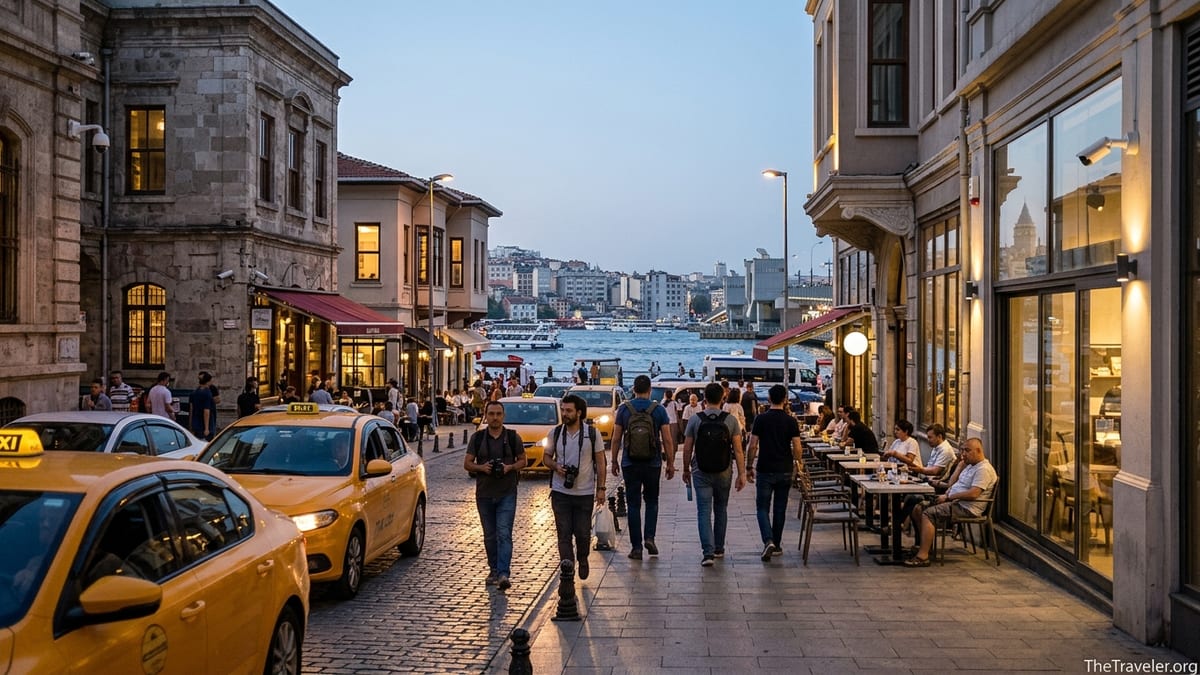
How Safe Is Karaköy Overall?
For most travelers, Karaköy feels reasonably safe by big-city standards. The area is a compact, mixed-use neighborhood: busy Rıhtım Caddesi along the waterfront, Galataport with its cruise terminal and shopping, and a grid of narrow streets climbing uphill toward Galata Tower. Recent travel advisories for Turkey emphasize that in major cities like Istanbul, the main risk for visitors is petty crime and scams rather than violent attacks, and this matches day-to-day experience in Karaköy. Violent incidents involving tourists are rare, and you are far more likely to remember a good meze dinner or Bosphorus sunset than any serious security problem.
At street level, Karaköy’s safety comes from foot traffic and infrastructure. The Galataport promenade, Karaköy ferry pier and the square at the base of Galata Bridge stay active from morning until late evening, with security staff, CCTV and regular police patrols. You will see cruise passengers, Istanbul families out for a stroll, and local workers heading to ferries bound for Kadıköy and Üsküdar. This mix of people and decent lighting makes the main arteries feel comfortable to walk, including after dark.
The tradeoff is that tourism also attracts opportunists. Travel and expatriate reports from 2024–2026 repeatedly mention overcharging taxis around Galataport and sporadic pickpocketing between Sultanahmet and Karaköy, especially on the tram and around the bridge. That does not mean the neighborhood is “dangerous,” but it does mean you should think in terms of urban awareness: keep valuables tucked away, be selective with taxis, and trust your instincts if someone is pushy or too helpful around ticket machines or ATMs.
If you are used to European or North American city centers, Karaköy will likely feel familiar: busy, a bit chaotic in rush hour, but not threatening. Most incidents that travelers recount, from an over-enthusiastic “helper” at the metro machine to a taxi driver trying to negotiate a flat fare from the cruise port, are preventable with a few clear rules, which we will walk through below.
Walking Karaköy by Day and by Night
By day, walking is the best way to experience Karaköy and generally very safe. The waterfront promenade from Galataport past the Istanbul Modern to Karaköy ferry pier is well paved, lined with cafés and restaurants and popular with families and office workers on lunch break. It is a straightforward, low-stress route even for first-time visitors, and a comfortable option for cruise passengers who want to walk from their ship into the city. The area around Karaköy tram stop and the underpass leading toward the bridge can be crowded, but they are busy commuting routes rather than true no-go zones.
At night, the picture is more nuanced. The main streets that most visitors use remain fairly active and well lit until late. Around the intersection of Kemankeş Karamustafa Paşa Caddesi and Kemeraltı Caddesi, you will find popular bars, dessert shops, and late-opening coffee spots. On a Friday or Saturday in peak season, you will see groups of young Istanbulites bar-hopping between Karaköy and nearby Galata and Tophane, which keeps many shopfronts open and lights on. For a solo traveler or a couple, walking here around 22:00 or 23:00 typically feels busy rather than deserted.
The quiet backstreets tell a different story. Once you move two or three blocks inland, especially on narrow residential lanes north of Kemeraltı Caddesi and toward Tophane’s steeper side streets, the atmosphere can shift quickly after 23:00. Shutters come down, foot traffic thins, and parked cars line poorly lit alleys. These are not automatically “dangerous,” but they are the sort of places where any big-city visitor should avoid walking alone late at night if there is an alternative. If your hotel is on a very small lane and you are returning after midnight, many guests choose to take a reputable taxi to the door rather than walk fifteen minutes through side streets.
A practical example: walking at 21:30 from Karaköy ferry pier up to Galata Tower via the main pedestrian route and the historic Tünel area is normal and commonly done, including by solo women. Walking at 01:30 from the same tower down via random side alleys with few open shops is different. In that scenario, taking a yellow taxi via an app or walking a busier route along Tersane Caddesi or the tram line makes more sense.
Waterfront Areas, Galataport and the Bridge
Karaköy’s waterfront is one of the neighborhood’s main attractions and also where several safety issues cluster. The Galataport development, stretching between the cruise terminal and the old Karaköy ferry piers, is a modern, high-investment zone with heavy security, controlled entry points, and well-maintained promenades. Visitors report feeling very comfortable strolling here at sunset, photographing ferries and the Bosphorus, or walking between cruise ships and nearby hotels. Families with strollers and joggers use the same paths, which reassures many first-time visitors.
Moving east, the area around Karaköy Pier and the base of Galata Bridge is typically crowded with commuters boarding ferries, anglers on the bridge, and food stands selling fish sandwiches and tea. This is one of Istanbul’s postcard scenes, and during daylight and early evening it is a great place to people-watch. However, it is also a textbook environment for pickpockets: dense crowds, distracted tourists taking photos, and easy escape routes toward Eminönü or into the tram stops. Travelers have reported realizing only later that a wallet disappeared from a back pocket here or that a phone was lifted from a half-zipped handbag while they leaned over to photograph the Golden Horn.
Late at night, the lower level of Galata Bridge and the underpasses on both ends can feel more isolated. A few restaurants remain open, but foot traffic drops and many shutters are down. Most visitors still cross the bridge without trouble, yet if you are alone and carrying cameras or laptops it is sensible to favor earlier crossings or take a taxi between Karaköy and Sultanahmet after midnight, especially in the off-season when evenings are quieter.
If your cruise ship docks at Galataport, plan your walking routes so that your first impression of Istanbul is positive rather than stressful. From the terminal’s exit, you can walk along the waterfront toward Karaköy square in under ten minutes without needing to navigate any underpasses. This is safer and more enjoyable than trying to shortcut via backstreets you have never seen before, especially with luggage.
Taxi Scams in and around Karaköy
Taxis are one of the most frequent sources of traveler complaints in Istanbul, and the cluster of hotels and the cruise terminal in Karaköy make it a prime hunting ground for dishonest drivers. Common patterns include refusing to use the meter from Galataport or Karaköy taxi stands, insisting on a flat cash fare, taking unnecessarily long routes to airports, or performing the classic “banknote switch” trick where the driver swaps a genuine 200 lira note for a 20 lira note and claims you paid the wrong amount. Local guides and transport companies have published detailed warnings about this, noting that cruise passengers unfamiliar with normal fares are particularly targeted at Galataport’s taxi ranks.
One real-world example shared by visitors involved a taxi hailed near the Karaköy taxi station for a trip to Istanbul Airport. Instead of using the meter, the driver pushed for a fixed fare that later turned out to be well above the metered price, then drove via a long ring-road route. Others describe leaving the cruise terminal and immediately being approached by unofficial taxi touts offering “VIP” cars to Sultanahmet or Taksim for inflated cash prices, while the official taxi line with metered yellow cabs was a short walk away but less aggressively advertised.
The most reliable way to manage taxis in Karaköy is to use a regulated app such as Uber or BiTaksi, which dispatches licensed yellow taxis but locks in GPS-tracked routes and digital payments. If you order a car to your hotel or to Galataport’s main gate, you will see the driver’s plate number and estimated fare in advance. When using a street taxi, insist on the meter from the beginning, watch that it is actually turned on, and have a rough idea of what the fare should be. For example, in 2026 a metered ride from Karaköy to Sultanahmet will typically be much cheaper than a ride to Istanbul Airport; if a driver quotes an airport-level fare for a ten-minute city ride, refuse politely and step away.
A few very simple habits go a long way: sit where you can see the meter, pay with smaller notes to avoid the note-switch trick, and keep your luggage in the trunk until after you have settled the fare. Avoid getting into taxis that are already occupied or where another person suddenly jumps into the passenger seat at the last minute, a pattern that sometimes appears in scam stories. If your hotel has a front desk, asking them to call a taxi and tell you the approximate price in advance is another layer of protection.
Pickpockets, “Helpers,” and Quiet Backstreets
Across Istanbul, and especially in tourist corridors linking Sultanahmet, Eminönü and Karaköy, the main crime risk is pickpocketing and bag theft. Travelers report most incidents not on empty streets but in very crowded spots: the T1 tram between Sultanahmet, Eminönü and Karaköy, stairways and underpasses at Karaköy square, and on packed ferries in summer. A typical pattern involves someone bumping you as the tram doors close, or a small group boxing you in while another person’s hand slips into an open bag. People often only realize what happened when they step off the tram or sit down at a café and check their pockets.
Another theme in recent traveler accounts is the overly helpful “local” at ticket machines or ATMs. At Karaköy and nearby tram stops, some visitors have described men hovering around the Istanbulkart machines, insisting on tapping the screen, choosing tickets, or even taking cash to “top up” a card for you. In the best case they are just angling for a tip; in the worst case they might select more expensive tickets or distract you long enough for an accomplice to check your bag. Similar behavior occurs at ATMs near the busy square, where someone may stand uncomfortably close, claiming to help with language or buttons.
A simple rule set helps reduce risk without becoming paranoid. Keep bags fully zipped and worn in front of your body in all crowded areas, including the Galataport promenade during cruise days. Move wallets, passports and phones away from back pockets and into inner jacket pockets or neck pouches when you board a tram or ferry. If someone approaches you uninvited at a ticket machine, maintain polite but firm boundaries by saying you do not need help and positioning your body to shield your PIN or cash. Using ATMs inside banks or hotel lobbies in Karaköy, rather than freestanding machines on the street, cuts down on both technical skimming risks and opportunistic onlookers.
On the quieter backstreets, the risk shifts from petty theft amid crowds to being alone in a poorly lit environment. Most of these lanes are simply residential, but they are also where you will see the occasional shuttered mechanic’s workshop, construction site or small warehouse. Avoid cutting through unfamiliar alleys late at night, especially if you are carrying cameras or laptops. A very short taxi ride or a slightly longer but more populated walking route can make a big difference to how a late-night journey feels.
Solo Travelers and Cruise Passengers
Solo travelers, including solo women, often rate Karaköy and neighboring Galata as comfortable bases in Istanbul. Safety impressions tend to be shaped more by nuisance than by fear: fending off taxi overcharging, saying no to a persistent “helpful” stranger, or handling the occasional catcall in nightlife zones. Many solo visitors report walking alone from Karaköy up to Galata Tower in the early evening, or along the waterfront at sunset, without feeling threatened, while stressing that they avoided very late-night wandering in deserted streets and chose their accommodation location carefully.
For solo travelers, choosing a hotel on or within one block of a main street such as Kemankeş Karamustafa Paşa Caddesi, Kılıç Ali Paşa Mescidi Sk, or around the Karaköy tram and ferry hub gives you better lighting and easier access to public transport. It means that when you return at 22:00 from Sultanahmet or Kadıköy you are stepping from a busy tram stop or taxi drop-off directly into a well-trafficked area rather than facing a ten-minute walk through alleys. Many boutique hotels in converted bank or warehouse buildings in Karaköy’s core offer 24-hour reception and can call trusted taxis if you arrive late at night.
Cruise passengers docking at Galataport have slightly different concerns: they often carry passports, credit cards and cameras, and may have only one day to see the city. The good news is that Galataport is integrated into the Karaköy waterfront, and it is entirely realistic to walk from the ship to the tram, to the ferries, or up toward Galata Tower. The key is to be cautious about anyone approaching you immediately outside the terminal to sell private tours, “VIP” taxis, or fast-track tickets. Official taxi ranks, ticket booths and tram stops are clearly signed; use those instead of accepting a stranger’s offer just because they are standing closer to the exit.
If you are joining a cruise in Istanbul and staying overnight in Karaköy beforehand, allow extra time on embarkation day so that you are not rushed or tempted to accept the first aggressive taxi offer. Walking ten to fifteen minutes along the promenade from a nearby hotel to the Galataport terminal, in daylight and without excess luggage, is a calm and safe way to start your cruise day.
Safer Hotel Locations in and around Karaköy
Karaköy offers a broad mix of accommodation options, from design hotels overlooking the Bosphorus to budget guesthouses on hillside streets. From a safety and convenience standpoint, the most comfortable area for first-time visitors is the flat zone between the waterfront and roughly one block inland, from Galataport in the west to the base of Galata Bridge in the east. Here you are close to ferries, the T1 tram, Galata Bridge, cafés and restaurants, and you benefit from better street lighting, more people on the sidewalks, and a visible police presence.
Many travelers deliberately choose hotels on or just off Kemankeş Karamustafa Paşa Caddesi or close to Karaköy tram stop so they can step straight into a taxi or tram without navigating a maze of alleys. This is especially useful if you are arriving from Istanbul Airport at night or leaving early in the morning with luggage. Properties near the Istanbul Modern and Galataport also suit cruise passengers who want to walk to the ship with bags in 10 to 15 minutes on a well-maintained promenade rather than arranging separate transport.
Hotels higher up the hill toward Galata Tower can offer spectacular views and a more residential feel, but they come with steeper walks and narrower side streets. If you choose one of these, check on a map how you would walk from the tram or from Galataport after dark, and consider arriving by taxi the first time so you see the route in daylight. Late at night, many guests opt for an app-ordered taxi from Taksim, Beyoğlu or Kadıköy straight to the door instead of walking down quiet slopes and stairways.
If ultra-quiet surroundings are important to you, remember that “quiet” can also mean fewer people on the streets at night. A tiny lane behind old warehouses might be peaceful for sleeping but feel lonely to walk through after midnight. Balancing daytime charm with nighttime practicality is part of choosing a safe base in Karaköy. When in doubt, favour accommodations within easy sight of a tram stop, ferry terminal or major intersection.
The Takeaway
Karaköy today is one of Istanbul’s most appealing neighborhoods: creative, waterfront, and conveniently located between the historic old city and the more modern districts of Beyoğlu and Beşiktaş. For most visitors, it is a safe place to stay, walk and go out at night, provided you treat it like any other busy urban quarter: protect your valuables, question deals that seem vague or too good to be true, and avoid unnecessarily isolated routes after dark.
The most realistic risks you face here are not violent crime but taxi games around Galataport and Karaköy taxi stands, pickpockets on crowded trams and around the bridge, and the occasional overly persistent stranger offering “help” or services you did not ask for. By using taxi apps where possible, keeping bags zipped and in front in crowds, ignoring unsolicited help at ticket machines and ATMs, and choosing a hotel in a well-trafficked part of the neighborhood, you can resolve most of these issues before they start.
If you arrive with informed expectations rather than fear, Karaköy is far more likely to be remembered for its Bosphorus views, art spaces and café culture than for any security concerns. The neighborhood rewards those who stay alert but relaxed: watch the details, trust your instincts, and give yourself permission to enjoy one of Istanbul’s most atmospheric corners.
FAQ
Q1. Is Karaköy safe to walk at night?
It is generally safe to walk along Karaköy’s main streets and waterfront until late evening, thanks to good lighting and steady foot traffic. After about midnight, especially in the off-season, it is wiser to avoid very quiet backstreets and either stick to the main roads or use a reputable taxi if you are alone.
Q2. Are taxis in Karaköy safe to use?
Licensed yellow taxis are widely used, but overcharging and refusal to use the meter are common complaints around Karaköy and Galataport. To stay safe and avoid disputes, use an app-based service like Uber or BiTaksi where possible, insist on the meter, know a rough expected fare, and pay with smaller notes to prevent note-switch scams.
Q3. Is Karaköy a good base for solo female travelers?
Many solo women choose Karaköy and nearby Galata as their base and report feeling comfortable, especially in the busy areas near the tram, ferries and main streets. Choosing a hotel close to public transport and returning by 22:00 or 23:00, or using app taxis late at night, helps maintain that sense of security.
Q4. How risky are pickpockets in Karaköy?
Pickpocketing is a moderate but real risk in crowded spots such as the Karaköy tram stop, the underpasses near Galata Bridge, and ferries during rush hour or cruise days. Wearing bags in front, keeping them fully zipped, and moving wallets and phones out of back pockets significantly reduces the chance of a problem.
Q5. Is the area around Galataport and the cruise terminal safe?
The Galataport complex and surrounding promenade are heavily managed, well lit and patrolled, and are generally considered safe for walking, even with children or luggage. The main issue here is not personal danger but aggressive taxi touts and overpriced transport offers, so rely on official taxi ranks, transport apps, or simple walking routes instead.
Q6. Which part of Karaköy is best for a safe hotel location?
For most first-time visitors, the safest and most practical hotel locations are on or just behind the main waterfront streets between Galataport, Karaköy tram stop and the base of Galata Bridge. These areas have more people, better lighting, easy public transport and quicker access to taxis compared to steep, narrow backstreets further uphill.
Q7. Can I walk from Karaköy to Sultanahmet safely?
Many visitors walk across Galata Bridge from Karaköy to Eminönü and then up into Sultanahmet during daylight and early evening without issues. It is safe if you stay aware of your belongings, avoid isolated underpasses very late at night, and consider taking a tram or taxi back after midnight instead of walking when the area is quieter.
Q8. Are there specific scams I should watch for in Karaköy?
Common issues include taxi drivers refusing the meter or taking long routes, unsolicited “helpers” at ticket machines or ATMs who try to steer you into paying more, and occasional bar or restaurant bills with unexpected charges. Saying no to unasked-for help, checking menus and prices in advance, and using official transport channels will prevent most of these problems.
Q9. Is Karaköy safe for families with children?
Yes, many families stay in Karaköy and enjoy the waterfront promenade, ferries and nearby museums. With children, focus on keeping everyone close in crowded areas like the tram or Galata Bridge, using pedestrian crossings on busy roads, and choosing a hotel on a main street so evening walks back to your room are short and straightforward.
Q10. What should I do in an emergency in Karaköy?
In any serious emergency in Turkey, you can dial 112 to reach combined emergency services, which often have English-speaking operators in major tourist areas. For less urgent issues, such as a lost wallet, contact your hotel reception, cruise desk or tour operator first; they can help you report incidents to local police, contact your embassy if needed, and advise on replacing cards or documents.