


More news on this day
Kenya Airways is accelerating its cargo expansion and maintenance overhaul strategy, adding dedicated freighters and upgraded repair capabilities in Nairobi as it positions itself as a key connector for African trade and travel.
Get the latest news straight to your inbox!
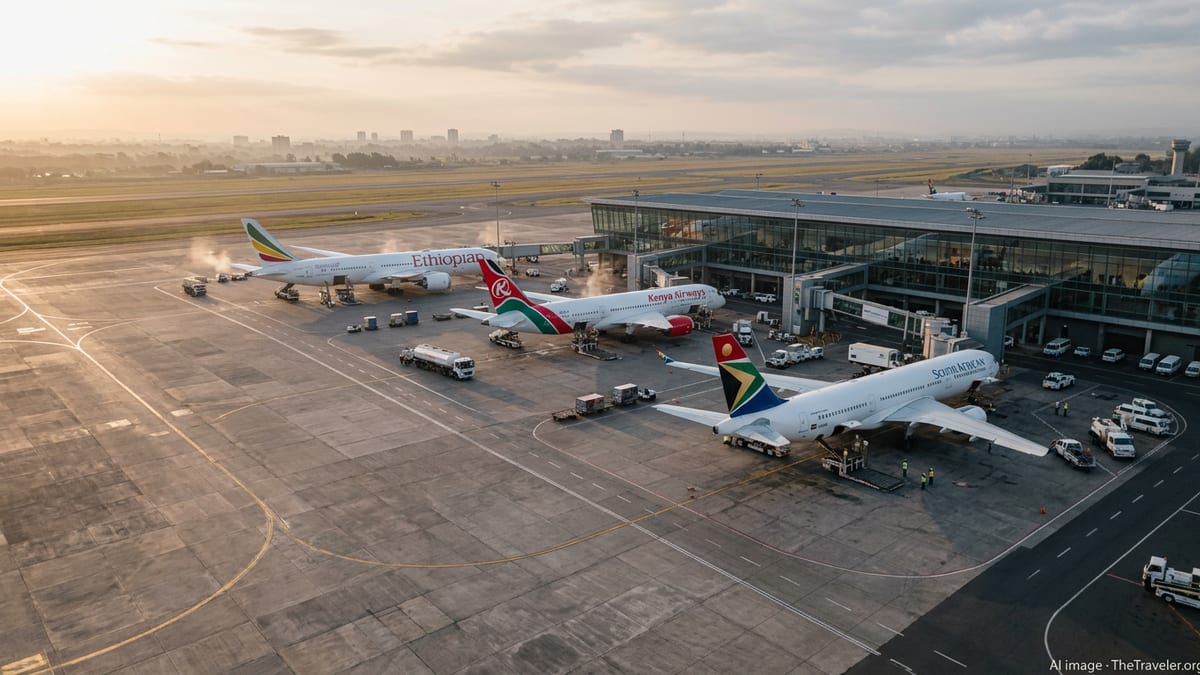
Freighter Additions Lift Cargo Capacity Across Key Trade Lanes
Publicly available information shows that Kenya Airways has been steadily growing its all-cargo fleet to capture rising demand on intra-African and intercontinental trade corridors. In April 2024 the airline received a second Boeing 737-800 freighter, taking its total cargo-dedicated fleet to four aircraft and adding around 20 tons of capacity per flight to its network. Reports indicate the freighters are being deployed on routes linking Nairobi with the Middle East, India and multiple African capitals, including Sharjah, Dubai World Central, Jeddah, Riyadh, Mumbai, Lagos and Dakar.
The enlarged freighter fleet supplements widebody belly capacity on passenger services out of Jomo Kenyatta International Airport, where Kenya Airways accounts for more than half of international seat capacity. Feasibility studies on the Nairobi hub highlight a broad network that already connects Eastern Africa to Europe, the Middle East, Asia and North America, allowing cargo from secondary African markets to feed into long haul services via Nairobi.
According to the airline’s published financial disclosures for the 2024 financial year, the addition of two cargo freighters formed part of a wider capacity and revenue recovery plan. The documents point to double-digit cargo growth and an expanded footprint in Africa, the Middle East and Asia, underscoring how freighter investment is being used to diversify earnings and smooth volatility in passenger demand.
Kenya Airways’ sustainability reporting further notes that the new freighters have enabled an increase in scheduled cargo routes and the launch of dedicated services to markets such as Mumbai, while maintaining uplift on African lanes that lost passenger frequencies during seasonal network adjustments. This separation of passenger and cargo planning is helping to preserve trade flows even as schedules are fine-tuned for peak leisure and business travel periods.
Network Adjustments Preserve Trade Links as Passenger Routes Shift
While building out its freighter operations, Kenya Airways has also been reshaping its passenger network to respond to seasonal patterns and fleet availability. Network updates released in July 2024 describe a series of adjustments across Southern and Central Africa, including capacity upgrades to Johannesburg and Cape Town, nonstop services to Douala and a suspension of Bangui flights during the August peak season.
In these communications, the airline emphasizes that cargo services to affected markets remain in place, even where passenger frequencies are reduced or temporarily halted. Maintaining freighter and belly cargo access on strategic lanes allows exporters of perishables, pharmaceuticals and manufactured goods to retain reliable air links despite timetable changes for travelers.
Industry route data for the northern summer 2024 season also shows Nairobi’s role as a consolidation point, with Kenya Airways rebalancing flights into high-demand regional hubs and long haul gateways while relying on its cargo fleet to backfill any gaps. This approach is aligned with broader African connectivity research that identifies hub carriers as the primary drivers of improved links between landlocked or secondary markets and global trade centers.
For logistics providers and shippers, the combination of network flexibility and dedicated freighter capacity offers additional options for time-sensitive cargo. It also reinforces Kenya’s objective of using aviation to support implementation of the African Continental Free Trade Area by shortening transit times between production centers and consumption markets across the continent.
MRO Upgrades Position Nairobi as a Regional Maintenance Hub
Kenya Airways is pairing its cargo build-out with a decisive push into maintenance, repair and overhaul services. In January 2025 the carrier’s Approved Maintenance Organization in Nairobi announced it had achieved the European Union Aviation Safety Agency Part 145 certification. Publicly available information from the airline describes this as a key milestone that authorizes base maintenance on Embraer 190s and Boeing 737 Next Generation aircraft and validates its procedures against stringent European safety standards.
The airline’s annual reporting for the 2024 financial year highlights a strong operational performance in engineering, with fleet reliability above 97 percent and availability near 99 percent. The documents note that Kenya Airways concluded multiple new maintenance partnerships and developed additional in-house capabilities, including heavy maintenance C checks, as part of a strategy to attract third-party work from regional airlines.
Details on the carrier’s MRO web pages present Nairobi as a full-service facility able to perform line, light and heavy checks on both Boeing and Embraer fleets, supported by two large airframe hangars at Jomo Kenyatta International Airport. As an Embraer Authorized Service Center in Africa, Kenya Airways markets its expertise in narrowbody and regional jet maintenance to operators seeking to reduce dependence on facilities in Europe or the Middle East.
This capacity expansion aligns with broader industry analysis indicating that African airlines are looking to grow local MRO to curb capital outflows to overseas providers. By offering competitive heavy maintenance and component services from Nairobi, Kenya Airways is positioning its engineering division as both a cost center for its own operations and a revenue generator serving foreign carriers.
Focus on Green, Digitally Enabled Maintenance to Retain Value in Africa
Beyond certification milestones, Kenya Airways is framing its MRO growth as a shift toward greener, more efficient maintenance practices. A blog article published on the airline’s corporate platform in April 2026 outlines a strategic agenda for what it describes as green MRO, emphasizing energy-efficient hangar operations, waste reduction and the use of digital tools to optimize maintenance planning.
The piece notes that the airline employs more than 700 specialists in engineering and maintenance and that investment is being channeled into digital transformation across operations. Priorities include predictive maintenance analytics, electronic task cards and integrated planning systems, all targeted at lowering aircraft downtime and cutting the carbon footprint associated with unscheduled repairs and ferry flights.
Kenya Airways also highlights four priorities for Africa’s wider MRO ecosystem: retaining more maintenance value on the continent, accelerating local capability development, investing in workforce skills and advancing regulatory harmonization between states. These themes echo analyses from global aviation consultancies, which argue that a more coordinated regulatory and skills framework is needed for African hubs such as Nairobi to compete with established centers in the Gulf and Europe.
By aligning its maintenance strategy with these trends, the airline is signaling that its MRO ambitions extend beyond serving its own fleet. The combination of international certification, a trained technical workforce and a sustainability-focused operating model is intended to attract carriers looking for cost-effective heavy checks within Africa rather than routing aircraft to distant facilities.
Implications for Africa’s Trade and Passenger Connectivity
The concurrent expansion of cargo capacity and MRO capabilities at Kenya Airways carries wider implications for regional connectivity. With Nairobi already functioning as a major transfer point for passenger traffic between African cities and global gateways, incremental freighter lift allows exporters and importers to access a denser network of onward connections, particularly to Europe, the Gulf and India.
Published connectivity assessments of Jomo Kenyatta International Airport describe the Kenyan capital as a central node in Eastern Africa, with Kenya Airways leveraging a hub and spoke model to concentrate flows from neighboring states. The airline’s strengthened cargo operations, backed by resilient maintenance infrastructure, enhance the reliability of this model and support ambitions to scale overall traffic in the coming decades.
For African aviation more broadly, Kenya Airways’ strategy illustrates how a national carrier can move beyond point to point passenger services into a diversified aviation group. By investing in freighters, cargo partnerships and certified MRO, the airline is seeking to capture a larger share of value from each aircraft movement and to keep more of that value within the region.
If these initiatives continue to mature, observers expect Nairobi to play an even more prominent role in linking African producers and travelers with global markets. Enhanced connectivity, supported by reliable maintenance capacity on the ground, could in turn make it easier for new airlines to launch services to Kenya, reinforcing the country’s status as a gateway for both trade and tourism.
Sources: Kenya Airways cargo fleet expansion; Kenya Airways EASA Part 145 certification; Kenya Airways MRO capabilities; Kenya Airways green MRO strategy; Kenya Airways network adjustments 2024